The Entry of Humanoid Robots into Manufacturing: At the Forefront of Industrial Innovation in 2025
 Editor
As of December 2025, the global manufacturing industry is at a historical inflection point with the introduction of humanoid robots. Over the past two years, humanoid robots, which existed only in labs and research facilities, have demonstrated verified results on actual production lines, presenting a new paradigm for manufacturing automation. Notably, Tesla’s operation of 500 Optimus robots at its Gigafactory in the first half of 2025, which improved hourly assembly efficiency by 32%, has sent shockwaves throughout the industry. This is seen not just as a technological achievement but as a harbinger of fundamental changes in the traditional industrial robot market.
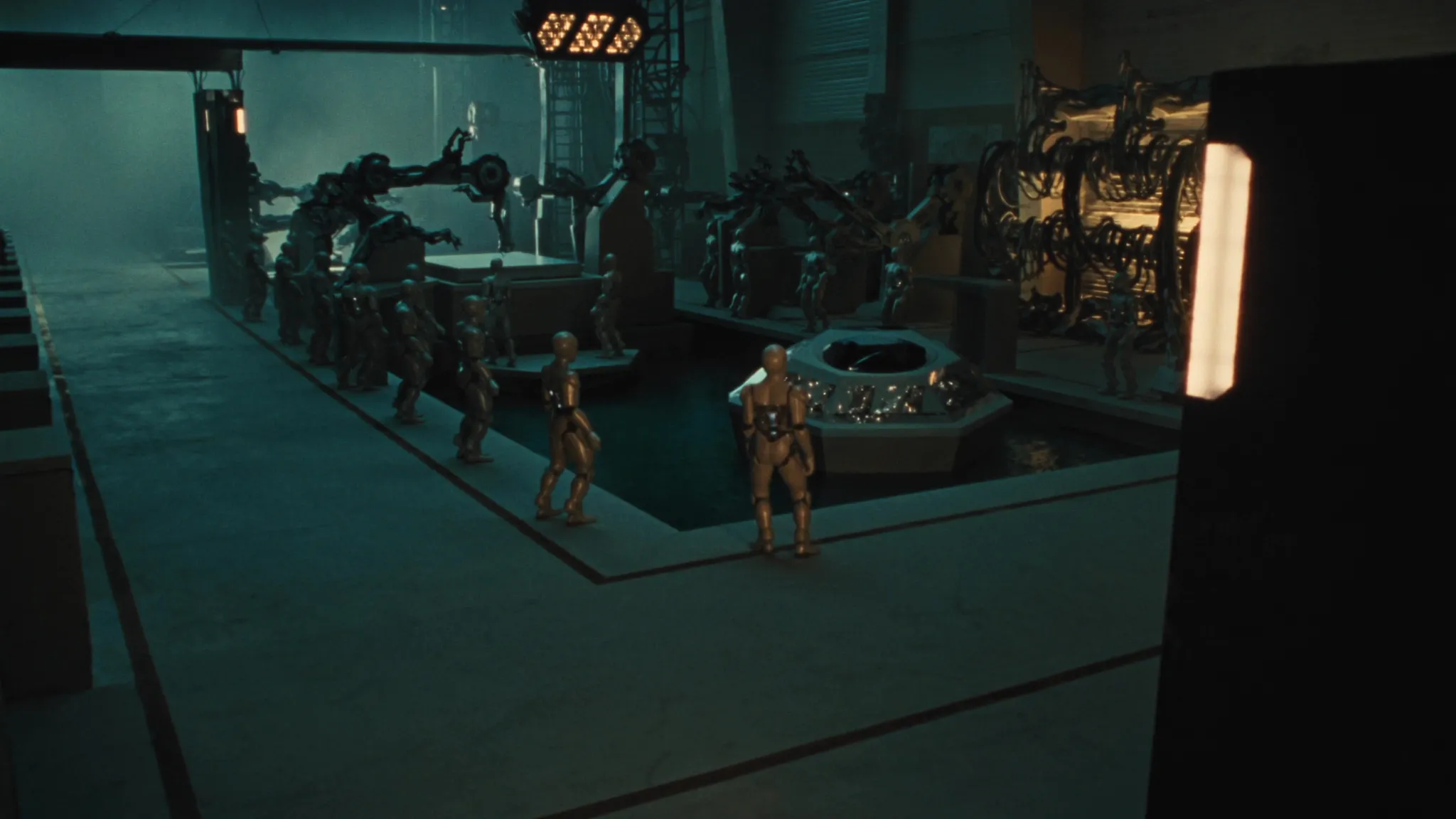
The global humanoid robot market has grown by 53.6%, from $2.8 billion in 2024 to $4.3 billion in 2025, with the manufacturing sector accounting for 47% of the total demand. According to McKinsey’s latest report, the humanoid robot market in the manufacturing sector is expected to grow at an average annual rate of 78%, reaching $34 billion by 2030. This rapid growth is driven by the unique advantages of humanoid robots, which can overcome the limitations of existing industrial robots. Unlike traditional robotic arms that can only perform repetitive tasks in fixed workspaces, humanoid robots can perform various tasks in human-like work environments and can be introduced without major overhauls to existing production lines, attracting the interest of manufacturers.
Tesla’s Optimus robot is currently the most notable example in the humanoid manufacturing robot field. As of October 2025, Optimus robots operating at the Gigafactory in Austin, Texas, are performing tasks such as battery pack assembly, quality inspection, and parts transportation, with an average work accuracy of 99.7%. Notably, these robots can work continuously for 24 hours and assemble 43% faster than human workers. Tesla plans to deploy an additional 1,000 Optimus robots by the end of 2025, with an annual operating cost of $25,000 per robot. This creates an economic effect by replacing skilled workers with an average annual wage of $60,000.
Boston Dynamics, under South Korea’s Hyundai Motor Group, is showcasing a different approach with its Atlas robots. Since September 2025, 20 Atlas robots have been in pilot operation at Hyundai’s Ulsan plant, handling complex tasks such as welding, painting, and final inspection. Atlas’s greatest strength lies in its excellent balance and mobility, excelling in precision work in confined spaces or tasks requiring movement over uneven terrain. Hyundai announced that the introduction of Atlas has reduced welding defects by 67% compared to previous levels and plans to deploy 200 Atlas robots across the entire production line by 2026. Although the introduction cost of each robot is about $150,000, higher than Tesla’s Optimus, it offers differentiated value by enabling more complex and sophisticated tasks.
Japan’s Honda launched the ‘P-Series,’ a manufacturing-specialized robot, in early 2025, leveraging humanoid robot technology accumulated through the development of ASIMO. The 50 P-Series robots operating at Honda’s Saitama plant are responsible for engine assembly and quality control tasks, particularly excelling in quality inspections through fine vibration detection and noise analysis, outperforming humans. Honda announced that the P-Series robots improved engine defect detection rates by 89% compared to previous levels and plans to offer robot leasing services to external manufacturers starting in the second half of 2025. The monthly lease cost is set at $3,500 per robot, providing an opportunity for small and medium-sized manufacturers to adopt humanoid robots with relatively little burden.
Technological Innovation and Performance Improvement
The rapid development of humanoid manufacturing robots in 2025 is attributed to simultaneous innovations in several key technologies. The most notable advancement is the improvement in AI-based real-time learning capabilities. Through simulation technology using NVIDIA’s latest Omniverse platform, humanoid robots can repeatedly learn millions of tasks in virtual environments before being deployed in actual work environments. For Tesla’s Optimus, the time required to learn new tasks has been reduced from an average of 72 hours in 2024 to 8 hours in 2025. This means manufacturers can quickly retrain robots when changing production lines or introducing new products.
Advancements in sensor technology have also been a key factor in enabling the application of humanoid robots in manufacturing. Currently, the latest humanoid robots are equipped with an average of 47 sensors, allowing them to recognize and manipulate objects with millimeter-level precision. Boston Dynamics’ Atlas can detect minute force changes of 0.1 Newton through its haptic feedback system, demonstrating stable performance in assembling fragile components or precision electronics. Additionally, with the development of computer vision technology, robots maintain an object recognition rate of over 99% even in real factory environments with lighting changes, dust, and contaminants.
Significant progress has also been made in battery technology and energy efficiency. As of 2025, the continuous operation time of major humanoid robots averages 16-20 hours, and with fast-charging technology, they can work for 8 hours with a 30-minute charge. Tesla, in particular, has improved the energy density of Optimus by 34% compared to previous levels using its 4680 battery cells, significantly enhancing the robot’s operational sustainability and economic efficiency. Hyundai’s Atlas has introduced an innovative technology that extends battery life by 15% by recovering energy generated from movements through a regenerative energy system during operation.
Safety and human-robot collaboration technologies have also emerged as key factors for manufacturing adoption. The latest humanoid robots comply with ISO 10218 and ISO/TS 15066 safety standards and are equipped with multiple safety systems to minimize collision risks with human workers. Honda’s P-Series implements a safety system that predicts human worker movements through 360-degree LiDAR sensors and AI predictive algorithms, stopping motion within 0.2 seconds if a collision risk is detected. These technological advances are creating environments where humanoid robots can work alongside humans, moving beyond isolated workspaces.
Market Dynamics and Competitive Landscape
The competitive landscape of the humanoid manufacturing robot market has undergone rapid changes in 2025. Traditional industrial robot manufacturers like ABB, KUKA, and Yaskawa are actively investing in humanoid robot development, intensifying competition with existing technology companies. Swiss company ABB invested $2.5 billion in the first half of 2025 to establish a dedicated humanoid robot division and unveiled the ‘ABB-H1’ prototype, aiming for commercialization in 2026. ABB’s strength lies in its accumulated manufacturing know-how and global service network in the existing industrial robot market, seeking to secure a competitive edge in maintenance and technical support services for humanoid robots.
The rapid pursuit by Chinese companies is also a noteworthy change. China’s UBTech has officially entered the manufacturing market with the latest model of its Walker series in 2025 and is currently conducting pilot projects with 15 automotive and electronics manufacturers in China. UBTech’s price competitiveness is significant, with the Walker robot priced at $80,000, half the price of Tesla’s Optimus. Although the technological completeness still lags behind Western companies, UBTech is pushing for rapid technological development and market expansion based on the Chinese government’s ‘Made in China 2025’ policy support and a large domestic market.
Korean companies are also increasing their presence in the market through unique positioning. Samsung Electronics introduced the ‘S-Bot,’ a humanoid robot specialized for semiconductor manufacturing, in a pilot at its Pyeongtaek line in the second half of 2025. The S-Bot is optimized for precision work in cleanroom environments, showing excellent performance in wafer handling and inspection equipment operation. Samsung announced that the introduction of S-Bot reduced wafer defect rates by 23% and plans to supply robot solutions to global semiconductor manufacturers starting in 2026. Considering the high entry barriers and expertise of semiconductor manufacturing, Samsung’s strategy is expected to establish a differentiated market position that competitors cannot easily replicate.
Investment and mergers and acquisitions (M&A) activities are also actively underway. In the first half of 2025, venture capital investment related to humanoid robots totaled $8.7 billion, a 156% increase compared to the same period last year. Investment is particularly focused on humanoid robot startups specialized in manufacturing, with U.S. company Agility Robotics raising $350 million in a Series C round, valuing the company at $2.5 billion. The company’s Digit robot is in pilot operation at Amazon and FedEx warehouses, with plans to enter the manufacturing market in 2026. Meanwhile, German industrial robot specialist KUKA acquired a 15% stake in U.S. humanoid robot startup Figure AI for $200 million in October 2025, strengthening technological collaboration.
In terms of market segmentation, the automotive manufacturing industry remains the largest demand source. In 2025, the automotive industry accounts for 34% of the humanoid robot market, followed by electronics manufacturing (28%), aerospace (18%), and metalworking (12%). The high utilization of humanoid robots in automotive manufacturing is due to complex assembly processes and the trend of small-batch production. In particular, in new processes such as electric vehicle battery pack assembly, the flexibility of humanoid robots offers greater advantages than traditional industrial robots. Ford Motor Company plans to introduce 100 humanoid robots at its Dearborn plant in Michigan by the end of 2025, expecting to improve the production efficiency of the F-150 Lightning electric truck by 20%.
Distinct regional characteristics are also evident in the global market. The North American market focuses on technological innovation and high-value-added products, while the Asia-Pacific region emphasizes mass production and cost efficiency. Europe, with its strict safety regulations and quality standards, is relatively cautious about adopting humanoid robots. However, demand for high-quality robots is increasing among precision manufacturers in Germany and Switzerland. In particular, humanoid robots are being highlighted as a key element in smart factory construction projects linked to Germany’s Industry 4.0 policy, with the German government allocating 30% of its manufacturing digital transformation support budget to the adoption of robotic technology in 2025.
The future outlook for the humanoid manufacturing robot market is very bright, but several challenges also exist. The biggest challenge remains the high initial adoption cost. Currently, the price of high-performance humanoid robots ranges from $100,000 to $200,000 per unit, making it difficult for small and medium-sized manufacturers to access them easily. However, it is expected that prices will fall to half of the current level by around 2028 through increased production and technological standardization. Additionally, the retraining of existing workers and the issue of job transitions are emerging as important social issues, requiring systematic response measures at the government and corporate levels. Nevertheless, the productivity improvements and quality enhancements that humanoid robots bring to manufacturing are considered by industry experts to be significant enough to offset these challenges.
This analysis is intended for general informational purposes and is not investment advice or a recommendation. Investment decisions should be made at one’s own discretion and responsibility.
