Collaborative Robots Reshape Korean Manufacturing: Rapid Growth of the Cobot Market and Industrial Innovation
 Editor
Explosive Growth of the Cobot Market and South Korea’s Emergence
As of December 2025, the collaborative robot (cobot) industry is experiencing unprecedented growth, reshaping the global manufacturing landscape. According to the latest report by the International Federation of Robotics (IFR), the global cobot market is expected to reach $21 billion by 2025, a 35% increase from the previous year. Notably, South Korea is positioning itself as a key driver of this growth. The Korean cobot market is estimated to be around $1.8 billion by 2025, with an impressive annual growth rate of 42%.
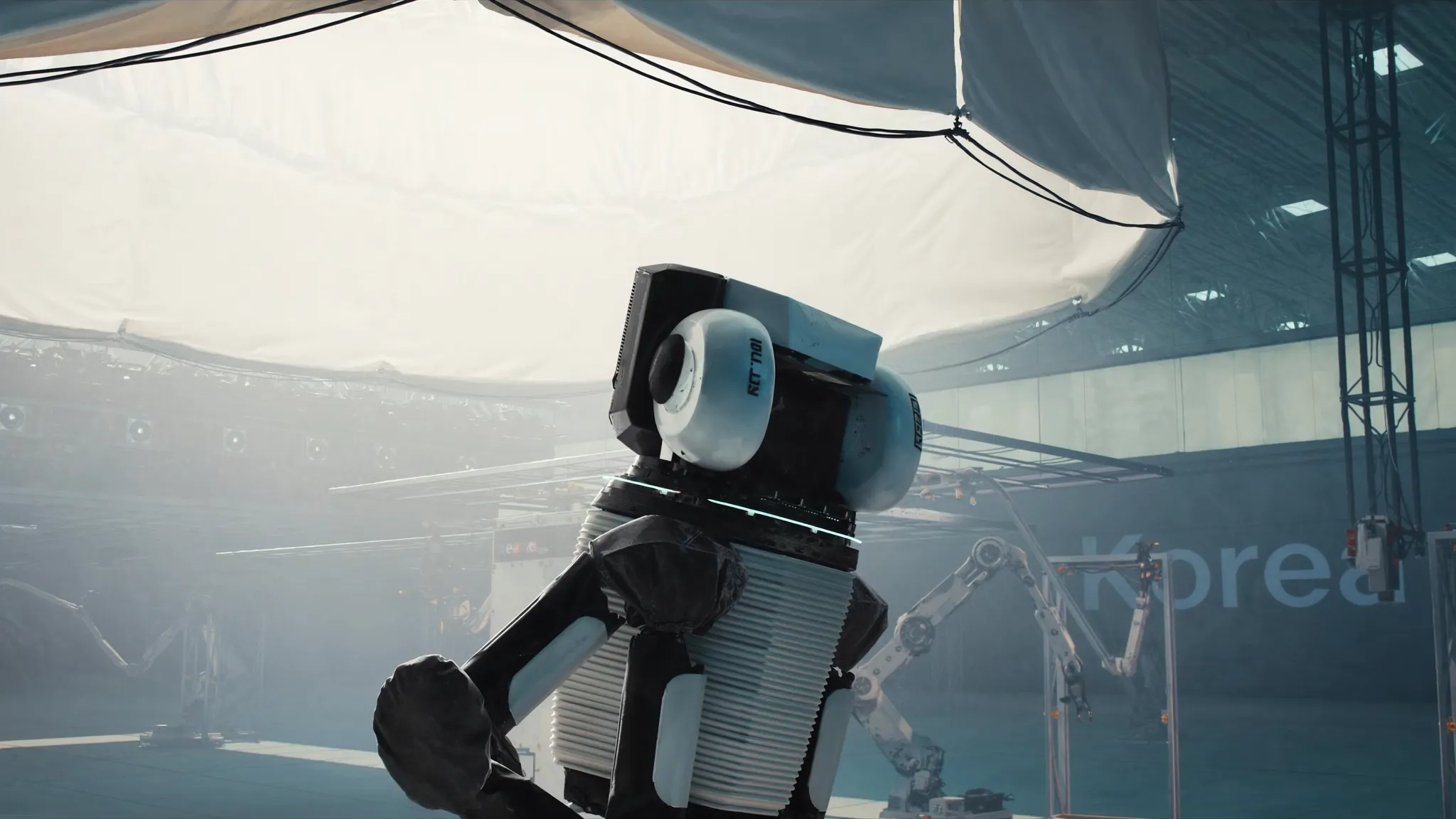
The background of this growth lies in the innovative characteristics of cobots that overcome the limitations of traditional industrial robots. While conventional industrial robots operated only in isolated environments with safety fences, cobots are designed to collaborate in the same space as humans, opening up entirely new possibilities for manufacturers. Since Universal Robots, headquartered in Odense, Denmark, launched the first commercial cobot in 2008, the market has continuously expanded, with Korean companies like Doosan Robotics and Hyundai Robotics fiercely competing for leadership in the global arena.
The greatest innovation of cobots is the simplification of programming. Traditional industrial robots required complex coding knowledge, but today’s cobots can be programmed through intuitive touch interfaces or even physical guidance. For example, Doosan Robotics’ M series offers a “hand guiding” feature that allows operators to directly move the robot arm to teach it movements without a “teaching pendant.” This ease of use has significantly lowered the threshold for SMEs to enter automation, with 70% of cobot-adopting companies in Korea being SMEs with fewer than 50 employees.
In terms of safety, cobots have achieved revolutionary advancements. Current cobots comply with ISO 10218 and ISO/TS 15066 safety standards, minimizing collision risks with humans through multiple safety sensors and real-time monitoring systems. Hyundai Robotics’ Hi6 series, for instance, is designed to stop within 0.1 seconds upon unexpected contact, faster than the human reflex time of 0.15 seconds. These advancements in safety technology have made human-cobot collaboration a realistic option, maintaining an accident rate 85% lower than that of traditional industrial robots in actual work environments.
Global Competitiveness and Market Share Expansion of Korean Companies
Korean cobot companies are rapidly expanding their presence in the global market. Notably, Doosan Robotics held a 12.8% market share in the global cobot market as of the third quarter of 2025, ranking third behind Universal Robots (28.5%) and KUKA Mobile, a subsidiary of Germany’s KUKA (15.2%). Doosan Robotics achieved this in just six years since entering the cobot business in 2019, with projected revenue for 2025 expected to increase by 68% year-on-year to 420 billion won.
Hyundai Robotics is also showing remarkable growth. Established based on Hyundai Motor Group’s automation technology, the company secured a 7.3% market share in the global cobot market in 2025, ranking fifth. Hyundai Robotics demonstrates competitive advantages in precision and durability, drawing from its experience in the automotive industry. Its flagship product, the Hi6-10 model, handles a payload of 10kg while achieving a repeat precision of ±0.03mm, a 67% improvement over the ±0.05mm precision of Denmark’s Universal Robots’ UR10e model.
One of the success factors for Korean companies is price competitiveness. Doosan Robotics’ M0609 model is sold for approximately $25,000, while a similar specification UR5e from Universal Robots is priced at $35,000, representing a 29% price advantage. However, Korean companies focus more on differentiation through technological innovation than mere price competition. For example, Doosan Robotics introduced the “vision-based autonomous operation” feature in its E series launched at the end of 2024, enabling robots to recognize work environments and perform tasks autonomously through cameras without a separate vision system.
In the global competitive landscape, traditional industrial robot giants like Switzerland’s ABB and Japan’s FANUC are also actively entering the cobot market. ABB’s GoFa and SWIFTI series handle payloads of 5kg and 4kg, respectively, with SWIFTI particularly specialized in high-speed pick-and-place operations due to its delta robot structure. FANUC’s CRX series emphasizes compatibility with existing FANUC robots, encouraging existing customers to transition to cobots. However, while these companies’ cobot sales account for only 15-20% of their total robot sales, Korean companies like Doosan Robotics and Hyundai Robotics are focusing on cobots, demonstrating faster innovation and market responsiveness.
According to the latest report by market research firm ABI Research, competition in the cobot market is expanding beyond hardware to software and services. Universal Robots offers a platform through its UR+ ecosystem, allowing third-party developers to create various applications, with over 400 certified products currently registered. Korean companies are responding to this. Doosan Robotics provides a simulation and programming platform called “Doosan Robotics Studio,” while Hyundai Robotics offers “Hi6 Connect” services for remote monitoring and predictive maintenance.
Industry Applications and Business Model Innovation
Examining actual applications of cobots reveals the extensive impact they have. Automotive parts manufacturer Daechang Solution Co., Ltd. automated its engine parts assembly process by adopting 12 units of Doosan Robotics’ M1013 model in 2024. As a result of this project, productivity improved by 35%, and defect rates decreased by 68%. Notably, the payback period was 14 months, half the average payback period of 28 months for traditional industrial robots. This is due to the low adoption cost and rapid deployment of cobots.
The use of cobots is also surging in the electronics manufacturing sector. TMC Co., Ltd., a partner of Samsung Electronics, utilizes Hyundai Robotics’ Hi6-6 model for assembling smartphone camera modules. This cobot can assemble precise components at a 0.01mm level and has increased production by 45% through continuous 24-hour operation. More importantly, it prevents musculoskeletal disorders caused by repetitive tasks, allowing skilled workers to transition to higher value-added tasks.
The food industry is also seeing notable achievements with cobot utilization. Paris Baguette Co., Ltd., a leading Korean bakery company, automated its cake decoration work by adopting Doosan Robotics’ A0912 model from the first half of 2025. This cobot features special coatings that meet food safety standards and has IP65-rated dust and water resistance. As a result of its adoption, the consistency of decoration work significantly improved, and work time was reduced by 40%. It also enabled flexible responses to surging orders during peak seasons like Christmas and Valentine’s Day.
The use of cobots is expanding in the medical and bio industries as well. Mediana Co., Ltd., a leading Korean medical device manufacturer, adopted Hyundai Robotics’ cobots in its ventilator assembly line. The cobots handle precise sensor assembly and airtightness testing, meeting the stringent quality control standards required for medical device manufacturing. This allowed the company to maintain consistent product quality while responding to the increased demand for medical devices following the COVID-19 pandemic.
The role of cobots is also expanding in logistics and warehouse automation. In the logistics center of the online retailer Coupang, Doosan Robotics’ cobots assist with product picking and packing tasks. Combined with the “Goods-to-Person” system, the cobots deliver products to workers and sort packaged products. This increased the processing capacity of the logistics center by 30% and reduced workers’ walking distances by 60%.
These various application cases demonstrate that cobots do not simply replace humans but collaborate with them to improve overall productivity and work environments. According to a survey by the Korea Institute for Advancement of Technology, 85% of companies that adopted cobots cited “improved worker satisfaction” as a major achievement. This is because cobots perform dangerous or repetitive tasks, allowing workers to focus on more creative and value-added work.
Another change brought by the adoption of cobots is the acceleration of the “reshoring” trend in manufacturing. Production processes that had been relocated overseas due to high labor costs are returning domestically with the adoption of cobots. In fact, Hansae Co., Ltd., a mid-sized Korean apparel company, relocated its high-end suit sewing process from Vietnam to Korea using cobots. By establishing an automated sewing system combining Hyundai Robotics’ cobots and AI vision systems, production costs were reduced by 15% compared to overseas production, and delivery times were drastically shortened from two weeks to three days. This demonstrates that cobots are being utilized not only as tools for productivity improvement but also as means to enhance the global competitiveness of manufacturing.
Looking at the future prospects of the cobot market, the integration of AI and machine learning technologies is expected to be a key driver. Next-generation cobots currently under development will not only perform pre-programmed tasks but also have the ability to recognize work environments and learn optimal work methods autonomously. Doosan Robotics announced plans to equip its next-generation models, slated for release in 2026, with NVIDIA’s Jetson Orin chip to implement real-time AI inference capabilities. This is expected to enable cobots to autonomously respond to unexpected situations that arise during work.
The growth of the cobot market signifies a fundamental shift in the manufacturing paradigm beyond mere technological advancement. The new work method of human-robot collaboration is establishing itself as an innovative solution that can simultaneously achieve productivity improvement and work environment enhancement, with Korean companies at the forefront of this change, promising an advantage in future global manufacturing competition.
From an investor’s perspective, the stock prices of cobot-related companies have been strong in 2025. Doosan Robotics’ stock price rose by 127% compared to the beginning of the year, while Hyundai Robotics also recorded an 89% increase. This indicates that the market highly values the growth potential of the cobot industry. In a recent report, global investment bank Goldman Sachs stated, “The cobot market is expected to maintain an average annual growth rate of 28% over the next five years,” and noted, “The technological competitiveness and market expansion strategies of Korean companies are noteworthy.” This positive outlook suggests that cobots are no longer a niche market but are becoming mainstream automation solutions, indicating the potential for continued growth of related companies.
