The Hidden Force of the Tech Industry in 2025: Next-Generation Growth Engine Driven by Semiconductor Packaging and Advanced Material Innovation
 Editor
The Battlefield of Invisible Innovation: The Rise of Advanced Packaging and Material Technology
In the global tech industry of 2025, the most notable fields are generative AI and electric vehicles, but behind these innovations lies more fundamental technological progress. The advanced semiconductor packaging market has grown to $45 billion this year, an 18.5% increase from the previous year, while the special chemical materials market has reached $38 billion, showing a growth rate of 15.2%. This is noteworthy not merely as a growth in the component industry but as a key driver in overcoming the physical limits of the next-generation tech ecosystem.
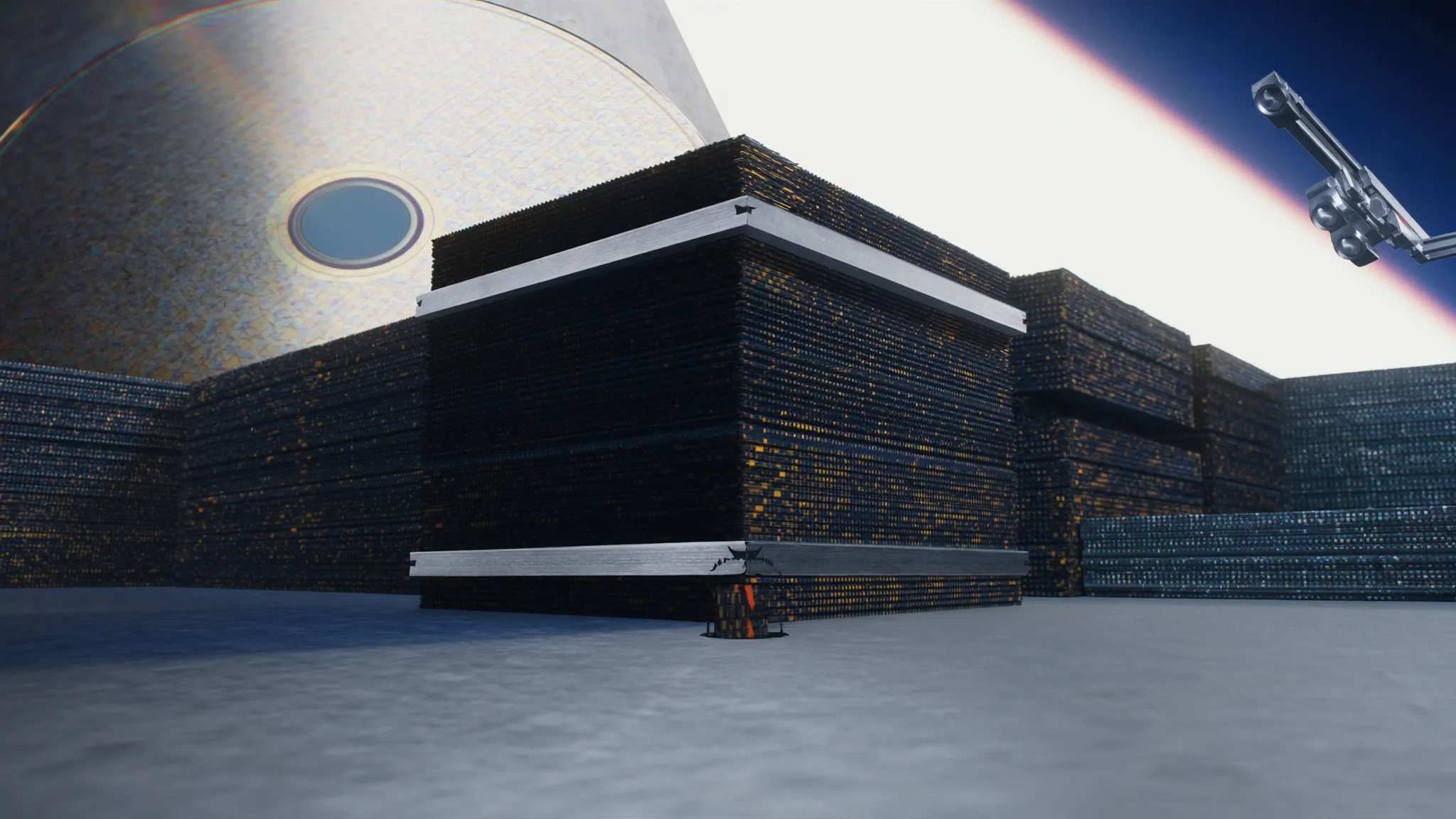
Particularly, Korean companies have established a unique competitive edge in this field. As of the third quarter of this year, Samsung Electronics holds a 50% global market share in the high-bandwidth memory (HBM) packaging sector, while SK Hynix has secured a 35% share with its HBM3E products. This is the result of advanced packaging technology that integrates AI chips and memory into a single package, beyond mere memory manufacturing. Samsung Electronics is projected to record approximately $18 billion in revenue from its advanced packaging division alone this year, accounting for 28% of its total semiconductor sales.
The background of this growth lies in the need to overcome the physical limitations of AI semiconductors. NVIDIA’s H100 GPU includes 81.4 billion transistors, and to operate it efficiently, a 3D stacked structure beyond traditional 2D packaging is essential. Taiwan Semiconductor Manufacturing Company (TSMC) has invested $12 billion this year in CoWoS (Chip-on-Wafer-on-Substrate) packaging technology to meet this demand. This technology integrates memory and processors onto a single substrate, achieving a 40% improvement in data transfer speed while reducing power consumption by 25%.
In the chemical materials sector, more detailed innovations are underway. LG Chem has maintained its number one position with a 23% global market share in the high-purity lithium compound market for electric vehicle batteries this year. In particular, it holds a dominant 35% market share in the ultra-high nickel cathode material sector with over 90% nickel content. This is the result of crystal structure control technology at the nano level, beyond simple chemical manufacturing. LG Chem’s NCMA (Nickel-Cobalt-Manganese-Aluminum) cathode material has improved energy density by 15% compared to existing materials while significantly enhancing thermal stability.
In the market for special chemicals for semiconductor manufacturing, Korea’s Soulbrain is gaining attention. The company recorded an 8.5% global market share in the semiconductor cleaning chemicals sector this year, competing with traditional Japanese giants. Soulbrain’s core technology is the manufacturing of ultra-high purity chemicals used in processes below 3 nanometers, capable of reducing impurity concentrations to parts per trillion (ppt) levels. This is essential technology for next-generation AI chip manufacturing, driving Soulbrain’s related revenue to increase by 45% year-on-year to $1.8 billion this year.
Changing Market Dynamics: Supply Chain Reorganization and Technological Sovereignty Competition
The biggest change in this field as of 2025 is the localization of supply chains and the competition to secure technological sovereignty. The United States is investing $26 billion in its domestic advanced packaging industry through the CHIPS Act, with 40% or $10.4 billion allocated for building packaging-specific facilities. Intel is constructing a $20 billion advanced packaging facility in Ohio, aiming for operation by 2026. This facility is expected to package 1 billion AI chips annually, potentially altering the current Asia-centric packaging production structure.
China is also focusing on the packaging sector to improve its semiconductor self-sufficiency rate. The Chinese government has invested $18 billion in the packaging sector through the National Integrated Circuit Industry Investment Fund this year, accounting for 35% of total semiconductor investment. Jiangsu Changjiang Electronics Technology (JCET) recorded $5.5 billion in revenue this year, growing into the world’s third-largest packaging company. The company shows unique competitiveness in RF packaging for 5G communication and sensor packaging for automobiles, particularly developing automotive packaging technology that operates in extreme temperatures from -40°C to 150°C.
Japan is striving to reestablish its position as a traditional material powerhouse. The Japanese government has invested $8.5 billion in the ‘Next-Generation Semiconductor Material Development Project’ this year, which will continue for a decade. Companies like Shin-Etsu Chemical and JSR Corporation still maintain over 80% market share in the photoresist sector for extreme ultraviolet (EUV) lithography. Japanese companies hold a unique position in developing photoresists for next-generation 1.4nm processes, which are evaluated as key technologies for future semiconductor miniaturization.
Korea occupies a unique position in this global competitive landscape. Samsung Electronics and SK Hynix are internalizing packaging technology based on their overwhelming dominance in the memory semiconductor sector, while chemical companies like LG Chem are demonstrating global leadership in the battery materials sector. Particularly, Korea is establishing itself as a key supply chain hub in the AI and electric vehicle era, based on its technological superiority in the two core fields of memory and batteries. This year, Korea’s exports in the advanced materials and packaging sector increased by 22% year-on-year to $68 billion, accounting for 11% of total exports.
From a technological perspective, the biggest challenge in the industry is overcoming the limits of Moore’s Law. As the improvement of two-dimensional integration reaches physical limits, three-dimensional stacking and heterogeneous material combinations are emerging as key technologies. Samsung Electronics’ X-Cube technology achieves four times the capacity by vertically stacking eight layers of memory, while also improving power efficiency by 30%. This technology requires the application of new physical principles beyond simple manufacturing process improvements.
Above Semiconductor is aligning with these trends by focusing on Fan-Out Wafer Level Package (FOWLP) technology. This technology aims to perform packaging directly at the wafer level, reducing size by 30% while improving performance by 20%. Above Semiconductor commercialized this technology this year, achieving $1.2 billion in revenue, particularly strong in the mobile AP and 5G communication chip packaging sectors. This showcases the expansion of the Korean packaging industry beyond memory-centric areas into various semiconductor fields.
In the materials sector, Samsung SDI has made significant progress in developing solid electrolytes for all-solid-state batteries. The sulfide-based solid electrolyte developed by the company shows ten times higher ionic conductivity than existing liquid electrolytes, while maintaining stable performance even at -30°C. Samsung SDI aims to commercialize all-solid-state batteries by 2027 based on this technology, which is expected to be a game-changer in the electric vehicle battery market. All-solid-state batteries can improve energy density by 40% while reducing charging time to one-tenth, potentially overcoming the last barrier to the popularization of electric vehicles.
Future Outlook and Investment Opportunities: Discovering Hidden Value
Looking at the market outlook until 2026, the advanced packaging market is expected to expand at an average annual growth rate of 16.8%, reaching $65 billion. Of this, AI-related packaging is projected to account for 40%, or $26 billion, while automotive semiconductor packaging is expected to record 25%, or $16.2 billion. The special chemical materials market is also expected to grow at an average annual growth rate of 13.5%, reaching $52 billion by 2026. This growth reflects not just market expansion but structural changes in the technological ecosystem.
From an investment perspective, companies in this field are relatively undervalued yet possess high growth potential. Samsung Electronics, for instance, has a current price-to-earnings ratio (PER) of 12.5, lower than the global semiconductor average of 18.2, but its operating profit margin in the advanced packaging division is 25%, significantly higher than the overall average of 15%. SK Hynix also saw its operating profit increase by 180% year-on-year due to the rapid growth of its HBM business, yet its stock price has not fully reflected this performance improvement.
In the case of LG Chem, the battery materials business accounts for 45% of total sales, providing a stable growth driver. Particularly, the high-purity lithium foil business for next-generation lithium-metal batteries recorded $1.8 billion in sales this year, growing 65% year-on-year. This product can improve energy density by 50% compared to existing products, making it an essential material in next-generation mobility fields like electric aircraft. LG Chem aims to achieve a 40% global market share in this field by 2026 and plans to invest an additional $12 billion over the next three years to achieve this.
The growth potential of small and medium-sized specialized companies like Soulbrain is also noteworthy. The company maintains high margins based on its unique technology in the niche market of semiconductor cleaning chemicals, with an operating profit margin of 18% this year. In particular, it holds a 25% global market share in the special etching chemicals sector essential for the next-generation GAA (Gate-All-Around) structure semiconductor manufacturing. This is expected to become even more important as processes below 3 nanometers become mainstream.
Above Semiconductor occupies a unique position as a packaging specialist. The company’s revenue increased by 35% year-on-year in response to the growing packaging demand from fabless (design-specialized) semiconductor companies. Particularly in the automotive semiconductor packaging sector, it has obtained AEC-Q100 certification, allowing direct transactions with global automakers, providing a stable revenue base. Above Semiconductor plans to expand its automotive packaging revenue to $1.5 billion, three times the current level, by 2026.
However, there are several risk factors in investing in this field. First, the pace of technological change is very rapid. Current leading technologies could become obsolete within 2-3 years, necessitating continuous R&D investment. Second, there is uncertainty due to the reorganization of the global supply chain. As the US-China tech hegemony competition intensifies, the existing division of labor structure is changing, which could impact companies’ business models. Third, the high capital-intensive nature poses a barrier to entry for small and medium-sized enterprises. Advanced packaging and special material manufacturing require substantial initial investment.
Nevertheless, this field has immense long-term growth potential as it provides the physical foundation for next-generation technological innovation. All next-generation technologies, including AI, autonomous driving, 6G communication, and aerospace, rely on the advancement of these fundamental technologies. Korean companies are expected to demonstrate global leadership in this field as well, based on their technological superiority in memory semiconductors and batteries. Continuous attention and investment in this field over the next five years are expected to play a crucial role in maintaining the competitiveness of Korea’s tech industry.
