Rapid Growth of the Battery Energy Storage System (BESS) Market and Analysis of the Global Competitiveness of Korean Companies
 Editor
Explosive Growth of the BESS Market and Acceleration of Energy Transition
As of December 2025, the global Battery Energy Storage System (BESS) market is experiencing unprecedented growth. According to the latest report by Bloomberg NEF (New Energy Finance), the global BESS market size is estimated to reach $120 billion by 2025, marking a 32% increase from the previous year. Notably, utility-scale BESS installation capacity surpassed 85GWh this year, a surge of over 40% compared to 2024. This growth is driven by the rapid increase in renewable energy generation and the rising demand for grid stability.
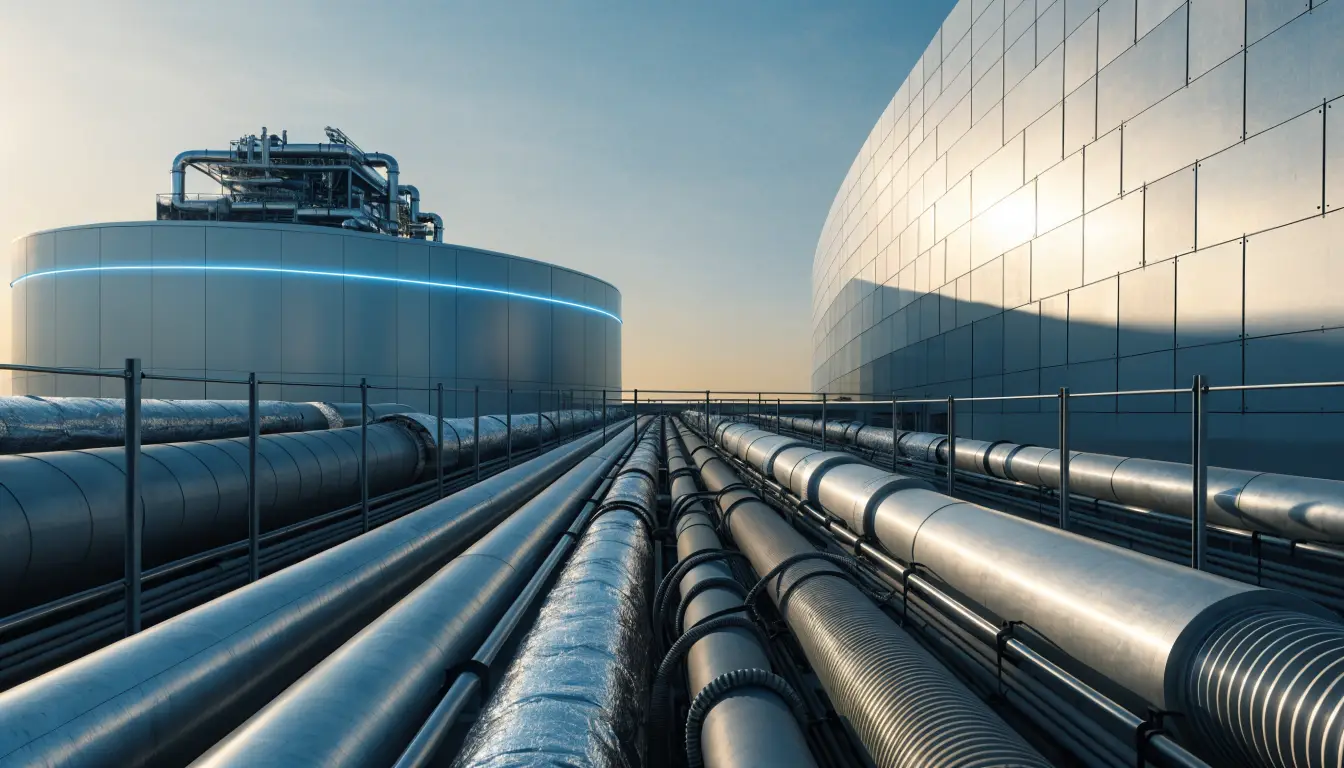
The International Energy Agency (IEA) analysis indicates that with the global share of renewable energy generation exceeding 30% by 2025, the need for energy storage solutions to address intermittent power supply issues has significantly increased. BESS plays a crucial role in complementing the variability of solar and wind power and providing frequency regulation services to the grid. In the United States, 15GWh of BESS projects were completed in the first half of 2025 alone, while China recorded annual BESS installations exceeding 40GWh, establishing itself as the largest market globally.
The Korean government is actively supporting the growth of the BESS market by setting a target to build 25GW of energy storage facilities by 2030 through the 10th Basic Plan for Electricity Supply and Demand. According to data from Korea Electric Power Corporation, the cumulative domestic ESS (Energy Storage System) installation capacity exceeded 4.2GW as of November 2025, a 28% increase from the same period last year. This reflects the impact of the Renewable Energy 3020 Implementation Plan and carbon neutrality policies, highlighting BESS as a key infrastructure in the energy transition process.
The growth of the BESS market is not limited to increased installation capacity but also extends to technological innovation and improved cost efficiency. The average price of lithium-ion battery packs fell to $139 per kWh by 2025, a decrease of over 60% compared to five years ago. This cost reduction significantly enhances the economic viability of BESS projects, attracting private investment and driving rapid growth in the commercial and industrial BESS markets.
Expansion of Global Market Share by Korean Battery Companies
Korean major battery manufacturers are demonstrating strong competitiveness in the global BESS market. Samsung SDI maintained the second position with an 18.5% market share in the global ESS battery market as of the third quarter of 2025. The ESS batteries produced at Samsung SDI’s Cheonan plant and Hungary’s Göd plant are highly regarded in the North American and European markets for their high energy density and long lifespan. The company expanded its annual ESS battery production capacity to 15GWh in 2025 and plans to increase it to 25GWh by 2026.
LG Energy Solution holds the top position in the global ESS battery market with a 22.3% market share, particularly strong in the U.S. market. Batteries produced at the Holland plant in Michigan and the Queen Creek plant in Arizona are supplied to major BESS products such as Tesla’s Megapack and Fluence Energy’s Gridstack. LG Energy Solution’s ESS division revenue for the third quarter of 2025 reached 1.28 trillion won, a 45% increase from the same period last year. The company achieved a 20% improvement in energy density while reducing costs by 10% through next-generation NCMA (Nickel-Cobalt-Manganese-Aluminum) battery technology.
SK On is expanding its presence in the ESS market. In 2025, the company began full-scale production of ESS-specific batteries at its Changzhou plant in China, securing an annual production capacity of 8GWh. SK On’s ESS batteries are particularly strong in commercial and industrial applications, and through a partnership with Hanwha Solutions, the company supplies batteries for domestic and international solar-linked ESS projects. The company’s ESS division revenue for 2025 is 650 billion won, accounting for 12% of total revenue, with expectations to expand to 20% by 2026.
Meanwhile, Chinese companies are also aggressively expanding their market presence. CATL (Contemporary Amperex Technology) maintains the top position in the global ESS battery market with a 29.1% market share, while BYD ranks third with a 16.8% share. Notably, CATL’s Tener series boasts industry-leading integration with a 5MWh capacity, capable of reducing installation costs by over 20%. BYD has significantly improved safety and lifespan by applying its Blade battery technology to ESS, with expected revenue of $12 billion in the ESS business segment for 2025.
In the U.S., Tesla occupies a unique position in the utility-scale BESS market with its Megapack product. Tesla’s Megapack 3 offers a 4MWh capacity, providing a 50% improvement in energy density over previous models, and uses its self-developed 4680 battery cells to secure cost competitiveness. Tesla’s energy storage business revenue is projected to exceed $10 billion in 2025, accounting for approximately 8% of total revenue.
Technological Innovation and Next-Generation BESS Solutions
The advancement of BESS technology is characterized by the diversification of battery chemistry and the sophistication of system integration technology. In addition to conventional lithium-ion batteries, various technologies such as sodium-ion batteries, vanadium flow batteries, and compressed air energy storage (CAES) are entering the commercialization stage. Sodium-ion batteries, in particular, are gaining attention as an alternative to address lithium resource shortages, with leading technological developments by China’s CATL and BYD. CATL’s sodium-ion battery achieves an energy density of 160Wh/kg and maintains over 90% capacity even at minus 20 degrees Celsius.
Korean companies are also actively investing in the development of next-generation battery technologies. POSCO Holdings is enhancing competitiveness across the battery supply chain by combining lithium extraction technology with cathode material production technology. POSCO Chemical expanded its high-nickel NCMA cathode production capacity to 100,000 tons annually by 2025, contributing to a 15% improvement in energy density for ESS batteries. Additionally, POSCO secures raw material supply chain stability by producing 25,000 tons of lithium annually through the Salar de Olaroz project in Argentina.
The intelligence and digitalization of BESS systems are also emerging as important trends. The introduction of AI-based battery management systems (BMS) and predictive maintenance technology significantly improves the operational efficiency and safety of BESS. Samsung SDI achieved a 20% extension in system lifespan by monitoring and optimizing battery cell imbalance in real-time through its self-developed AI-based BMS. LG Energy Solution also established a cloud-based battery monitoring platform to remotely manage the performance of global ESS projects.
The scaling up of grid-scale BESS projects is another noteworthy change. Australia’s Victoria Big Battery project, with a capacity of 450MW/1,800MWh, is one of the world’s largest lithium-ion battery storage facilities, utilizing Tesla’s Megapack. The Moss Landing BESS project in California, USA, with a capacity of 400MW/1,600MWh, can supply power to 100,000 households for four hours. These large-scale projects demonstrate the economic viability and contribution of BESS to grid stability, encouraging further investment.
In Korea, large-scale ESS projects are actively progressing. Korea Electric Power Corporation is constructing a 200MW/800MWh ESS in Jeju Island to complement the variability of wind power, marking the largest utility ESS project domestically. SK E&S installed a 100MW/200MWh commercial ESS in the Ulsan petrochemical complex, achieving peak power cost reduction and power quality improvement. This project provides an annual electricity cost reduction of 15 billion won and shortens the investment recovery period to seven years.
The growth of the BESS market is also accelerating changes in the power market structure. The expansion of BESS participation in various ancillary service markets, such as frequency regulation services, reserve provision, and peak shaving, is creating new revenue models. In the UK, BESS generates over £100,000 per MW annually in the frequency regulation service market, and in the U.S. PJM market, BESS commands high prices in the capacity market. Korea plans to expand the scope of ESS participation in the ancillary service market from the second half of 2025 to improve investment profitability.
The rapid growth of the global BESS market presents unprecedented opportunities for Korean companies, but it also brings intense competition and technological challenges. Aggressive price competition from Chinese companies and protectionist policies like the U.S. IRA (Inflation Reduction Act) are challenges that Korean companies must overcome. However, the superior technology and quality competitiveness of Korean companies, along with the demand for diversification of global supply chains, are expected to act as favorable factors in the long term. With the global BESS market projected to grow to $180 billion by 2026, the expansion of market share and technological innovation by Korean companies are anticipated to continue.
This analysis is based on publicly available industry reports and corporate disclosures and should not be interpreted as investment advice. The energy storage market can exhibit rapid volatility due to technological advancements and policy changes, so consultation with experts is recommended before investing.
