The Manufacturing Revolution of Humanoid Robots in 2026: A New Market Shaped by the Competition Between Tesla and Hyundai
 Editor
In the first week of the New Year 2026, the global manufacturing industry is experiencing the wave of change brought about by the commercialization of humanoid robots. After 18 months of experimental introduction, humanoid robots began full-scale commercial deployment in the fourth quarter of 2025, presenting a new paradigm in manufacturing automation. Notably, Tesla in Austin, Texas, and Hyundai Motor in Ulsan, South Korea, have rapidly expanded the scale of humanoid robot operations in their factories, emerging as leaders in this field.
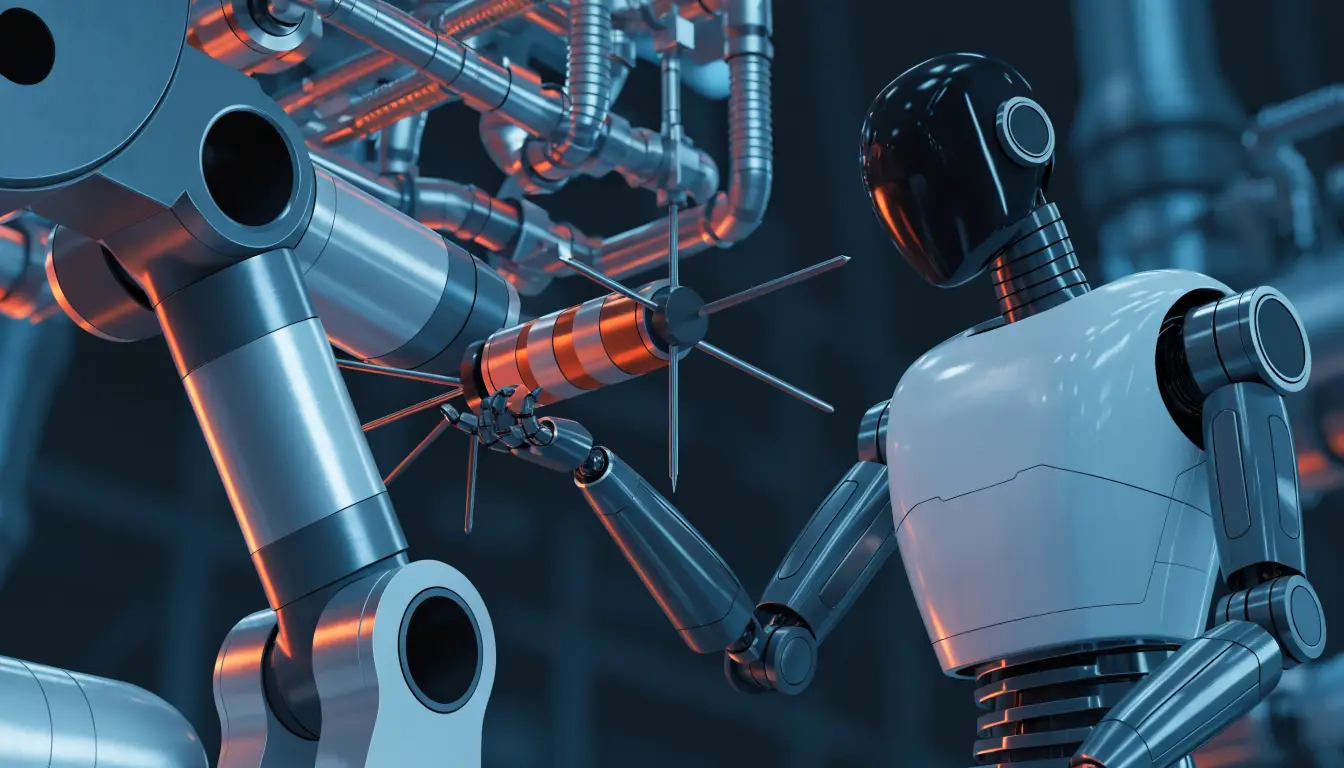
According to the latest report by Boston Consulting Group, the global humanoid robot market size reached $3.4 billion in 2025, marking a 187% growth compared to the previous year. More notably, the market size is expected to reach $6.2 billion in 2026, with the manufacturing sector accounting for 68% or $4.2 billion of the total. This rapid growth is driven by major automakers and electronics manufacturers accelerating the adoption of humanoid robots to address labor shortages and improve production efficiency.
Tesla’s Optimus robot is currently one of the most notable humanoid robots, with approximately 240 units operating at the Texas Gigafactory as of December 2025. CEO Elon Musk announced in the December 2025 performance report that “Optimus robots have shown 23% higher productivity compared to human workers on the battery pack assembly line and can operate continuously for 24 hours, achieving an overall productivity improvement of 37%.” Tesla aims to fully automate the Model Y production line by deploying an additional 1,000 Optimus robots in the first half of 2026.
Meanwhile, South Korea’s Hyundai Motor has introduced the ‘Atlas-M’, a manufacturing-specialized version of the Atlas robot, in collaboration with Boston Dynamics at its Ulsan plant. According to a Hyundai Motor official, the 80 Atlas-M units, which began operation in November 2025, have demonstrated 43% higher precision in welding and painting processes compared to existing industrial robots, particularly excelling in complex curved welding tasks. Hyundai Motor plans to introduce an additional 120 Atlas-M units in the first quarter of 2026 for the Genesis GV90 electric vehicle production line.
Technological Breakthroughs and Performance Innovations
The full-scale application of humanoid robots in manufacturing is underpinned by several key technological breakthroughs. The most important is the rapid advancement of AI vision systems. Humanoid robots equipped with NVIDIA’s latest Jetson Thor chipset can recognize and make decisions in complex 3D environments in real-time within 0.03 seconds. This is a 15-fold improvement in processing speed compared to 2024, providing a stable foundation for operations in dynamic manufacturing environments.
Advancements in battery technology are also a key factor in commercialization. The next-generation high-density battery developed by Samsung SDI allows humanoid robots to operate continuously for 16-18 hours on a single charge. This is nearly double the previous 8-10 hours, enabling practical operation in a three-shift manufacturing environment. Samsung SDI recorded $1.4 billion in sales in the humanoid robot battery sector in the fourth quarter of 2025, with expectations to increase to $2.8 billion in 2026.
The development of tactile sensor technology is also noteworthy. Honda’s successor model to ASIMO, the ‘Honda Helper’, has developed robot hands with human-level tactile sensing capabilities, showing excellent performance in precision assembly tasks. Honda has been operating 45 Honda Helper units at its Saitama plant since September 2025, reducing the defect rate in engine assembly processes from 0.08% to 0.03%, a 62% reduction. Based on these achievements, Honda plans to introduce the same system to its North American Ohio plant in 2026.
Advancements in machine learning algorithms have also significantly enhanced the adaptability of humanoid robots. Currently commercialized humanoid robots can learn new tasks within an average of 72 hours through reinforcement learning, a revolutionary improvement compared to the 2-3 weeks required for programming existing industrial robots. Tesla’s Optimus robots improve their performance by 3-5% weekly based on data collected from actual work environments, demonstrating continuous learning capabilities.
Economic Viability and Return on Investment
The rapid expansion of humanoid robots in manufacturing is primarily due to their clear economic viability. According to McKinsey & Company’s December 2025 analysis, the average cost of introducing a humanoid robot ranges from $150,000 to $250,000 per unit, with a return on investment achievable within three years. Considering the ability to operate continuously for 24 hours, the labor cost savings amount to $120,000-$180,000 per robot annually.
In Hyundai Motor’s specific case, the introduction cost of one Atlas-M robot is approximately $220,000, but it can replace three shift workers, resulting in annual labor cost savings of about $160,000. When combined with quality improvements, defect rate reduction, and minimized downtime, the total economic effect is calculated at $210,000 per robot annually. This allows for the recovery of initial investment costs in approximately 13 months.
Tesla demonstrates even more aggressive economic viability. The manufacturing cost of the self-developed Optimus robot has been reduced to around $80,000 per unit, and even including internal operating costs, the total ownership cost is only $120,000. This is 50% lower than externally purchased humanoid robots, and if Tesla begins external sales in 2026, it is expected to exert significant price pressure on the market.
The investment market is also paying attention to these changes. In 2025, venture capital investments in humanoid robot-related companies totaled $4.7 billion, a 312% increase from the previous year. Investments in manufacturing-specialized humanoid robot startups have surged, with Figure AI securing $600 million and 1X Technologies raising $400 million. This surge in investment indicates that market participants highly value the commercial potential of humanoid robots.
However, there are still challenges in economic viability. Maintenance costs for humanoid robots amount to 15-20% of the robot’s annual price, and maintenance costs are continuously rising due to a shortage of skilled technicians. Additionally, the risk of production downtime due to unexpected failures or software errors still exists. According to a recent report by ABB, the average operating rate of currently operating humanoid robots is 87%, somewhat lower than the 95% of traditional industrial robots.
As the adoption of humanoid robots in manufacturing accelerates, changes are also occurring in the global supply chain. China’s BYD introduced 150 units of its self-developed humanoid robot ‘Walker-S1’ to its Shenzhen plant in December 2025 for electric vehicle battery assembly processes. BYD has reduced battery production costs by 12% through this, and plans to introduce an additional 300 units in the first half of 2026. The proactive adoption by Chinese companies is expected to further strengthen price competitiveness in the global electric vehicle market.
The application of humanoid robots in manufacturing is also creating new business models. The ‘Robot-as-a-Service (RaaS)’ model is gaining attention, where manufacturers lease robots on a monthly basis instead of purchasing them. Boston Dynamics launched a RaaS service for Atlas-M robots at $12,000 per month starting in October 2025, with 17 manufacturers currently using this service. This model attracts interest from small and medium-sized manufacturers as it reduces the burden of initial investment while applying the latest technology.
The humanoid robot market is expected to develop into an increasingly competitive landscape. Starting in the second half of 2026, Apple plans to pilot its self-developed manufacturing humanoid robots with Chinese partners, and Amazon is considering entering manufacturing based on its success in logistics centers. Next-generation humanoid robots combined with generative AI are expected to go beyond simple repetitive tasks to creative problem-solving, potentially changing the paradigm of manufacturing itself. These changes will be both opportunities and challenges for existing manufacturers, with rapid adaptation and investment becoming key elements of competitiveness.
This analysis is not intended as investment advice, and all investment decisions should be made at the individual’s discretion and responsibility.
