The Upheaval in the Energy Storage Market by 2026: How Battery Technology Innovations are Reshaping Global Power Infrastructure
 Editor
As of January 2026, the global energy storage market is at an unprecedented turning point. According to the latest report from Bloomberg NEF, the average price of lithium-ion battery packs plummeted from $97/kWh in 2025 to $79/kWh as of January 2026, breaking the long-awaited psychological resistance level of $80. This significantly enhances the economic viability of energy storage systems (ESS), accelerating the paradigm shift in global power infrastructure. In particular, the technological innovation race led by Korea’s Samsung SDI (Seoul), LG Energy Solution (Seoul), SK Innovation (Seoul), China’s CATL (Ningde), BYD (Shenzhen), and the United States’ Tesla (Austin) is fundamentally reshaping market dynamics.
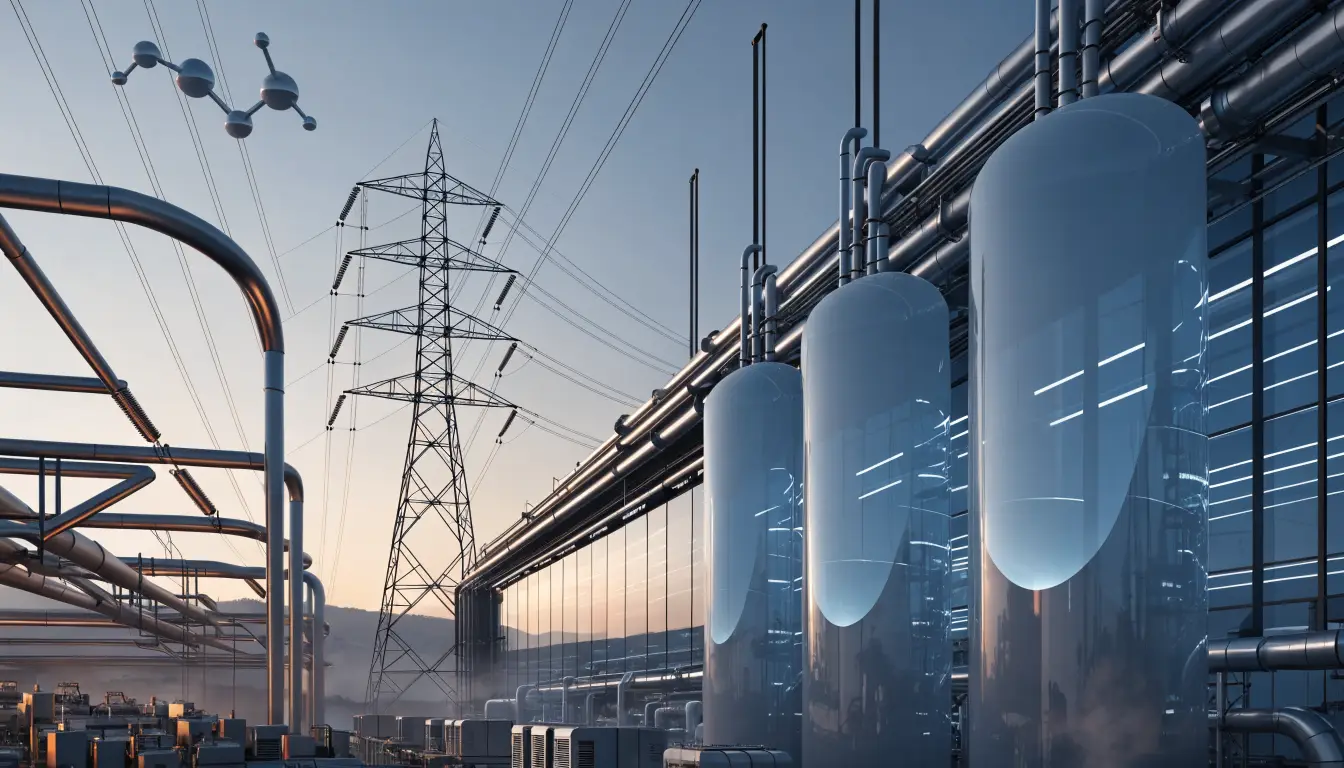
According to an analysis by Wood Mackenzie, the global ESS market size in 2026 is expected to reach $18.7 billion, a 42% increase from the previous year, with utility-scale ESS accounting for 68% of the total market at $12.7 billion. The backdrop of this rapid growth includes the demand for grid stability due to increased renewable energy generation and the remarkable advancements in battery technology. Specifically, improvements in the safety and lifespan of lithium iron phosphate (LFP) batteries and the commercialization of next-generation silicon nanowire anode technology are acting as game-changers in the ESS market.
LG Energy Solution, a leader in the Korean battery industry, announced in its Q4 2025 earnings report that its ESS division’s revenue increased by 89% year-on-year to 3.2 trillion won. This accounts for 31% of the company’s total revenue, indicating its growth as the second main business unit following electric vehicle batteries. LG Energy Solution CEO Kim Dong-myung stated, “We plan to improve energy density by 23% compared to the current level through the application of next-generation NCMA (nickel-cobalt-manganese-aluminum) batteries in ESS in the first half of 2026,” expressing a commitment to securing technological leadership.
A New Dimension in the Technological Innovation Race
The most notable advancement at the forefront of battery technology innovation is the commercialization of next-generation anode materials. At CES in January 2026, Samsung SDI unveiled its next-generation battery technology based on silicon nanowire, announcing a 35% improvement in energy density and a 60% reduction in charging time compared to existing lithium-ion batteries. This technology is set to enter mass production from the second half of 2027, initially targeting the premium ESS market. Samsung SDI CEO Jeon Young-hyun emphasized the improvement in space efficiency, stating, “The new anode material technology allows us to reduce the installation area of ESS by 30% while achieving the same storage capacity.”
China’s Contemporary Amperex Technology (CATL) is targeting the market with a different approach. In December 2025, the company announced its next-generation sodium-ion battery technology, achieving a 40% lower production cost than lithium-ion batteries. Although the energy density is at 75% of lithium-ion batteries, it offers excellent stability in extreme temperature environments and a 20% longer lifespan. CATL Chairman Zeng Yuqun stated, “Sodium-ion batteries will be a game-changer, especially in large-scale utility ESS,” and announced plans to begin full-scale mass production from the second half of 2026.
U.S.-based Tesla is attempting to differentiate itself with a unique system integration approach. The company’s Megapack 3.0 offers a storage capacity of 4MWh per unit and maximizes grid integration efficiency through its proprietary AI-based energy management software. Tesla CTO Drew Baglino stated in a recent interview, “As important as hardware performance improvement is system optimization through software,” adding, “Megapack 3.0 has improved response speed by 70% compared to existing systems, securing a competitive edge in grid frequency regulation services.”
This technological innovation race is driving the evolution of the entire ESS ecosystem beyond mere battery performance improvements. SK Innovation announced a large-scale investment in battery management system (BMS) technology in January 2026, stating that it is developing a next-generation BMS integrating AI-based predictive maintenance and real-time performance optimization functions. This system is expected to extend battery life by 15% and reduce operating costs by 25%.
Global Market Dynamics and Geopolitical Changes
The rapid growth of the ESS market is bringing significant changes to global supply chains and geopolitical dynamics. According to the International Energy Agency’s (IEA) 2026 energy transition report, while China maintains an overwhelming dominance with 76% of global lithium-ion battery production, the expansion of production capacity in Korea, Japan, Europe, and North America is accelerating. Particularly, the U.S. Inflation Reduction Act (IRA) and Europe’s Green Deal policy are encouraging domestic battery production, leading to diversification of the global supply chain.
In Korea, the combination of the government’s K-Battery Belt policy and private investment is expected to increase ESS battery production capacity by 67% year-on-year to 89GWh in 2026. The Ministry of Trade, Industry and Energy presented a goal of achieving a 35% global market share in the ESS sector by 2030 in its energy security enhancement plan announced in January 2026, promoting a total of 15 trillion won in public-private joint investment to achieve this.
In the Chinese market, BYD is gaining attention with its unique vertical integration strategy. The company produces everything from battery cells to inverters and energy management systems in-house, recording a 156% increase in ESS business revenue to 14.2 billion yuan (approximately 2.8 trillion won) in 2025 compared to the previous year. BYD Chairman Wang Chuanfu stated, “Through vertical integration, we have maximized compatibility between products and reduced overall system costs by 30%,” aiming for a 40% market share in the Chinese ESS market by 2026.
In the European market, the increase in renewable energy generation and demand for grid modernization are accelerating ESS adoption. According to data from the European Network of Transmission System Operators for Electricity (ENTSO-E), the share of renewable energy generation in Europe is expected to reach 42% of the total by 2025, leading to a surge in ESS installations to manage power supply variability. In Germany, 3.2GWh of utility-scale ESS was newly installed in 2025, an 89% increase from the previous year.
In the U.S. market, large-scale ESS projects are actively underway, particularly in Texas, California, and New York. According to the latest data from the U.S. Energy Information Administration (EIA), the total new ESS installation capacity in the U.S. in 2025 was 8.4GW/21.5GWh, a 73% increase from the previous year. In Texas, the need to strengthen grid resilience against extreme weather events is driving a surge in ESS investment. Tesla’s Megapack maintains a leading position, accounting for 34% of the entire Texas ESS market, but Korean companies are also expanding their market entry through local partnerships.
An interesting phenomenon in this global market expansion is the emergence of different technological preferences and business models in each region. Europe prioritizes safety and environmental friendliness, showing a high preference for LFP batteries, while the U.S. prioritizes performance and efficiency, favoring high energy density batteries. The Asia-Pacific region emphasizes cost efficiency while not hesitating to invest in technological innovation. These regional differences are pressuring global battery companies to develop diverse product portfolios and region-specific strategies.
One of the most notable trends entering 2026 is the convergence of ESS and electric vehicle infrastructure. With the commercialization of V2G (Vehicle-to-Grid) technology, electric vehicles can now serve as mobile ESS units. Korea Electric Power Corporation started a V2G pilot project in Jeju Island in January 2026, utilizing 10,000 electric vehicles as a virtual 100MWh ESS. If successful, this project is expected to significantly enhance grid stability without the need for separate ESS installations.
From an investment perspective, the rapid growth of the ESS market is having a significant impact on the valuation of related companies. According to a recent analysis by Goldman Sachs, the value of ESS business units in major battery companies accounts for 25-40% of the total corporate value. In particular, LG Energy Solution’s high profitability in the ESS business (operating profit margin of 18.3%) is a key driver of stock price growth. On the other hand, despite the growth of Tesla’s Megapack business, the overall stock price increase is limited due to the sluggish electric vehicle business.
For the continued growth of the ESS market, several challenges need to be addressed. First, securing the stability of the battery raw material supply chain is necessary. The price volatility of key raw materials such as lithium, nickel, and cobalt still affects the profitability of battery companies. Second, continuous technological development and regulatory adjustments for ESS fire safety are required. Third, establishing a battery recycling system is urgent. As the battery replacement period for initially installed ESS is expected to arrive around 2030, a response plan from a circular economy perspective is needed.
In conclusion, as of 2026, the ESS market is showing unprecedented growth momentum, driven by technological innovation, cost reduction, and policy support. The fierce competition among Korean, Chinese, and U.S. companies is accelerating technological advancement, which is ultimately expected to contribute to the transition to renewable energy and the modernization of power grids. Over the next 3-5 years, securing technological superiority and market share in this market will be key factors determining the long-term competitiveness of related companies. For investors, companies with system integration capabilities and software technology, beyond mere battery manufacturing capabilities, are expected to emerge as more attractive investment targets.
This analysis is based on information and market data available as of January 21, 2026, and additional due diligence and expert consultation are recommended when making investment decisions.
