The Rapid Growth of the Global Energy Storage Market by 2025 and Strategic Responses of Korean Companies
 Editor
Explosive Growth and Market Dynamics of the Energy Storage Market
The global energy storage system market is experiencing unprecedented growth in 2025. According to the latest report by Bloomberg NEF (New Energy Finance), the global ESS market size is expanding to $120 billion by 2025, marking a 35% growth compared to the previous year. This figure represents a fourfold increase from $30 billion in 2020 over five years, indicating its establishment as a key infrastructure in the era of energy transition. Particularly, utility-scale large-capacity storage systems are leading the growth, accounting for 68% of the total market, while commercial and residential ESS are also showing steady growth with shares of 22% and 10%, respectively.
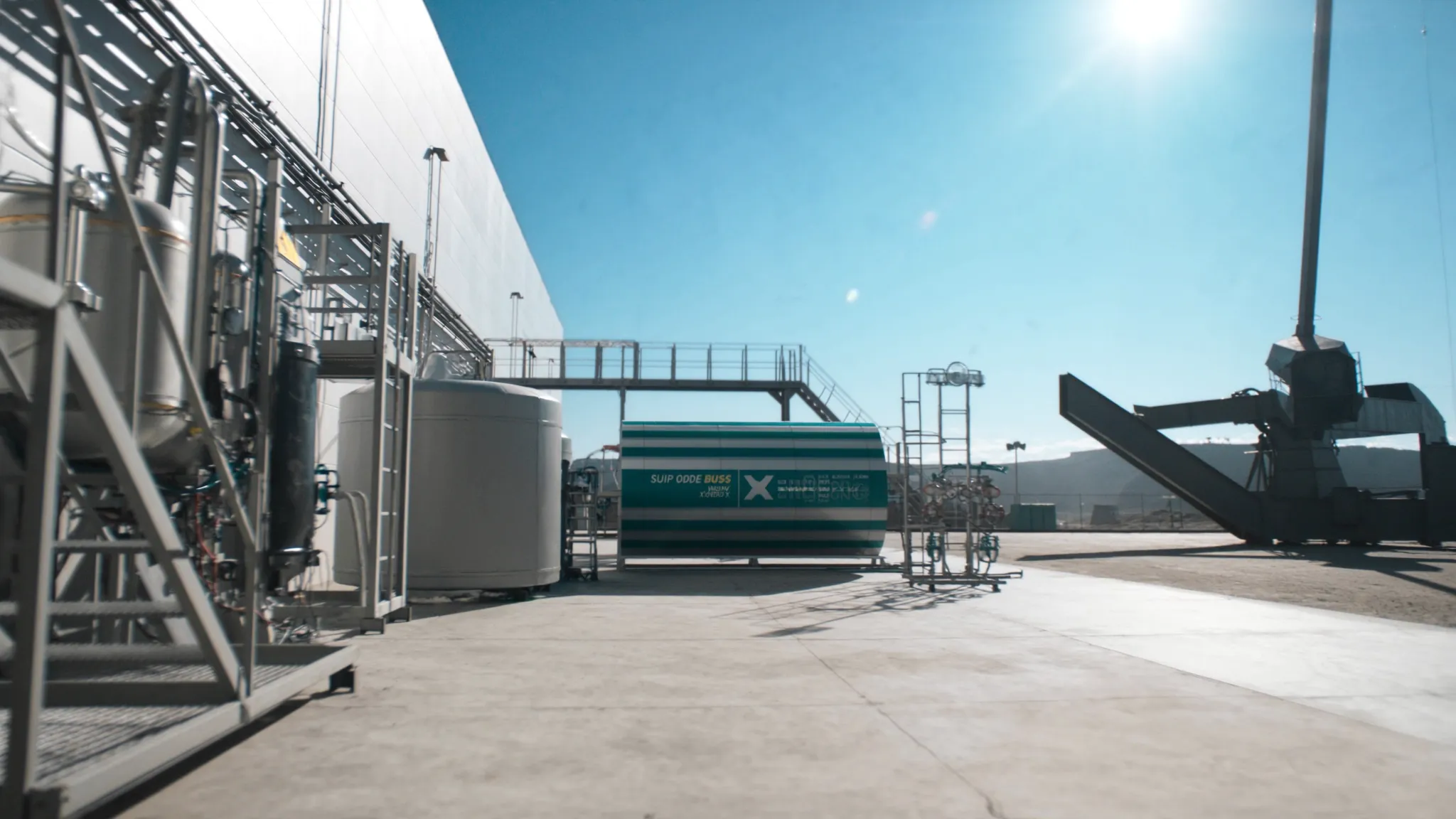
The main drivers of market growth are the increase in renewable energy generation and the expanding demand for power grid stability. According to the International Renewable Energy Agency (IRENA), the global share of renewable energy generation is expected to rise to 42% by 2025, leading to a surge in demand for storage facilities to address intermittency issues. In the U.S., new ESS projects with a capacity of 8.2 GWh commenced operations in the first quarter of 2025 alone, while China aims to install 25 GWh of new capacity within the year. The European Union plans to invest a total of €150 billion to secure 200 GW of energy storage capacity by 2030 as part of the REPowerEU plan, indicating significant potential for future market growth.
From a technological perspective, lithium-ion batteries continue to dominate the market, but the commercialization of next-generation technologies is gaining momentum. Lithium iron phosphate (LFP) batteries are expanding their share in utility-scale ESS due to their safety and cost-effectiveness, and new technologies such as sodium-ion batteries and liquid air energy storage (LAES) are entering the commercialization phase. Notably, the sodium-ion battery developed by China’s Contemporary Amperex Technology (CATL) is drawing attention with a groundbreaking cost of $60 per kWh and is set to begin mass production in the second half of 2025.
In the Korean market, the installation of ESS is accelerating in line with the government’s Korean New Deal policy and the 2050 carbon neutrality goal. As of November 2025, the cumulative domestic ESS installation capacity is 3.2 GWh, a 45% increase from the same period last year, with solar-linked ESS accounting for 60% of the total. The Ministry of Trade, Industry and Energy has set a domestic ESS installation target of 25 GWh by 2030, with a public-private joint investment of 15 trillion won to achieve this. Additionally, improvements in the electricity market system are ensuring the profitability of ESS operators and providing various revenue models such as frequency regulation services and peak reduction services.
Strategic Positioning and Global Competition of Korea’s Top Three Battery Companies
Korea’s top three battery companies, LG Energy Solution, Samsung SDI, and SK Innovation, are demonstrating strong competitiveness in the global ESS market. LG Energy Solution maintained its position as the market leader with a 23.5% share of the global ESS market as of the third quarter of 2025, particularly showing high shares in the North American and European markets. The company recorded ESS business sales of 8.2 trillion won in 2025, a 42% increase from the previous year, with an improved operating profit margin of 12.3%. The success of LG Energy Solution is attributed to its NCM (nickel-cobalt-manganese) battery technology, known for high energy density and safety, along with strategic partnerships with major system integrators like Tesla and Fluence Energy.
Samsung SDI is expanding its market share with a differentiated technology strategy. The all-solid-state battery developed by the company is targeting commercialization in 2026 and is expected to achieve a 50% improvement in energy density and a 90% reduction in charging time compared to existing lithium-ion batteries. Samsung SDI’s ESS sales in 2025 reached 4.8 trillion won, a 38% increase from the previous year, with notable achievements in the European market. The company expanded its European market share to 15.2% through large project orders with Germany’s RWE and France’s EDF. Samsung SDI is also focusing on recycling technology development, commercializing technology to recover over 95% of key materials like lithium, nickel, and cobalt from used batteries starting in 2025.
SK Innovation is pursuing an aggressive investment strategy focused on the North American market. Forty percent of the batteries produced at its Georgia plant are supplied for ESS, with a North American ESS market share of 18.7% in 2025. The company secured a stable order base by signing long-term supply contracts with major U.S. power companies such as NextEra Energy and Duke Energy. SK Innovation’s ESS sales in 2025 reached 3.5 trillion won, a 33% increase from the previous year, with an operating profit margin of 14.1% based on high profitability in the North American market.
Global competitors are also engaged in fierce market competition. China’s CATL ranks second with a 20.3% market share, driven by aggressive price competitiveness centered on LFP batteries. Notably, the company’s Qilin battery can achieve 80% fast charging within 10 minutes, significantly enhancing the operational efficiency of ESS. BYD is providing a one-stop solution from batteries to system integration based on a vertical integration strategy, achieving a market share of 15.8%. The U.S.’s Tesla is showing strength in the large-capacity utility ESS market through its Megapack product line, enhancing cost competitiveness by applying its self-developed 4680 battery cells.
The role of system integrators is also becoming increasingly important. The U.S.’s Fluence Energy leads the global ESS system integration market with sales of $3.5 billion in 2025. The company improved ESS operational efficiency by 30% through its AI-based energy management software, Mosaic, creating high added value. Germany’s Younicos (now part of Aggreko) and China’s Sungrow Power Supply are also demonstrating strong competitiveness in the European and Asian markets, respectively.
Trends in Next-Generation Technologies and Future Prospects
The core of ESS technology development lies in improving energy density, reducing costs, and ensuring safety. The energy density of currently commercialized lithium-ion batteries is at the level of 200-300 Wh/kg per kWh, but next-generation technologies aim for significantly higher performance. Solid-state batteries can achieve energy densities of over 500 Wh/kg and reduce charging times to one-tenth of the current level. Japan’s Toyota and the U.S.’s QuantumScape are leading this field, with Korean companies also actively developing related technologies. LG Energy Solution is investing 2 trillion won annually in R&D, targeting mass production of solid-state batteries by 2027.
Sodium-ion batteries are bringing revolutionary changes in terms of raw material costs. While lithium prices are around $70,000 per ton, sodium is priced at about $300 per ton, over 200 times cheaper. CATL’s sodium-ion battery has already achieved a cost of $60 per kWh, with expectations to lower it to $50 by 2027. This is less than half the cost of lithium-ion batteries ($120-150 per kWh), expected to play a decisive role in the widespread adoption of ESS. China’s HiNa Battery and the UK’s Faradion are emerging as key players in this field, with Korean companies also accelerating related technology development.
New technologies for long-duration energy storage are also gaining attention. Liquid air energy storage (LAES) involves cooling air to -196°C to store it in liquid form and then vaporizing it to drive a turbine to generate electricity, allowing for storage durations of 8-12 hours. The UK’s Highview Power is leading this field, having started operating a 50 MW commercial plant in Manchester in 2025. Compressed air energy storage (CAES) follows a similar concept, with Germany’s Hydrostor and Canada’s LightSail Energy developing related technologies. These long-duration storage technologies are attracting attention for their ability to address seasonal variability issues in renewable energy at low costs of $50-80 per kWh.
The intelligence of grid-scale ESS is also an important trend. Predictive algorithms using AI and machine learning technologies accurately forecast power demand and renewable energy generation, significantly enhancing ESS operational efficiency. Google’s DeepMind developed an AI system that optimizes ESS charging and discharging plans by predicting wind power generation 36 hours in advance, improving profitability by over 20%. In Korea, Korea Electric Power Corporation has introduced an AI-based ESS operation system, increasing the accuracy of frequency regulation services to over 95%. These intelligent technologies enhance the added value of ESS and enable the creation of new business models.
The future outlook for the global ESS market is very bright. The International Energy Agency (IEA) predicts that the global ESS market size will expand to $350 billion by 2030, corresponding to an average annual growth rate of 25%. The increase in demand in developing countries is expected to be a major growth driver. India aims to install 100 GWh of ESS by 2030, and demand for ESS for off-grid power supply is rapidly increasing in Africa. Korean companies are evaluated to be able to actively leverage these global growth opportunities based on their technological prowess and quality. However, they need to carefully manage risk factors such as aggressive price competition from Chinese companies and instability in raw material supply chains.
This analysis is based on publicly available market data and industry reports, and additional expert consultation and risk assessment are necessary for investment decisions.
