Energy Realism vs. Carbon Neutrality: Which Path Should South Korea Choose?
 Editor
Recently, at ADIPEC 2025 held in Abu Dhabi, Qatar’s Minister of Energy, Saad Sherida Al-Kaabi, made a bombshell statement that is shaking the global energy industry. His blunt remark, “I do not believe net-zero emissions are achievable,” goes beyond a personal opinion and is being interpreted as a representative stance of ‘energy realism’ shared by oil-producing countries. This presents a new dilemma for South Korea, which has a 95% dependency on energy imports and a manufacturing-centered economic structure.
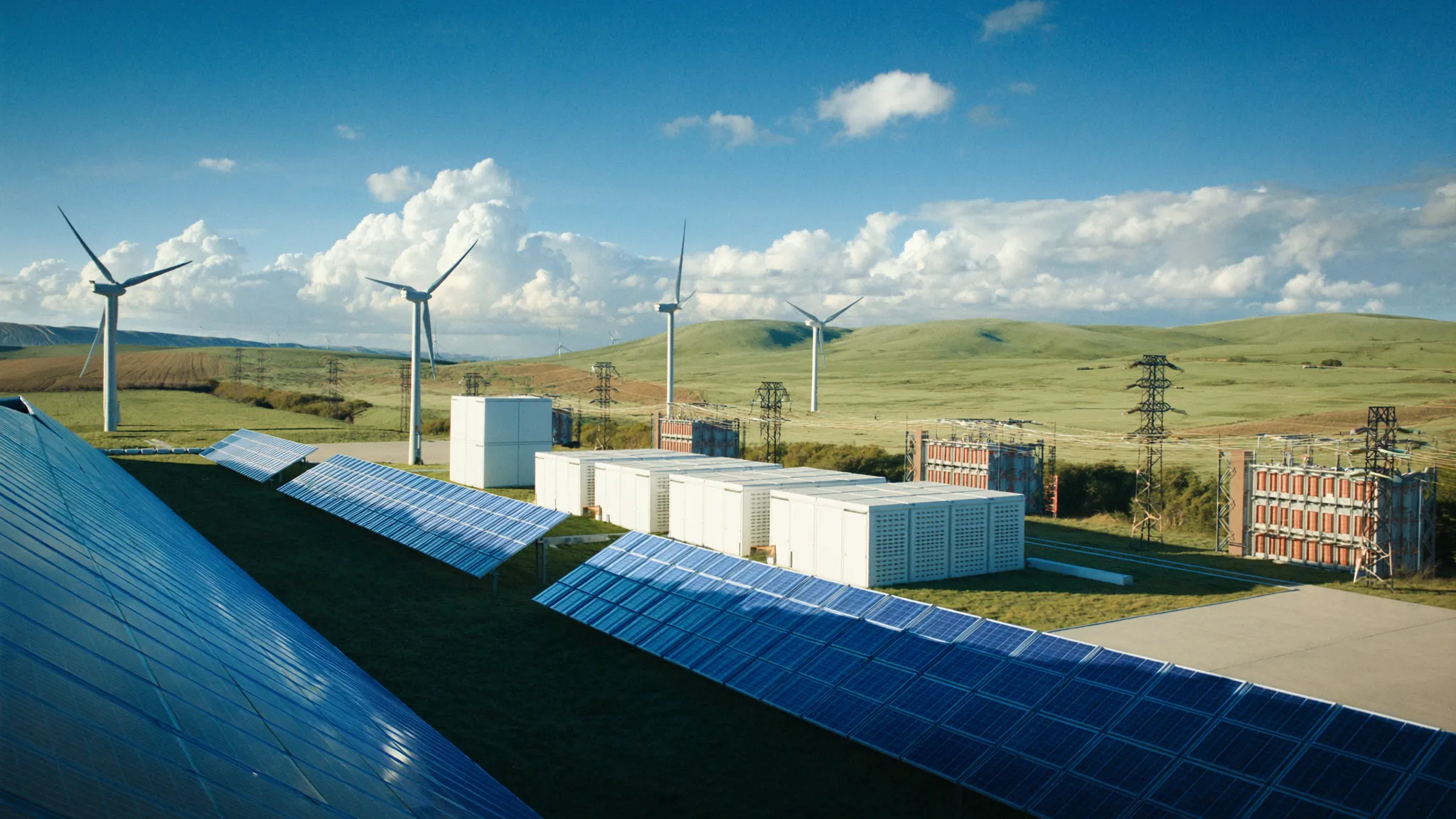
Understanding the background of such voices makes some sense. With current technology, it is indeed challenging to ensure the stability of large-scale power grids solely with intermittent renewable energies like solar and wind. Moreover, there is growing concern that the enormous costs incurred during the carbon neutrality process will ultimately be passed on to consumers, potentially expanding energy poverty and weakening industrial competitiveness.
Actual data reveal that these concerns are not mere unfounded fears. As of 2024, the European Union’s share of renewable energy generation reached a record 47%, more than four times higher than South Korea’s 10%. However, paradoxically, the EU’s electricity rates are among the highest in the world. According to Statista, as of March this year, household electricity rates were at a global high of $0.45 per kWh in Ireland, $0.43 in Italy, and $0.4 in Germany, Belgium, and the UK.
In contrast, South Korea’s electricity rate remains significantly lower at $0.081 per kWh, even compared to the United States ($0.18) and Japan ($0.23). Only a few countries, such as China ($0.08), UAE ($0.08), Turkey ($0.07), and Russia ($0.06), have lower rates than South Korea. This disparity in electricity rates is a crucial factor directly linked to national competitiveness, beyond mere policy differences.
The Common Ground Between Trump and Oil-Producing Countries: The Spread of ‘Energy Realism’
Interestingly, former U.S. President Trump also propagated the ‘climate crisis hoax,’ denying the science of climate change itself, arguing that climate regulations like the Paris Agreement weaken the competitiveness of U.S. manufacturing and reduce jobs. Although the scientific basis differs, he shares the goal with oil-producing countries in viewing climate regulations as a growth impediment.
This trend goes beyond merely protecting the vested interests of fossil fuel-producing countries. In reality, even major countries that have actively led climate policies are unable to completely abandon coal power. Germany, which declared a coal phase-out, saw the ruling Christian Democratic Union (CDU) in this year’s general election pledge to build 50 gas and coal-fired power plants.
The global energy market presents an increasingly complex picture. In the first half of this year, there was positive news that global renewable energy generation surpassed coal for the first time. However, as of last year, global coal usage reached an all-time high. This indicates that coal usage has not decreased but that the rate of increase has slowed, showing that its use is still expanding.
More specifically, the share of non-carbon power sources in global energy consumption is 41%, 7 percentage points ahead of coal power. However, when considering only pure renewable energy like solar and wind, the share remains at just 15%. Major countries like China, the U.S., and Germany are maintaining coal power as a strategic backup to ensure grid stability.
South Korea’s situation is even more complex. Although Minister of Climate and Energy Environment Kim Sung-hwan recently joined the Powering Past Coal Alliance at COP30 in Brazil, there is still opposition within the domestic energy industry, arguing that coal is necessary for power supply stability. There seems to be concern that if South Korea unilaterally declares a coal phase-out, it could diverge from international trends in terms of industrial and power stability.
South Korea’s Energy Strategy: Balancing Reality and Ideals
The dilemma facing South Korea’s energy policy is more serious than expected. From an energy security perspective, South Korea is a major energy importer, ranking 5th in crude oil imports and 3rd in natural gas imports globally. With an energy import dependency of 95% as of 2024, a radical energy transition could pose a critical risk to supply stability.
Considering that manufacturing accounts for 28% of South Korea’s GDP, an increase in energy costs would directly lead to weakened industrial competitiveness. South Korea’s leading companies like Samsung Electronics, SK Hynix, and POSCO are already in a situation where cost competitiveness is a key factor in global competition. If electricity rates rise 4-5 times, it could be a severe blow to these companies’ global competitiveness.
However, completely abandoning carbon neutrality is not an option either. With the EU’s Carbon Border Adjustment Mechanism (CBAM) coming into full effect, trade barriers for carbon-intensive products are rising, and ESG management is becoming essential for corporate survival. In fact, key export items from South Korea, such as steel, cement, and chemical products, are included in the CBAM scope, making response urgent.
In this situation, a realistic alternative for South Korea is ‘Korean-style energy pragmatism.’ This means maintaining the long-term goal of carbon neutrality while considering both energy security and industrial competitiveness in a phased transition strategy. Specifically, it involves expanding the share of nuclear power, transitioning to relatively cleaner fossil fuels like LNG, and simultaneously developing and expanding renewable energy technologies.
In terms of nuclear power, South Korea is the 6th largest nuclear power holder in the world with significant technological capabilities. Korea Hydro & Nuclear Power operates 25 nuclear reactors, accounting for about 30% of total power generation, and companies like Doosan Enerbility have global competitiveness in manufacturing key nuclear components. Nuclear power is evaluated as a suitable alternative for South Korea, as it provides stable base power with almost no carbon emissions.
In the renewable energy sector, South Korean companies have also made significant technological advancements. Hanwha Solutions ranks 7th globally in solar module production, and Samsung SDI and LG Energy Solution possess world-class technology in the energy storage system (ESS) field. Based on this technological prowess, a strategy to gradually increase the share of renewables while addressing the intermittency issue is realistic.
Personally, I believe South Korea should focus on optimizing a realistic energy mix rather than rushing into a coal phase-out. While the goal of increasing the share of renewables to 30% by 2030 is important, it is even more crucial not to undermine power supply stability and industrial competitiveness in the process. South Korea should avoid situations like those in Germany or the UK, where manufacturing is hit by soaring energy prices.
Ultimately, South Korea is at a point where it must find a balance that simultaneously meets climate response, industrial competitiveness, and power grid stability. Now, as ‘energy realism’ spreads globally, seems to be the right time for South Korea to establish its own practical energy transition roadmap. We need to watch what choice South Korea will make between ideals and reality and how that choice will impact the future of the South Korean economy.
This article was written after reading the [Energy Insight] ‘Energy Realism’ on the Rise… South Korea’s Dilemma article, adding personal opinions and analysis.
Disclaimer: This blog is not a news outlet, and the content is the author’s personal opinion. The responsibility for investment decisions lies with the investor, and the author assumes no responsibility for any investment losses based on this article.
