Elon Musk’s Energy Solution for the AI Era – Is Solar Power Really the Answer?
 Editor
Elon Musk has once again made an intriguing statement. I came across news that he emphasized “solar power will become the primary power source” in response to the rapid increase in electricity demand due to the swift advancement of AI. Personally, I was curious whether this statement was merely promotional talk from the Tesla CEO or a realistic forecast based on actual data. Especially considering the exponential increase in power consumption of AI data centers as of late 2025.
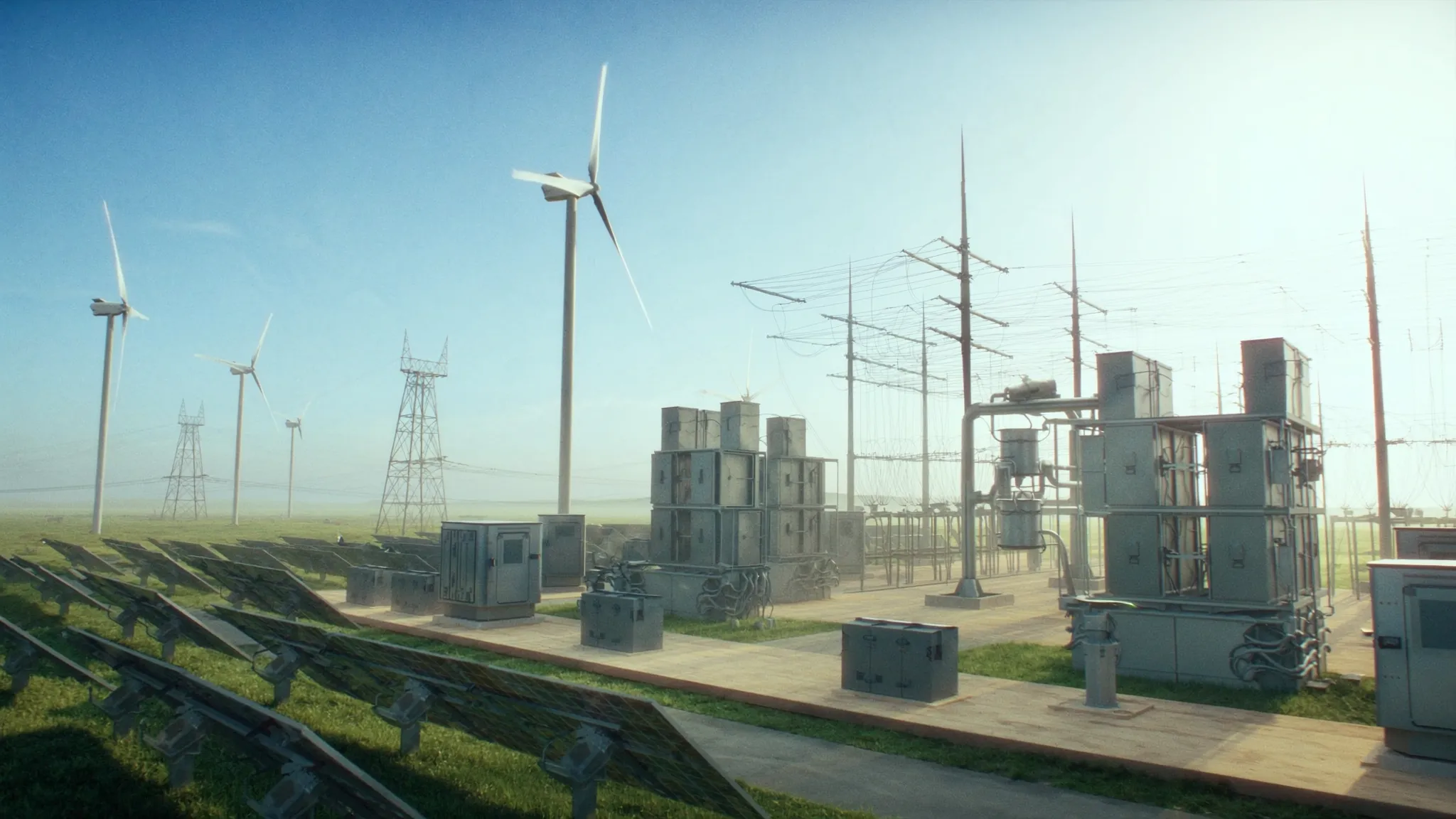
The power consumption of AI models is indeed astonishing. Research indicates that a single query on ChatGPT-4 consumes over 10 times more power than a traditional Google search, and an NVIDIA H100 GPU consumes 700W of power, with tens of thousands of such chips operating in large data centers. Microsoft announced that its AI-related power consumption increased by 34% in 2024 compared to the previous year. Following this trend, the IEA forecasts that global data center power consumption could increase by 2.5 times by 2030.
However, upon hearing Musk’s emphasis on solar power, I wondered whether current solar technology could truly meet such massive power demands. Of course, solar power generation efficiency is continuously improving. As of 2025, the efficiency of commercial solar panels has risen to 22-24%, with some laboratory cases achieving 47% efficiency. Yet, the issues of intermittency and energy storage costs remain significant obstacles.
From Tesla’s standpoint, it makes sense to push for solar power, but looking at market realities, a more complex approach seems necessary. In fact, Amazon has signed a direct contract with a nuclear power plant for AI data center power supply in 2024, and Google has entered into a 480MW power supply agreement with Kairos Power, a developer of small modular reactors (SMRs). Microsoft has also decided to invest $1.6 billion in the Three Mile Island nuclear plant reactivation project. These movements suggest that even big tech companies see limitations in relying solely on solar power.
The Current State of the Renewable Energy Market Domestically and Internationally
The situation in Korea is even more complex. As of 2024, the share of renewable energy in Korea is about 8.5%, with the government aiming to increase it to 20% by 2030. However, this seems challenging in reality. The high population density relative to land area limits the establishment of large-scale solar farms, and environmental controversies over mountain solar installations persist.
On a hopeful note, domestic companies like Hanwha Solutions are performing well in overseas markets. Hanwha Solutions recorded a 28% year-over-year increase in solar module shipments to 3.2GW in the third quarter of 2024 and announced plans to expand annual production capacity to 8.4GW by 2025 through its Georgia plant expansion. Notably, the Inflation Reduction Act (IRA) benefits have significantly improved local production competitiveness.
OCI is also making interesting moves in the polysilicon market. Despite challenges from low-cost Chinese competition, recent diversification policies in the U.S. and Europe have led to increased orders. The average selling price of polysilicon in the fourth quarter of 2024 rose by 15% to $12,000 per ton compared to the previous quarter, signaling increased demand for suppliers outside China.
Looking at the overseas market, First Solar is noteworthy. This company uses cadmium telluride (CdTe) technology instead of silicon, which has the advantage of emitting 70% less carbon during manufacturing compared to silicon panels. Its 2024 revenue increased by 22% year-over-year to $3.8 billion, and its new order backlog for 2025 has already exceeded 52GW. Particularly strong in large-scale utility projects in the U.S., this could indicate some realism in Musk’s ‘solar-centric energy transition’ vision.
However, many challenges remain. First, the cost of energy storage systems (ESS) is still high. Although lithium-ion battery prices have fallen to $139 per kWh as of 2024, more significant cost reductions are needed for large-scale grid storage. Solutions like Samsung SDI’s next-generation battery technology or Tesla’s Megapack could improve the situation once commercialized, but more time is needed.
The Dilemma of AI Data Centers and Energy Efficiency
What’s truly interesting is that AI companies have varied energy strategies. NVIDIA is focused on improving the power efficiency of its GPUs. The latest H200 GPU can perform 1.4 times more computations with the same power compared to the H100, and the B200, scheduled for release in 2025, is expected to be even more efficient. However, as AI models continue to grow, overall power consumption is actually increasing.
Microsoft is taking a slightly different approach. According to materials released in 2024, their strategy is to concentrate AI workloads in the cloud to enhance overall energy efficiency. The logic is that using cloud services like Azure is more power-efficient than individual companies building their own AI infrastructure. Microsoft’s data center PUE (Power Usage Effectiveness) has improved to 1.12, significantly better than the industry average of 1.67.
Despite these efficiency improvements, overall power demand continues to rise. This is known as the ‘Jevons Paradox,’ where increased efficiency leads to greater usage. The same applies to AI, where improved GPU efficiency results in training larger models or performing more inference tasks.
Reconsidering Musk’s emphasis on solar power in this context, it seems to have some basis beyond mere Tesla promotion. Solar power generation costs have fallen by 85% compared to 2010, and it has already become the cheapest power source in many regions. According to the International Renewable Energy Agency (IRENA), global solar power generation costs have dropped to 4.8 cents per kWh in 2024, cheaper than coal (5.5 cents) or natural gas (6.1 cents).
However, the issue of intermittency remains. Solar power cannot generate at night, and output varies significantly with weather conditions. AI data centers require stable 24-hour power supply, and solar power alone seems insufficient in this regard. Therefore, many experts believe a hybrid solution combining solar power, nuclear, and large-scale ESS is realistic.
Tesla itself seems to recognize these limitations. Tesla’s Megapack business is rapidly growing, with ESS revenue in the third quarter of 2024 increasing by 52% year-over-year to $2.4 billion. This suggests a strategy to provide integrated solutions, including energy storage, rather than just selling solar panels. Indeed, large-scale ESS installation cases like the Victoria Big Battery Project in Australia or the Moss Landing Project in California are increasing.
In conclusion, synthesizing Musk’s statements, solar power can be the ‘primary’ power source but not the ‘only’ power source. To meet the energy demands of the AI era, a diversified approach combining solar power with nuclear, wind, and large-scale ESS seems necessary. This energy transition process could also open new opportunities for domestic companies like Hanwha Solutions and Samsung SDI. Especially as the U.S. and Europe’s supply chain diversification policies continue, efforts to reduce dependence on China could be advantageous for our companies.
This article was written after reading the Elon Musk Emphasizes Solar as ‘Primary Power Source’ Amid AI Energy Demand article, adding personal opinions and analysis.
Disclaimer: This blog is not a news outlet, and the content reflects the author’s personal views. Investment decisions are the responsibility of the investor, and no liability is assumed for investment losses based on the content of this article.
