Australia’s Solar Revolution: When “Free Electricity” Becomes Reality
 Editor
Reading about Australia’s renewable energy progress feels like glimpsing into a future that’s arriving faster than anyone expected. Federal Energy Minister Chris Bowen’s recent presentation at COP30 in Brazil wasn’t just political posturing—it revealed market dynamics that are fundamentally reshaping how we think about electricity generation and distribution. When a country starts offering “three hours of free power in the middle of the day” to households without solar panels, you know something profound is happening in energy markets.
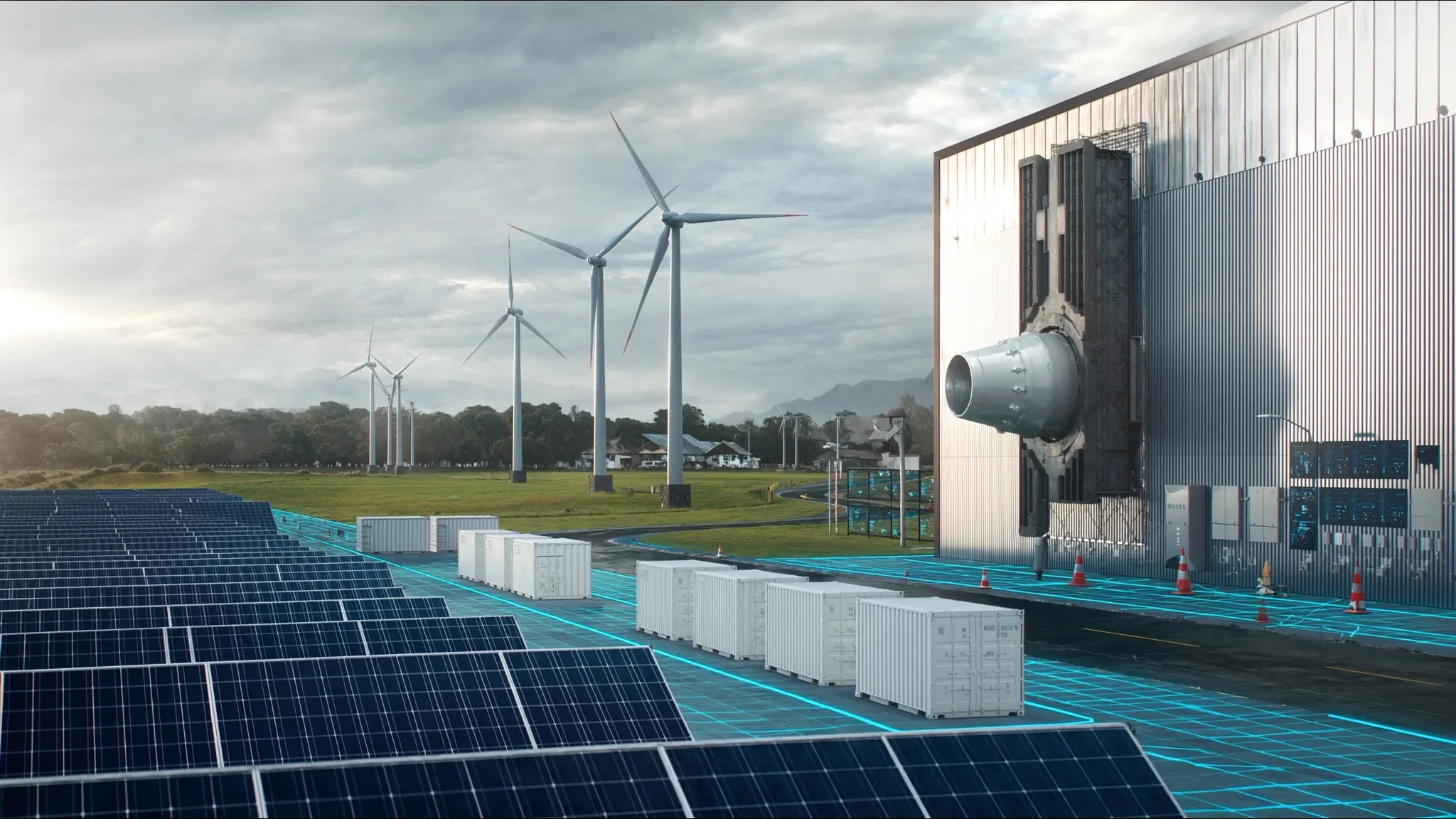
The numbers coming out of Australia, particularly South Australia, are genuinely staggering. As of November 2025, more than one-third of Australian homes have rooftop solar installations, creating what industry analysts are calling a “prosumer revolution” where consumers become producers. But here’s what caught my attention: South Australia achieved 157.2% renewable penetration of local demand on a recent Sunday morning. That’s not a typo—they’re generating more renewable energy than the entire state can consume, with the excess flowing to batteries and neighboring states.
This surplus situation is creating entirely new business models. Australia’s “Solar Sharer” program represents a fascinating market response to oversupply. When you have so much solar generation that wholesale electricity prices go negative during peak sun hours, offering free power becomes economically rational. Tesla (Austin, Texas) has been experimenting with similar demand-shifting strategies through their Powerwall ecosystem, but Australia is implementing this at national scale through policy rather than just technology.
The battery adoption metrics reveal the scale of this transformation. Over 125,000 Australian households installed home batteries since July 2024 through the Cheaper Home Batteries program—that’s approximately 1,000 installations daily. For context, that installation rate exceeds the entire residential battery market in most European countries. Sonnen (Munich, Germany) and Enphase Energy (Fremont, California) are major beneficiaries of this surge, alongside Tesla’s energy division, which has captured roughly 35% of the Australian residential storage market according to recent industry reports.
South Australia’s achievement of 74% average wind and solar penetration over the past 12 months puts it ahead of Denmark, which has long been considered the global renewable integration leader. Denmark’s Ørsted (Copenhagen) pioneered offshore wind development, but South Australia is demonstrating that high renewable penetration is achievable through distributed solar rather than just utility-scale wind farms. The state recorded around 300 days last year where renewables fulfilled 100% of demand at some point during each day—a reliability metric that challenges traditional assumptions about grid stability.
Market Dynamics and Economic Implications
What’s happening in Australia illustrates a broader global trend that’s accelerating in 2025: the economics of renewable energy are creating market conditions that traditional utility models can’t handle. When South Australia’s rooftop solar output “sometimes matches all of state demand,” you’re looking at a fundamental disruption of centralized power generation. This isn’t just about environmental benefits—it’s about economic displacement of existing energy infrastructure worth billions of dollars.
The financial implications extend far beyond Australia’s borders. Major utilities like NextEra Energy (Juno Beach, Florida) and Enel (Rome, Italy) are closely studying Australia’s integration challenges and solutions. NextEra, with over $150 billion in market capitalization, has been pivoting toward renewable development and storage integration, partly based on lessons from markets like South Australia. The company’s recent $4.2 billion investment in battery storage projects reflects recognition that storage is becoming as important as generation capacity.
China’s renewable energy manufacturers are the biggest beneficiaries of Australia’s solar boom. BYD (Shenzhen, China) has captured significant market share in both residential and utility-scale battery systems, while Jinko Solar (Shanghai, China) and LONGi (Xi’an, China) dominate panel installations. This creates interesting geopolitical dynamics—Australia’s renewable transition depends heavily on Chinese manufacturing capacity, even as political tensions persist between the countries.
The competitive landscape in energy storage is particularly intense. LG Energy Solution (Seoul, South Korea) competes directly with Chinese manufacturers like CATL (Ningde, China) for residential battery contracts. LG’s recent announcement of a $2.8 billion investment in North American battery production partly reflects the need to compete with Chinese pricing while meeting local content requirements in various markets.
Australia’s approach contrasts sharply with other major economies. Germany’s Energiewende has struggled with grid stability issues at high renewable penetration levels, while California continues to face curtailment challenges where excess solar generation must be wasted. Australia’s combination of distributed generation, residential storage, and flexible demand programs offers a potentially more scalable model for other regions.
The financial metrics are compelling for consumers and investors alike. Australian households with solar and battery systems are achieving energy independence levels that seemed impossible just five years ago. Average payback periods for combined solar-battery installations have dropped to 6-8 years, down from 12-15 years in 2020. This improvement reflects both declining equipment costs and rising electricity prices from traditional sources.
Technical Challenges and Global Implications
However, the technical challenges of managing 157% renewable penetration shouldn’t be understated. Grid operators like the Australian Energy Market Operator (AEMO) are essentially running a real-time experiment in power system management. When renewable generation exceeds demand by such margins, maintaining grid frequency and voltage stability requires sophisticated control systems that didn’t exist a decade ago.
The solution involves what engineers call “virtual power plants”—networks of distributed batteries that can be controlled collectively to provide grid services. Tesla’s Virtual Power Plant in South Australia, comprising over 50,000 household batteries, demonstrates how residential storage can provide utility-scale grid stabilization. This model is being replicated by companies like Sunrun (San Francisco, California) in the United States and Octopus Energy (London, United Kingdom) in Europe.
Interestingly, Australia’s success is creating new challenges for fossil fuel companies. AGL Energy (Melbourne, Australia) and Origin Energy (Sydney, Australia) are accelerating coal plant closures as renewable generation makes thermal plants economically unviable. Origin’s recent decision to close the Eraring power station—Australia’s largest coal plant—by 2025 reflects these changing economics. The plant’s 2,880 MW capacity will be replaced by a combination of renewable generation and storage.
The implications for global energy markets are profound. If Australia can achieve 100% net renewables by 2027 as South Australia plans, it provides a roadmap for other developed economies. Countries like Spain, Portugal, and Chile are already implementing similar policies based on Australia’s experience. Spain’s recent auction of 3.3 GW of renewable capacity at record-low prices reflects global learning from Australian market design.
Investment flows are following these trends. Clean energy investment in Australia reached $11.5 billion in 2024, according to Bloomberg New Energy Finance, with residential solar and storage accounting for approximately 35% of total investment. This compares to $8.2 billion in 2023, indicating accelerating momentum. Global infrastructure funds like Brookfield (Toronto, Canada) and Macquarie (Sydney, Australia) are increasing allocations to Australian renewable projects.
The manufacturing implications extend beyond energy equipment. Australia’s push toward green hydrogen and green steel production, mentioned in Minister Bowen’s presentation, represents the next phase of renewable integration. Companies like Fortescue Future Industries (Perth, Australia) are investing billions in green hydrogen production, while steel producers explore renewable-powered direct reduction processes. These industrial applications could absorb excess renewable generation while creating new export industries.
Looking ahead, Australia’s renewable transition offers both inspiration and caution for other markets. The technical and economic success is undeniable, but it required specific conditions: abundant solar resources, supportive policy frameworks, and consumer willingness to invest in new technology. Countries with different resource profiles or regulatory environments may need different approaches, but the fundamental economics of renewable energy plus storage are becoming increasingly attractive globally.
As of November 2025, Australia’s renewable energy experiment is entering a critical phase where theory meets large-scale reality. The next 18 months will determine whether South Australia’s 100% net renewables target is achievable while maintaining grid reliability and economic competitiveness. Success would accelerate similar transitions worldwide, while challenges could slow adoption in more conservative markets. Either way, Australia is providing invaluable real-world data about the future of electricity systems in a renewable-dominated world.
This post was written after reading “So much solar”: Bowen touts free PV, home batteries, and world-leading renewables in COP bid. I’ve added my own analysis and perspective.
Disclaimer: This blog is not a news outlet. The content represents the author’s personal views. Investment decisions are the sole responsibility of the investor, and we assume no liability for any losses incurred based on this content.
