Industrial Heat Batteries Are Finally Having Their Moment – Rondo Energy’s Thailand Deployment Shows Why
 Editor
The industrial decarbonization puzzle has been missing a crucial piece for years, and Rondo Energy’s latest deployment in Thailand might just be it. The California-based startup, working with SCG Cleanergy, has successfully commissioned what they’re calling Southeast Asia’s first industrial thermal battery energy storage system at a cement plant in Saraburi, Thailand. But here’s what makes this particularly interesting – this isn’t just another energy storage project. It’s the world’s first commercial heat battery system specifically designed for cement manufacturing, an industry that’s notoriously difficult to decarbonize.
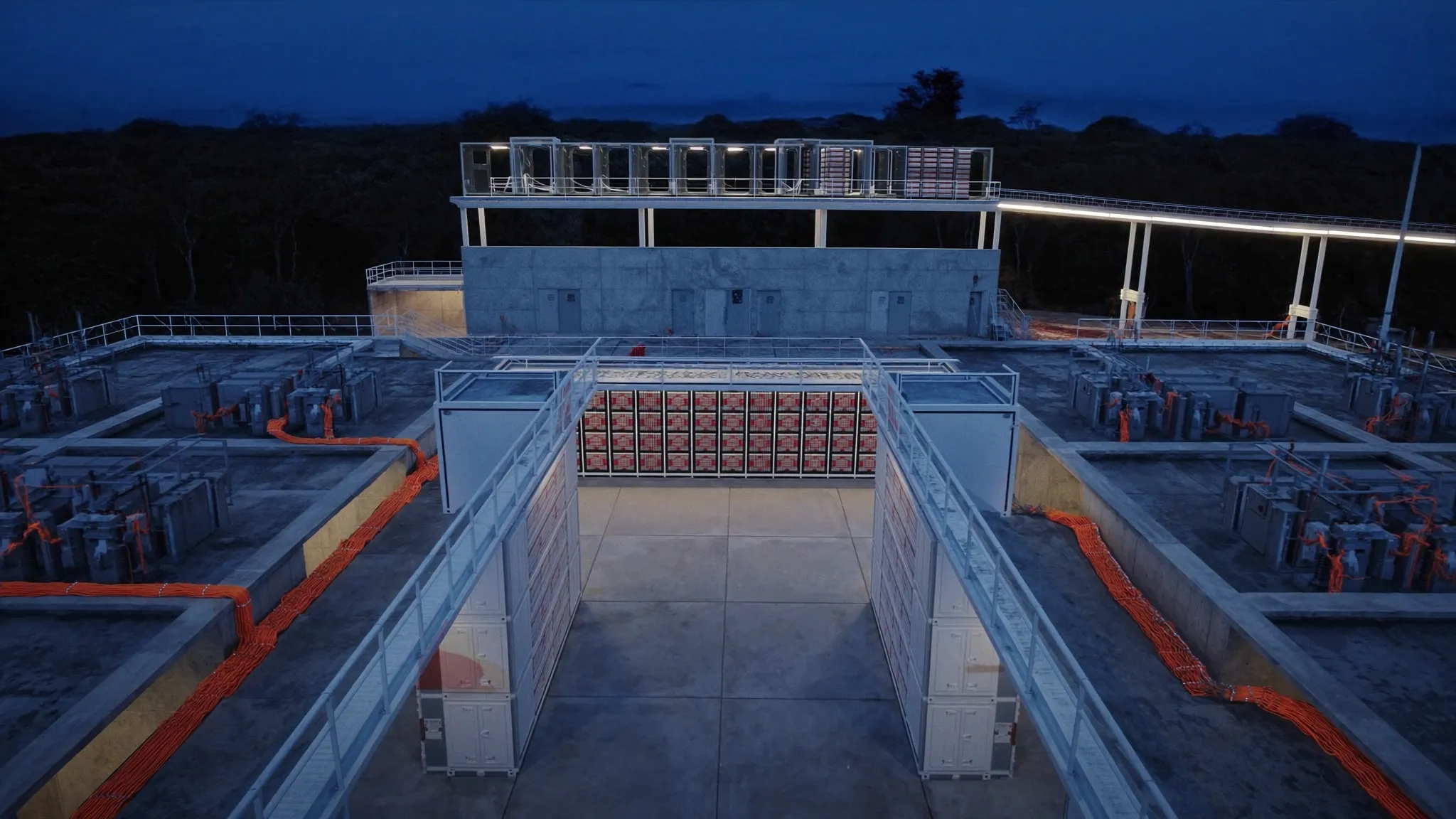
The 33MWh Rondo Heat Battery (RHB) installation represents something industry analysts have been waiting for: a viable pathway to replace fossil fuel combustion in high-temperature industrial processes. Cement production requires temperatures exceeding 1,400°C for clinker formation, making it nearly impossible to electrify using conventional technologies. Traditional battery systems simply can’t deliver the extreme heat these processes demand, which is why thermal energy storage has emerged as a potential game-changer.
What’s particularly clever about Rondo’s approach is how the system integrates with existing infrastructure. The thermal battery unit connects directly to SCG’s cement plant’s existing heat recovery system and operates as what the company claims is the world’s only heat battery driving a steam turbine. The system generates superheated steam that boosts the heat recovery turbine’s power output, essentially providing both thermal energy and electricity generation capabilities within a single installation.
The technology itself stores electrical energy as high-temperature heat in specialized materials – think of it as a massive, industrial-grade thermal mass that can be charged with renewable electricity and discharged as heat on demand. Rondo’s initial commercial deployment involved a 2MWh system capable of reaching 1,000°C temperatures, establishing the technical foundation for these larger-scale applications. The Thailand installation represents a significant scale-up from those early systems.
Market Momentum Building Across Multiple Industries
This Thailand deployment comes on the heels of some impressive momentum for Rondo Energy. Just recently, the company completed installation of what they claim is the world’s largest industrial heat battery system – a massive 100MWh installation for Holmes Western Oil Corporation in California. That system delivers continuous steam powered entirely by off-grid solar energy, demonstrating the technology’s capability to convert intermittent renewable energy into reliable industrial heat supply around the clock.
The numbers are starting to add up in a meaningful way. Within days of announcing the California project completion, Rondo signed contracts for another 100MWh RHB installation, this time for Heineken at their Vialonga Brewery and Malting Plant in Portugal. The Heineken system will be charged directly from a nearby ground-mounted solar PV plant owned by utility EDP, showing how thermal batteries can create direct pathways between renewable generation and industrial heat demand.
What’s particularly noteworthy is the manufacturing approach Rondo and SCG Cleanergy took in Thailand. They manufactured the entire unit locally, utilizing Thai supply chains and manufacturing capabilities. This localized production strategy could prove crucial for scaling thermal battery deployment across Southeast Asia’s manufacturing sector, where logistics costs and import dependencies have historically been barriers to adopting new energy technologies.
The cement industry represents a potentially massive target market for thermal energy storage solutions. Global cement production accounts for approximately 8% of worldwide CO2 emissions, with most of those emissions coming from the high-temperature processes required for clinker formation. Traditional approaches to decarbonizing cement have focused on carbon capture or alternative materials, but thermal batteries offer a different pathway – directly replacing fossil fuel combustion with stored renewable energy.
Industry analysts estimate the global industrial heat market at over $300 billion annually, with cement manufacturing representing roughly 15% of that total. The challenge has always been finding technologies that can deliver the extreme temperatures these processes require while maintaining economic viability. Rondo’s approach appears to be hitting both targets – their systems can reach the necessary temperatures while potentially offering cost savings through renewable energy arbitrage.
Competitive Landscape and Technology Positioning
Rondo Energy isn’t operating in a vacuum here. The thermal energy storage market has attracted significant attention from both startups and established players. Companies like Antora Energy (also California-based) are developing similar high-temperature thermal storage systems, though with different technical approaches. Antora focuses on solid carbon blocks that can store heat at temperatures up to 2,000°C, while Malta (backed by Alphabet’s X division) is pursuing a pumped-heat energy storage approach using molten salt.
What sets Rondo apart is their focus on direct integration with existing industrial processes rather than standalone storage systems. Their heat batteries are designed to slot into existing industrial infrastructure, which significantly reduces deployment costs and complexity compared to greenfield installations. This integration-first approach appears to be resonating with industrial customers who need solutions that work within their existing operational frameworks.
The competitive dynamics are particularly interesting when you consider the capital requirements. Industrial thermal storage systems require substantial upfront investments – Rondo’s 100MWh installations likely represent tens of millions of dollars in capital expenditure. However, the economics become compelling when you factor in the potential for renewable energy arbitrage and the elimination of fossil fuel costs for high-temperature processes.
European competitors like Siemens Gamesa (now part of Siemens Energy) have been developing electric thermal energy storage systems, but primarily for power generation rather than direct industrial heat applications. The distinction matters because power generation systems optimize for electrical output efficiency, while industrial heat applications optimize for thermal output and temperature capabilities.
From a financial perspective, Rondo Energy has raised approximately $60 million in funding to date, including a Series B round led by Breakthrough Energy Ventures. The company’s valuation and funding levels suggest investors see significant potential in the industrial thermal storage market, particularly given the regulatory pressure for industrial decarbonization across major economies.
SCG Cleanergy’s involvement adds another interesting dimension. As a subsidiary of SCG Group, one of Thailand’s largest industrial conglomerates, SCG Cleanergy brings both technical expertise and market access across Southeast Asia. The partnership suggests Rondo is positioning for broader regional expansion rather than one-off project deployments.
The timing couldn’t be better from a policy perspective. The European Union’s Carbon Border Adjustment Mechanism, which began phasing in during 2023, creates financial incentives for industrial decarbonization that extend beyond environmental considerations. Cement producers serving European markets face increasing pressure to demonstrate lower carbon intensity, making thermal battery systems potentially valuable for maintaining market access.
Looking at the broader industrial landscape, the success of these early thermal battery deployments could accelerate adoption across other hard-to-decarbonize industries. Steel production, chemical manufacturing, and glass production all require high-temperature processes that could benefit from similar thermal storage solutions. The combined market opportunity across these sectors represents hundreds of billions of dollars in annual energy consumption.
What’s particularly compelling about the Thailand deployment is the demonstration effect for Southeast Asian markets. The region’s manufacturing sector has been relatively slow to adopt advanced energy storage technologies, partly due to concerns about technical complexity and maintenance requirements. A successful commercial deployment at an existing cement plant provides concrete evidence that thermal batteries can operate reliably in industrial environments.
The economic implications extend beyond just the companies involved. Industrial thermal storage systems could fundamentally change how renewable energy projects are developed and financed. Instead of requiring grid connections and dealing with intermittency challenges, renewable developers could potentially sell directly to industrial customers through thermal storage systems. This direct-pay model could improve project economics for both renewable generators and industrial energy consumers.
As we move into 2025, the industrial decarbonization challenge is becoming increasingly urgent. The combination of regulatory pressure, carbon pricing mechanisms, and improving technology economics is creating a perfect storm for thermal energy storage adoption. Rondo Energy’s Thailand deployment represents more than just another project milestone – it’s proof that industrial heat batteries have moved from laboratory concepts to commercially viable solutions. The question now isn’t whether thermal batteries will play a role in industrial decarbonization, but how quickly they can scale to meet the enormous market opportunity ahead.
This post was written after reading Rondo Energy deploys Southeast Asia’s ‘first industrial Heat Battery’. I’ve added my own analysis and perspective.
Disclaimer: This blog is not a news outlet. The content represents the author’s personal views. Investment decisions are the sole responsibility of the investor, and we assume no liability for any losses incurred based on this content.
