AI Energy Boom: Why Nuclear and Storage Stocks Could Be the Next Big Thing
 Editor
I stumbled across an interesting piece from Zacks Research that got me thinking about something we don’t talk about enough – the massive energy appetite of artificial intelligence. While everyone’s focused on which AI model is better or which chip company will dominate, there’s this huge underlying story about power consumption that’s creating some fascinating investment opportunities.
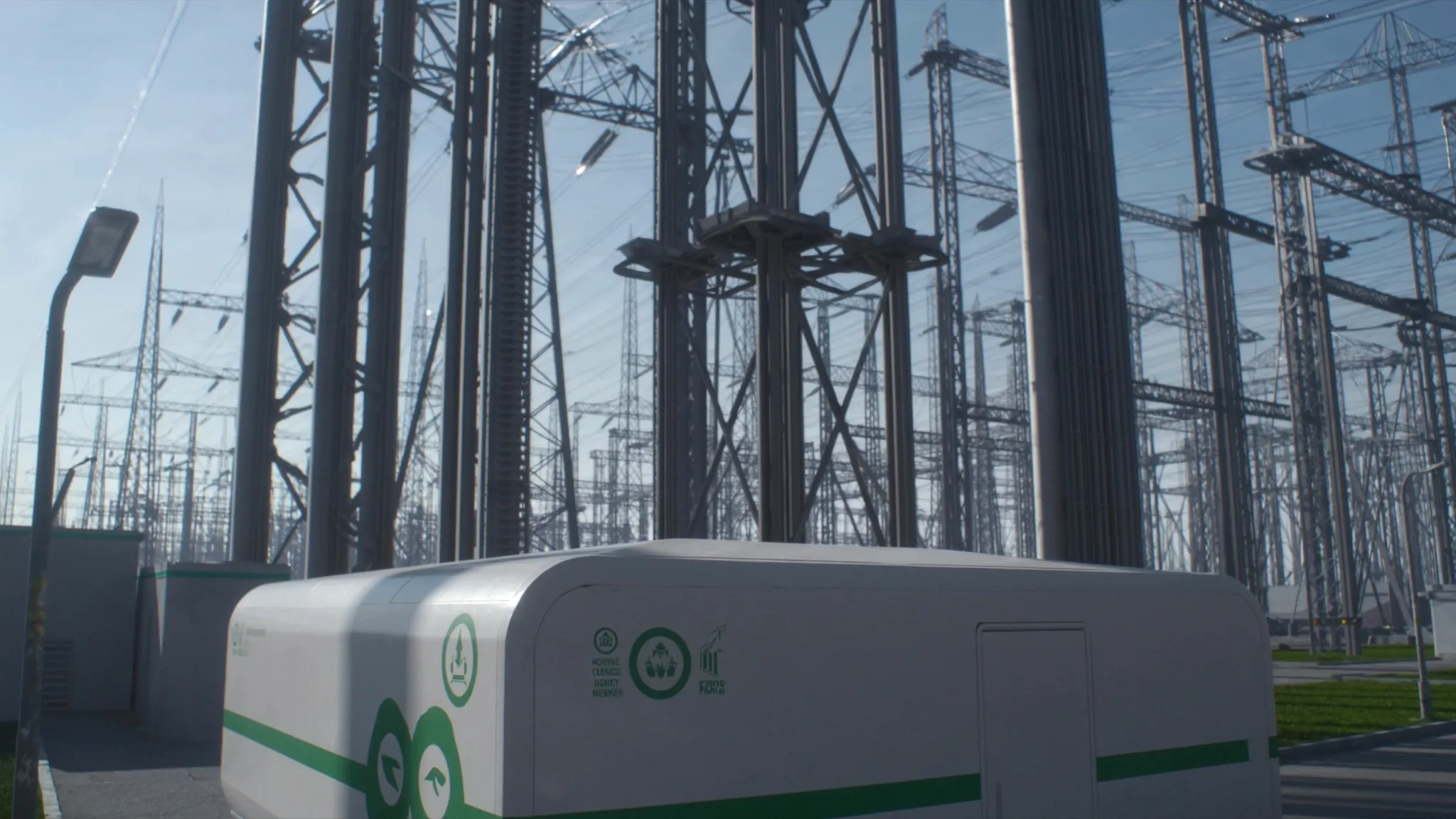
The article highlights two companies that could potentially mirror Oklo’s remarkable performance in the AI energy space. For context, Oklo Inc. (NYSE: OKLO), the California-based nuclear technology company, has been absolutely on fire lately. As of November 2025, nuclear energy stocks have been experiencing unprecedented momentum, driven primarily by the energy-intensive demands of AI data centers and the broader push toward carbon-neutral power generation.
What’s really striking is the scale of this energy challenge. According to recent industry data, a single ChatGPT query consumes roughly 10 times more energy than a traditional Google search. When you multiply that across billions of AI interactions daily, plus the training requirements for large language models, you’re looking at energy demands that could fundamentally reshape the power sector. The International Energy Agency projects that data centers could account for up to 6% of global electricity consumption by 2030, with AI workloads representing the fastest-growing segment.
This brings us to the two stocks the article identifies as potential winners in this space. The first is Constellation Energy Corporation (NASDAQ: CEG), headquartered in Baltimore, Maryland. Constellation operates the largest fleet of carbon-free nuclear plants in the United States, with approximately 21,000 megawatts of generating capacity across 21 nuclear units. What makes CEG particularly interesting in the AI context is their recent strategic partnerships with major tech companies looking to secure reliable, clean baseload power for their data center operations.
Nuclear Power’s AI Renaissance
The nuclear angle here is fascinating because it solves multiple problems simultaneously. AI workloads require 24/7 power availability – you can’t train GPT models only when the wind is blowing or the sun is shining. Nuclear provides that consistent baseload power while maintaining the carbon-neutral credentials that major tech companies need for their ESG commitments. Microsoft’s recent 20-year power purchase agreement with Constellation for the Three Mile Island restart perfectly illustrates this trend.
Constellation’s financial performance reflects this positioning. The company reported third-quarter 2025 revenues of $6.3 billion, representing a 7.8% increase year-over-year. More importantly, their forward-looking power sales contracts show significant premium pricing for their nuclear output, with average realized prices reaching $85 per megawatt-hour compared to market averages of around $45 per megawatt-hour. This premium reflects the value that large industrial customers, particularly data center operators, place on reliable, clean power.
The competitive landscape in nuclear is quite interesting too. While Oklo focuses on small modular reactors (SMRs) for future deployment, Constellation operates proven, large-scale nuclear facilities that can immediately meet current AI energy demands. This gives them a significant near-term advantage, though it also means they’re dealing with aging infrastructure and higher maintenance costs. Companies like NuScale Power Corporation (NYSE: SMR) in Oregon and TerraPower in Washington state are developing next-generation nuclear technologies, but most won’t be commercially available until the late 2020s or early 2030s.
The second stock mentioned is Microvast Holdings Inc. (NASDAQ: MVST), a Texas-based battery technology company that’s taking a different approach to the AI energy challenge. Rather than focusing on power generation, Microvast is tackling the storage and grid stability issues that arise when you have massive, variable power loads from data centers. Their lithium-ion battery systems are designed for commercial and industrial applications, including grid-scale energy storage that can help smooth out the power demands of AI workloads.
The Energy Storage Play
Microvast’s positioning is particularly clever because AI data centers don’t just need a lot of power – they need power quality and reliability that traditional grid infrastructure struggles to provide. Training a large language model can require weeks or months of continuous computation, and any power interruption can result in millions of dollars in lost progress. This creates demand for sophisticated uninterruptible power supplies and grid-scale storage systems that can provide instant backup power and voltage regulation.
The numbers around Microvast tell an interesting story about the broader energy storage market. The company reported $108.7 million in revenue for the third quarter of 2025, with their commercial and industrial battery segment growing 43% year-over-year. More significantly, their gross margins have improved to 18.2%, up from 12.1% in the previous year, suggesting they’re successfully moving up the value chain toward higher-performance, higher-margin applications.
What’s particularly compelling about the energy storage angle is the infrastructure multiplication effect. Every new AI data center doesn’t just need power – it needs redundant power systems, backup storage, and grid stabilization equipment. A typical hyperscale data center might require 50-100 megawatts of power capacity, but the associated storage and backup systems can represent another 20-30 megawatts of battery capacity. With companies like Amazon, Google, and Microsoft each planning dozens of new AI-focused data centers over the next five years, the cumulative storage demand could reach several gigawatts.
The competitive dynamics in energy storage are quite different from nuclear. Companies like Tesla Energy, Fluence Energy (NASDAQ: FLNC) in Virginia, and China’s CATL dominate the utility-scale storage market, but there’s significant opportunity in the specialized commercial and industrial segment where Microvast operates. The key differentiator is often the ability to provide integrated solutions that combine batteries, power electronics, and software management systems tailored to specific industrial applications.
From a financial perspective, both CEG and MVST present interesting risk-reward profiles, though they’re at very different stages of maturity. Constellation trades at approximately 12 times forward earnings with a dividend yield of 3.2%, making it relatively attractive for income-focused investors who want exposure to the AI energy theme. The company’s regulated utility operations provide stable cash flows, while their competitive generation business offers upside potential as power prices rise due to AI demand.
Microvast, on the other hand, is more of a growth story with higher volatility. The company is still achieving profitability at the operating level, but their revenue growth trajectory and improving margins suggest they’re successfully scaling their business model. The stock trades at roughly 2.8 times forward sales, which seems reasonable given the projected growth in commercial energy storage markets.
Looking at the broader market context, it’s worth noting that AI energy stocks have become increasingly correlated with both technology sector performance and energy commodity prices. This creates some interesting portfolio dynamics – these companies can benefit from AI adoption trends while also serving as partial hedges against rising energy costs that might pressure other technology companies’ margins.
The regulatory environment also plays a crucial role in this investment thesis. The Biden administration’s Inflation Reduction Act provides significant tax incentives for clean energy projects, including both nuclear power and energy storage systems. These incentives can improve project economics by 30-40% in some cases, making previously marginal investments highly attractive. However, potential policy changes under future administrations create some uncertainty around the long-term regulatory landscape.
What’s particularly interesting about this AI energy trend is how it’s reshaping traditional utility and energy sector dynamics. Historically, electricity demand growth in developed markets has been relatively modest – typically 1-2% annually. But AI workloads are creating step-function increases in power demand in specific regions, forcing utilities and independent power producers to rapidly scale up generation and transmission capacity. This creates opportunities for companies that can quickly deploy reliable power solutions, whether through existing nuclear assets or rapidly scalable storage systems.
The geographic concentration of AI development also creates interesting regional dynamics. Major AI research and deployment centers in California, Virginia, Texas, and Washington state are experiencing particularly acute power supply constraints. This geographic clustering means that companies with assets or capabilities in these regions may command premium pricing for their services.
As of November 2025, the investment landscape around AI energy is still relatively nascent, but the fundamentals seem compelling. The energy intensity of AI workloads isn’t going away – if anything, it’s likely to increase as models become more sophisticated and AI applications become more pervasive. Companies that can provide reliable, clean, and cost-effective energy solutions for this growing market segment are well-positioned for sustained growth.
The key risk, of course, is execution. Both nuclear power and energy storage are capital-intensive, technically complex businesses with long development cycles and significant regulatory oversight. Success requires not just identifying the right market opportunity, but also having the technical capabilities, financial resources, and operational expertise to deliver on large-scale infrastructure projects. For investors, this means careful evaluation of management teams, balance sheet strength, and competitive positioning within their respective market segments.
This post was written after reading Member Sign In. I’ve added my own analysis and perspective.
Disclaimer: This blog is not a news outlet. The content represents the author’s personal views. Investment decisions are the sole responsibility of the investor, and we assume no liability for any losses incurred based on this content.
