AI Innovations in Biotechnology: A Turning Point in the Industry from Drug Discovery to Personalized Medicine by 2025
 Editor
The biotechnology industry is undergoing unprecedented changes through its convergence with artificial intelligence. As of November 2025, the global AI-biotechnology market size has reached approximately $85 billion, reflecting a 42% growth compared to 2024. This rapid growth signifies a paradigm shift for the entire healthcare industry, beyond mere technological advancement. Particularly in drug discovery, diagnostics, and personalized treatment, the introduction of AI is revolutionizing previously inefficient processes. Traditionally, new drug development required an average of $2.6 billion and 10-15 years, but AI-based platforms are reducing this period by 30-50% while increasing success rates from the existing 12% to 25-30%.
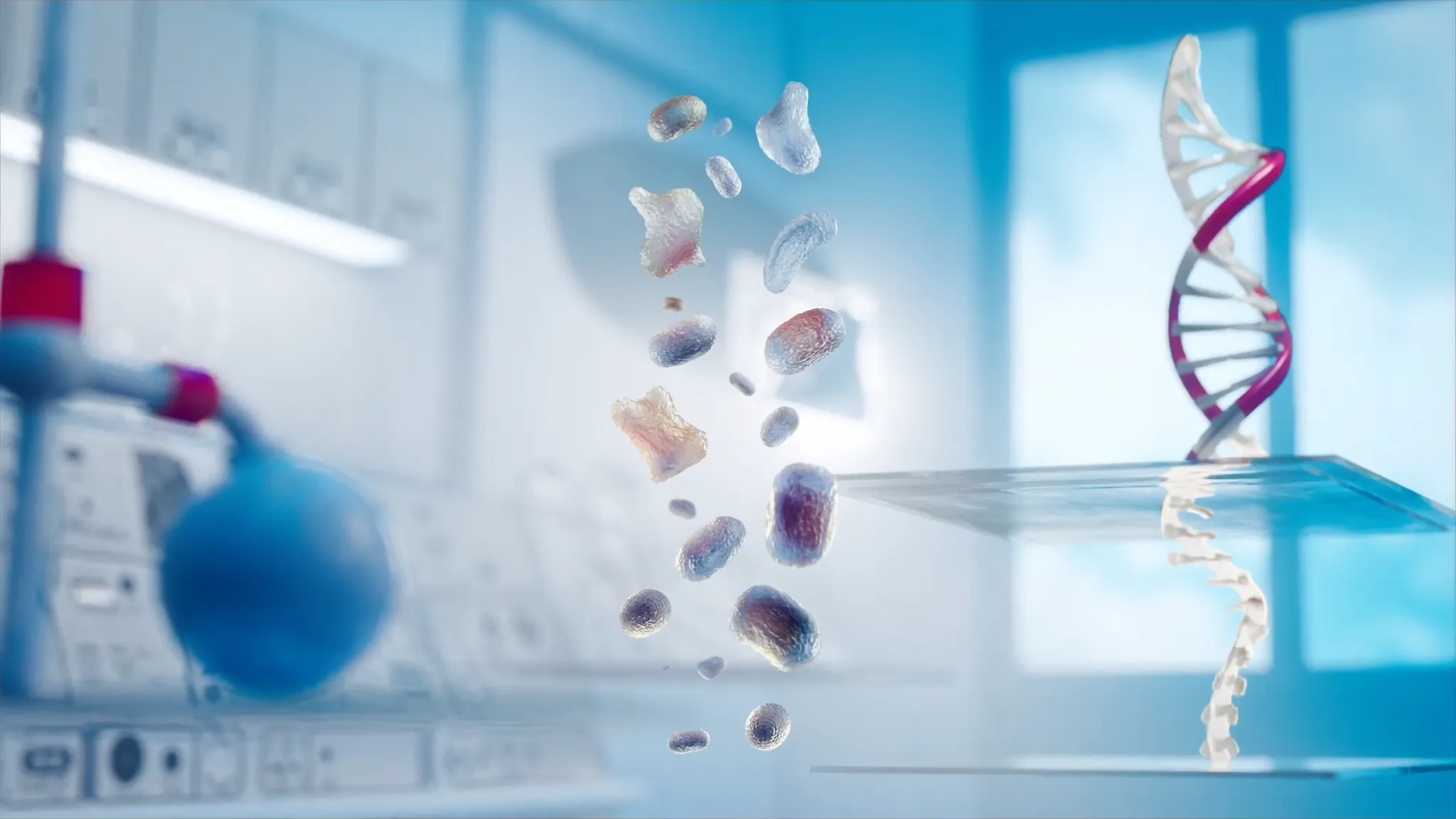
At the heart of this transformation is the remarkable accuracy of machine learning algorithms in predicting molecular structures, protein folding, and analyzing drug-target interactions. AlphaFold, developed by DeepMind (based in London, UK), predicted over 200 million protein structures by the end of 2024, which has been made freely available to researchers worldwide, significantly accelerating research speed. In South Korea, major biotech companies like Samsung Biologics and Celltrion are investing over 50 billion KRW annually in AI-based R&D, particularly enhancing AI utilization in biosimilar development. These companies report significant efficiency improvements in production process optimization, quality control, and predictive maintenance through AI.
Market Innovation in AI-Based Drug Discovery
The impact of AI in the field of drug discovery is particularly notable. Atomwise, based in California, USA, identified 12 new drug candidates through its AI-based drug discovery platform in the first half of 2025, with 3 of them already entering Phase 1 clinical trials. This is approximately five times faster than traditional methods. Exscientia, based in London, UK, created the first instance of an AI-designed drug entering clinical trials and, as of 2024, has over 25 AI-designed drugs in its pipeline. Their success has attracted significant investor attention, with AI-biotech startups raising a total of $4.5 billion in the first half of 2025 alone.
In the Korean market, AI-based drug discovery platforms are also gaining attention. Standigm has achieved results in the ‘drug repositioning’ field, identifying new indications for existing approved drugs through its proprietary AI platform ‘Standigm ASK’. As of 2025, the company is utilizing AI in developing treatments for Alzheimer’s disease and non-alcoholic steatohepatitis, having signed over 10 collaborative research agreements with domestic and international pharmaceutical companies. Additionally, Syntekabio is focusing on antibody drug development using AI, with three antibody drugs in the preclinical stage as of the end of 2024. The technological capabilities of these Korean companies are approaching global standards, particularly showing a competitive edge in utilizing clinical data for Asian populations.
The economic impact of AI drug discovery is substantial. According to a 2025 report by Boston Consulting Group, AI-driven drug development reduces overall development costs by an average of 35% and shortens market launch times by 4-6 years, resulting in an annual cost-saving of approximately $100 billion for pharmaceutical companies. AI’s effectiveness is particularly pronounced in developing treatments for rare diseases, where traditional clinical trial designs are challenging due to the small patient population. Recursion Pharmaceuticals, based in Utah, USA, is simultaneously advancing over 50 rare disease programs using this approach, with a market capitalization of $3.5 billion as of 2025.
AI Innovations in Personalized Medicine and Precision Diagnostics
Another area of AI innovation in biotechnology is personalized medicine and precision diagnostics. With the explosive increase in genomic data, AI is comprehensively analyzing individuals’ genetic traits, lifestyle, and environmental factors to propose personalized treatment plans. Illumina, based in California, USA, launched an AI-based genomic analysis platform in the first half of 2025, claiming it can predict cancer patients’ treatment responses with over 90% accuracy. This significantly surpasses the previous accuracy of 70-80%, contributing to reducing unnecessary treatments and minimizing side effects.
AI innovation continues in the diagnostics field as well. Google Health’s AI diagnostic system is utilized in over 50 countries as of 2025, demonstrating accuracy on par with ophthalmologists in diagnosing diabetic retinopathy. In South Korea, VUNO’s medical AI solutions have been adopted by major hospitals, achieving over 95% accuracy in chest X-ray interpretation. The company expanded its business to Southeast Asia and the Middle East in the first half of 2025, with overseas sales accounting for 40% of the total. Additionally, Lunit’s AI-based medical imaging analysis solutions are exported to over 40 countries worldwide, with 2024 sales increasing by 65% year-on-year to 45 billion KRW.
A notable case in personalized medicine is Tempus, based in Chicago, Illinois, USA. The company operates a platform that analyzes cancer patients’ molecular information and clinical data using AI to recommend optimal treatments. As of 2025, Tempus’s database contains information on over 5 million patients, with the accuracy of treatment recommendations continuously improving. In particular, the company has achieved a 15-20% improvement in survival rates for lung and breast cancer compared to existing treatments. Based on these achievements, Tempus raised an additional $1.2 billion in a Series G round in the first half of 2025, with its corporate value estimated at $14 billion.
Real-time health monitoring through wearable devices and IoT sensors is also a crucial area of AI biotechnology. The ECG monitoring feature of the Apple Watch contributed to the early detection of over 50,000 cases of atrial fibrillation worldwide by 2024, with 85% of these cases being previously undiagnosed patients. HUINNO in South Korea developed a solution that detects arrhythmias in real-time using AI-based ECG analysis technology, supplying it to major hospitals and telemedicine platforms as of 2025. Their technology significantly improves wearing convenience compared to traditional Holter monitors, maintaining a diagnostic accuracy of over 92%.
Challenges in utilizing AI in biotechnology are not insignificant. The most significant issue is the quality and standardization of data. Medical data varies in format and standards across hospitals and countries, making it difficult to generalize AI models. Additionally, the ‘black box’ nature of medical AI often makes it challenging for physicians to trust AI’s judgments. Explainable AI technology is gaining attention to address this, and the US FDA is evaluating the transparency of algorithms more rigorously for medical AI product approvals starting in 2025. Privacy protection and ethical issues are also critical concerns. Strict privacy protection regulations like Europe’s GDPR impose additional compliance costs on AI biotech companies, acting as a barrier to entry, particularly for startups.
Nevertheless, the future outlook for AI biotechnology is very bright. According to McKinsey’s latest report, the economic value of AI in the healthcare industry is expected to reach $1 trillion annually by 2030, accounting for about 10% of total healthcare spending. The growth potential is particularly significant in the Asia-Pacific region, with countries like South Korea, Japan, and Singapore emerging as AI biotech hubs. The South Korean government also announced plans to invest 10 trillion KRW in the AI biotech sector by 2030 through the ‘Biohealth New Deal 2.0′, which is expected to have a positive impact on the overall domestic biotech ecosystem. As Korean companies’ technological capabilities and innovation are continuously validated in global competition, South Korea’s status in the AI biotechnology field is expected to rise significantly over the next 5-10 years.
*This analysis is based on publicly available market information and industry reports and is not intended as investment advice. All investments carry risks, so careful judgment is required.*
