The Solar Industry’s $1.6 Trillion Future: Why Grid Instability Might Be the Real Story
 Editor
I just read a fascinating report from Allied Market Research that got me thinking about something we don’t discuss enough in the renewable energy space. Yes, the headline number is impressive—the global solar market is expected to grow from $400 billion in 2024 to $1.6 trillion by 2034, representing a 15.2% compound annual growth rate. But honestly, what caught my attention wasn’t the growth projection. It was the candid discussion about intermittency problems that are already causing real headaches for grid operators worldwide.
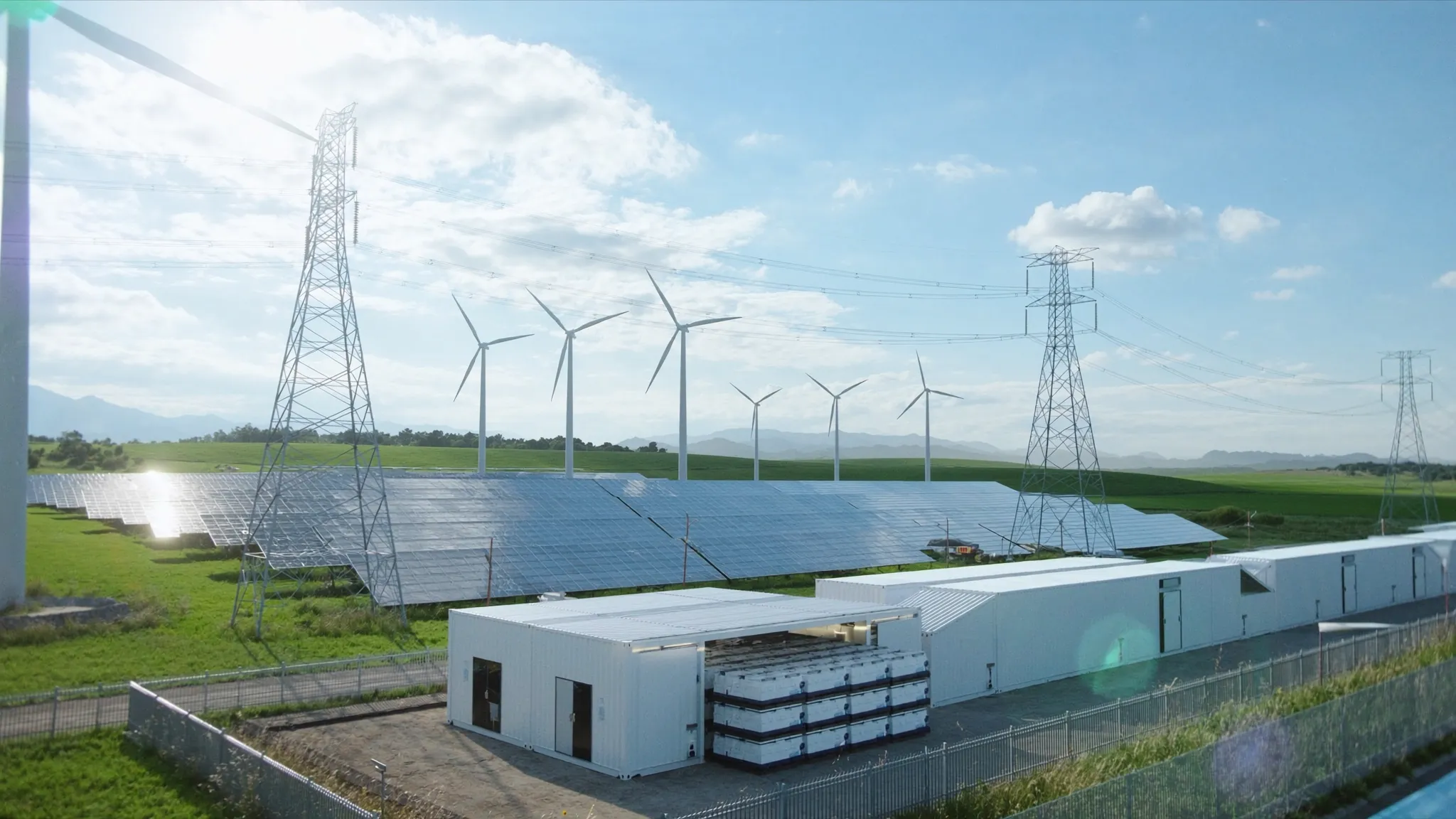
The report mentions something that perfectly illustrates the complexity we’re dealing with: solar generation has spiked to 2,129 TWh over the past 11 years, now supplying around 8% of global electricity as of July 2025. That’s remarkable progress, but it’s creating unprecedented challenges. In California and Australia—regions with high solar penetration—unexpected surpluses have actually driven wholesale power prices negative. Think about that for a moment: electricity became so abundant during peak solar hours that utilities had to pay customers to take it off their hands.
Meanwhile, on the flip side, sudden output drops are straining grid stability to the point where we’ve seen partial blackouts in Spain and Portugal earlier this year. The variability isn’t just theoretical anymore—it’s causing real operational problems that grid operators are scrambling to solve. Even with advanced weather forecasting, abrupt cloud cover or storms lead to substantial prediction errors, causing equipment stress and grid imbalances that ripple through entire energy systems.
What makes this particularly interesting is how it contrasts with the broader market optimism. The report identifies technological advancements and smart technology integration as key drivers, along with increasing adoption of Building-Integrated Photovoltaics (BIPV). Governments worldwide have introduced comprehensive renewable energy policies—national solar missions, renewable portfolio standards, and feed-in tariff schemes that mandate or incentivize utilities to source specific percentages of power from solar. The regulatory environment couldn’t be more supportive.
The Economics of Solar Intermittency
The financial implications of this intermittency challenge are more complex than most people realize. When I look at the market dynamics, it’s clear that the traditional energy pricing model is breaking down in regions with high solar penetration. In Germany, for instance, wholesale electricity prices have become increasingly volatile, with intraday price swings of 200-300% becoming common during periods of high renewable generation. This volatility creates both opportunities and risks for different market participants.
Energy storage companies like Tesla (Austin, Texas) with their Megapack systems and CATL (Ningde, China) with their grid-scale battery solutions are seeing unprecedented demand. Tesla reported that their energy storage deployments grew 40% year-over-year in Q3 2024, largely driven by utility-scale projects designed to smooth out renewable intermittency. Similarly, Fluence Energy (Arlington, Virginia), a joint venture between Siemens and AES, has seen their backlog grow to over $3.8 billion as of late 2024, with the majority of projects focused on renewable integration.
The storage market itself is projected to reach $120 billion by 2026, according to BloombergNEF, with lithium-ion battery prices falling to around $139/kWh in 2024—down from over $1,100/kWh in 2010. This cost decline is making grid-scale storage economically viable for the first time, but it’s still not cheap enough to fully solve the intermittency problem at scale. A typical utility-scale solar farm might need 4-6 hours of storage to provide firm power, which adds roughly $40-60 per MWh to the levelized cost of electricity.
What’s particularly striking is how different regions are adapting to these challenges. In Denmark, which gets over 50% of its electricity from wind and solar, the grid operator Energinet has implemented sophisticated demand response programs that automatically adjust industrial loads based on renewable availability. Danish companies like Ørsted (Fredericia, Denmark) have become global leaders in renewable integration, partly because they’ve had to solve these problems earlier than most.
In contrast, the United States is taking a more market-based approach. PJM Interconnection, which operates the grid for 13 states and Washington D.C., has implemented capacity markets that pay generators for being available when needed, regardless of whether they actually produce electricity. This creates revenue streams for both renewable and conventional generators, but it also adds complexity and cost to the system.
Technology Solutions and Market Response
The technology landscape around solar intermittency is evolving rapidly, with companies taking dramatically different approaches to the same fundamental problem. First Solar (Tempe, Arizona) has focused on improving the predictability of their thin-film panels, developing modules that perform more consistently across varying weather conditions compared to traditional silicon panels. Their Series 6 Plus modules maintain higher efficiency during cloudy conditions, which helps reduce some of the volatility that causes grid management headaches.
On the software side, companies like Stem (Millbrae, California) and Fluence are deploying AI-powered energy management systems that can predict and respond to grid conditions in real-time. Stem’s Athena platform uses machine learning to optimize when energy storage systems charge and discharge, potentially reducing grid balancing costs by 15-20% according to their internal studies. These systems are becoming sophisticated enough to participate in multiple grid services simultaneously—providing frequency regulation, voltage support, and energy arbitrage all from the same battery installation.
The inverter market is also adapting quickly. Companies like SolarEdge (Herzliya, Israel) and Enphase Energy (Fremont, California) are developing “smart inverters” that can provide grid services beyond just converting DC to AC power. These devices can adjust their output to help stabilize grid frequency and voltage, essentially turning every solar installation into a mini grid resource. Enphase reported that their IQ8 microinverters, which can operate during grid outages, saw 45% growth in shipments during 2024 as utilities began requiring more grid-supportive features.
Perhaps most interesting is the emergence of virtual power plants (VPPs) as a solution to aggregation challenges. Sunrun (San Francisco, California), the largest residential solar installer in the US, has partnered with utilities to create VPPs that can dispatch thousands of home battery systems as if they were a single power plant. Their VPP in California can provide over 100 MW of dispatchable capacity during peak demand periods, helping to smooth out the duck curve that occurs when solar production drops off in the evening just as electricity demand peaks.
The competitive dynamics in this space are fascinating to watch. Traditional utilities like NextEra Energy (Juno Beach, Florida) are investing heavily in both solar and storage, with their NextEra Energy Resources subsidiary operating over 30 GW of renewable capacity as of 2024. They’re essentially betting that scale and integration will allow them to manage intermittency more effectively than smaller, specialized players.
Meanwhile, tech companies are approaching the problem from entirely different angles. Google (Mountain View, California) has committed to operating on 24/7 carbon-free energy by 2030, which requires them to match their electricity consumption with clean generation on an hourly basis. This is pushing them to invest in advanced forecasting and storage technologies that could have broader applications across the industry. Microsoft (Redmond, Washington) has taken a similar approach, signing power purchase agreements that include both solar generation and battery storage to ensure more predictable renewable energy delivery.
The international picture adds another layer of complexity. China dominates solar panel manufacturing through companies like JinkoSolar (Shanghai), LONGi Solar (Xi’an), and Trina Solar (Changzhou), but they’re also investing heavily in grid flexibility solutions. State Grid Corporation of China has deployed over 1 GW of grid-scale energy storage and is experimenting with ultra-high voltage transmission lines that can move solar power from the sunny western provinces to population centers in the east. This geographical load balancing is something that smaller countries can’t easily replicate.
Looking at the financial markets, it’s clear that investors are starting to price in these intermittency challenges. Pure-play solar developers like Sunnova Energy (Houston, Texas) and SunPower (San Jose, California) have seen their valuations become more volatile as markets grapple with how to value assets that produce unpredictable cash flows. In contrast, integrated companies that combine generation, storage, and grid services are commanding premium valuations. This suggests that the market believes the future belongs to companies that can solve the whole intermittency puzzle, not just generate cheap solar electricity.
The regulatory response is also evolving. California’s Public Utilities Commission has implemented net energy metering 3.0, which reduces payments to solar customers during periods of oversupply and increases them during periods of scarcity. This is designed to encourage solar-plus-storage installations and shift some of the intermittency management burden to individual customers. Early results suggest that over 60% of new residential solar installations in California now include battery storage, up from less than 10% before the policy change.
As we head toward that $1.6 trillion market by 2034, it’s becoming clear that success won’t just be about deploying more solar panels—it’ll be about deploying them in ways that actually help rather than hurt grid stability. The companies and countries that figure out how to do this effectively will capture disproportionate value in what’s shaping up to be one of the most important technology transitions of our time. The intermittency challenge isn’t just a technical problem to be solved; it’s reshaping the entire energy industry in ways we’re only beginning to understand.
This post was written after reading Global solar energy market to reach $1.6 trillion by 2034 at 15.2% growth rate. I’ve added my own analysis and perspective.
Disclaimer: This blog is not a news outlet. The content represents the author’s personal views. Investment decisions are the sole responsibility of the investor, and we assume no liability for any losses incurred based on this content.
