[Solar Series] Hanwha Solutions, OCI Holdings, HD Hyundai Energy Solutions, and SK Eternix: A Look at South Korea’s Solar Industry Through Q3 Results
 Editor
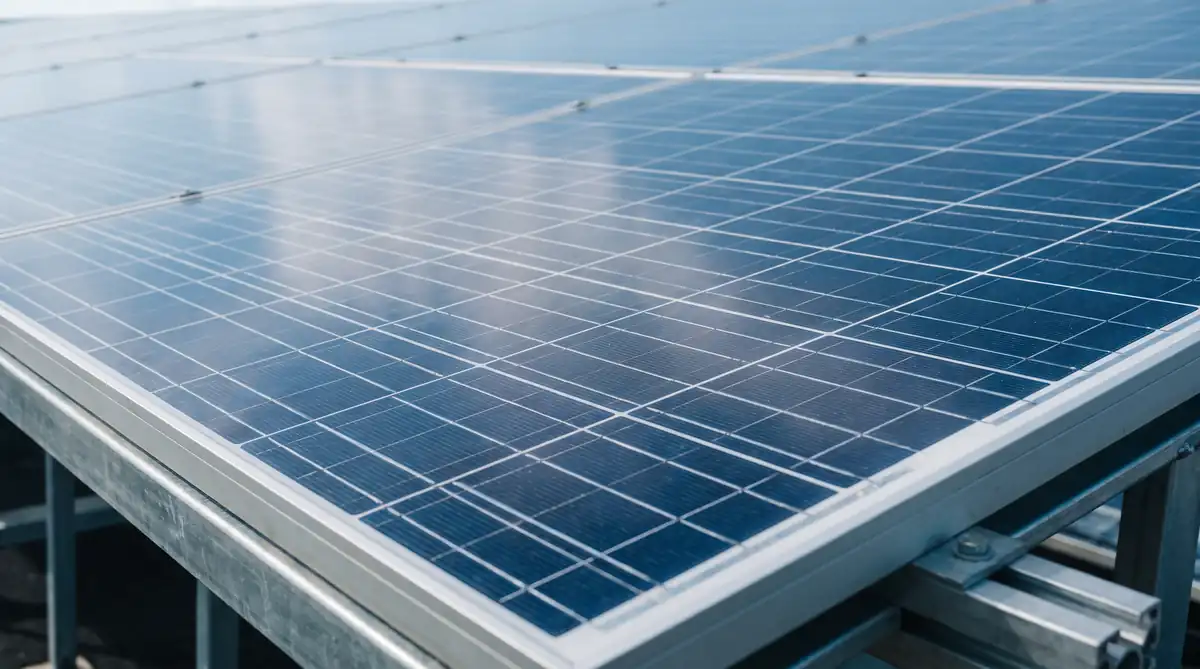
Images used in this article are not official company images.
Major South Korean solar companies have begun releasing their third-quarter 2026 results. Hanwha Solutions and OCI Holdings returned to operating profitability compared with the same period last year, while HD Hyundai Energy Solutions continued its year-on-year growth. SK Eternix has not yet announced its third-quarter results.
Based solely on the reported results of the three companies, the solar industry appears to be recovering. However, the picture changes when compared with the previous quarter. Operating profit declined at Hanwha Solutions and HD Hyundai Energy Solutions, and Hanwha Solutions fell substantially short of market expectations. OCI Holdings also missed market expectations, although its Malaysian polysilicon business turned profitable, signaling a change in profitability across its business segments.
Attention is now shifting beyond whether companies have returned to profitability toward whether improved margins can be sustained and how changes in U.S. trade policy will affect actual selling prices, orders, and revenue.
In particular, the United States is scheduled to issue antidumping and countervailing duty orders on solar products from India, Indonesia, and Laos on November 2, 2026. Minimum import prices (MIPs) and additional tariffs under Section 232 of the Trade Expansion Act are then scheduled to take effect on December 4.
The impact of these policies differs across Hanwha Solutions, which manufactures locally in the United States; OCI Holdings, which supplies polysilicon; HD Hyundai Energy Solutions, which produces solar cells and modules in South Korea for export; and SK Eternix, which develops domestic power generation projects.
This article examines the four companies’ third-quarter results alongside the production, order, and policy schedules that could determine their future performance.
Comparison of Q3 2026 Results: Four Solar Companies
| Company | Q3 Revenue | Q3 Operating Profit | Key Highlights |
|---|---|---|---|
| Hanwha Solutions | KRW 3.9486 trillion | KRW 90.5 billion | Returned to operating profitability year-on-year; 57% below market expectations |
| OCI Holdings | KRW 1.0622 trillion | KRW 68 billion | Returned to operating profitability year-on-year; 5.1% below market expectations |
| HD Hyundai Energy Solutions | KRW 150.7 billion | KRW 20.4 billion | Operating profit increased 39.3% year-on-year |
| SK Eternix | Not announced | Not announced | Q3 results not announced; long-term PPA contract disclosed |
The figures are based on preliminary results disclosed by Hanwha Solutions and OCI Holdings on October 29 and HD Hyundai Energy Solutions on October 26. As SK Eternix had not announced its third-quarter results as of October 29, 2026, brokerage estimates have been excluded from the table.
Comparing financial figures alone does not fully capture each company’s circumstances. For Hanwha Solutions and HD Hyundai Energy Solutions, solar cell and module manufacturing and selling prices are particularly important. OCI Holdings’ profitability depends on polysilicon prices, supply contracts, and power project sales. SK Eternix’s quarterly results are affected by the timing of revenue recognition from power project development and contracts.
Future results therefore need to be understood not only through revenue and operating profit, but also through how each company’s production capacity and secured contracts translate into actual earnings.
1. Hanwha Solutions — After Returning to Profit, U.S. Production Expansion and Profitability Take Center Stage
Hanwha Solutions disclosed on October 29 that it recorded consolidated third-quarter revenue of KRW 3.9486 trillion and operating profit of KRW 90.5 billion. Revenue increased 17.4% year-on-year, while operating profit turned positive from a loss of KRW 7.4 billion in the same period last year. Net profit was KRW 68.5 billion.
However, operating profit declined 70.5% from KRW 306.5 billion in the previous quarter. It was also 57% below the market expectation of KRW 210.5 billion.
By business segment, renewable energy supported the company’s results. The segment recorded revenue of KRW 2.1632 trillion and operating profit of KRW 105.1 billion. Increased module sales to the United States and improved profitability in the residential energy business contributed positively.
Nevertheless, operating profit in the renewable energy segment also declined 36.8% from KRW 166.4 billion in the previous quarter. In the second quarter, approximately KRW 90 billion in tariff refunds was reflected as a reduction in costs, alongside one-off factors such as the sale of development assets. As these effects diminished, direct comparisons between quarterly earnings require caution.
The chemicals segment posted an operating loss of KRW 44.7 billion due to reverse-lagging effects associated with falling oil prices. In contrast, the advanced materials segment recorded operating profit of KRW 38.9 billion, up 35.1% quarter-on-quarter.
Cell Efficiency and Production Stabilization Matter More Than Utilization Rates at the Cartersville Plant
A major variable in Hanwha Solutions’ future results is its Cartersville plant in Georgia, United States.
During its third-quarter earnings conference call, the company stated that most wafer- and cell-related processes at the Cartersville facility had reached operating levels close to production capacity. It also explained that work was underway to improve target efficiency in the cell manufacturing process.
This indicates a shift in attention beyond simply increasing factory operations toward improving the performance and profitability of the products manufactured.
Going forward, maintaining high utilization rates will matter, but so will whether improvements in cell efficiency translate into actual productivity gains and cost competitiveness. Even if production volume increases, higher sales may not immediately produce greater operating profit if product efficiency or manufacturing costs fall short of expectations.
How Much Will Increased AMPC Recognition Contribute to Results?
Expanding U.S. manufacturing is also linked to the Advanced Manufacturing Production Credit (AMPC).
During its third-quarter conference call, Hanwha Solutions projected that its annual AMPC amount would remain in the mid-KRW 900 billion range and expected the amount recognized in the fourth quarter to increase.
During the preceding second-quarter conference call, the company had projected AMPC recognition of KRW 230 billion in the third quarter and KRW 310 billion in the fourth quarter. It also explained that once production facilities became fully operational, an additional quarterly benefit of approximately KRW 100 billion could arise.
However, these figures are company forecasts and must be distinguished from confirmed financial results.
In future announcements, an important point of comparison will be not only the actual amount of AMPC recognized but also the extent to which profitability in the underlying manufacturing business improves excluding tax credit benefits.
Even if AMPC supports reported earnings, it would be difficult to fully attribute a recovery in profitability to manufacturing operations without an improvement in the relationship between manufacturing costs and selling prices.
What 2027 Sales Contracts and 2028 Negotiations Reveal About Pricing
Hanwha Solutions is securing medium- and long-term sales contracts while expanding its U.S. manufacturing base.
The company stated that it had completed sales contracts for 2027 modules meeting DCA (supply chain requirements related to foreign entities of concern) requirements and was negotiating supply volumes for 2028.
It also said that some gigawatt-scale contracts for future supply carry average selling prices (ASPs) more than 10% higher than this year’s levels.
This suggests that tightening U.S. supply chain regulations are influencing product price negotiations. However, higher prices in certain contracts do not necessarily mean that overall selling prices or operating profit will increase.
The important factors will be how much of the contracted pricing is reflected when revenue is actually generated and whether changes in production costs and sales volumes support that outcome.
A petition requesting a circumvention investigation into South Korean solar cells also remains a trade policy variable. During its second-quarter conference call, Hanwha Solutions stated that no related investigation had been initiated and that it did not expect an impact. Whether an investigation proceeds and its potential scope must be considered separately.
Ultimately, a sustained improvement in Hanwha Solutions’ profitability will depend on the combined effects of stabilizing Cartersville production, improving cell efficiency, expanding AMPC recognition, and converting higher-priced sales contracts into recognized revenue.
2. OCI Holdings — Can Polysilicon’s Return to Profit Become Sustainable Earnings?
OCI Holdings recorded third-quarter revenue of KRW 1.0622 trillion and operating profit of KRW 68 billion. Revenue rose 25.7% year-on-year, while operating profit turned positive from a loss of KRW 53.3 billion in the same period last year.
The company maintained operating profitability for four consecutive quarters, although operating profit was 5.1% below the market expectation of KRW 71.6 billion. It recorded a net loss of KRW 27.1 billion.
Both Hanwha Solutions and OCI Holdings missed market expectations, but the difference was substantial. Hanwha Solutions’ operating profit was 57% below expectations, compared with a 5.1% shortfall for OCI Holdings.
A notable development at OCI Holdings was the return to profitability of OCI TerraSus, its Malaysian polysilicon manufacturing subsidiary.
OCI TerraSus Reports Its First Quarterly Profit of the Year; Selling Prices Are the Next Variable
OCI TerraSus achieved its first quarterly operating profit of the year in the third quarter.
The company stated that it had signed a long-term agreement (LTA) with a new U.S. customer, securing annual supply volumes of 35,000 metric tons through 2029.
In the polysilicon business, long-term contracts improve the predictability of sales volumes. However, securing contracted volumes and maintaining high profitability are separate matters.
In particular, U.S. measures under Section 232 of the Trade Expansion Act are a key variable.
Starting December 4, 2026, the United States is scheduled to apply a minimum import price of $21 per kilogram to polysilicon used as a solar raw material. This standard has already been finalized by presidential proclamation and is awaiting implementation.
In its comments on third-quarter results, OCI Holdings said customers had adopted a wait-and-see approach while awaiting detailed guidance on the U.S. Section 232 measures and how prices would be applied. The company expects the relevant guidance to become clearer in early December.
The proclamation itself, however, is already final. The remaining uncertainty concerns how customers will incorporate it into actual purchasing decisions and price negotiations.
It is also important that OCI Holdings does not directly export polysilicon to the United States but supplies it through customers. Consequently, implementation of the minimum import price does not mean that OCI Holdings’ product prices or profits will rise by the same amount.
Meaningful changes may instead emerge in whether customers resume purchases, whether long-term supply agreements are fulfilled, and how much bargaining power OCI Holdings gains in polysilicon pricing.
Capacity Expansion and the Vietnamese Wafer Business
OCI Holdings is pursuing capacity expansion alongside improvements in the profitability of its existing polysilicon business.
The company has presented a plan to invest KRW 1.4299 trillion in OCI TerraSus and expand annual production capacity to 70,000 metric tons by 2029.
This reflects an effort to strengthen its business foundation through long-term supply capacity expansion rather than relying solely on short-term selling price changes. However, for the expansion plan to improve profitability, additional capacity must be accompanied by higher actual sales volumes.
Its Vietnamese wafer subsidiary, NeoSilicon, is another component of its supply chain expansion.
NeoSilicon has carried out quality certification and initial shipments of products destined for the U.S. market and plans to begin full-scale commercial production in the first quarter of 2027.
Future developments will depend on whether stable supply follows quality certification and whether commercial production begins as planned.
If the integration of polysilicon production and wafer supply stabilizes, OCI Holdings could expand its role in the solar supply chain beyond raw material sales.
U.S. Power Project Sales Add Another Variable to Earnings
OCI Holdings’ results are not determined solely by its materials manufacturing business.
OCI Energy, its U.S. power development subsidiary, is pursuing additional sales of projects totaling 250MW in the fourth quarter. If these sales are completed as planned, annual project sales will reach 750MW.
OCI Energy has secured a project pipeline totaling 8GW, primarily in Texas.
However, the size of a project pipeline does not directly translate into revenue or profit. The amount and quarter in which earnings are recognized can vary depending on each project’s development stage and sale completion date.
In the second quarter, the sale of the 500MW Lascaye project was reflected in results. Future comparisons should therefore distinguish one-off gains from project sales from the recurring profitability of the polysilicon manufacturing business.
The next developments at OCI Holdings are expected to become evident in whether Malaysian polysilicon operations remain profitable, how prices are negotiated after U.S. policy implementation, NeoSilicon’s preparations for commercial production, and whether OCI Energy completes its planned project sales.
3. HD Hyundai Energy Solutions — Capacity Expansion Becomes Key After Earnings Growth
HD Hyundai Energy Solutions disclosed third-quarter revenue of KRW 150.7 billion and operating profit of KRW 20.4 billion on October 26.
Revenue increased 24.5% year-on-year, while operating profit rose 39.3%. Compared with the previous quarter, however, revenue declined 8.7% and operating profit fell 43.4%.
Cumulative revenue from January through September reached KRW 475.688 billion, up 39.9% year-on-year, while cumulative operating profit increased 220.5% to KRW 85.576 billion.
Third-quarter operating profit was approximately 41% below market expectations. Since second-quarter operating profit of KRW 36.1 billion was the highest level in the past three years, quarterly earnings fluctuations have also been substantial.
However, the specific reasons for the quarter-on-quarter decline in operating profit cannot be identified from the currently confirmed disclosures alone. There is insufficient evidence to attribute it to individual factors such as weak U.S. sales or rising costs.
The next challenge for HD Hyundai Energy Solutions is how it expands its current production structure and responds to changes in domestic and overseas markets.
Will the Gap Between Cell and Module Capacity Lead to Expansion?
HD Hyundai Energy Solutions’ production facilities in Eumseong, North Chungcheong Province, have annual capacity of 400MW for cells and 1.2GW for modules.
In the first half of this year, the cell plant operated at a utilization rate of 96.6%, compared with 77.4% for the module plant.
With the cell facility maintaining a high utilization rate, the company is reviewing expansion of its Eumseong plant and construction of new factories in South Korea and overseas.
However, the company has stated that it is too early to specify an investment timeline. The scale of expansion and the construction start date therefore cannot be treated as confirmed plans.
The next important development will be whether the proposed expansion moves from the review stage to an actual investment decision.
In particular, given the difference between cell and module capacity, the direction of capacity expansion could alter the company’s internal sourcing structure and operating model. Once the locations and sizes of new facilities are finalized, they will provide an important basis for understanding its supply chain strategy.
Expanding U.S. Revenue Without Local Manufacturing Facilities
HD Hyundai Energy Solutions is also expanding its business in the U.S. market.
Second-quarter U.S. revenue totaled KRW 65.8 billion, representing approximately 40% of total revenue. Earlier, in March, the company signed a solar module supply contract worth KRW 127.8 billion with Hillsboro Solar.
It is also supplying TOPCon cells to the United States.
However, its business structure differs from Hanwha Solutions, which has production facilities in the United States.
Because HD Hyundai Energy Solutions has no U.S. manufacturing facilities, it does not qualify for AMPC benefits applicable to domestic U.S. manufacturing. Products manufactured in South Korea and exported to the United States must account for minimum import prices and tariffs under Section 232 of the Trade Expansion Act.
A 15% cap applies to South Korean products, including existing most-favored-nation (MFN) tariffs.
In an environment of higher minimum import prices, selling prices may change, but tariffs and logistics costs must also be considered.
Whether expanding U.S. exports leads to improved profitability will therefore depend on actual contract prices, supply volumes, and the cost structure after the policy takes effect.
Connecting Domestic Solar Expansion Policy with Manufacturing Investment
Domestic policy is another important variable for HD Hyundai Energy Solutions.
The government has set a target of 87GW in cumulative installed solar capacity by 2030. Alongside the expansion of domestic solar deployment, the details of preferential treatment for domestically manufactured and low-carbon products will also matter.
If these policies translate into product demand, they could change the business environment for companies with domestic manufacturing facilities.
However, deployment targets alone do not establish that any particular company will receive more orders or improve its results. The actual impact on individual companies can be distinguished only after detailed policy criteria and support mechanisms are finalized.
For HD Hyundai Energy Solutions, decisions on expanding cell production capacity, revenue and profitability from U.S. export contracts, and the finalization of domestic solar deployment policies will be major factors determining its next stage of growth.
4. SK Eternix — Q3 Results Not Yet Announced; Revenue Recognition Matters After Securing Contracts
SK Eternix had not announced its third-quarter results as of October 29, 2026.
The latest financial results available in the company’s IR materials library were its second-quarter materials posted on August 13. Although the statutory filing deadline for the third-quarter report is November 16, 2026, the actual announcement date remains Unverified.
At this point, progress should therefore be assessed by distinguishing disclosed contracts from brokerage forecasts.
Long-Term PPA Secured: The Path Toward Actual Power Project Results
On October 15, SK Eternix disclosed a direct renewable energy power purchase agreement (PPA) worth approximately KRW 507.788 billion.
The contract covers 100MW over a 25-year period. Its value is equivalent to 131.67% of the company’s most recent annual revenue.
A long-term PPA establishes a contractual foundation for electricity sales in a power generation business. In particular, amid growing demand for renewable electricity, it can support long-term project development.
However, the entire value of a long-term contract is not recognized as revenue when the agreement is signed.
The key future developments will be progress on the associated power projects and how the actual electricity supply and revenue recognition structure take shape.
The contract counterparty cannot be identified from the currently confirmed materials.
Will Revenue from Solanix No. 6 Be Recognized in Q4?
The Solanix No. 6 project has been identified as an important factor in SK Eternix’s near-term results.
On October 21, Hana Securities estimated SK Eternix’s third-quarter revenue at KRW 239.2 billion and operating profit at KRW 6.7 billion.
Hana Securities forecast that third-quarter results would fall short of market expectations because revenue recognition related to Solanix No. 6 had been deferred to the fourth quarter.
The approximately 154MW capacity attributed to Solanix No. 6 is also a Hana Securities estimate.
These are all brokerage estimates and forecasts, not confirmed results announced by the company.
When SK Eternix announces its actual third-quarter results, the differences from Hana Securities’ estimates and the status of revenue recognition by project will become important. Whether Solanix No. 6 revenue is recognized in the fourth quarter as forecast will also help explain the direction of earnings.
Quarterly results for power project developers can vary considerably depending on project progress and the timing of revenue recognition. Accordingly, the size of one quarter’s profit alone is not sufficient to assess the annual business trajectory.
Expanding Solar Development and Bidding for ESS and New Businesses
SK Eternix is pursuing an expansion of its existing solar power development business.
Hana Securities forecast that the company’s annual solar development volume would increase from the previous 200–300MW to more than 500MW.
This is a Hana Securities forecast and does not mean that the expansion in actual development volume has been confirmed.
The outcomes of bidding processes scheduled within the year for energy storage systems (ESS), the Clean Hydrogen Portfolio Standard (CHPS), and offshore wind projects are also potential drivers of business expansion.
However, profitability remains a concern in the ESS business. Hana Securities forecast that losses in the ESS segment would continue due to the expiration of basic electricity charge discounts in April.
It is therefore important to distinguish new business contract wins from improvements in profitability within the existing ESS business.
Unlike manufacturers, SK Eternix does not have a business structure in which U.S. solar import restrictions directly affect earnings. Instead, key variables include domestic renewable electricity demand, expansion of the long-term PPA market, power project development, and revenue recognition.
Its future business trajectory is expected to become clearer through the announcement of actual third-quarter results, revenue recognition from Solanix No. 6, expansion of solar development activities, and bidding outcomes for ESS, CHPS, and offshore wind projects.
5. U.S. Trade Policy — November Tariff Orders and December Minimum Import Prices
A common factor affecting the solar industry in the fourth quarter of 2026 is the tightening of U.S. import restrictions.
In particular, antidumping and countervailing duty measures on products from India, Indonesia, and Laos must be distinguished from the minimum import prices introduced under Section 232 of the Trade Expansion Act.
Antidumping and Countervailing Duty Orders Scheduled for November 2
On October 14, 2026, the U.S. International Trade Commission (USITC) issued final affirmative injury determinations concerning solar cells and modules from India, Indonesia, and Laos.
This moves forward the process for the U.S. Department of Commerce to issue antidumping duty (AD) and countervailing duty (CVD) orders.
AASMT, an alliance of U.S. solar manufacturers, stated that the orders and cash deposits were scheduled to begin on November 2, 2026. This is a planned date, and whether the orders are actually issued must be established through official announcements at that time.
The rates set out in the U.S. Department of Commerce’s September 11 final determinations are as follows.
| Country | Antidumping Duty (AD) | Countervailing Duty (CVD) |
|---|---|---|
| India | 123.04% | 126.09% |
| Indonesia | 94.36% | 73.20~173.70% |
| Laos | 65.43% | 82.03~153.67% |
These figures represent rates stated in the Commerce Department’s final determinations. Actual application varies by the companies and products involved and the relevant orders. The two types of duties should not simply be added together and treated as a single uniform rate applicable to all products.
Petitioners in the case include Hanwha Qcells USA, First Solar, and Mission Solar.
This demonstrates that U.S. manufacturers view competition with imported products as an important industry issue.
Going forward, important developments will include whether the orders are issued as scheduled and how supply volumes from the affected countries and procurement methods among U.S. buyers change.
The USITC’s public report is scheduled to be published by November 23.
December 4, 2026: Section 232 Minimum Import Prices Take Effect
The second development involves import measures on solar products under Section 232 of the Trade Expansion Act.
Through a proclamation signed on August 6, 2026, the United States finalized minimum import prices and additional tariffs on solar-related products.
The measures are scheduled to apply to products entering customs clearance from 12:01 a.m. U.S. Eastern Time on December 4, 2026.
The minimum import prices for major product categories are as follows.
| Product | Finalized Minimum Import Price (MIP) |
|---|---|
| Solar modules | $0.38/W |
| Solar cells | $0.22/W |
| Ingots and wafers | $100/kg |
| Polysilicon | $21/kg |
An additional 15% tariff applies to products ranging from ingots to modules. However, a 15% cap applies to South Korea, Japan, the European Union (EU), and certain others when combined with existing MFN tariffs. Raw polysilicon is subject only to the minimum import price measure, not the additional tariff.
The minimum import price of 38 cents per watt for solar modules is not merely a market forecast. It is a standard already finalized by proclamation and awaiting implementation.
Sisajournal-e reported that this price is 40.7% higher than the previous average import price of approximately $0.27.
However, a higher minimum import price does not mean that all solar modules sold in the United States will increase in price by the same percentage.
In practice, existing contract terms, product-specific sourcing structures, policy implementation dates, and the extent to which the changes are reflected in selling prices may all affect market outcomes.
In addition, fixed-term contracts concluded before August 6, 2026, may qualify for exceptions if relevant requirements are met and supporting documents are submitted. The authorization for the U.S. Secretary of Commerce to adjust minimum import prices periodically is another variable in future policy implementation.
December 4 is therefore not the beginning of policy discussions but the point at which the already finalized measures begin to apply to actual customs clearance and transactions.
Some policy effects may be reflected in prices in advance, but their impact on corporate earnings will depend on transaction structures and the timing of contracts.
6. Why the Same U.S. Policy Affects the Four Companies Differently
Tighter U.S. import restrictions clearly represent an important change for the solar industry as a whole. However, it would be difficult to interpret them as equally favorable to every company.
This is because the companies operate in different parts of the solar industry and have manufacturing facilities in different locations.
| Company | Main Business Structure | Future Policy and Business Variables |
|---|---|---|
| Hanwha Solutions | Local U.S. wafer, cell, and module production and sales | Cartersville production stabilization, AMPC recognition, U.S. module selling prices |
| OCI Holdings | Malaysian polysilicon, Vietnamese wafers, U.S. power projects | Polysilicon pricing power, resumption of customer purchases, power project sales |
| HD Hyundai Energy Solutions | Solar cell and module manufacturing in South Korea and exports to the U.S. | Minimum import prices and tariffs, export contract profitability, capacity expansion |
| SK Eternix | Domestic power project development and long-term PPAs | Project revenue recognition, renewable electricity demand, new business bidding |
Hanwha Solutions has integrated production facilities in the United States, making the AMPC benefits of expanding local manufacturing and changes in supply chain regulations important variables. However, even if production facilities operate normally, improvements in profitability will depend on manufacturing costs and selling prices.
OCI Holdings is affected by polysilicon prices and changes in the supply chain. Implementation of the polysilicon minimum import price may strengthen its pricing power, but given its supply structure through customers, the actual benefit will depend on transaction terms.
HD Hyundai Energy Solutions sells products manufactured in South Korea to the United States, so minimum import prices and tariffs may affect the pricing and cost structure of its export business. Unlike Hanwha Solutions, it has no U.S. manufacturing facilities and therefore cannot readily benefit from AMPC.
SK Eternix focuses on domestic power project development, making the direct impact of U.S. solar import regulations on earnings relatively limited. Instead, domestic renewable energy policy and electricity demand, project development, and contract execution are more influential factors.
Thus, even within the same solar industry, higher U.S. tariffs or minimum import prices alone cannot explain the earnings outlook for every company in the same way.
Moreover, even if policy changes push module selling prices higher, they may also increase equipment procurement costs for developers building solar power plants in the United States.
Higher selling prices for manufacturers and changes in project economics for power developers must therefore be considered separately.
Conclusion — Beyond Q3 Results: Turning Production, Pricing, and Contracts into Actual Performance
South Korean solar companies’ third-quarter 2026 results revealed signs of both recovery and slowing momentum.
Hanwha Solutions and OCI Holdings returned to operating profitability but fell short of market expectations. The differences were substantial: Hanwha Solutions missed expectations by 57%, while OCI Holdings fell short by 5.1%.
HD Hyundai Energy Solutions showed clear growth in cumulative results, but operating profit declined quarter-on-quarter in the third quarter. SK Eternix has not yet announced its third-quarter results, so its actual performance must be distinguished from Hana Securities’ estimates.
The variables explaining the four companies’ future results are also becoming increasingly distinct.
- For Hanwha Solutions, important developments include production stabilization at its Cartersville plant, improvements in cell efficiency, increased AMPC recognition, and the conversion of 2027–2028 sales contracts into actual revenue and profit.
- For OCI Holdings, key factors include whether OCI TerraSus maintains profitability, polysilicon price negotiations after December’s minimum import price implementation, NeoSilicon’s preparations for commercial production, and progress on OCI Energy’s project sales.
- For HD Hyundai Energy Solutions, decisions on expanding cell manufacturing facilities, profitability from U.S. export contracts, and the finalization of domestic solar deployment policies will help determine its future direction.
- For SK Eternix, major variables include its unannounced third-quarter results, whether Solanix No. 6 revenue is reflected in the fourth quarter, expansion of development projects based on long-term PPAs, and the outcomes of new business bids.
Common milestones include the antidumping and countervailing duty orders scheduled for November 2, 2026, and implementation of the finalized minimum import prices on December 4.
What happens after implementation matters more than implementation itself. Changes in actual transaction prices, normalization of customer purchasing schedules, and the conversion of company contracts and production expansion into revenue and operating profit will provide the basis for assessing the effects of these policies.
If third-quarter results showed the companies’ current profitability, future disclosures concerning production, orders, and revenue recognition should help explain how sustainable that profitability may be.
This article distinguishes publicly available disclosures, reports, company statements, and brokerage forecasts. It does not constitute investment advice or a recommendation concerning any specific stock.
Sources
Company Results and Business Developments
- Yonhap News Agency, 2026.10.29, Hanwha Solutions’ Q3 results
https://www.yna.co.kr/view/AKR20261029121100527
- Yonhap News Agency, 2026.10.29, OCI Holdings’ Q3 results
https://www.yna.co.kr/view/AKR20261029141100527
- Korea Financial Times, 2026.07.29, Hanwha Solutions’ Q2 results and tariff refunds
https://www.fntimes.com/html/view.php?ud=202607292231253457fa6b69a559_18
- Global Economic, 2026.10.29, Hanwha Solutions’ Q3 conference call and outlook for U.S. production and orders
https://www.g-enews.com/article/Industry/2026/10/202610291501522262ea14faf6f5_1
- Digital Times, Hanwha Solutions’ AMPC and production expansion outlook
https://www.dt.co.kr/article/12075520
- Etoday, OCI Holdings’ business developments and project sales
https://www.etoday.co.kr/news/view/2641822
- Newsis, 2026.08.25, OCI TerraSus capacity expansion investment
https://www.newsis.com/view/NISX20260825_0003762172
- Bizwatch, 2026.10.14, HD Hyundai Energy Solutions’ review of production capacity expansion
https://news.bizwatch.co.kr/article/industry/2026/10/14/0046
- Dealsite, reporting on HD Hyundai Energy Solutions’ production and related policies
https://dealsite.co.kr/articles/169852
- The Bell, 2026.08.10, HD Hyundai Energy Solutions’ U.S. business
https://www.thebell.co.kr/front/newsview.asp?key=202608101353322200101935
- Digital Today, HD Hyundai Energy Solutions’ preliminary Q3 earnings disclosure
https://www.digitaltoday.co.kr/disclosure/articleView.html?idxno=709992
- Digital Today, SK Eternix’s long-term PPA contract disclosure
https://www.digitaltoday.co.kr/disclosure/articleView.html?idxno=707404
- SK Eternix official IR materials library
https://www.sketernix.com/invest/irsearchList.do
- Yonhap News Agency, 2026.10.21, Hana Securities’ estimates for SK Eternix’s Q3 results and business outlook
https://www.yna.co.kr/view/AKR20261021027700008
U.S. Trade Policy and Market Conditions
- U.S. International Trade Commission (USITC), 2026.10.14, final injury determinations on solar products from India, Indonesia, and Laos
https://www.usitc.gov/press_room/news_release/2026/er1014_69351.htm
- U.S. Department of Commerce, 2026.09.11, final antidumping and countervailing duty determinations on solar products
https://www.trade.gov/final-affirmative-determinations-antidumping-duty-and-countervailing-duty-investigations-0
- AASMT, 2026.10.14, U.S. solar manufacturers’ alliance announcement concerning AD/CVD measures
https://aasmt.org/release-u-s-international-trade-commission-votes-in-favor-of-domestic-solar-manufacturers-in-antidumping-and-countervailing-duty-cases-against-india-indonesia-and-laos/
- Ministry of Trade, Industry and Resources, reference materials on U.S. Section 232 import measures for solar products
https://www.motir.go.kr/kor/article/ATCL3f49a5a8c/172093/view
- Seoul Economic Daily, U.S. minimum import prices for solar products and their impact on South Korean companies
https://www.sedaily.com/article/20077069
- Sisajournal-e, reporting on U.S. minimum import prices for solar modules
https://www.sisajournal-e.com/news/articleView.html?idxno=423037
- Gateway, overview of Section 232 solar product tariffs, minimum import prices, and contract exceptions
