A New Era of Synthetic Biology: Rapid Growth and Market Restructuring in Biomanufacturing by 2026
 Editor
In early 2026, the global synthetic biology market is at a historic turning point. According to McKinsey’s latest report, the biomanufacturing industry grew by 34%, from $92.6 billion in 2025 to $124 billion in 2026, significantly surpassing the traditional chemical manufacturing industry’s annual growth rate of 3.2%. This explosive growth is driven by the commercialization of gene-editing technologies, the refinement of AI-based protein design, and the urgent demand for sustainability from corporations. Notably, the Asia-Pacific region has overtaken North America (38%), accounting for 42% of the total market, driven by substantial government investments and proactive business transitions in South Korea and China.
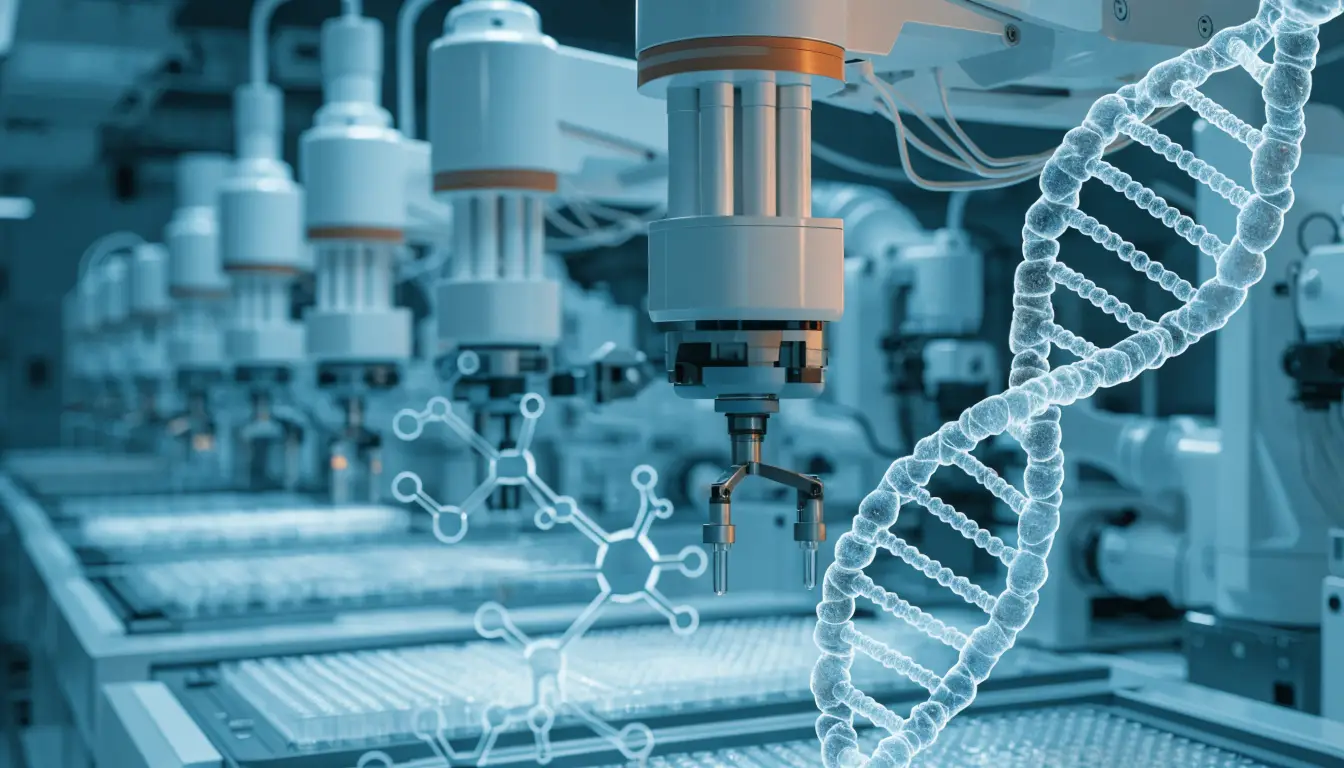
In South Korea, the government announced a concentrated investment of 2.8 trillion won in the synthetic biology sector over the next three years through the ‘K-Bio Grand Challenge 2026’ program. This amount is 2.3 times the previous year’s investment, with 70% allocated to building biomanufacturing infrastructure and developing core technologies. Samsung Biologics in Pangyo, Gyeonggi Province, reported a 67% increase in first-quarter revenue in 2026 compared to the same period last year, reaching 1.24 trillion won, supported by these policy initiatives. The company has completed the construction of its fourth plant in Songdo, Incheon, with an annual production capacity of 360,000 liters, further solidifying its position in the global biopharmaceutical contract manufacturing (CMO) market.
In the U.S. market, Boston-based Ginkgo Bioworks is presenting a new model for synthetic biology platform companies. As of January 2026, the company has a market capitalization of $8.4 billion and handles over 20,000 strain development projects annually through its automated microbial engineering platform. Unlike traditional biotech companies, Ginkgo’s unique business model offers ‘biological foundry’ services, acting as a B2B platform that designs and optimizes custom microorganisms for its clients. As of the fourth quarter of 2025, 127 Fortune 500 companies were utilizing Ginkgo’s services, with an average project size of $3.2 million.
Technological Innovation and Commercialization Acceleration in Biomanufacturing
One of the key drivers of synthetic biology commercialization is the integration of AI and machine learning technologies. Denmark’s Novozymes announced in early 2026 that its AI-based enzyme design platform ‘BioAI’ reduced development time from 18 months to 6 months, a 75% time saving compared to traditional trial-and-error enzyme development, and also reduced development costs by an average of 40%. Novozymes’ first-quarter revenue in 2026 increased by 28% year-on-year to 4.7 billion kroner, with sustainable detergent enzymes and biofuel enzymes growing by 45% and 52%, respectively.
Meanwhile, California’s Amyris is achieving notable success in producing high-value chemicals through synthetic biology. The company uses genetically engineered yeast to produce squalene for cosmetics, patchouli oil for fragrances, and artemisinin for antimalarial treatments. As of 2026, Amyris’ São Paulo plant in Brazil produces 12,000 tons of bio-based chemicals annually, reducing carbon emissions by 68% compared to traditional petrochemical processes. Notably, production costs have decreased by 35% compared to conventional extraction methods, indicating that synthetic biology offers both environmental benefits and economic competitiveness.
Another axis of technological advancement is the precision of gene-editing technologies. With the commercialization of next-generation gene-editing tools beyond CRISPR-Cas9, the accuracy and efficiency of microbial engineering have significantly improved. The introduction of Prime Editing and Base Editing technologies allows precise genetic modifications without unwanted side effects. These technological advancements have improved the yield of biomanufacturing processes by an average of 23% and reduced byproduct generation during production by 45%.
South Korea’s LG Chem is actively leveraging these technological trends to expand its bio-based chemical materials business. The company announced the start of operations at its bio-based BDO (1,4-butanediol) production plant in Daesan, Chungnam, with an annual capacity of 50,000 tons in January 2026. This facility uses genetically engineered E. coli to produce BDO from sugar, reducing production costs by 18% and carbon emissions by 62% compared to traditional petrochemical processes. LG Chem has set a revenue target of 1.5 trillion won for its bio-chemical division in 2026, accounting for 12% of its total chemical division revenue.
Market Competition Landscape and Investment Trends
The competitive landscape in the synthetic biology field is unfolding as a fierce battle between traditional chemical and pharmaceutical companies and emerging biotech firms. Traditional companies have strengths in large-scale commercialization utilizing existing manufacturing infrastructure and customer networks, while emerging companies lead the market with innovative technologies and agile development speeds. The key to success in this competitive landscape is the combination of technological superiority and commercialization capability, with many companies striving to achieve this through strategic partnerships.
Interest from venture capital and corporate investors in synthetic biology is rapidly increasing. According to PitchBook data, investment in global synthetic biology startups in the first quarter of 2026 increased by 89% year-on-year to $4.7 billion. Particularly, late-stage investments after Series B accounted for 68% of the total, indicating that the technology is moving beyond the proof-of-concept stage to commercialization. The average investment size also increased by 35%, from $23 million in 2025 to $31 million in 2026, showing that investors are focusing on commercialization projects requiring larger capital.
In the Korean market, active strategic investments by large corporations are progressing alongside the government’s proactive policy support. Celltrion announced in January 2026 an investment of 120 billion won to establish its own synthetic biology research institute, aiming to strengthen its capabilities in developing next-generation biopharmaceuticals. The company is particularly focused on developing innovative therapies utilizing synthetic biology technologies in the fields of antibody-drug conjugates (ADCs) and cell therapies. Celltrion’s first-quarter R&D expenditure in 2026 increased by 43% year-on-year to 68 billion won, with 35% allocated to synthetic biology-related projects.
On a global scale, the rapid growth of Chinese companies is changing the market dynamics. According to China’s ’14th Five-Year Plan,’ a total of 80 billion yuan (approximately 15 trillion won) will be invested in the synthetic biology field over five years, targeting an annual growth rate of 28%. Particularly, biomanufacturing clusters centered around Shanghai and Shenzhen are rapidly growing, and companies in these regions are accelerating their global market entry based on low production costs and government support. This rise of China is exerting new competitive pressure on existing companies in advanced countries while simultaneously promoting diversification of the global supply chain.
Another noteworthy trend in investment is the increasing importance of ESG (Environmental, Social, and Governance) factors. Institutional investors are comprehensively considering not only technological capability and marketability but also environmental impact, bioethics, and safety when evaluating synthetic biology companies. Consequently, many companies are setting sustainability indicators as key performance indicators (KPIs) and establishing governance systems for transparent safety data disclosure and ethical research conduct. According to BlackRock’s recent report, synthetic biology companies meeting ESG criteria have an average valuation premium of 15-20%.
As of 2026, the growth drivers of the synthetic biology market are the simultaneous effects of achieving technological maturity, securing economic competitiveness, and increasing societal demand for sustainability. Over the next five years, this market is projected to maintain an average annual growth rate of 26%, reaching $420 billion by 2031. The growth potential in the Asia-Pacific region is particularly significant, and Korean companies are expected to further strengthen their competitiveness in the global market, supported by government policy initiatives and proactive corporate investments. However, successfully overcoming challenges such as changes in regulatory environments, technological risks, and intensifying international competition will be key to sustained growth.
