A New Turning Point in Biotechnology Innovation: The Rapid Growth of AI-Driven Drug Development and Gene Therapy by 2026
 Editor
A New Era of Biotechnology Driven by the AI Revolution
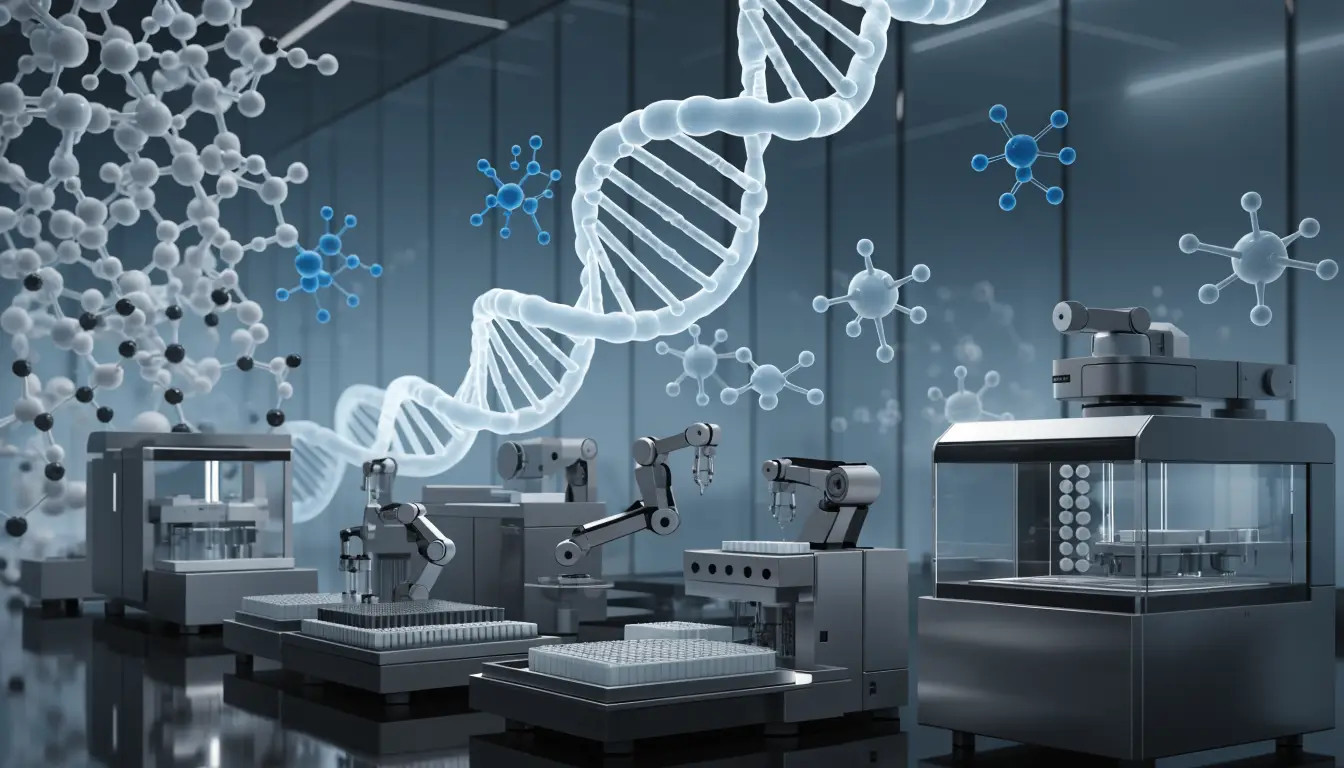
As of January 2026, the biotechnology industry is undergoing a fundamental transformation due to the integration of artificial intelligence and machine learning technologies. The global biotechnology market size has reached $1.012 trillion, reflecting an 18.7% growth compared to 2025, significantly surpassing the average annual growth rate of 15.2% over the past five years. Particularly, the AI-driven drug discovery sector has emerged as the most notable area, accounting for 32% of total biotech investments. Moderna, headquartered in Boston, USA, announced in its 2026 Q1 earnings report that it would invest $4.5 billion in developing personalized cancer treatments using its mRNA vaccine platform, representing 60% of the company’s total R&D budget.
The South Korean biotech industry is also experiencing rapid growth. Samsung Biologics, headquartered in Incheon, recorded a 24.3% increase in Q4 2025 sales compared to the same period the previous year, reaching 842 billion won, and expanded its market share in the global biopharmaceutical contract development and manufacturing organization (CDMO) market to 15.7%. This ranks second globally, following Roche of Basel, Switzerland, which holds an 18.2% share. Samsung Biologics’ success is driven by policy support linked to the South Korean government’s K-Bio Belt project and the expansion of infrastructure in the Songdo Bio Cluster. Notably, Plant 4, completed in December 2025, boasts an annual production capacity of 240,000 liters, the largest for a single facility worldwide.
In the field of gene therapy, the commercialization of CRISPR-Cas9 technology is rapidly changing the market landscape. The global gene therapy market is currently valued at $18.7 billion in 2026, reflecting an 89% growth compared to 2023. Gilead Sciences, headquartered in Foster City, California, USA, announced in November 2025 that it had expanded the indications for its CAR-T cell therapy ‘Kymriah’, achieving annual sales of $2.3 billion. This accounts for 8.7% of Gilead’s total revenue and is considered a key achievement in the company’s strategy to transition from a focus on traditional antiviral drugs to next-generation immunotherapies.
The efficiency of AI-driven drug development platforms demonstrates a significant advantage over traditional methods. While conventional drug development processes take an average of 12-15 years and cost $2.7 billion, research indicates that AI-driven drug development can reduce development time to 5-7 years and cut costs by 40-60%. Biogen, headquartered in Cambridge, Massachusetts, announced in 2025 that it had simultaneously advanced three Alzheimer’s disease treatment candidates to Phase 1 clinical trials using its AI drug development platform. This case demonstrates a more than threefold improvement in development speed by processing what would have been sequential steps in parallel.
The integration of AI in the biotechnology industry is fundamentally transforming the medical paradigm beyond mere technological advancement, and it is expected to lead to the popularization of personalized precision medicine.
Changes in Global Competition and the Rise of the Asian Biohub
In 2026, the global competitive landscape of the biotechnology industry is shifting from a US-centric unipolar system to a multipolar one with the rapid rise of the Asia-Pacific region. China’s biotech investment reached $32 billion in 2025, a 67% increase from the previous year, ranking second globally after the US ($89 billion). Particularly, bio clusters centered around Shanghai and Beijing are becoming hubs for global biotech companies’ entry into Asia, supported by strong government backing. Japan, too, has expanded its biotech investment to $18 billion in 2025, a 45% increase from the previous year, through the government-led ‘Bio Community Japan’ project.
In South Korea, the biotech ecosystem is rapidly maturing due to the combination of the government’s K-Bio Grand Challenge policy and private investment. In 2025, the total investment raised by South Korean biotech companies reached $7.8 billion, approximately four times the amount in 2020. Celltrion, headquartered in Songdo, Incheon, recorded a 12.3% global market share in the biosimilar sector in 2025, closely trailing Switzerland’s Novartis (13.7%). Celltrion’s success is attributed to its vertically integrated production system from raw materials to finished products and its accumulated expertise in obtaining approvals from global regulatory authorities. Notably, the trastuzumab biosimilar ‘Herzuma’, approved by the European Medicines Agency (EMA) in 2025, achieved annual sales of $1.5 billion, accounting for 23% of the company’s total revenue.
Eli Lilly, headquartered in Indianapolis, Indiana, USA, announced that its diabetes treatment ‘Mounjaro’ achieved global sales of $13.9 billion in 2025. This ranks as the second-highest sales for a single drug, following Pfizer’s COVID-19 vaccine ‘Comirnaty’. Mounjaro’s success was driven by the commercialization of a new treatment mechanism as a GLP-1 receptor agonist and the expansion of indications as an obesity treatment. Building on this success, Lilly announced an additional $8 billion investment in the development of the Alzheimer’s treatment ‘Leqembi’ in 2026, marking the largest single project investment in the company’s history.
Another feature of the changing competitive landscape is the accelerated entry of big tech companies into biotechnology. Alphabet, Google’s parent company, has entered the drug development platform market by commercializing the protein structure prediction AI ‘AlphaFold’, developed by its subsidiary DeepMind. In 2025, there were over 1,200 drug development projects utilizing AlphaFold globally, with 32 of these projects entering clinical trials. Microsoft also announced the establishment of a biotech-focused subsidiary ‘MS Bio’ in 2025 and a $3.5 billion investment in a cloud-based drug development platform.
This shift in the global competitive landscape is leading to more active strategic alliances and M&A activities among biotech companies. In 2025, the M&A transaction volume in the biotech sector increased by 43% from the previous year, reaching $234 billion, the highest level since the pandemic boom in 2021. Particularly, there is intense competition to acquire startups with AI-driven drug development platforms, with an average acquisition price applying a 4.7x premium over company valuations.
The regulatory environment is also rapidly changing. In December 2025, the US FDA released ‘AI-Based Medical Device and Drug Approval Guidelines’, emphasizing transparency and explainability of AI algorithms as key review criteria. The European Union introduced a strict regulatory framework for medical AI through the ‘AI Act’, effective from 2026, which is expected to significantly impact global biotech companies’ strategies for entering the European market. The Korean Ministry of Food and Drug Safety also introduced the ‘K-Bio Innovation Approval System’ in November 2025, providing a fast-track approval pathway for innovative biopharmaceuticals.
In terms of investment trends, venture capital investment in biotechnology accounted for 28.4% of total VC investments, the highest proportion ever. The average investment size for Series A stage biotech startups was $23.4 million, a 2.1x increase from 2020. This reflects the technological complexity and high initial investment costs in the biotech sector. Simultaneously, the average investment recovery period is 8.7 years, longer than in other sectors, but with an average return of 12.3x upon success, it remains an attractive investment field.
As of 2026, the biotechnology industry is at a turning point where technological innovation, market expansion, and regulatory changes are occurring simultaneously. The integration of AI and machine learning technologies is fundamentally changing the paradigm of drug development, while the commercialization of gene and cell therapies presents new possibilities for treating incurable diseases. The multipolarization of the global competitive landscape and the rise of the Asian biohub are expected to reshape the biotech industry landscape over the next decade, with the roles of Asian countries, including South Korea, becoming increasingly important. Investors and industry stakeholders need a strategic approach to capture new opportunities and manage risks amid these waves of change.
*This article is intended for informational purposes only and does not constitute investment advice or recommendations. Investment decisions should be made based on individual judgment and responsibility.*
