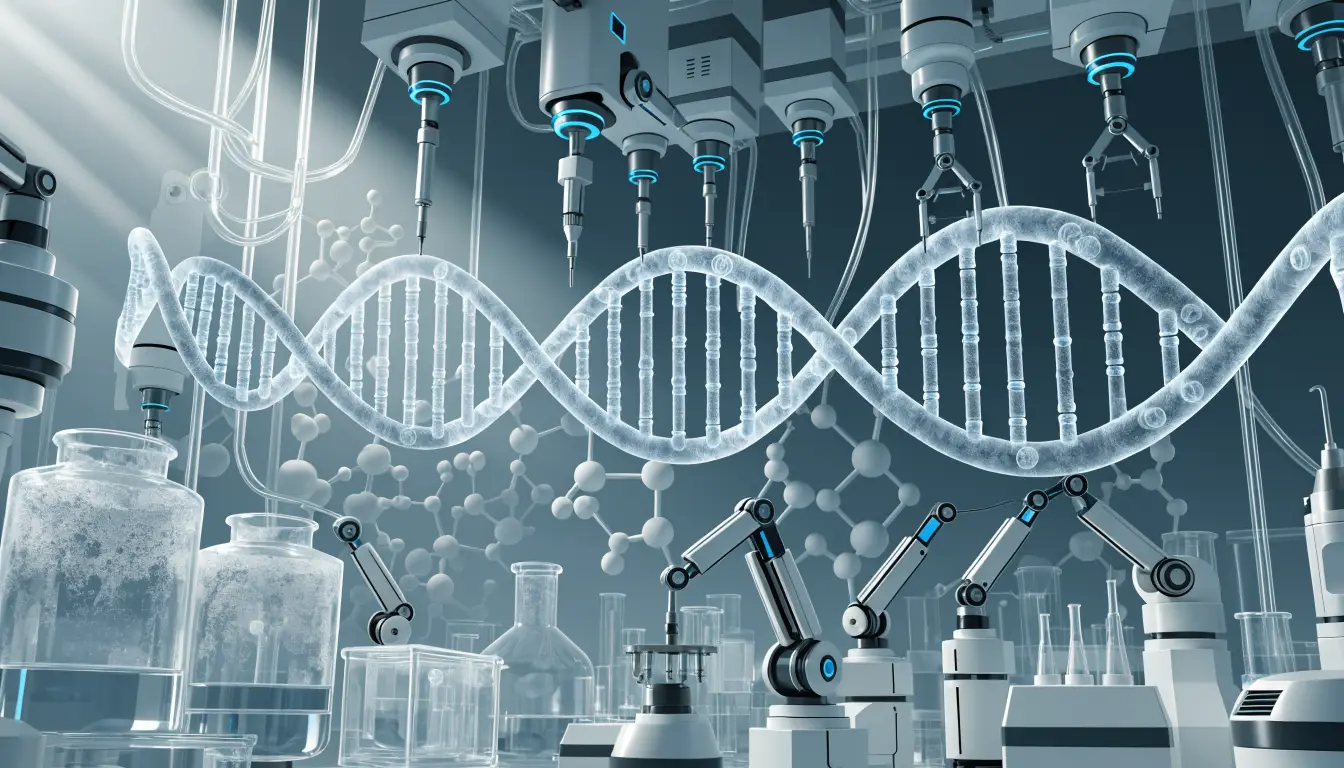
A New Turning Point in the Biotech Revolution: The Rapid Growth of AI-Based Drug Development and Gene Therapy by 2025
 Editor
The Paradigm Shift in Drug Development Driven by AI
As of the end of 2025, the biotechnology industry is experiencing an unprecedented transformation through the integration of artificial intelligence and machine learning. With the global biotech market reaching $1.2 trillion and recording an annual growth rate of 13.2%, AI-based drug development platforms are fundamentally reshaping the R&D processes of the traditional pharmaceutical industry. Particularly, the time required from the discovery of new drug candidates to clinical trials has been reduced from the conventional 10-15 years to 5-7 years, dramatically improving the return on investment and pace of innovation across the industry.
Recursion Pharmaceuticals, based in Cambridge, Massachusetts, announced that as of the third quarter of 2025, they are simultaneously developing over 100 new drug candidates through their AI platform, achieving more than 90% cost savings compared to traditional methods. Additionally, Exscientia, based in London, UK, received a fast-track designation from the FDA for an AI-designed cancer drug this year, proving the commercial success potential of AI drug development. In Korea, Samsung Biologics is investing 500 billion won in an AI-based biopharmaceutical development platform to secure global competitiveness.
These technological advancements are not only improving efficiency but also significantly increasing the success rate of drug development. While the success rate of traditional drug development remained below 10%, projects utilizing AI-based platforms are achieving success rates of 30-40%, drawing industry attention. Particularly, with AI’s accuracy in predicting target protein structures and modeling molecular interactions exceeding 95%, the possibility of developing treatments for diseases previously deemed ‘undruggable’ is opening up.
Accelerating the Commercialization of CRISPR Gene Editing
In the field of gene editing technology, next-generation technologies beyond CRISPR-Cas9 are entering clinical application stages, driving market growth. The global gene editing market size reached $28 billion in 2025 and is projected to expand to $75 billion by 2030 with an annual growth rate of 19.8%. Particularly, with the precision of Base Editing and Prime Editing technologies improving to over 99.5%, there have been revolutionary advancements in treating genetic disorders caused by single nucleotide mutations.
Editas Medicine, based in California, USA, announced this year that they confirmed vision improvement in 87% of patients in a Phase 3 clinical trial of the in vivo CRISPR therapy EDIT-101 for treating Leber congenital amaurosis (LCA10). This is considered a significant milestone in applying gene editing technology to actual patient treatment beyond the laboratory. Meanwhile, CRISPR Therapeutics, based in Basel, Switzerland, demonstrated commercial success in gene editing therapies by recording $1.5 billion in annual sales with their sickle cell disease treatment CTX001.
Korean biotech companies are also showing noteworthy achievements in this field. ToolGen completed an IND application for a hemophilia A treatment based on their independently developed CRISPR platform, and Celltrion announced a more than 30% improvement in treatment efficacy by applying gene editing technology to CAR-T cell therapy development. These technological advancements are becoming crucial stepping stones for domestic biotech companies to secure competitiveness in the global gene editing market.
The application scope of gene editing technology is also expanding from rare diseases to cancer, cardiovascular diseases, and neurodegenerative diseases. Particularly, with the neuroprotective effects of gene editing in treating neurodegenerative diseases like Alzheimer’s and Parkinson’s being proven in animal experiments, full-scale human clinical trials are set to begin in 2026. This not only offers new hope to over 50 million dementia patients and 10 million Parkinson’s patients worldwide but is also expected to bring a paradigm shift to the $1 trillion annual neurodegenerative disease treatment market.
The spread of precision medicine and personalized therapies is also acting as a key driver for the growth of the biotech industry. With the cost of next-generation sequencing (NGS) falling below $100, personal genome analysis is becoming commonplace, and the development of personalized therapies based on this is rapidly increasing. Illumina, based in the USA, is performing over 2 million whole genome analyses annually worldwide as of 2025, a tenfold increase compared to 2020.
In the field of personalized cancer treatment, particularly notable advancements are being observed. As precision oncology, which selects the optimal treatment by analyzing the genetic characteristics of individual tumors, becomes the standard treatment, the five-year survival rate is improving by more than 25% on average compared to conventional treatments. According to the latest research from Memorial Sloan Kettering Cancer Center in the USA, patients receiving gene profiling-based personalized treatments showed an average progression-free survival extension of 8.2 months.
In Korea, the adoption of precision medicine is accelerating. The National Cancer Center began applying insurance coverage for gene panel tests for all cancer patients starting in 2025, and major medical institutions like Samsung Medical Center and Asan Medical Center in Seoul are establishing AI-based precision medicine platforms. Green Cross announced that sales from personalized diagnostic services increased by 45% year-on-year to 120 billion won, demonstrating the growth potential of the precision medicine market.
The cell and gene therapy (CGT) market is also experiencing explosive growth in 2025. The global CGT market size reached $34 billion and is projected to expand to $110 billion by 2030 with an annual growth rate of 22.4%. Particularly, as the CAR-T cell therapy market grows to an annual $18 billion scale, it is changing the paradigm of blood cancer treatment. Gilead Sciences’ Yescarta and Tecartus recorded combined sales of $1.5 billion, showing excellent clinical results with response rates exceeding 80%.
In Korea, investment and development in the CGT field are becoming active. Celltrion invested 300 billion won in developing an autologous CAR-T cell therapy, aiming for commercialization by 2026. Hanmi Pharmaceutical is pursuing the commercialization of CAR-T therapies in the Asian market through a partnership with Kite Pharma, USA, and announced achieving a complete remission rate of over 90% in early clinical trials.
The investment environment supporting the growth of the biotech industry has also significantly improved. The global biotech venture investment size reached $45 billion in 2025, an 18% increase from the previous year. Particularly, investments in AI-based drug development and gene editing fields account for over 60% of the total, accelerating technological innovation. Major venture capital firms in Silicon Valley, USA, view biotech as the next growth engine following IT and are forming large-scale funds.
The improvement of the regulatory environment is also positively impacting the development of the biotech industry. The FDA reduced the approval period for innovative therapies to an average of 8 months in 2025 and expanded the expedited approval system using real-world data (RWD). The European Medicines Agency (EMA) also updated guidelines for gene therapies, simplifying the approval process. The Korean Ministry of Food and Drug Safety introduced a fast-track system for advanced biopharmaceuticals and is supporting the rapid market entry of innovative therapies through a conditional approval system.
However, along with the rapid growth of the biotech industry, several challenges are also emerging. The most significant issue is the soaring cost of therapies. For CAR-T cell therapy, the cost per treatment reaches $400,000-$500,000, and the gene therapy Zolgensma is recorded as the most expensive drug in the world at $2.1 million. The spread of such high-cost therapies is causing increased medical expenses and issues of healthcare accessibility disparities.
Technical limitations still exist. For CRISPR gene editing, the risks of off-target effects and mosaicism have not been completely resolved, and CAR-T cell therapy can accompany severe side effects such as cytokine release syndrome. AI-based drug development also has the potential for unexpected results due to data quality and algorithm bias issues.
The expansion of supply chains and manufacturing capabilities is also an urgent task. Due to the nature of personalized therapies, a small-scale, multi-product production system different from the existing mass production system is required, necessitating infrastructure development and the training of specialized personnel. Particularly in the Asian region, there is a shortage of CGT manufacturing facilities, leading to high dependence on the US and Europe, which negatively impacts the stability and cost-efficiency of therapy supply.
Intellectual property disputes are also a major concern in the industry. Patent disputes surrounding CRISPR technology continue, and the patentability of AI algorithms and data ownership issues present complex scenarios. These legal uncertainties affect companies’ investment decisions and R&D directions.
As of the end of 2025, the biotech industry stands at an important turning point where it must secure sustainability and accessibility amid positive momentum of technological innovation and market growth. While the innovation in therapies brought by the convergence of AI and gene editing technology is clear, for these technological advancements to reach actual patients, improvements in cost-efficiency, safety, and regulatory systems must occur simultaneously. Particularly in the Asian market, including Korea, realistic pricing policies and insurance coverage plans considering the relatively low healthcare expenditure levels compared to advanced countries must be prepared. The success of the biotech industry over the next five years is expected to depend not only on technological excellence but also on creating social value and achieving healthcare equity.