Accelerating the Industrialization of Synthetic Biology: Bio-Manufacturing Innovations Reshape Traditional Manufacturing by 2026
 Editor
Reaching the Critical Point of the Bio-Manufacturing Revolution
As of early 2026, the synthetic biology-based bio-manufacturing industry is at a turning point from laboratory to commercial production. The global bio-manufacturing market size is expected to increase by 34.3% from $184 billion in 2025 to $247 billion in 2026, significantly surpassing the traditional chemical manufacturing industry’s annual growth rate of 2.8%. Particularly, the commercialization of high-value compound production through microbial fermentation is rapidly increasing, replacing petrochemical-based manufacturing processes.
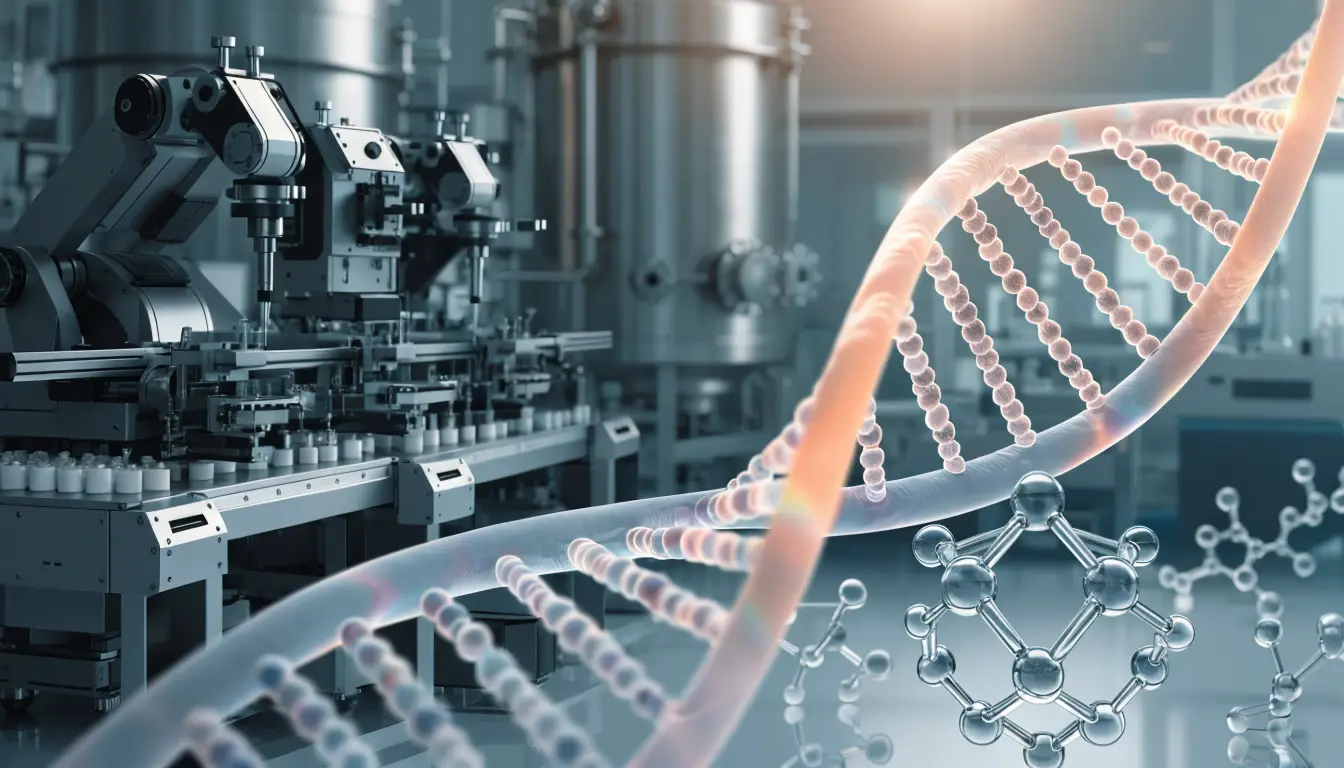
The core drivers of this change are advancements in gene editing technologies such as CRISPR-Cas9 and the integration of AI-based protein design technologies. By the end of 2025, the number of approved bio-manufacturing facilities worldwide increased by 67% year-on-year to 340, with 45% concentrated in Asia. In Korea, under the government’s K-Bio policy support, the bio-manufacturing infrastructure is rapidly expanding around the Pangyo-Songdo bio-cluster, with domestic companies like Samsung Biologics and Celltrion playing leading roles in the global bio-manufacturing market.
The economic impact of bio-manufacturing extends beyond mere market expansion. Compared to traditional chemical processes, it can reduce energy consumption by an average of 30-50% and carbon emissions by up to 80%, attracting the attention of global companies pursuing ESG management. Particularly, with the EU’s new Carbon Border Adjustment Mechanism (CBAM) expansion plan announced in December 2025, carbon taxes will be applied to chemical products starting in 2027, further intensifying the pressure to transition to bio-manufacturing.
The most notable technology in the current bio-manufacturing field is the approach known as ‘Programmable Biology.’ This technology programs the metabolic pathways of organisms like software to produce desired compounds, and its commercial application began in earnest from the second half of 2025. The automated platform developed by Ginkgo Bioworks (NYSE: DNA) in the U.S. reduced the development time for microbial strains from 18 months to 3 months, significantly shortening the new product launch cycle. In Korea, LG Chem announced the construction of a bio-based chemical production plant with an annual capacity of 50,000 tons in Dangjin, Chungnam, in November 2025, accelerating the transition of traditional petrochemical companies to bio-manufacturing.
Paradigm Shift in Pharmaceutical Bio-Manufacturing
The impact of bio-manufacturing is particularly pronounced in the pharmaceutical industry. As of 2026, bio-manufacturing-based production accounts for 68% of the global biopharmaceutical market, a continuous increase from 42% in 2020. The importance of bio-manufacturing technology is rapidly emerging in fields such as mRNA vaccines and cell and gene therapies (CGT). Following the COVID-19 pandemic, the use of mRNA platform technology in developing treatments for various diseases has led to a surge in investment in related bio-manufacturing facilities.
Samsung Biologics completed the construction of its fourth plant in Songdo, Incheon, in December 2025, achieving a total production capacity of 620,000 liters. This is the largest capacity for a single company in the global CDMO (Contract Development and Manufacturing Organization) market, with projected sales in 2026 expected to increase by 28% year-on-year to 3.2 trillion won. The company has secured unrivaled technology in the ADC (Antibody-Drug Conjugate) manufacturing field, signing long-term contracts with global pharmaceutical companies. Celltrion is also expanding its business into the next-generation biopharmaceutical manufacturing sector, leveraging its experience in biosimilar production, with an order backlog of 8.5 trillion won as of the fourth quarter of 2025.
Global pharmaceutical companies’ bio-manufacturing strategies are also rapidly changing. Johnson & Johnson invested $1.5 billion in 2025 to establish a next-generation bio-manufacturing facility in Beerse, Belgium, applying continuous manufacturing technology to improve productivity by 40% compared to existing methods. Roche, in its new 10-year strategy announced in January 2026, identified bio-manufacturing capabilities as a core competitive advantage and plans to invest $8 billion in the related field over the next five years, focusing on building a distributed bio-manufacturing model for personalized medicine production.
The advancement of bio-manufacturing technology is fundamentally changing the supply chain structure of the pharmaceutical industry. As pharmaceutical manufacturing shifts from large-scale centralized production to small-scale distributed production, regional supply chain risks are significantly reduced. This was demonstrated during the Suez Canal blockage in the second half of 2025, where bio-manufacturing-based pharmaceuticals continued production without supply disruptions. This change aligns with national biosecurity policies, intensifying competition to attract bio-manufacturing facilities domestically.
Particularly noteworthy is the convergence of AI and bio-manufacturing. By the end of 2025, 93% of major bio-manufacturing companies had adopted AI-based process optimization systems, improving production yields by an average of 15-25%. Samsung Biologics’ ‘Bio-AI’ platform analyzes real-time production data to automatically adjust optimal culture conditions, reducing batch quality variance by over 90%. These technological innovations simultaneously achieve cost reduction and quality improvement in biopharmaceutical production, significantly enhancing patient accessibility.
Bio Transition and Investment Trends in the Chemical Industry
The adoption of bio-manufacturing in the chemical industry is accelerating in 2026. Global chemical companies are actively pursuing a transition to bio-based production to achieve carbon neutrality goals and diversify raw materials. BASF began operating a bio-based acrylic acid production facility with an annual capacity of 100,000 tons in Nanjing, China, in December 2025, marking the first commercial case of completely replacing the traditional propylene oxidation process with microbial fermentation. This facility achieved a 75% reduction in CO2 emissions and a 12% reduction in production costs compared to existing processes.
DSM (now DSM-Firmenich) has secured a dominant position in the bio-manufacturing field. In 2025, bio-based products accounted for 84% of its revenue, maintaining the number one global market share in bio-based vitamins and enzyme production. The company announced plans to build a next-generation biorefinery facility in Delft, Netherlands, in January 2026, which will produce various high-value chemicals using agricultural waste as raw material. The expected investment is 800 million euros, with commercial production targeted for 2028.
In Asia, investments in bio-manufacturing by chemical companies are also surging. Japan’s Mitsubishi Chemical completed a bio-plastic production plant in Rayong, Thailand, in November 2025, with an annual capacity of 30,000 tons, targeting the Southeast Asian market. China’s Sinopec announced a $5 billion investment plan in bio-manufacturing in 2026, aiming to convert 30% of its existing petrochemical business portfolio to bio-based. This investment expansion is attributed to policy support from the Chinese government’s designation of bio-manufacturing as a strategic emerging industry in its ’14th Five-Year Plan.’
Venture capital and private equity investments in the bio-manufacturing sector are at an all-time high. In 2025, global investments in bio-manufacturing startups reached $18.7 billion, an 89% increase from the previous year. Synthetic biology platform companies are attracting large-scale investments, with the acquisition of Zymergen in the U.S. leading to a surge in the valuation of related companies. In Korea, investments in the bio-manufacturing sector are also active, with a total of 1.2 trillion won invested in the second half of 2025 alone. Of this, 60% involved foreign investors, with significant interest from Japanese and Singaporean funds.
As the commercialization of bio-manufacturing technology progresses, competition in related intellectual property is also intensifying. In 2025, the number of bio-manufacturing-related patent applications exceeded 15,000 globally, a 340% increase from 2020. Patent applications are concentrated in microbial strain development and fermentation process optimization, with Korean companies actively building patent portfolios to secure core technologies. Samsung Biologics filed 87 bio-manufacturing-related patents in 2025, with 70% being international applications.
However, alongside the rapid growth of the bio-manufacturing industry, new challenges are emerging. There is a severe shortage of skilled bioengineers, with a global shortfall of approximately 250,000 bio-manufacturing professionals as of 2026. Governments and companies are expanding education programs and establishing retraining courses to address this, but it is expected to be difficult to resolve in the short term. Additionally, standardization of bio-manufacturing facilities and the establishment of regulatory frameworks are urgent tasks. The differing regulatory standards across countries pose challenges to building a global production network, necessitating international cooperation to resolve these issues.
As of 2026, the bio-manufacturing industry has reached a critical point in both technological maturity and commercial viability. How investment and technology development in this field progress over the next 3-5 years will determine the future of traditional manufacturing. It remains to be seen whether Korean companies can secure a leading position in the global bio-manufacturing market based on the competitiveness they have built so far. With ESG management and carbon neutrality goals becoming core tasks in corporate management, bio-manufacturing technology is recognized as an essential element for survival, rather than a mere choice.
