AI Integration Innovation in the Biotech Industry: An Analysis of South Korea and Global Market Trends in 2026
 Editor
In early 2026, the global biotechnology industry is experiencing an unprecedented wave of innovation through the integration of artificial intelligence (AI) technology. Particularly, South Korean biotech companies are expanding their presence in the global market by leveraging AI-based drug development platforms, significantly impacting the business strategies of traditional pharmaceutical giants. The global biotech market size is projected to grow from $1.24 trillion in 2025 to $1.38 trillion in 2026, marking an 11.3% increase, with the AI-based biotech sector driving high growth at an annual rate of 23.7%.
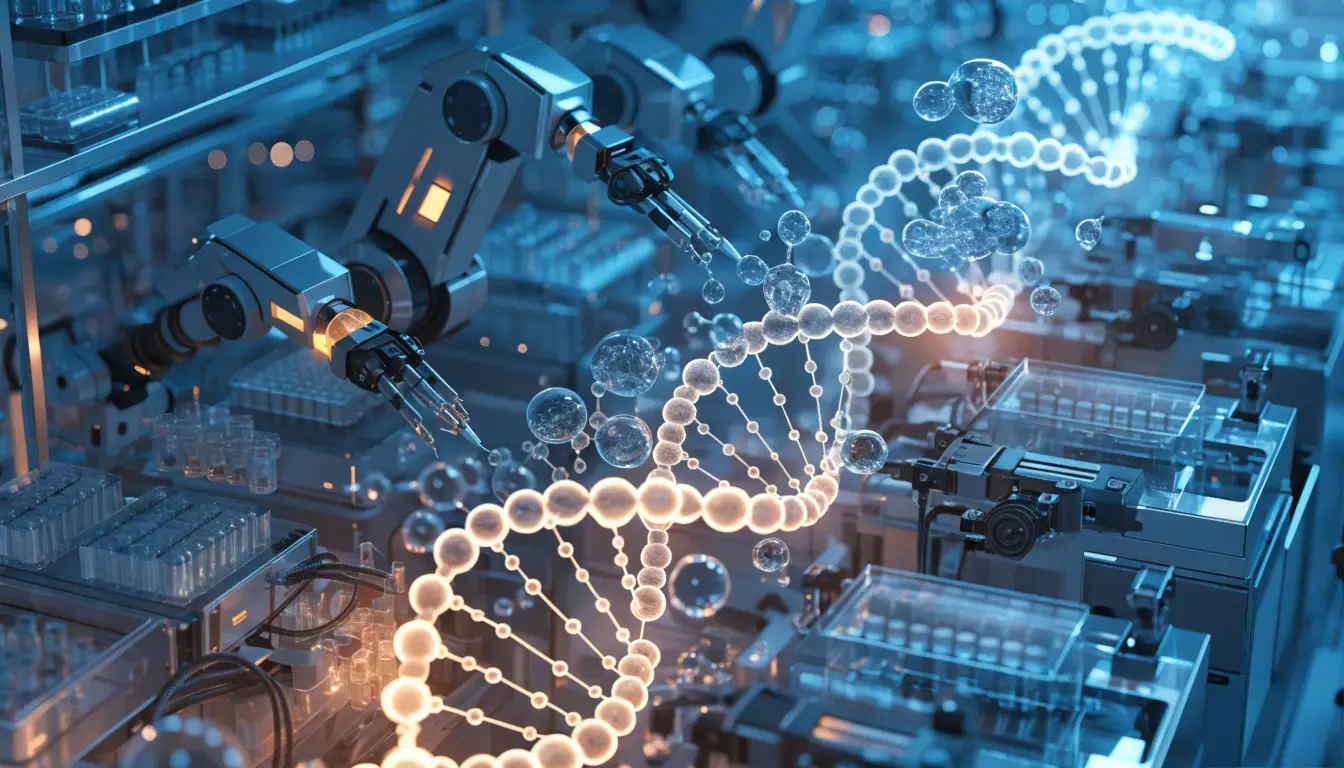
The global competitiveness of South Korea’s biotech industry is becoming more pronounced in 2026. According to the Korea Biotechnology Industry Organization, the overseas export value of domestic biotech companies increased by 18.4% compared to 2025, reaching $14.2 billion, with the biopharmaceutical sector showing an impressive growth rate of 34.2%. This growth is attributed to leading domestic biotech companies such as Samsung Biologics in Seongnam and Celltrion in Incheon, which are securing large-scale contract manufacturing (CMO) deals from global pharmaceutical companies by enhancing production efficiency and quality management systems using AI technology.
The fusion of AI and biotechnology is driving a paradigm shift across the industry beyond mere technological integration. Traditionally, new drug development required an average of 10-15 years and $2.6 billion; however, research indicates that utilizing AI-based platforms can reduce development time by 30-40% and costs by 20-25%. This improvement in efficiency is bringing revolutionary changes, particularly in the development of treatments for rare diseases and personalized medicines, prompting a reorganization of R&D strategies among global pharmaceutical companies.
Examining the AI investment status of global pharmaceutical giants, Roche, based in Basel, Switzerland, invested $2.3 billion in AI-based drug development in 2025 and announced plans to increase this to $3.1 billion in 2026. Similarly, Novartis, also in Basel, decided to invest a total of $4.5 billion over the next three years to build an AI platform, while Johnson & Johnson in New Jersey, USA, has established its own AI research lab, conducting R&D worth $1.8 billion annually. These large-scale investments demonstrate that AI-based biotechnology is not merely a trend but a key driver determining the future of the industry.
## Acceleration of AI-based Drug Development Platform Commercialization
In 2026, the commercialization of AI-based drug development platforms is accelerating in earnest. Notably, molecular design and drug interaction prediction systems utilizing deep learning and machine learning technologies are achieving significant results in actual drug development projects, attracting industry attention. The global AI drug development market is expected to grow from $3.4 billion in 2025 to $4.7 billion in 2026, a 38.2% increase, exceeding the overall biotech market growth rate by more than three times.
In South Korea, Yuhan Corporation in Seoul made headlines by investing 120 billion won, a 45% increase compared to 2025, in building an AI-based drug development platform. The company has identified three anticancer drug candidates through its proprietary AI platform, with two currently undergoing Phase 1 clinical trials. Additionally, AI biotech startups like StanDaim in Pangyo have attracted a total of $800 million in investments from global pharmaceutical companies, showcasing the dynamism of South Korea’s AI biotech ecosystem.
The technological advancement of AI platforms is also showing remarkable achievements. The latest AI models demonstrate performance accuracy of 85-92% in molecular structure prediction, an improvement of 12-15% compared to 2024. Particularly in the field of protein folding prediction, with the release of AlphaFold 3.0, prediction accuracy has reached 94.7%, significantly enhancing its applicability in actual drug development. This technological advancement is innovatively improving drug development efficiency by automating the entire process from target protein identification to drug optimization.
Looking at the adoption of AI platforms by global pharmaceutical companies, Pfizer in New York, USA, announced plans to open its own AI drug development center in January 2026, with a total investment of $6 billion over the next five years. Pfizer’s AI platform has already played a crucial role in the development of the COVID-19 treatment Paxlovid and is currently being utilized in the development of treatments for Alzheimer’s and Parkinson’s diseases. Meanwhile, AstraZeneca in Cambridge, UK, has established a platform specialized in AI-based immuno-oncology drug development and is currently developing 12 candidate substances simultaneously, with four expected to enter clinical trials in the second half of 2026.
## Transition to Smart Factories in Biomanufacturing and Global Competitiveness
In the biomanufacturing sector, the introduction of smart factory technology is driving productivity innovation. Particularly, South Korean biomanufacturing companies are securing global competitiveness by establishing smart production facilities that combine AI and IoT technologies. Samsung Biologics has introduced a fully automated AI-based production system at its fourth plant in Songdo, Incheon, improving production efficiency by 35% and reducing quality defect rates to below 0.02%. Based on this technological advantage, the company secured new CMO contracts worth a total of $4.7 billion in the first quarter of 2026 alone.
Celltrion is also gaining attention by fully implementing an AI-based quality management system at its production facility in Songdo International City, Incheon. The company’s smart factory monitors all variables in the production process through real-time data analysis and prevents potential quality issues in advance through predictive analytics. Through this system, Celltrion has maintained the quality consistency of its biosimilar products at 99.8% while achieving a 22% reduction in production costs. The smart factory technology played a key role in the global supply of the company’s COVID-19 treatment, Regkirona.
The transition to smart factories is also accelerating in the global biomanufacturing industry. Novo Nordisk in Bagsvaerd, Denmark, has introduced an AI-based predictive maintenance system at its diabetes treatment production facility, improving equipment utilization from 94.5% to 98.2%. Additionally, Biogen in Massachusetts, USA, applied a machine learning-based quality prediction model to its multiple sclerosis treatment production line, achieving an 85% reduction in batch failure rates. These cases demonstrate the tangible impact of AI technology on improving productivity and quality in biomanufacturing.
The transition to smart factories in biomanufacturing is not just about technology adoption but is also promoting the digital transformation of the entire supply chain. Integrated operations of raw material tracking systems using blockchain technology, real-time environmental monitoring based on IoT sensors, and AI-based demand forecasting and inventory optimization systems are significantly improving the operational efficiency of biomanufacturers. These changes are particularly crucial in the market for personalized therapies and small-batch production of rare disease treatments, serving as key elements of competitive advantage.
From an investment perspective, capital investment in the transition to smart factories in biomanufacturing is surging. The global biomanufacturing automation market is projected to grow from $17.8 billion in 2025 to $21.4 billion in 2026, a 20.2% increase, which is twice the growth rate of the overall manufacturing automation market. Notably, investment growth in the Asia-Pacific region is prominent, with South Korea, China, and Singapore emerging as biomanufacturing hubs, concentrating related infrastructure investments.
In 2026, the biotechnology industry is facing new challenges alongside innovation through AI integration. As regulations on data security and privacy protection are strengthened, additional costs and complexities are increasing in the operation of AI-based bio platforms. Furthermore, concerns about the interpretability and reliability of AI models are being raised, making the regulatory approval process more stringent. Nevertheless, the potential for innovative changes brought about by the convergence of AI and biotechnology is considered to outweigh these challenges, and it is expected to serve as a key driver of the biotech industry over the next decade.
In conclusion, the biotechnology industry in 2026 is experiencing innovation across the entire value chain, from drug development to manufacturing and distribution, through the integration of AI technology. Particularly, the strengthening of global competitiveness by South Korean biotech companies and successful cases of smart factory transitions are suggesting the future direction of the Asian bio ecosystem and prompting strategic responses from global pharmaceutical giants. These changes provide new opportunities for investors while indicating the need for a reassessment of existing business models, necessitating continuous attention and monitoring across the industry.
This analysis is based on general market trends and publicly available information, and additional due diligence and expert consultation are required when making investment decisions. The biotechnology industry involves high volatility and regulatory risks, requiring a cautious approach.
