The AI Revolution in the Biotech Industry: From Drug Discovery to Personalized Treatment by 2026
 Editor
As of February 2026, the biotech industry is experiencing unprecedented changes through its convergence with artificial intelligence. The global AI-biotech convergence market grew from $83 billion in 2025 to $120 billion in 2026, a 44.6% increase, significantly surpassing the traditional biotech market growth rate of 8.2%. Notably, AI-based drug discovery platforms are reducing development time by an average of 70% compared to traditional methods. This innovation is not just a technological advancement but is fundamentally reshaping the business models and competitive landscape of biotech companies.
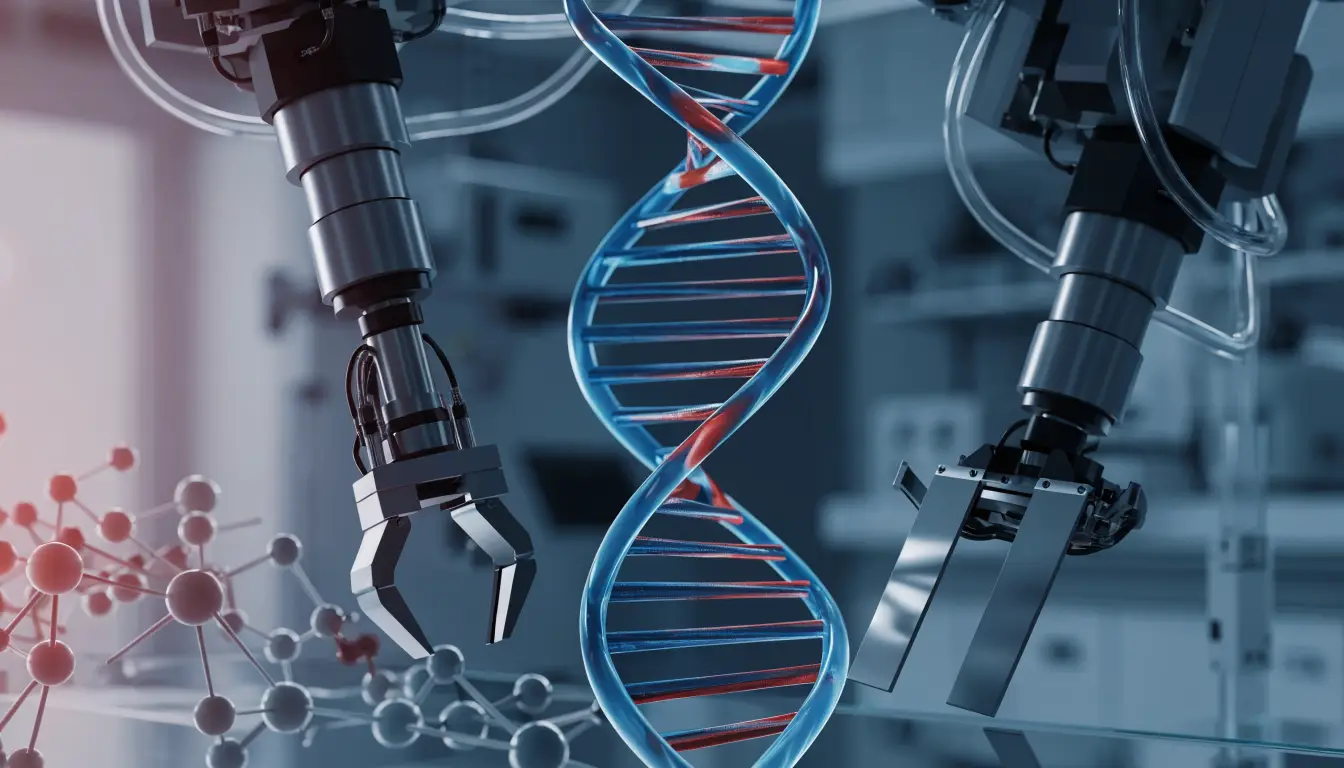
Currently, the application of AI in the biotech industry is largely divided into three areas. The first is the acceleration of drug discovery and development, where AI is applied throughout the entire process from molecular design to clinical trial optimization. The second is the development of personalized therapeutics, where precision medicine based on genetic analysis and patient data is becoming a reality. The third is the optimization of biomanufacturing processes, where AI is improving quality control and yield. These changes are directly impacting the R&D investment patterns of biotech companies, with AI-related R&D investments by major biotech companies increasing by an average of 85% in the first half of 2026 compared to the same period last year.
The influence of AI in the field of drug discovery is particularly notable. Following the development of AlphaFold by the UK’s DeepMind, protein structure prediction technology has completely changed the paradigm of drug design. As of January 2026, the AlphaFold database contains over 200 million protein structures, and the number of drug candidate discoveries utilizing this has increased by 120% compared to 2025. California-based Scripps Research announced that it discovered new therapeutic candidates for the COVID-19 variant virus using AI in just 18 months, 6 months faster than traditional methods.
Current Trends and Achievements in AI-based Drug Development
Global pharmaceutical companies are rapidly increasing their investments in AI-based drug development platforms. Switzerland’s Roche announced an investment of $1.5 billion in AI drug discovery by the end of 2025, accounting for 12% of its total R&D budget. The US’s Johnson & Johnson (J&J) also plans to invest a total of $2.5 billion in AI-based new drug development over three years starting in 2026. The backdrop of these large-scale investments is the visible achievements AI is actually demonstrating.
Looking at specific performance indicators, the success rate of drug candidate discovery using AI has more than doubled from 12% with traditional methods to 28%. Additionally, the time taken to enter clinical phase 1 from the preclinical stage has been reduced from an average of 4.2 years to 2.8 years. Massachusetts-based Moderna announced that it reduced the vaccine development time for emerging infectious diseases from the traditional 10-15 years to within 6 months using its AI-based mRNA vaccine development platform. This is considered a clear demonstration of AI’s potential in pandemic situations.
Korea’s biotech industry is also actively participating in this AI revolution. Samsung Biologics, headquartered in Songdo, Gyeonggi Province, announced that it improved production yield by an average of 15% by introducing an AI-based biopharmaceutical production optimization system starting in the second half of 2025. Additionally, Incheon-based Celltrion achieved a reduction in development time from the traditional 7-8 years to 4-5 years by establishing an AI-based biosimilar development platform. These achievements play a crucial role in securing the competitiveness of Korean biotech companies in the global market.
Particularly noteworthy is the growth of AI-based biotech startups. As of the first quarter of 2026, venture investment in global AI-biotech startups totaled $8.7 billion, a 65% increase compared to the same period in 2025. Of this, about 40% was invested in drug discovery platforms, 25% in personalized therapeutic development, and the remaining 35% in diagnostics and biomanufacturing optimization. In Korea, AI drug development startups founded by KAIST alumni are attracting significant attention by securing large-scale investments in series B rounds.
Realization of Personalized Treatment and Precision Medicine
The most innovative achievements in the convergence of AI and biotech are seen in personalized treatment. As of 2026, approximately 1.5 million patients worldwide are receiving personalized treatment through AI-based genetic analysis, and this number is increasing by 8-10% monthly. The effects of AI-powered precision medicine are particularly prominent in the field of cancer treatment. According to a January 2026 announcement by the US National Cancer Institute (NCI), the 5-year survival rate of personalized cancer treatment through AI-based genetic analysis improved by an average of 23% compared to standard treatment.
The core of these achievements lies in AI’s pattern recognition capabilities. Current AI systems can simultaneously analyze tens of thousands of variables, including a patient’s genetic information, lifestyle data, and clinical records, to propose the optimal treatment. Switzerland-based Novartis announced that it reduced the personalized manufacturing time for CAR-T cell therapy using AI from the traditional 4-6 weeks to 2-3 weeks. This is a significant improvement that directly impacts patient survival rates.
Korean companies’ achievements in the field of precision medicine are also noteworthy. Macrogen, headquartered in Gangnam-gu, Seoul, developed an Asia-specific disease prediction model through its AI-based genomic analysis platform. This model shows 15-20% higher prediction accuracy for major chronic diseases such as diabetes, hypertension, and dementia compared to models targeting Western populations. Additionally, in collaboration with Seoul National University Bundang Hospital, they are developing a personalized anticancer drug selection algorithm reflecting the genetic characteristics of Koreans for clinical application.
The market size for personalized treatment is also rapidly expanding. The global precision medicine market grew from $95 billion in 2025 to $118 billion in 2026, a 24.2% increase, with AI-based solutions accounting for 35% of this. The growth rate in the Asia-Pacific region is particularly notable, with the precision medicine market in this region, centered around Korea, Japan, and China, growing by 42% year-on-year to reach $28 billion in 2026. This is analyzed as a result of the precision medicine promotion policies of Asian governments combined with high IT infrastructure levels.
However, there are still challenges in the spread of personalized treatment. The biggest issue is the high cost of treatment, with current AI-based personalized treatment costs being 3-5 times higher than standard treatment. Additionally, data privacy and security issues, as well as the lack of AI utilization capabilities among medical professionals, are pointed out as challenges to be addressed. In response, governments and medical institutions worldwide are working on related system improvements and workforce training. The Korean government also announced a 5-year investment plan of 200 billion won starting in 2026 for training precision medicine specialists.
AI’s influence is also expanding in the field of biomanufacturing. Traditionally, biopharmaceutical manufacturing involved complex biological processes, making quality control a challenging area. However, with the introduction of real-time monitoring and prediction systems using AI, the stability and efficiency of the manufacturing process have significantly improved. Illinois-based AbbVie announced that it improved biopharmaceutical production yield by an average of 18% and reduced defect rates by 60% through its AI-based manufacturing optimization system.
These achievements are significant for ensuring the supply stability and price competitiveness of biopharmaceuticals. Especially after the COVID-19 pandemic, the importance of the biopharmaceutical supply chain has been highlighted, and AI-based manufacturing optimization is recognized as a strategic national task. Korea’s Samsung Biologics also established an AI-based smart manufacturing system at its third plant in Songdo and began full-scale operations in the second half of 2025. This system ensures product quality consistency by predicting and automatically adjusting variables in the manufacturing process through real-time quality monitoring.
Several key drivers are influencing the adoption of AI in the biotech industry. The first is the rapid improvement in computing performance. The advancement of GPU-based high-performance computing has made complex molecular simulations and large-scale data analysis feasible at realistic costs. The second is the explosive increase in bio data. As the cost of genomic analysis continues to decline, the amount of accumulated biological data is exponentially increasing, providing the raw material needed for AI model training. The third is the improvement of the regulatory environment. Regulatory agencies, including the FDA, are refining approval guidelines for AI-based medical devices and treatments, clarifying the commercialization path.
From an investment perspective, the biotech AI sector is showing active movements. As of the first quarter of 2026, AI-related investments accounted for 32% of global venture investments in the biotech field, a fourfold increase from 8% in 2020. Particularly, mergers and acquisitions (M&A) of AI biotech startups by large pharmaceutical companies are becoming more active. In 2025 alone, 12 AI biotech M&As worth over $1 billion were completed, with a total transaction volume of $18 billion. This demonstrates that the biotech industry views AI not just as a tool but as a core competitive advantage.
However, challenges arising from the convergence of AI and biotech cannot be ignored. The most critical issue is data quality and standardization. The performance of AI models is heavily dependent on the quality of the training data, and in the case of medical data, there can be significant variations depending on the collection institution and method. Additionally, issues of data bias based on race, gender, age, etc., must be addressed. Currently, most medical AI models are developed based on Western data, and their accuracy may decrease when applied to Asians. In response, countries are working on building medical databases that reflect the characteristics of their populations.
Regulatory and ethical issues are also important considerations. Since AI-based medical solutions are directly related to patients’ lives, strict verification of safety and reliability is necessary. However, due to the ‘black box’ nature of AI, it is often challenging to fully explain the decision-making process, leading to significant time and costs in obtaining regulatory approval. Additionally, protecting patient data privacy and ensuring the fairness of AI algorithms remain ongoing concerns. With the emergence of comprehensive regulatory frameworks like the European Union’s AI Act, biotech companies must establish systems for regulatory compliance alongside technology development.
The convergence of AI in the biotech industry is expected to accelerate further. Industry experts predict that AI will be utilized in over 80% of the drug development process by 2030. Additionally, alongside the popularization of personalized treatment, AI-based digital therapeutics are expected to emerge as a new growth driver. These changes will reshape the competitive landscape of biotech companies, with AI capability acquisition becoming a critical factor for corporate survival and growth. It is time for the Korean biotech industry to secure competitiveness by enhancing AI capabilities and expanding international cooperation in line with these global trends.
