Battery Storage Systems Reshaping the Global Energy Market: 2025 Industry Analysis
 Editor
The Current State of the Rapidly Growing Battery Storage System Market
The global Battery Energy Storage System (BESS) market is experiencing unprecedented growth, emerging as a game changer in the power industry by 2025. According to market research firm Wood Mackenzie, the global BESS market size is expected to reach $87 billion by 2025, marking a 42% increase from the previous year. Notably, the installed capacity is projected to surge from 42GWh in 2024 to 61GWh in 2025, a 45% increase. This explosive growth is attributed to the expansion of renewable energy, the demand for grid modernization, and carbon neutrality policies by governments worldwide.
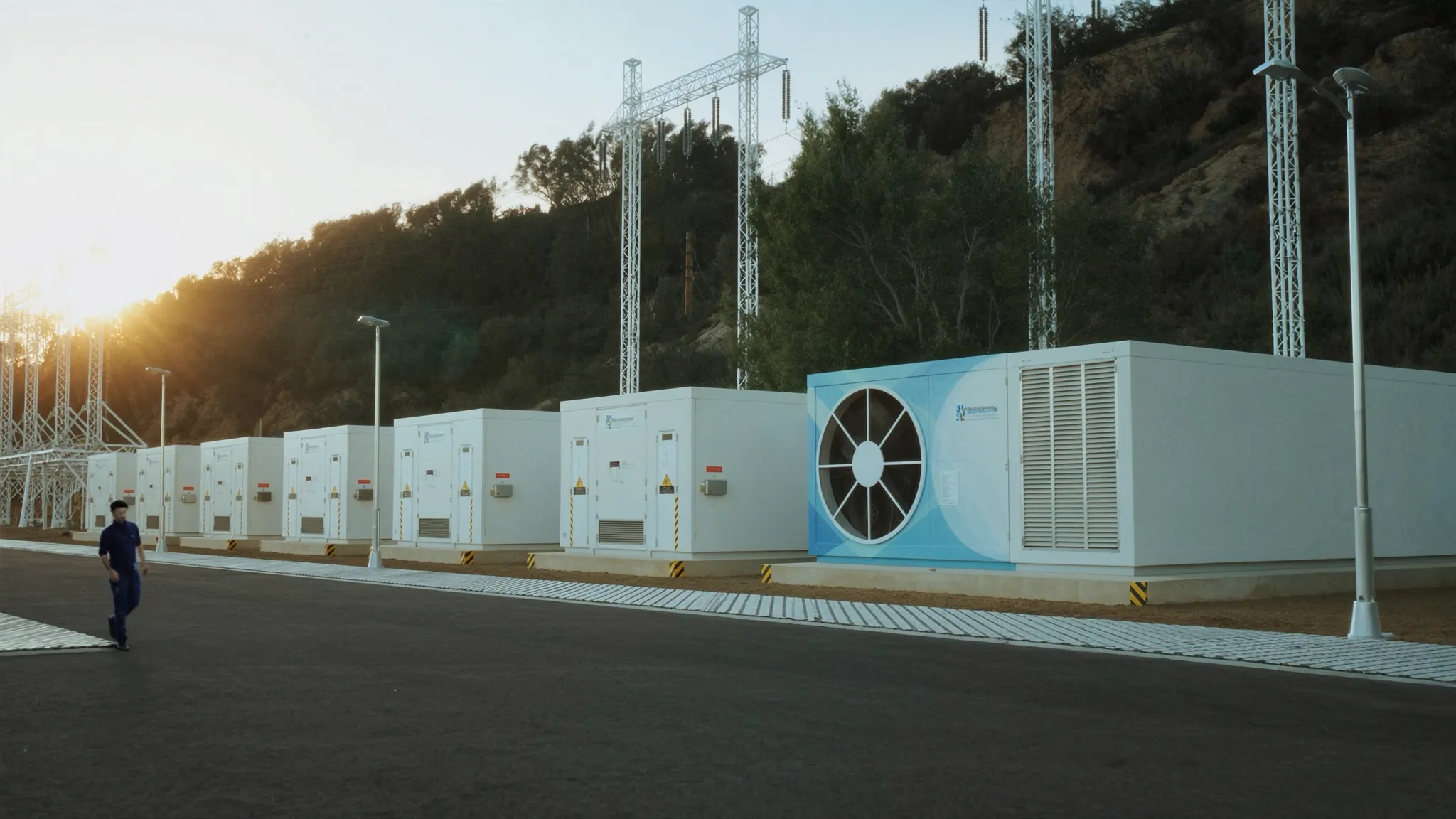
The primary driver of market growth is the urgent need within the power industry to address the intermittency issues of solar and wind power generation. According to data from the International Renewable Energy Agency (IRENA), the global renewable energy generation capacity reached 3,870GW in 2024, with solar accounting for 1,419GW and wind for 906GW. However, the unstable output characteristics of these renewable energy sources have made securing grid stability a pressing issue, with BESS recognized as the key technology to address this challenge. The U.S. Department of Energy (DOE) has announced that at least 100GWh of storage capacity is needed to maintain grid stability by 2030.
Regional market analysis shows that China holds a dominant market share. China’s new BESS installation capacity in 2024 was 22.6GWh, accounting for 54% of the global total, significantly ahead of the U.S. (8.9GWh) and Europe (6.8GWh). This growth is supported by strong policy support from the Chinese government, large-scale manufacturing infrastructure, and relatively low battery costs. Particularly, China is implementing policies to mandate BESS installation as part of its plan to build a new power system by 2025, which is expected to further accelerate growth.
Technologically, the BESS market is undergoing rapid changes. Lithium Iron Phosphate (LFP) batteries have become mainstream, occupying 82% of the total BESS market. LFP batteries are evaluated as being more suitable for large-scale storage systems due to their superior safety, longer lifespan, and 25% lower cost compared to Nickel Cobalt Manganese (NCM) batteries. According to BloombergNEF (BNEF), the price of LFP battery packs fell to $95 per kWh in 2024 and is expected to drop to $85 by 2025, significantly improving the economics of BESS projects.
Intense Technological Competition Among Korean, Chinese, and Japanese Battery Companies
With the rapid growth of the BESS market, the technological supremacy competition among battery manufacturers from Korea, China, and Japan is intensifying. In terms of market share, Chinese companies hold a dominant position. China’s Contemporary Amperex Technology Co. Limited (CATL) maintained its top position in 2024, supplying 43% of the world’s BESS batteries. CATL’s annual battery production capacity reaches 500GWh, with 30% allocated for Energy Storage Systems (ESS). The company announced plans to expand its ESS-dedicated production line by an additional 150GWh by the end of 2025.
Another strong player from China, BYD, is gaining attention with its unique vertical integration strategy. BYD has established a system that produces everything from battery cells to system integration in-house, securing cost competitiveness. The company’s BESS business revenue reached $8.9 billion in 2024, a 67% increase from the previous year. BYD’s Blade Battery technology is evaluated as having improved energy density by 20% while significantly enhancing safety.
Korean companies are responding with technological innovation and quality differentiation strategies. Samsung SDI is investing 1.2 trillion KRW annually in developing next-generation solid-state battery technology, aiming for commercialization by 2026. Solid-state batteries are expected to deliver groundbreaking performance improvements in BESS applications due to their 40% higher energy density and significantly lower fire risk compared to conventional liquid electrolytes. Samsung SDI’s ESS revenue in 2024 was 4.3 trillion KRW, a 28% increase from the previous year, accounting for 22% of its total revenue.
LG Energy Solution is pursuing a localization strategy focused on the U.S. and European markets. The company is constructing an ESS-dedicated plant with an annual capacity of 35GWh in Michigan, USA, with mass production set to begin in the second half of 2025. Additionally, it plans to produce 25GWh of ESS batteries annually at its Wrocław plant in Poland. LG Energy Solution’s NCMA (Nickel-Cobalt-Manganese-Aluminum) batteries are praised for securing both energy density and safety, maintaining a high market share in the premium BESS markets of Europe and North America.
SK Innovation is attempting to differentiate itself with its NCM9 battery technology. This battery, with a nickel content of up to 90%, has improved energy density by 15% compared to existing models and can save 20% of installation space for the same storage capacity. This is particularly advantageous in advanced markets where land costs are high. SK Innovation’s ESS division revenue in 2024 was 2.8 trillion KRW, a 45% increase from the previous year.
Market Segmentation and New Opportunity Areas
The BESS market is diversifying into various segments based on usage, each with unique growth drivers and technical requirements. Utility-scale BESS accounts for 78% of the total market, representing the largest share. This sector primarily involves large-scale storage systems linked to renewable energy plants, with mega projects ranging from 100MWh to 1GWh increasing. The Moss Landing BESS project in California, boasting a capacity of 3GWh, is a representative example of this trend towards larger projects.
The commercial and industrial (C&I) BESS market is also experiencing rapid growth. The installed capacity in this sector reached 8.2GWh in 2024, an 89% increase from the previous year, and is expected to reach 14.5GWh in 2025. Manufacturers are actively considering BESS adoption to reduce electricity costs and carbon emissions. In Korea, industrial electricity rates have risen to an average of 142 KRW per kWh, significantly increasing the demand for Peak Shaving, which involves reducing peak-time electricity usage and storing cheaper nighttime power for later use.
The residential BESS market, while relatively small, is showing high growth rates. Global residential BESS installations are projected to increase from 2.8GWh in 2024 to 4.1GWh in 2025, a 46% increase. Germany and Australia are emerging as key markets for residential BESS, with Germany particularly supporting the distribution of home storage systems linked to solar power through government subsidies. Tesla’s Powerwall is leading this market, setting the standard with a capacity of 13.5kWh and a price of $11,500.
The BESS market linked to electric vehicle charging infrastructure is also gaining attention as a new growth driver. BESS-powered charging systems are spreading to address the surge in power demand at ultra-fast charging stations. According to Korea Electric Power Corporation’s analysis, 10 ultra-fast chargers operating simultaneously require 3.5MW of power, equivalent to the capacity of a small substation. To address this, BESS is being installed at charging stations to store power during off-peak times and supply it during charging. Hyundai Motor Group is pursuing the construction of 100 BESS-linked ultra-fast charging stations at highway rest areas nationwide, with plans to install 2MWh of battery capacity at each station.
BESS is also expanding its role in the microgrid sector. It is being utilized as a key component in establishing independent power supply systems, particularly in island regions or industrial complexes. Jeju Island plans to build a total of 200MWh of BESS by 2025 as part of its Carbon-Free Island initiative, aiming to increase the renewable energy share to 70%. Currently, the renewable energy share in Jeju is 17.4%, and it is expected to significantly expand with the increase in BESS.
From a technological perspective, the BESS market is on the verge of introducing next-generation battery technologies. Sodium-ion batteries are gaining attention as an alternative to lithium-ion batteries, particularly for large-scale stationary storage systems due to their excellent cost-effectiveness. China’s CATL successfully completed a 10MWh BESS demonstration project using sodium-ion batteries in 2024 and plans for commercialization in 2025. Sodium-ion batteries are characterized by being 30% cheaper in raw material costs and having superior temperature stability compared to lithium-ion batteries, making them suitable for BESS applications.
In summary, the BESS industry is expected to sustain high growth at an average annual rate of 35% from 2025 to 2030. Market growth is anticipated to accelerate as government policy support, the spread of renewable energy, and the demand for grid modernization converge. However, volatility in raw material prices, delays in technology standardization, and regulatory uncertainties are identified as major risk factors, making strategic responses by companies crucial. Korean companies are analyzed to need to secure differentiated positioning in competition with Chinese companies through technological innovation and strengthening global partnerships.
