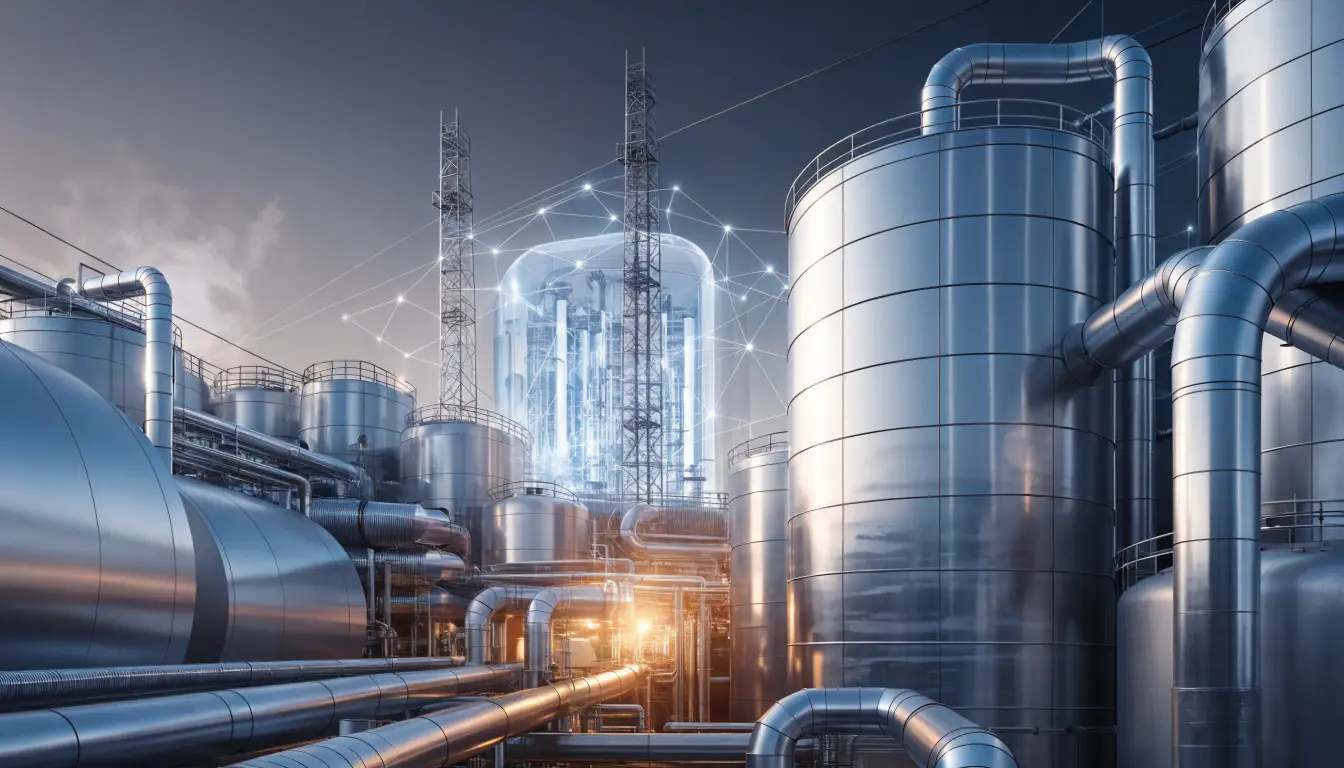
Rapid Growth and Technological Innovation Trends in the Global Energy Storage System Market by 2026
 Editor
Explosive Growth in the Energy Storage System Market
In 2026, the global energy storage system (ESS) market is recording the fastest growth rate in history, emerging as a central axis of the energy industry. According to the latest report from Bloomberg New Energy Finance (BNEF), the global ESS market size is expected to reach $142 billion in 2026, marking a significant 35.2% increase from $105 billion in 2025. The Asia-Pacific region, in particular, is leading the growth, accounting for 48% of the total market, with South Korea’s Samsung SDI (based in Suwon) and LG Energy Solution (based in Seoul) acting as key drivers of this growth.
The backdrop of this rapid growth includes the sharp increase in renewable energy generation and the demand for power grid stability. According to data from the International Renewable Energy Agency (IRENA), global renewable energy generation capacity surpassed 4,500GW in 2025, leading to a surge in demand for ESS to stabilize intermittent power supply. The U.S. Department of Energy announced that utility-scale ESS installation capacity in the U.S. is expected to increase by 42% year-over-year to 28GWh in 2026. This capacity is equivalent to the electricity consumption of approximately 2.8 million households for an entire day.
On the technological front, continuous improvements in the energy density and efficiency of lithium-ion batteries have significantly enhanced the economic viability of ESS. As of 2026, the average price of lithium-ion batteries is $95 per kWh, a decrease of over 30% from $137 in 2020. China’s CATL (Contemporary Amperex Technology Co., based in Ningde) and BYD (Build Your Dreams, based in Shenzhen) are leading the reduction in battery pack prices, expanding their market share, and their technological innovations are a key factor in enhancing the price competitiveness of the global ESS market.
Battery Technology Innovations and Next-Generation Energy Storage Solutions
The most notable change in the ESS market in 2026 is the accelerated commercialization of next-generation battery technologies. Samsung SDI of South Korea has developed the 4th generation NCM (Nickel-Cobalt-Manganese) battery, achieving an energy density of 300Wh/kg, which is a 25% improvement over previous models. This technology entered full-scale mass production at the end of 2025 and is expected to be applied to large-scale ESS projects in North America and Europe in the first half of 2026. The batteries produced at Samsung SDI’s Göd plant in Hungary guarantee a lifespan of over 20 years and can store the same capacity in 40% less space compared to existing batteries, significantly reducing installation costs.
LG Energy Solution is also striving to capture the market with its next-generation NCMA (Nickel-Cobalt-Manganese-Aluminum) battery technology. As of January 2026, the NCMA batteries produced at LG Energy Solution’s Holland plant in Michigan achieve over 95% energy efficiency and boast durability that withstands over 10,000 charge-discharge cycles. This is more than a 50% improvement over the typical 6,000-8,000 cycles of lithium iron phosphate (LFP) batteries, making it particularly suitable for long-term utility-scale ESS operations.
Tesla (based in Austin, Texas) strengthened its position in the ESS market by launching the Megapack 2.0, based on its proprietary 4680 battery cell technology, in the second half of 2025. Tesla’s new Megapack offers a capacity of 4MWh per unit, achieving a 20% improvement in energy density and a 15% reduction in installation costs compared to previous models. Notably, Tesla’s proprietary thermal management system and AI-based battery management software (BMS) ensure stable performance in extreme environments ranging from -20°C to 50°C. As of 2026, Tesla maintains a leading position with a 23% market share in the global utility-scale ESS market.
China’s CATL has commercialized an ESS solution capable of 80% fast charging within 10 minutes through its Qilin 3.0 battery technology. This technology is gaining significant attention in the industrial ESS market, where power demand fluctuates rapidly, and is being widely adopted for peak power management by manufacturers in China in the first half of 2026. CATL’s market share is expected to expand from 32% in 2025 to 35% in 2026, primarily due to increased orders in the Asian and European markets.
Innovative alternative technologies such as the vanadium redox flow battery (VRFB) are also gaining attention. Developed by Australia’s CellCube Energy Storage Systems, VRFB boasts a lifespan of over 25 years and nearly unlimited charge-discharge cycles, emerging as a strong alternative to lithium-ion batteries for projects requiring large-scale, long-duration energy storage. The 200MWh VRFB facility installed in Hokkaido, Japan, in 2025 demonstrated commercial viability with a round-trip efficiency of 97% after six months of operation.
Market Segmentation and Changes in the Global Competitive Landscape
As the segmentation of the ESS market becomes more sophisticated, specialized solutions for each application are emerging. The utility-scale ESS market is expected to form a $95 billion market, accounting for 67% of the total market in 2026, with 45% for grid stabilization and 55% for renewable energy integration. The commercial and industrial (C&I) ESS market is maintaining high growth with an annual average growth rate of 28%, forming a $32 billion market, driven particularly by the increasing demand for power stability from data centers and manufacturers.
Fluence Energy (based in Arlington, Virginia) in the U.S. is attempting to differentiate itself with software-centric ESS solutions. Fluence’s IQ series uses AI-based predictive analytics to forecast power demand in advance and automatically establish optimal charge-discharge schedules. The 400MWh Fluence ESS installed in California in the second half of 2025 demonstrated the importance of software by achieving a 15% higher return compared to previous systems. As of 2026, Fluence holds a 42% market share in the software-based optimization solutions market for global ESS projects.
In the European market, Germany’s Sonnen and the UK’s Moixa are leading the home ESS market, introducing new business models. Beyond simple battery sales, they offer virtual power plant (VPP) services, connecting thousands of home ESS units into a network to provide ancillary services to the power grid. In 2025, 150,000 households in Germany alone participated in these VPP programs, generating an average additional income of 800 euros annually. This exemplifies the evolution of ESS from mere energy storage devices to revenue-generating assets.
In the Korean market, the demand for ESS is surging due to the government’s K-New Deal 2.0 policy and the spread of RE100. According to data from Korea Electric Power Corporation, the cumulative installed capacity of domestic ESS reached 4.2GWh in 2025, with expectations to expand to 6.8GWh by 2026. Particularly, in Jeju Island’s smart grid demonstration project, ESS plays a key role in effectively managing the variability of renewable energy output. In 2025, Jeju Island covered 18% of its power supply with wind and solar energy, reducing blackout times by 40% compared to the previous year through power quality management with ESS.
China’s ESS market is expected to grow to $49.7 billion, accounting for 35% of the global market in 2026. The explosive growth is driven by the mandatory installation of ESS to achieve carbon neutrality goals under China’s 14th Five-Year Plan. Manufacturers in the Yangtze River Delta and Pearl River Delta regions are accelerating ESS adoption to reduce power costs and carbon emissions. In 2025, the installed capacity of C&I ESS in China increased by 78% year-over-year to 2.1GWh, with over 80% of these systems based on lithium iron phosphate batteries.
NextEra Energy (based in Juno Beach, Florida) in the U.S. is leading the market by building the world’s largest ESS portfolio. As of the end of 2025, NextEra operates a total of 3.2GW/12.8GWh of ESS, with plans to install an additional 1.8GW capacity in 2026. NextEra’s ESS business recorded annual revenue of $870 million in 2025, a 52% increase from the previous year. Large-scale ESS facilities operating in Texas and California are generating high returns in the power market, proving investment profitability.
The competitive landscape of the global ESS market is being reshaped based on technological capabilities, manufacturing capacity, and project development experience. While Asian companies dominate battery manufacturing, European and American companies are demonstrating competitiveness in system integration and software solutions. Particularly, lifecycle management and performance optimization technologies for ESS are emerging as new differentiators, with comprehensive energy solution provision capabilities becoming key factors for market success beyond mere hardware supply. By 2026, the ESS market is accelerating the digital transformation of the energy industry through these technological innovations and business model diversifications, solidifying its role as a key infrastructure for achieving carbon neutrality.
*This article is for informational purposes only and should not be interpreted as investment solicitation or decision-making advice. Investment decisions should be made at one’s own discretion and responsibility.*