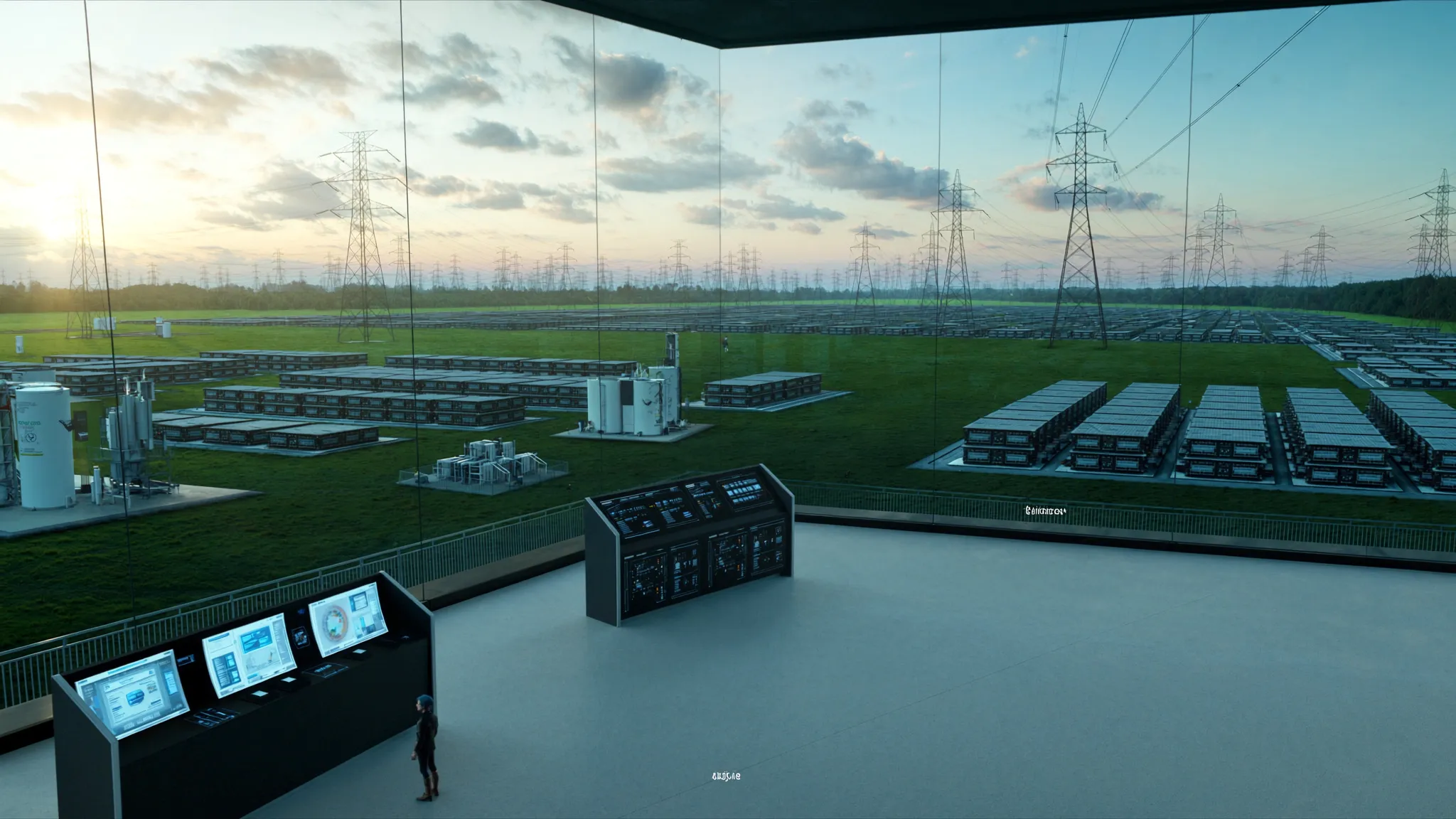
The Rapid Growth of the Global Battery Energy Storage Market in 2025 and Strategic Responses by Korean Companies
 Editor
Explosive Growth of the Battery Storage System Market
The global battery energy storage system (BESS) market is experiencing unprecedented growth in 2025. According to the latest report by Bloomberg NEF, the global BESS market size is expected to reach $68 billion this year, representing a significant 35% growth compared to the previous year. Notably, an additional 42GW of new battery storage capacity is expected to be installed, marking a 35% increase from 31GW in 2024. This growth is driven by the increase in renewable energy generation, rising demand for grid stability, and rapid advancements and cost reductions in battery technology.
China continues to lead the global BESS market, expected to account for about 60% of the total new installation capacity. Contemporary Amperex Technology (CATL), based in Shenzhen, maintained its top position with a 40.6% market share in the global BESS market up to the third quarter of this year. The U.S. market is also showing strong growth, supported by tax benefits from the Inflation Reduction Act (IRA), with an expected addition of 8.5GW of new capacity this year. Europe is expanding its investment in battery storage infrastructure as part of the REPowerEU plan to secure energy independence, with 5.2GW of new installations planned, centered around Germany and the UK.
Technologically, lithium iron phosphate (LFP) batteries are taking a leading position in the BESS market. LFP batteries demonstrate excellent performance in terms of safety, lifespan, and cost efficiency, accounting for about 85% of the total BESS market. Battery pack prices continue to decline, with the average cost per kWh expected to be $139 in 2025, a reduction of approximately 60% compared to 2020. This price drop significantly improves the economic viability of BESS projects, accelerating market expansion.
Strategic Expansion of Korean Battery Companies in the Global Market
Major Korean battery manufacturers are actively implementing strategies to expand their presence in the rapidly growing global BESS market. LG Energy Solution, based in Seoul, announced that its ESS (energy storage system) segment revenue increased by 78% year-on-year to 1.24 trillion won in the third quarter of 2025. This accounts for about 18% of total revenue, indicating that the ESS business is emerging as the company’s second growth driver following electric vehicle batteries. LG Energy Solution is particularly strong in the North American market and plans to expand ESS battery production at its battery plant under construction in Texas, USA.
Samsung SDI, based in Suwon, is also taking active steps in the ESS market. The company established a new ESS battery production line at its Göd plant in Hungary this year, securing an annual production capacity of 3GWh. Samsung SDI’s ESS segment revenue increased by 45% year-on-year to 820 billion won in the first half of 2025, accounting for about 15% of total revenue. The company’s performance in the European market is particularly notable, solidifying its market base by signing long-term supply contracts with major utility companies in Germany.
SK Innovation, based in Seoul, is accelerating its entry into the ESS market through its subsidiary SK On. SK On began operating a dedicated ESS production line at its Changzhou plant in China this year, aiming for an annual production capacity of 5GWh. The company is focusing on the Asia-Pacific market, securing contracts to supply batteries for large ESS projects in Australia and Japan. Although SK On’s ESS segment is still in its early stages, the company aims to expand ESS revenue to 20% of total revenue by 2027.
The technical strengths of Korean companies lie in their ability to develop high-capacity, high-output battery cells. LG Energy Solution recently announced that it applied next-generation NCM (nickel-cobalt-manganese) battery technology to ESS, improving energy density by 15% compared to previous models. This means more energy can be stored in the same space, providing a competitive edge in urban ESS projects where space is limited. Samsung SDI demonstrates strengths in battery management system (BMS) technology, significantly enhancing the operational efficiency and safety of ESS by developing an AI-based battery condition diagnosis and prediction system.
In the global competitive landscape, Korean companies face challenges in price competition and narrowing the technology gap with Chinese companies. As Chinese companies like CATL and BYD, based in Shenzhen, expand their market share through cost reductions from mass production, Korean companies are pursuing differentiation strategies based on premium technology and quality superiority. Korean products are particularly preferred in large utility ESS projects where safety and durability are crucial.
Industry analysts have a positive outlook on the ESS market prospects for Korean companies. Goldman Sachs recently predicted that LG Energy Solution’s ESS segment revenue will grow at an average annual rate of 35% to reach 4 trillion won by 2027. This exceeds the growth rate of the electric vehicle battery market (average annual 25%), suggesting that the ESS business will become a new growth driver for Korean battery companies. Morgan Stanley also valued Samsung SDI’s ESS business at 15 trillion won, equivalent to about 25% of its current market capitalization.
With the acceleration of renewable energy and grid modernization, the growth potential of the BESS market remains significant. According to the International Energy Agency (IEA), a global battery storage capacity of 1,200GW will be needed by 2030, equivalent to about 15 times the current installed capacity. This market expansion presents substantial opportunities for Korean companies but also poses challenges in securing technological innovation and cost competitiveness. Competition is expected to intensify in the development of next-generation battery technologies such as solid-state batteries and sodium-ion batteries, and securing technological superiority in these areas is anticipated to determine long-term market dominance.
This article is for informational purposes only and is not investment advice or a recommendation. Investment decisions should be made with careful consideration and consultation with experts.