A New Turning Point in Korea’s Energy Transition: The Market Landscape of 2025 Shaped by Nuclear Reactor Restarts and the Spread of RE100
 Editor
Korea’s energy industry is at an unprecedented inflection point. As of November 2025, with the government’s decision to resume construction of Shin Hanul Units 3 and 4 and the accelerated RE100 commitments by major domestic companies, a new energy mix centered around nuclear and renewable energy is forming. According to Korea Electric Power Corporation, electricity demand in the first half of 2025 increased by 3.2% year-on-year to 287.4 TWh, attributed to the rapid growth of data centers and the semiconductor industry. Notably, industrial power demand accounted for 78% of the total increase, highlighting the heightened demand for stable power supply by companies.
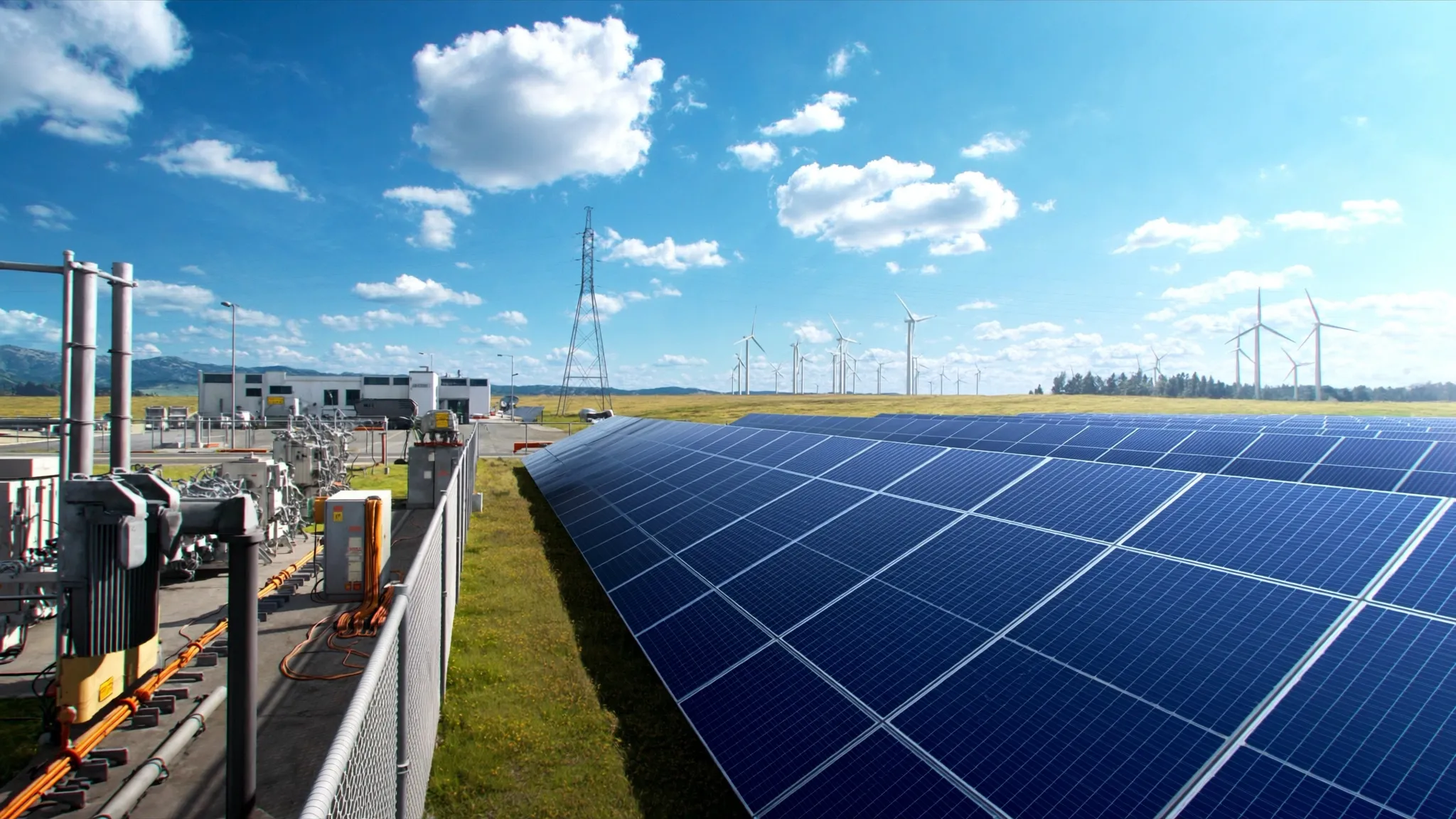
This demand surge is driven by a complex interplay of global supply chain restructuring and the spread of ESG management. As semiconductor companies like Samsung Electronics and SK Hynix expand local production in the US and Europe, the requirements for clean power have become more stringent, serving as a major impetus for domestic parent companies to join RE100. According to a recent report by the Korea Energy Agency, as of 2025, the number of domestic RE100 member companies totals 23, a 35% increase from the previous year, with their annual power consumption amounting to approximately 45 TWh, accounting for 8.2% of total power demand. More notably, the renewable energy power demand of these companies is expected to triple to 135 TWh by 2030.
The government’s shift in nuclear policy is interpreted as a strategic choice to respond to these market demands while strengthening energy security. Shin Hanul Units 3 and 4, each with a capacity of 1,400 MW using the APR1400 model, aim for commercial operation in 2032 and 2033. Doosan Enerbility has been selected as the main contractor for this project, which has a total project cost of 8.2 trillion won and can supply approximately 22 TWh of electricity annually upon completion. This is equivalent to about 14% of Korea’s current total nuclear power generation and is expected to play a key role in increasing the share of nuclear power as a baseload power source from the current 27% to 32% by 2030.
Revival of the Nuclear Industry Ecosystem and Recovery of Global Competitiveness
The decision to resume Shin Hanul Units 3 and 4 extends beyond simply expanding power supply, leading to the restoration of the overall ecosystem of Korea’s nuclear industry. Doosan Enerbility announced that this project is expected to create approximately 20,000 direct and indirect jobs, particularly securing opportunities to maintain and develop manufacturing technologies for key nuclear power plant components such as steam generators and reactor pressure vessels. According to company officials, due to the suspension of new nuclear construction over the past five years, more than 30% of the approximately 300 partner companies had reduced their businesses or transitioned to other fields, but the resumption of the Shin Hanul project allows for the regrouping of these companies’ technologies and manpower.
Changes in Korea’s status in the global nuclear market are also noteworthy. According to the International Atomic Energy Agency (IAEA), as of 2025, there are a total of 58 reactors under construction worldwide, with China leading with 21, followed by India with 8, and Russia with 4. Korea, having halted overseas orders after completing the UAE Barakah nuclear power plant, is now facing a turnaround opportunity as the consortium of Korea Hydro & Nuclear Power and Doosan Enerbility has been selected as a final candidate for the new Dukovany nuclear power plant project in the Czech Republic. This project, with a total project cost of 24 trillion won, is expected to significantly enhance the global competitiveness of Korea’s nuclear industry if secured.
Significant changes are also observed in the innovation of nuclear technology. The Korea Atomic Energy Research Institute is investing 50 billion won annually in the development of small modular reactor (SMR) technology, aiming to construct a demonstration reactor by 2028. Particularly, the Korean SMR ‘SMART’ technology is being verified for commercialization potential through a cooperative project with Saudi Arabia. Unlike large nuclear plants, SMRs can reduce construction time to 3-4 years and lower initial investment costs by half, providing favorable conditions for entry into emerging markets. The global SMR market is expected to grow at an average annual rate of 20% to reach 15 billion dollars by 2030, and if Korea secures leadership in this market, it could become a new breakthrough for the nuclear export industry.
Evolution of RE100 and Corporate Power Procurement Strategies
The spread of RE100 commitments by Korean companies is establishing itself as a survival strategy in the global supply chain beyond mere environmental management. Samsung SDI announced its commitment to RE100 in October 2025, setting a goal to use 100% renewable energy across all its operations by 2050. The company stated it requires approximately 3 TWh of renewable energy annually, equivalent to the annual usage of 300,000 households. Notably, Samsung SDI plans to complete the transition to renewable energy at its overseas plants in Hungary and Malaysia first, and gradually transition its domestic operations by 2040, based on the realistic assessment that the renewable energy procurement environment is more favorable overseas.
POSCO Holdings is taking a more proactive approach. The company aims to achieve RE100 by 2030 and announced plans to invest a total of 10 trillion won to build its own renewable energy generation facilities. Specifically, it plans to secure a total of 7 GW of renewable energy generation facilities, including 3 GW of offshore wind, 2 GW of onshore wind, and 2 GW of solar power. POSCO is also pursuing vertical integration across the renewable energy ecosystem, including a 5 billion dollar investment in a green hydrogen production project in Australia. This strategy is evaluated as an effort to secure both cost competitiveness and supply stability by participating in the entire renewable energy value chain beyond merely purchasing power.
The structural change in the domestic renewable energy market is also accelerating. Hanwha Solutions expanded its solar module production capacity to 12 GW in 2025, a 40% increase from the previous year, accounting for about 60% of the domestic solar market size. The company aims to improve efficiency by more than 30% compared to existing silicon solar cells by investing 30 billion won annually in the development of perovskite tandem solar cell technology. If commercialized, this technology is expected to reduce the levelized cost of electricity (LCOE) for solar power from the current 80 won per kWh to 60 won. Simultaneously, SK Innovation is focusing on the energy storage system (ESS) business to address the intermittency issue of renewable energy. The company expanded its ESS battery production capacity to 20 GWh in 2025, a 67% increase from the previous year.
The corporate renewable energy power purchase agreement (PPA) market is also experiencing rapid growth. According to the Korea Energy Agency, as of 2025, the total capacity of corporate PPA contracts is 2.3 GW, a 190% increase from the previous year. The average contract duration is 15 years, and the contract price is an average of 95 won per kWh, about 20% higher than Korea Electric Power Corporation’s industrial electricity rates. However, companies prefer PPA contracts despite the price premium due to supply stability and ESG management goals. Particularly in the semiconductor and display industries, stable 24-hour power supply is essential, leading to increased interest in hybrid PPA models that combine renewable energy with ESS. These models can provide baseload-level stability by compensating for the variability of renewable energy generation with ESS, and are expected to become a major trend in the PPA market.
The government’s renewable energy policy is also evolving in response to these market changes. The Ministry of Trade, Industry and Energy announced the ‘Expansion Plan for Customized Corporate Renewable Energy Supply’ in November 2025, setting a goal to expand corporate renewable energy supply to 50 TWh by 2030, five times the current level. To achieve this, the government is introducing a green premium system for RE100 companies and improving systems such as opening the renewable energy certificate (REC) trading market to companies. Additionally, the plan includes establishing a one-stop permitting system for offshore wind farm development to reduce project development time from the current 7-8 years to 5 years. These policy changes are expected to further accelerate the growth rate of the domestic renewable energy market.
The biggest challenge facing Korea’s energy transition is finding a balance between grid stability and economic viability. According to internal analysis by Korea Electric Power Corporation, once the share of renewable energy generation exceeds 30%, additional investments for grid stability increase sharply. Specifically, it is estimated that 33 trillion won will be needed for grid connection facility expansion (15 trillion won), ESS installation (10 trillion won), and transmission and distribution network reinforcement (8 trillion won). This is similar to KEPCO’s annual revenue, making it difficult to manage without raising electricity rates. At the same time, expanding the share of nuclear power also entails additional costs for spent nuclear fuel management and safety assurance. It is estimated that 3 trillion won is needed for interim storage facility construction and 15 trillion won for high-level radioactive waste permanent disposal facilities, requiring social consensus on how to share these costs.
Changes in the international energy market also significantly impact Korea’s energy policy. According to the International Energy Agency (IEA), global renewable energy generation capacity is expected to increase by 510 GW in 2025, an 85% increase from the previous year. Particularly, China accounts for 60% of the total increase, demonstrating overwhelming dominance in renewable energy technology and manufacturing. In the case of solar modules, Chinese companies occupy more than 80% of global production, and they significantly outperform Korean companies in price competitiveness. In this situation, Korean companies are striving for differentiation based on high-efficiency technology and system integration capabilities, but there is a prevailing assessment that there are limits to competing against China’s economies of scale and government support.
In conclusion, Korea’s energy transition is evolving into a new paradigm centered around the dual pillars of nuclear and renewable energy. The resumption of Shin Hanul Units 3 and 4 reaffirms the role of nuclear power as a baseload power source while providing opportunities to restore the competitiveness of the nuclear industry ecosystem. Meanwhile, the spread of RE100 and the growth of the corporate PPA market are acting as new drivers of renewable energy demand, accelerating structural changes in the energy market. However, how to address the massive investment costs and technical challenges arising from this transition will determine the success or failure of Korea’s future energy policy. Innovative approaches are needed to simultaneously achieve grid stability and economic enhancement.
This content is provided for reference only for investment decisions, and any investment decisions should be made at your own risk through careful analysis.
