Can the Korean Government’s Energy Innovation Project Be a Game Changer by 2030?
 Editor
After reviewing the ‘Third Plan for Promoting 15 Leading Projects of the Super-Innovation Economy’ announced by the Korean government on November 26, I must admit I was a bit surprised. This time, they presented very specific figures and timelines. Goals like achieving 35% solar cell efficiency and 28% module efficiency by 2030, or localizing 20MW-class super-large offshore wind turbines, are not just slogans but clear indicators that the industry must achieve.
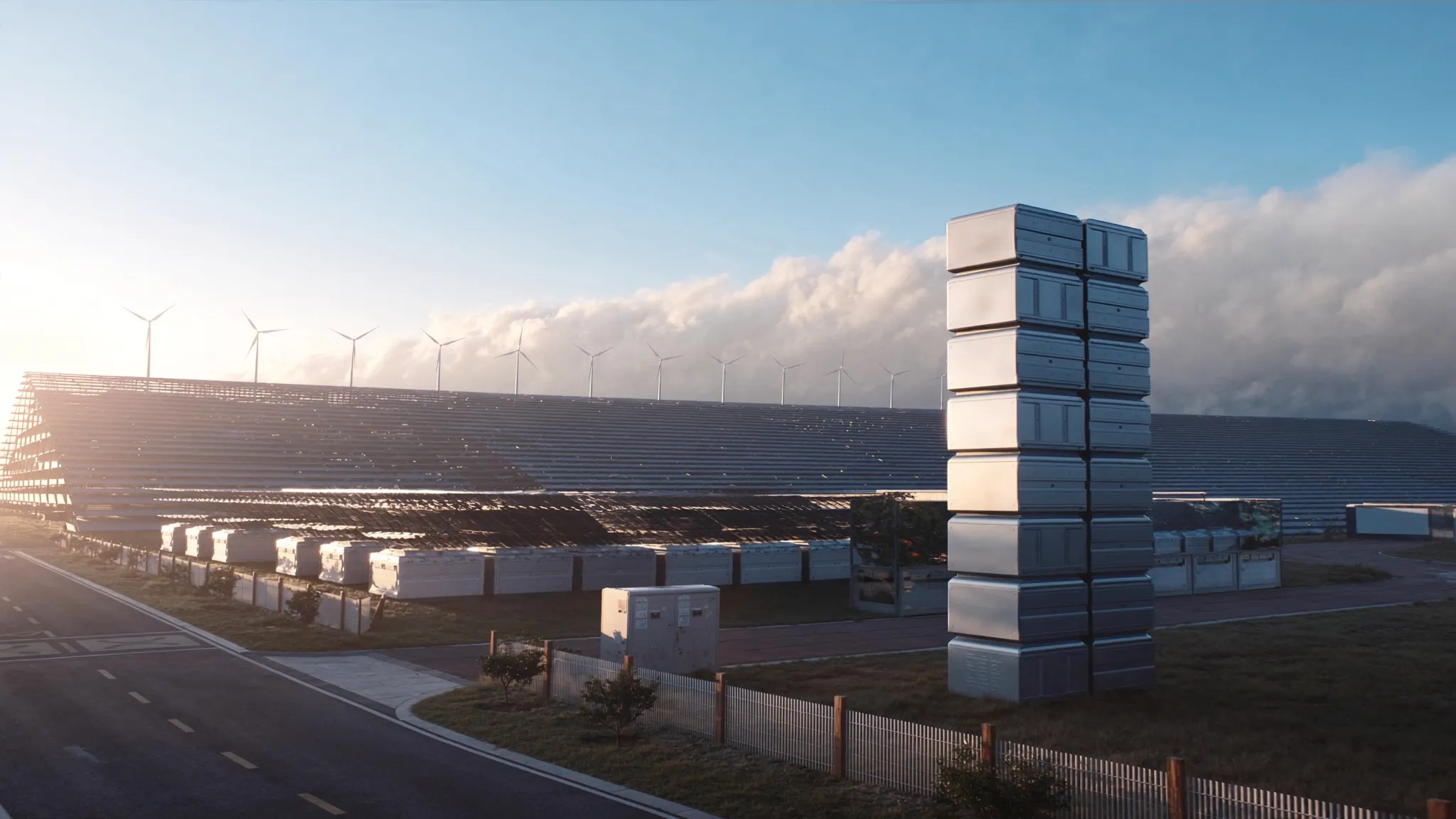
What stands out, in particular, is the plan to commercialize HVDC (High Voltage Direct Current) technology. With the global HVDC market expected to grow from 15.6 trillion won in 2024 to 23.1 trillion won by 2030, it seems Korea is strategizing to secure a meaningful market share. HVDC is indeed a crucial infrastructure for the expansion of renewable energy. It is essential for efficiently transmitting electricity generated from offshore wind farms to land.
The government plans to develop the design and manufacturing technology for 500kV-class voltage-type HVDC bipolar transformers by 2027 and enhance 2GW-class voltage-type HVDC valve/controller technology under private sector leadership. Additionally, they plan to establish a 2GW demonstration line over a 220km section from Saemangeum to Seohwaseong. This is indeed a massive project. Currently, the HVDC market is dominated by global companies like ABB (Switzerland), Siemens (Germany), and Hitachi Energy (Japan/Switzerland), and the key will be whether Korean companies can enter this market with competitive products.
Personally, I find the solar power sector plans the most intriguing. The government has declared that it will secure commercial technology for ultra-high-efficiency tandem solar cells within five years, a world first. Tandem solar cells are a technology that layers solar cells made of different materials to absorb a broader spectrum of sunlight. The efficiency of current commercial silicon solar cells is around 20-22%, so aiming to raise it to 35% is indeed an ambitious goal.
Korea’s Differentiation Strategy Against China’s Solar Dominance
In reality, the solar market is currently dominated by China. As of 2025, China accounts for over 80% of global solar panel production, and Chinese companies control the entire supply chain from polysilicon, a key material, to wafers, cells, and modules. Chinese companies like LONGi, JinkoSolar, and Trina Solar have secured price competitiveness through economies of scale.
In this situation, Korea has chosen the strategy of developing ‘high-value new technologies.’ Rather than directly competing on price with China, they aim to differentiate through technological superiority. If tandem solar cell technology is successfully commercialized, the higher efficiency could significantly improve power generation relative to installation costs, especially in urban areas or commercial building rooftops where space is limited, making high efficiency crucial.
The government has included a 33.6 billion won R&D budget in next year’s budget proposal, but frankly, this seems somewhat insufficient. With companies like China’s BYD and CATL investing trillions of won annually in R&D, Korea’s investment scale appears relatively small. Of course, additional private investment will occur beyond the government budget, but more bold investments seem necessary to compete globally.
Korean companies like Hanwha Solutions and LG Energy Solution already possess considerable technological prowess in the solar and battery sectors. Hanwha Solutions, in particular, operates solar module production bases in the U.S. and Malaysia, securing a certain position in the global market. However, the aggressive competition from Chinese companies makes it challenging to compete without technological differentiation.
Can Offshore Wind and Green Hydrogen Become New Growth Engines?
There are also many intriguing plans in the offshore wind sector. The government aims to localize 20MW-class super-large offshore wind turbines, which is on par with the current largest global turbines. Products like Vestas’ (Denmark) V236-15MW and Siemens Gamesa’s (Germany/Spain) SG 14-222 DD are currently the largest commercialized turbines, and 20MW-class would surpass them.
Doosan Enerbility has already developed and commercialized 8MW-class offshore wind turbines and is now working on developing larger capacity turbines. However, reaching 20MW will require technological innovation in all key components, such as blades, bearings, and generators. Offshore turbines must withstand extreme conditions like salt, strong winds, and waves, making durability and reliability critical.
Floating offshore wind technology is also noteworthy. Fixed offshore wind can only be installed in depths of 50-60m, but floating technology allows installation in deep seas over 200m, significantly expanding usable sea areas. With Korea surrounded by seas and having good wind resources on the west and south coasts, commercialization of floating technology could greatly increase offshore wind potential.
In the green hydrogen sector, the goal is to develop large-scale production technology of 100MW by 2033. Considering that current domestic green hydrogen demonstration plants are usually 1-5MW, 100MW is a significant leap. Next year, 10 billion won will be invested to develop a 5MW PEM (Polymer Electrolyte Membrane) electrolysis system, and if successful, the scale can be gradually expanded.
However, the biggest challenge for green hydrogen remains its economic viability. Currently, green hydrogen production costs are around $6-8 per kg, while fossil fuel-based gray hydrogen is about $1-2. The cost gap is so large that commercialization is difficult without government support or policies like carbon taxes. However, as renewable energy generation costs continue to fall and electrolysis technology improves, economic viability is expected to be secured in the long term.
The next-generation power grid construction plan is also impressive. With the spread of renewable energy, the power system is shifting from a ‘few large’ power plants to ‘many small’ distributed resources, and an AI-based intelligent power grid is essential for efficient management. The government plans to invest 117.6 billion won in ESS construction and 70.2 billion won in microgrids next year, which could lead to significant demonstration projects.
Personally, the most realistic aspect of this plan seems to be the development of SMR (Small Modular Reactors). Korea already possesses world-class capabilities in nuclear technology, with Korea Hydro & Nuclear Power, Doosan Enerbility, and KEPCO KPS participating in i-SMR development. The target is to obtain standard design approval by 2028, which seems quite achievable.
However, there are concerns as well. For these large-scale projects to succeed, consistent government policy support is necessary, but energy policies have often wavered with changes in administration. Additionally, active participation and investment from private companies are crucial, but with global economic uncertainties and rising interest rates, companies’ investment capacities are constrained.
Nonetheless, if this plan is successfully implemented, it could be an opportunity for Korea to establish itself as a major player in the global energy transition era. Technologies like HVDC, tandem solar cells, and large-capacity offshore wind turbines are in high demand worldwide, so securing technological competitiveness could lead to significant export effects. It will be fascinating to see how these projects unfold over the next few years.
This article was written after reading the Untitled article, adding personal opinions and analysis.
Disclaimer: This blog is not a news outlet, and the content reflects the author’s personal views. The responsibility for investment decisions lies with the investor, and no liability is assumed for investment losses based on this article’s content.
