Germany’s 300GW Renewable Energy Goal: A New Benchmark for Global Energy Transition
 Editor
The German government has unveiled an ambitious plan to expand its renewable energy capacity to 300GW by 2030. What is even more remarkable is the presentation of a concrete roadmap to allocate 2% of its land for onshore wind power. As of December 2025, this seems to be more than just a policy announcement; it appears to set a new benchmark for global energy transition.
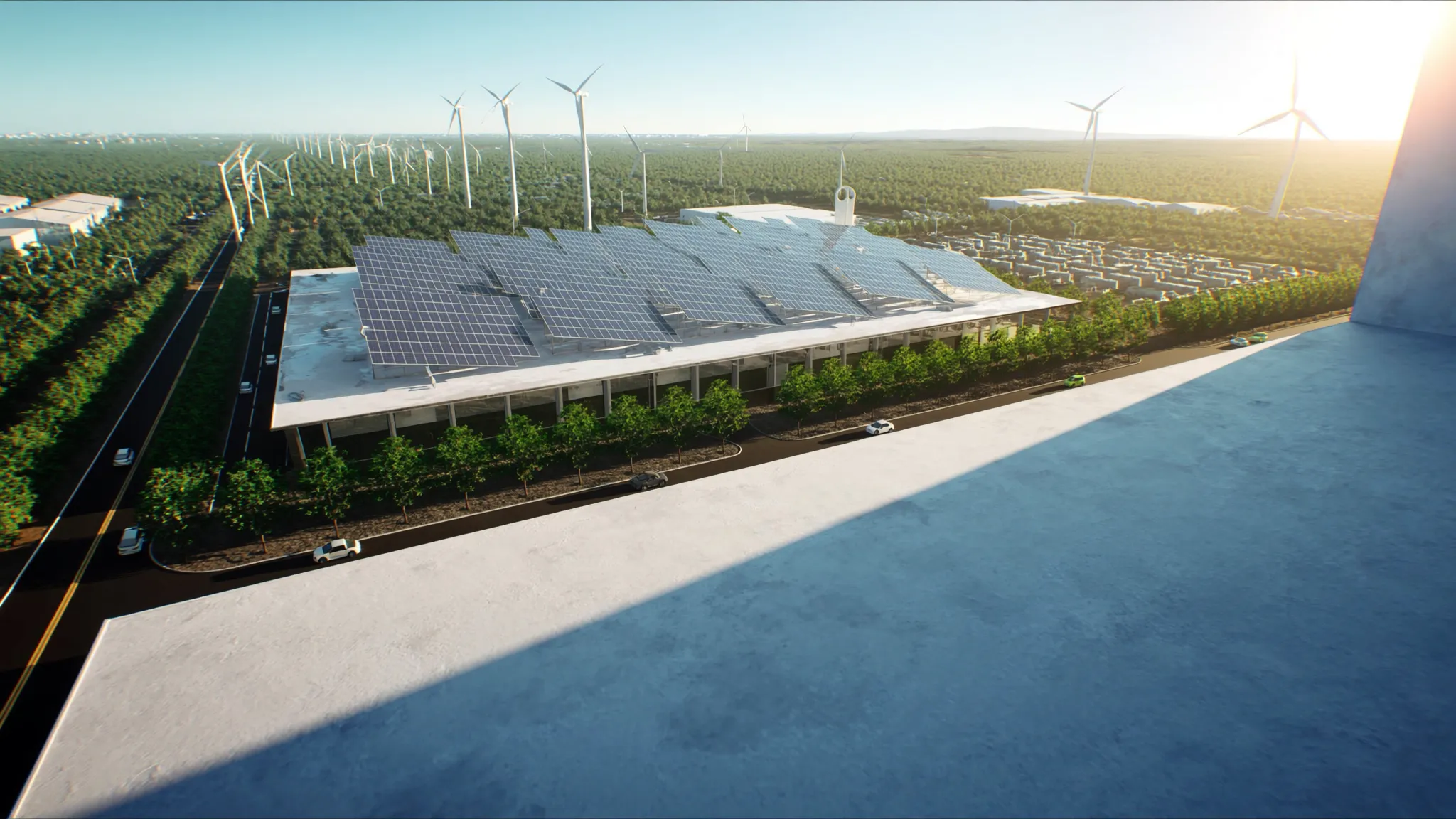
Considering Germany’s current renewable energy capacity is approximately 150GW, the goal is to achieve a 100% increase over the next five years. This means installing an average of 30GW annually, which, given the global wind market’s annual installation volume of around 100GW, implies Germany alone aims to account for 30% of the world’s new installations. This is indeed a massive scale.
Personally, the most noteworthy aspect of this announcement is the specific figure of ‘allocating 2% of the land for onshore wind.’ With Germany’s land area being about 357,000 km², this means approximately 7,140 km² will be used for wind power, equivalent to about 3.9 times the size of Jeju Island. But is this realistically feasible?
Germany’s proactive approach is closely linked to the EU’s REPowerEU plan. Following the Russia-Ukraine war, energy security has emerged as a top priority, leading the entire EU to announce an increase in renewable energy share to 42.5% by 2030. As the EU’s largest economy, Germany is in a position to play a crucial role in achieving this goal.
From a market perspective, Germany’s announcement presents a tremendous opportunity for global wind turbine manufacturers. Denmark’s Vestas Wind Systems A/S, headquartered in Copenhagen, already holds over 30% market share in Germany and is expected to benefit the most. As of the third quarter of 2024, Vestas recorded a 16% market share in the global onshore wind market, and Germany’s large-scale investment is likely to further increase this figure.
Siemens Energy AG, based in Munich, is also noteworthy. Siemens Energy recorded approximately 16 billion euros in revenue from the wind sector for the fiscal year 2024, and if Germany’s plan is realized, an annual growth of 20-30% over the next five years seems possible. Siemens, with its strengths in offshore wind, is expected to play a significant role in Germany’s North Sea offshore wind projects.
A Seismic Shift in the Global Renewable Energy Market
The importance of Germany’s announcement lies not only in a single country’s energy policy change but also in its potential role as a catalyst for altering the global renewable energy market landscape. As of 2025, the global wind market size is approximately 120 billion dollars, and Germany’s investment alone could expand this market by 30-40%.
The response from Chinese companies is also intriguing. Currently, Chinese firms hold over 60% market share in the global wind turbine market. It will be interesting to see what strategies Chinese companies like Goldwind, Envision, and Mingyang will adopt to enter the German market. However, the EU’s anti-dumping policies and supply chain diversification pressures may make it more challenging for Chinese companies to enter Europe than before.
American companies are also eyeing opportunities. GE Vernova, headquartered in Boston, has been actively targeting the European market since its spin-off in 2024 as a renewable energy specialist. GE’s Haliade-X offshore wind turbine, boasting a capacity of 15MW, perfectly aligns with Germany’s offshore wind expansion plans.
Korean companies are also worth watching. Hanwha Solutions, headquartered in Seoul, has entered the global top 5 in the solar sector through the acquisition of Q CELLS and is now venturing into the wind business. Doosan Enerbility, based in Changwon, possesses world-class technology in offshore wind, making it likely to participate in Germany’s North Sea projects. In fact, Doosan Enerbility recorded orders worth 1.2 trillion won in the offshore wind sector in the first half of 2024 alone.
However, one question arises: Can Germany truly achieve such ambitious goals? Technically, it seems feasible. Germany’s current wind power utilization rate is about 25%, but with the application of the latest turbine technology, this can be increased to 35-40%. The challenge lies in social acceptance and regulation.
Challenges and Realistic Constraints
Ironically, the biggest obstacle in Germany’s renewable energy expansion plan is environmental protection and opposition from local residents. Allocating 2% of the land for wind power means converting a significant portion of existing forests or farmland, which is expected to face strong opposition from environmental groups and local residents. In fact, complaints about noise from wind turbines are continuously being raised in Germany.
The power grid infrastructure is also a major challenge. To transmit the concentrated wind power from northern Germany to the industrial areas in the south, large-scale transmission line construction is necessary, and the currently planned SuedLink and SuedOstLink projects may not be sufficient. It is estimated that the German government will need to invest an additional 100 billion euros over the next decade for this purpose.
There are also many considerations from an economic perspective. Germany’s renewable energy surcharge (EEG Umlage) is already at a significant level, and achieving the 300GW goal is expected to require an additional annual subsidy of 20-30 billion euros. This could further increase the electricity bill burden on German households. However, the recent rise in wholesale electricity prices has significantly improved the economic viability of renewable energy, which is a positive aspect.
From a global supply chain perspective, there are challenges as well. Currently, most of the rare earth magnets and bearings, which are key components of wind turbines, are dependent on China. Considering geopolitical risks, supply chain diversification is essential. This may lead to short-term cost increases but is likely to strengthen the manufacturing base within Europe in the long term.
Nevertheless, I believe there is a good chance of success for Germany’s plan. Above all, Germany has already accumulated over 20 years of experience through its Energiewende (energy transition) policy. The fact that Germany has increased its renewable energy share from 6% to over 50% since the introduction of the Renewable Energy Act (EEG) in 2000 proves the country’s policy execution capability.
Offshore wind specialists like Denmark’s Ørsted A/S, headquartered in Fredericia, also have high expectations for the German market. Ørsted holds a 28% market share in the global offshore wind market as of 2024, and with the large-scale offshore wind projects in Germany’s North Sea region, annual growth of 30-40% is anticipated.
NextEra Energy Inc., headquartered in Juno Beach, USA, is also noteworthy. As the largest renewable energy developer in North America, NextEra is actively considering entering the European market. Germany’s 300GW goal presents a golden opportunity for such global companies.
Ultimately, Germany’s announcement is likely to be more than just a policy goal; it has the potential to be a game-changer that accelerates the pace of global energy transition. As of December 2025, if Germany’s strategy to simultaneously address climate change and energy security succeeds, other countries are expected to set similarly ambitious goals. In the process, the global renewable energy market is likely to grow to a much larger scale than it is now.
This article was written after reading the article Germany to Supply 300GW of Renewable Energy by 2030… 2% of Land for Onshore Wind, adding personal opinions and analysis.
Disclaimer: This blog is not a news outlet, and the content is the author’s personal opinion. The responsibility for investment decisions lies with the investor, and no responsibility is taken for investment losses based on the content of this article.
