Imminent Power Crisis for Korean Data Centers? A Realistic Warning That There Is No Solution Without Nuclear Power
 Editor
With the explosive growth of AI and cloud services, the power demand for data centers is surging, and Korea is no exception. According to a recent report by Maeil Business Newspaper, domestic data center power demand is projected to soar to twice the current level by 2030. It is expected to increase from 8.2 TWh this year to 18 TWh by 2030, and to 30 TWh by 2038.
You might not grasp the magnitude of these figures, but calculations show that meeting the 2030 demand alone would require 1.8 gigawatts of nuclear power. A 1 GW nuclear plant can produce about 10 TWh of electricity annually, so simple math indicates that nearly two plants would be needed. The problem is that this calculation only considers data center demand.
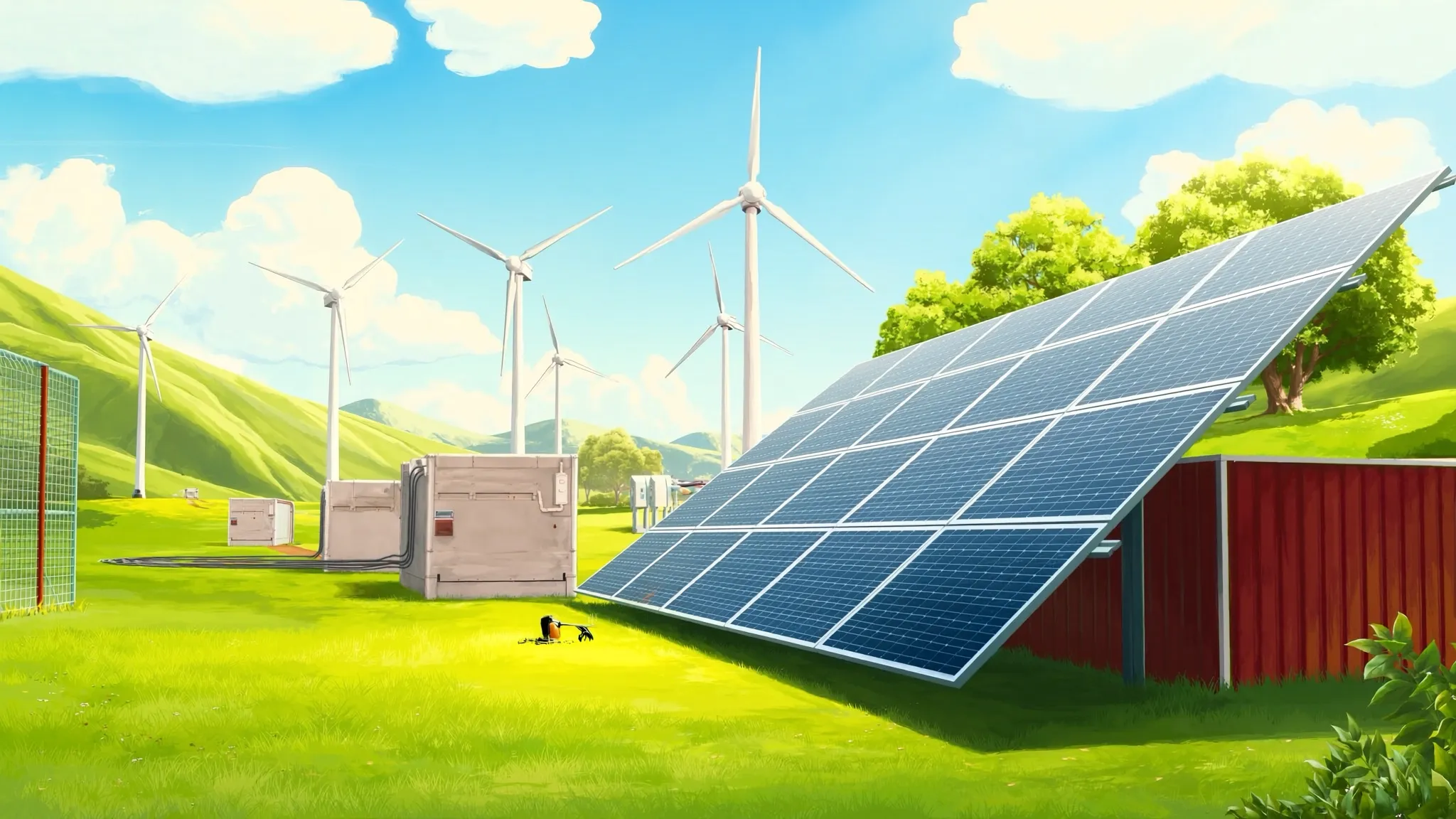
What about renewable energy? To produce the same amount of power with solar energy, a facility capacity of 13 GW is required. This would necessitate 128.7㎢ of land, which is 44 times the size of Yeouido and 21.3% of Seoul’s area—an enormous scale that is practically impossible to secure.
An even bigger issue is the intermittency of solar power. Since it only generates electricity during the day, energy storage systems (ESS) are essential for nighttime or cloudy days, leading to exponentially increasing additional land and costs. Installing a 1 MW ESS requires the area of a large container, and due to fire risks, multi-layer installations are limited, highlighting clear practical constraints.
Global Surge in Data Center Power Demand and Korea’s Response
This situation is not unique to Korea. Globally, data center power demand is skyrocketing. In the U.S., data centers accounted for about 4% of total power consumption in 2023, and this is expected to rise to 8% by 2030. Big tech companies like Amazon (AMZN:US), Microsoft (MSFT:US), and Google (Alphabet:GOOGL:US) are significantly increasing their investments in data centers as they compete in AI services.
Research indicates that conversational AI services like ChatGPT or Claude consume 10-30 times more power than traditional search services. With OpenAI’s ChatGPT processing over 100 million queries daily, the proliferation of such services will inevitably lead to an exponential increase in power demand.
Korea Electric Power Corporation (015760:KR) plays a crucial role in this context. As the sole monopoly power supplier in the country, it must respond to the surging data center power demand, but the current power generation facilities seem to have clear limitations. Despite recording sales of 17.9 trillion KRW in the third quarter of 2024, KEPCO is still facing challenges due to rising fuel costs and power sales price issues.
More importantly, Korea Hydro & Nuclear Power (592080:KR) has a significant role. KHNP, responsible for operating domestic nuclear plants, currently manages 24 reactors, but delays in new plant construction are raising concerns about future power supply. Although the government plans to initiate public discussions on constructing two new nuclear plants within the year, it realistically takes over 10 years to complete construction.
Practical Limitations of Nuclear Plant Construction and Seeking Alternatives
Even if nuclear plant construction is the answer, there are many practical issues. Site selection is a major hurdle. After the Fukushima nuclear accident, public perception of nuclear power has worsened, making it difficult to find new sites. Additional construction on existing nuclear sites is likely to face opposition from local residents.
Construction costs are also significant. Building a 1 GW nuclear plant costs about 7-8 trillion KRW, so 1.8 plants would require nearly 14 trillion KRW. Considering the construction period, there is insufficient time to meet the 2030 power demand.
Can renewable energy be a complete alternative? Companies like Hanwha Aerospace (012450:KR) and Doosan Enerbility (034020:KR) are actively investing in offshore wind projects, but limitations remain clear. For Doosan Enerbility, a significant portion of its 2.1 trillion KRW third-quarter 2024 revenue comes from the wind sector, but the progress of domestic offshore wind projects is slower than expected.
In the ESS market, Samsung SDI (006400:KR) and LG Energy Solution (373220:KR) have global competitiveness. Samsung SDI recorded 1.2 trillion KRW in sales from the ESS sector in the third quarter of 2024, and LG Energy Solution is also actively expanding its ESS business. However, as mentioned earlier, ESS alone cannot fully address the intermittency issue of solar power.
Professor Yoo Seung-hoon of Seoul National University of Science and Technology hits the nail on the head. His statement that “no country supplies AI data center power with 100% solar energy” reflects reality well. In fact, global big tech companies like Google and Microsoft are actively considering nuclear power for data center power supply. Google signed a power purchase agreement with Kairos Power, a small modular reactor (SMR) developer, in October 2024, and Microsoft decided to invest in the reactivation of the Three Mile Island nuclear plant.
The situation is even more urgent in Korea. Naver (035420:KR) operates a large-scale data center ‘Gak’ in Chuncheon, and Kakao is expanding data centers in Ansan and Gimpo. In addition, global cloud service providers like Amazon Web Services (AWS), Microsoft Azure, and Google Cloud are increasing their data center investments in Korea. If this trend continues, power demand could rise faster than expected.
Personally, I believe an energy mix approach is necessary. Instead of a binary view of nuclear versus renewable energy, it’s important to establish a balanced power supply system considering the pros and cons of each. Nuclear power provides stable base power, renewable energy enhances eco-friendliness, and ESS offers flexibility in power supply.
However, time is of the essence. Experts warn that a power crisis could occur within five years if nuclear plant construction procedures are delayed. Data center power demand won’t wait. As AI service competition intensifies and cloud service usage increases, power demand will continue to rise.
Ultimately, it seems to be a time for swift government decisions. While the public discussion process is important, considering the national task of power supply stability, it is a situation that can no longer be postponed. Simultaneously, the expansion of renewable energy and the development of ESS technology must be pursued in parallel. Stable power supply is a prerequisite for Korea to maintain its digital competitiveness in the AI era.
This article was written after reading a Maeil Business Newspaper article and adding personal opinions and analysis.
Disclaimer: This blog is not a news outlet, and the content is the author’s personal opinion. The responsibility for investment decisions lies with the investor, and no liability is assumed for investment losses based on this article’s content.
