Integration of OLED Technology in HD Hyundai Energy Solutions – The True Meaning of Next-Generation Solar Cell Efficiency at 28.7%
 Editor
We have received news that HD Hyundai Energy Solutions, in collaboration with the Korea Research Institute of Chemical Technology, has achieved 28.7% efficiency in silicon-perovskite tandem solar cells. Initially, I thought it was just another efficiency improvement news, but upon closer inspection, it’s not just a numbers game. The key point is the integration of OLED processes into solar cells, and we’ll take a closer look at why this is significant.
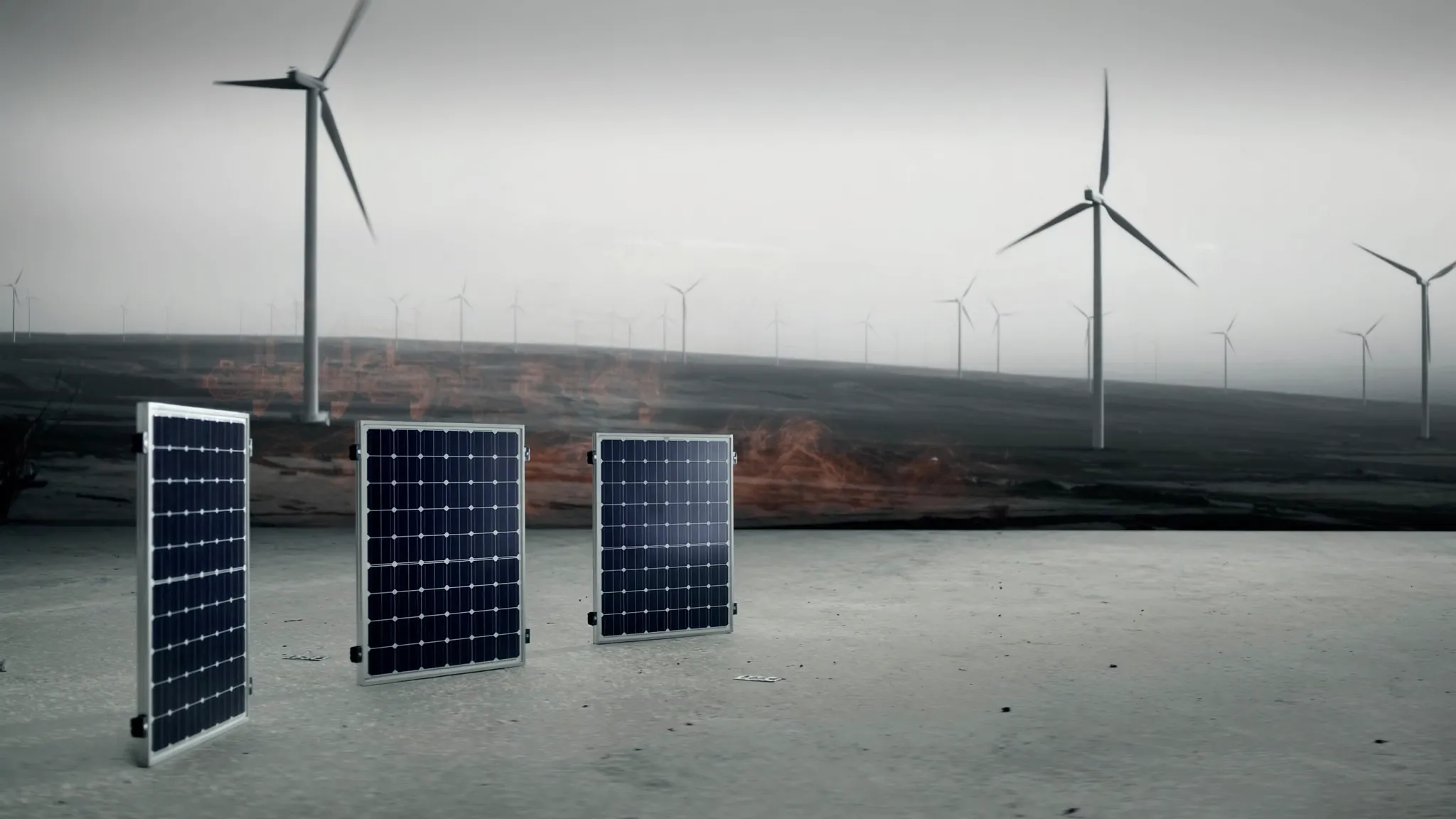
The theoretical efficiency limit of single silicon cells in the current solar market is known to be around 29%. Commercial products typically remain at the 20-22% level. However, with a tandem structure, it is theoretically possible to achieve up to 43%. The 28.7% achieved by HD Hyundai is more than 30% higher than current commercial silicon cells. But what’s truly important here is not the efficiency itself, but how it was achieved.
In the field of perovskite solar cells, 99% have so far used the ‘wet solution process’. This method involves dissolving perovskite material in a solution for coating, which yields good results in laboratories but has many limitations for mass production. The solution does not spread evenly, making it difficult to produce on a large scale, and it is sensitive to humidity and temperature, reducing stability. In fact, global solar companies like First Solar (FSLR) and JinkoSolar (JKS) are delaying the commercialization of perovskite due to these issues.
However, the ‘dry vacuum deposition’ method chosen by HD Hyundai is a completely different approach. This is the technology used by Samsung Display and LG Display to manufacture OLED panels. It involves vaporizing materials in a vacuum state for uniform deposition, a technology already verified for large-scale production. Samsung Display, for example, manufactures 65-inch OLED panels using this method. Applying this technology to solar cells means that existing OLED production infrastructure can be utilized.
A Technological Breakthrough That Could Change the Market Landscape
As of 2025, the global solar market is estimated to be around $250 billion, with Chinese companies occupying more than 70%. Companies like Longi Solar, JinkoSolar, and Trina Solar dominate the market with price competitiveness. Korean companies, such as Hanwha Solutions (009830), are around 7th place globally, and HD Hyundai Energy Solutions has not yet entered the top ranks.
However, if tandem solar cells become commercialized, the rules of the game could change. The current LCOE (Levelized Cost of Electricity) for silicon solar cells is around 3-5 cents per kWh, but if efficiency increases by more than 30%, more power can be produced from the same area, effectively reducing power generation costs. Especially in urban or commercial buildings with limited installation space, the premium for high-efficiency panels will be greater.
What personally intrigues me is the potential synergy between HD Hyundai’s large-scale manufacturing know-how accumulated in shipbuilding and Hyundai Motor Group’s battery technology. Hyundai Motor (005380) is building a battery plant in Georgia with LG Energy Solution (373220), and HD Hyundai, as the world’s largest shipbuilder, has extensive experience in manufacturing large structures. Since solar panels are ultimately large-scale manufacturing, this experience could be beneficial.
Market analysts predict that the tandem solar cell market will grow at an average annual rate of 35% by 2030. Currently, it is almost non-existent, but it is expected to reach $15 billion by 2030. While such predictions are not always accurate, the growth potential seems certain.
However, competitors will not remain idle. The UK startup Oxford PV has already announced achieving 28.6% efficiency with perovskite tandem cells, and Japan’s Kaneka recorded 26.7%. China’s LONGi Solar also announced an astonishing figure of 32.69%, but this seems to be at the laboratory level and far from commercialization. Ultimately, who first establishes a mass production system will be crucial.
Practical Challenges to Commercialization
However, achieving 28.7% efficiency does not immediately mean commercialization. The first challenge is to maintain the efficiency achieved with small cells in the laboratory when expanding to large-area modules. Typically, about 80-85% of laboratory efficiency is achieved in commercial modules, so it is likely to be around 23-24% in reality. Still, this is certainly higher than current commercial silicon panels.
The second challenge is durability. Perovskite materials are sensitive to humidity and heat, and their long-term stability has not been verified. Solar panels usually have a 25-year warranty, and performance must be maintained at over 80% for 25 years. HD Hyundai’s choice of the dry deposition method seems to be an attempt to solve these stability issues, but we need to see how much it actually improves.
The third challenge is cost. The vacuum deposition process is more complex and costly than the wet process. This is one reason why OLED panels are more expensive than LCDs. However, since the OLED industry has already accumulated mass production know-how, and companies like Samsung SDI (006400) and LG Energy Solution possess related equipment and material technologies, synergy effects can be expected.
HD Hyundai Energy Solutions aims for an official efficiency of over 30% in the future, and if achieved, it could truly be a game-changer. 30% efficiency is more than 50% higher than current commercial panels, meaning 1.5 times more power can be produced from the same roof area. At this level, even if the initial installation cost is somewhat high, it would still be economically viable.
From the perspective of the domestic solar market, this is also significant. Korea has limited land for solar installations, but with high-efficiency panels, more power can be generated from the same area, aiding in achieving renewable energy goals. The government aims to increase the share of renewable energy to 30% by 2030, but it currently remains around 9%. High-efficiency solar technology could be a key means to achieve these goals.
Another point to note is HD Hyundai Group’s overall energy transition strategy. HD Hyundai Heavy Industries is manufacturing offshore wind turbines, and HD Hyundai Electric produces power conversion devices. Adding high-efficiency solar cells to this mix could complete the renewable energy value chain. Particularly, projects like hybrid power plants combining offshore wind and solar could create synergies.
From an investment perspective, the solar business revenue share of HD Hyundai Energy Solutions is still small. The main focus is still on batteries and fuel cells. However, if tandem solar cells become commercialized, they could become a new growth engine. They could target the premium market in the global solar market based on technological superiority. However, commercialization is expected to take another 2-3 years, and there are technological and economic risks to consider in the process.
Ultimately, HD Hyundai’s achievement seems to show the possibility for Korea to join the global leading group in next-generation solar technology. The idea of integrating Korea’s strength in OLED technology into solar is also innovative. It will be interesting to see the process towards actual commercialization and the position it will occupy in global competition.
This article was written after reading the HD Hyundai Energy Solutions achieves world-leading efficiency in next-generation solar cells by applying ‘OLED process’ article, adding personal opinions and analysis.
Disclaimer: This blog is not a news media outlet, and the content is the author’s personal opinion. The responsibility for investment decisions lies with the investors themselves, and no responsibility is taken for investment losses based on the content of this article.
