Korea’s Next-Generation Nuclear Technology Throws a Gauntlet in the Global Clean Energy Race
 Editor
As of the end of 2025, the global energy industry faces an unprecedented challenge of simultaneously achieving carbon neutrality and energy security. In this context, nuclear energy is being reevaluated, with next-generation nuclear technologies such as Small Modular Reactors (SMRs) and fourth-generation nuclear technology emerging as game-changers. According to the International Energy Agency (IEA), the global SMR market size is projected to grow from approximately $7 billion in 2024 to $30 billion by 2030, at an average annual growth rate of 35%. At the center of this massive market shift, Korean nuclear companies are gaining attention with their unique technological capabilities and strategies.
Korea’s nuclear industry ecosystem is reaching a new turning point, based on 50 years of accumulated technology and operational experience. Currently, Korea relies on nuclear power for about 30% of its electricity production and operates 25 nuclear power plants. Notably, Korea’s nuclear plant utilization rate is the highest in the world at 93.4%, proving its global leadership in technical reliability and operational efficiency. Building on this foundation, major companies such as Korea Electric Power Corporation (headquartered in Seoul), Doosan Enerbility (headquartered in Changwon), and KEPCO Engineering & Construction (headquartered in Gyeongju) are expanding their investments in next-generation nuclear technology development and overseas expansion.
In the SMR sector, Korea’s approach focuses on miniaturizing existing large reactor technology while maximizing safety and economic efficiency. The SMART reactor, under development by the Korea Atomic Energy Research Institute, has an electrical output of 100MW and can reduce construction time from five years to three compared to conventional large reactors. It is evaluated as an optimized solution for medium-scale power demand, compared to the 77MW SMR under development by NuScale Power (headquartered in Oregon, USA) and the 35MW Akademik Lomonosov by Russia’s Rosatom (headquartered in Moscow). Notably, the SMART reactor implements an innovative safety design with a passive safety system that automatically maintains coolant circulation even during power supply interruptions.
Doosan Enerbility is taking a unique positioning in the SMR market. The company is focusing on developing key equipment for SMRs based on its manufacturing technology for steam generators and reactor vessels for large reactors. As of the third quarter of 2024, its nuclear sector revenue increased by 42% year-on-year to 1.23 trillion won. This is analyzed as a result of securing the Dukovany nuclear power plant project in the Czech Republic and expanding R&D investments related to SMRs. Doosan Enerbility has decided to increase its annual R&D investment by 60% from 2025, to 240 billion won, with 40% focused on next-generation nuclear technology.
Competitive Landscape of the Global SMR Market and Korea’s Differentiation Strategy
The current global SMR market is shaped by a four-power structure led by the United States, Russia, China, and Korea. NuScale Power in the U.S. is working on the first SMR project aiming for commercial operation by 2029, supported by a total of $1.3 billion from the U.S. Department of Energy. Russia has already commercialized the floating nuclear power plant Akademik Lomonosov and plans to construct four additional floating SMRs by the end of 2025. China is constructing the 125MW Linglong One (ACP100) in Hainan Province, aiming for commercial operation by 2026.
In this fierce competitive environment, Korea’s differentiation strategy lies in balancing safety and economic efficiency. According to analysis by the Korea Atomic Energy Research Institute, the construction cost of the SMART reactor is approximately $6.5 million per MW, more competitive than NuScale’s $8.9 million and China’s Linglong One’s $7.2 million. Additionally, the SMART reactor has a design lifespan of 60 years, offering a long-term economic advantage over the typical 40-50 years of general SMRs. KEPCO Engineering & Construction has signed technology cooperation agreements for the introduction of SMART reactors in Saudi Arabia and Jordan, aiming to finalize construction contracts by the first half of 2025.
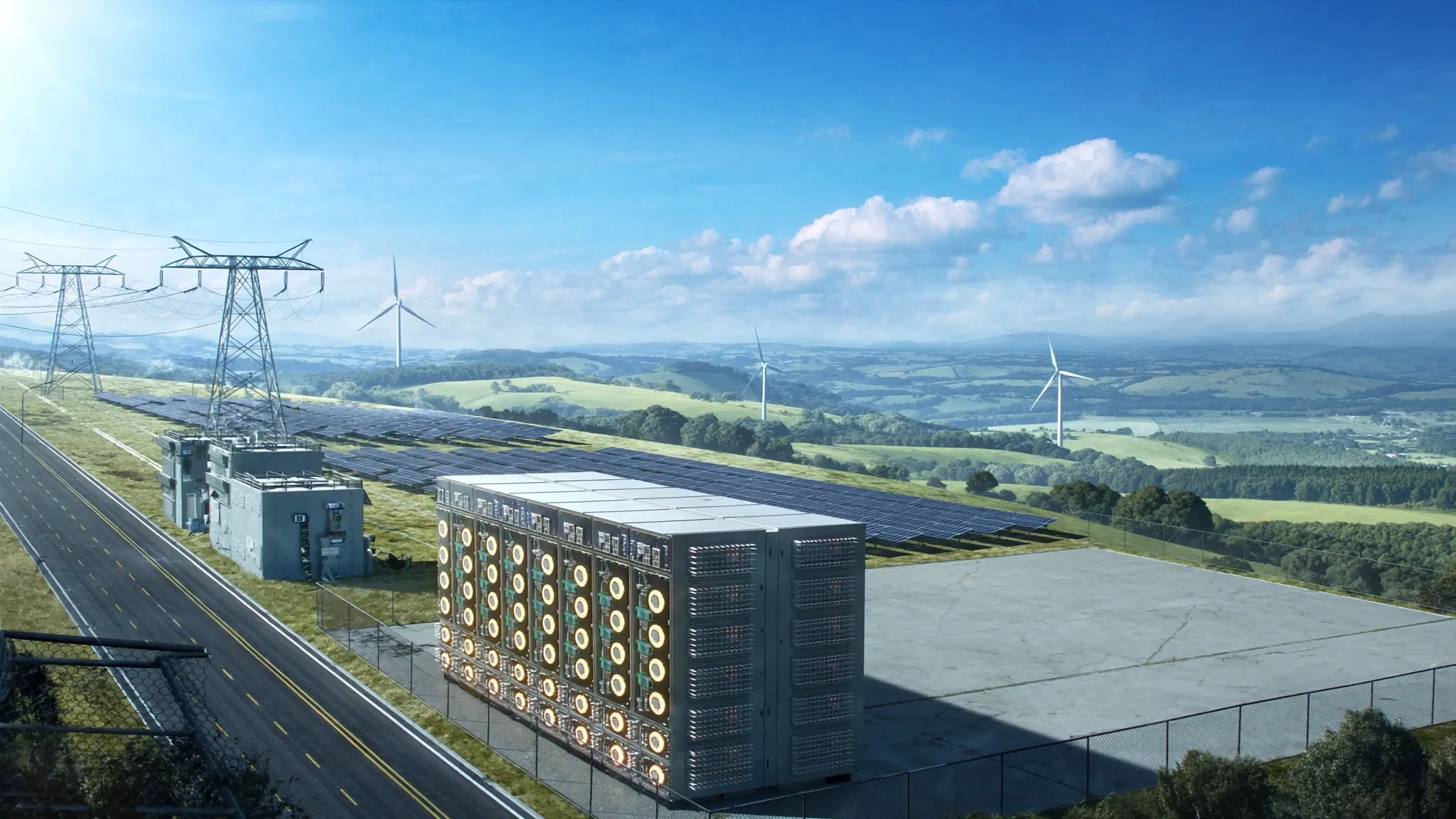
Notably, Korea is taking a leading role in developing hybrid systems of SMRs and renewable energy. Korea Electric Power Corporation announced a pilot project plan in November 2024 to link SMART reactors with offshore wind power in Jeju Island. This system is designed to complement the intermittency of renewable energy with the stable base power of SMRs, ensuring a power supply reliability of over 95%. This is a unique approach that differentiates Korea from leading renewable energy companies such as Denmark’s Ørsted (headquartered in Fredericia) and the UK’s EDF (headquartered in London).
Korea is also active in developing fourth-generation nuclear technology. The Korea Atomic Energy Research Institute is working on sodium-cooled fast reactor (SFR) technology to establish a nuclear system capable of recycling spent nuclear fuel. If commercialized, this technology is expected to fundamentally solve the nuclear waste issue, one of the biggest challenges of current nuclear power generation. SFR technology can improve uranium resource utilization efficiency by more than 100 times compared to existing methods and drastically reduce the toxicity period of high-level waste from 100,000 years to 300 years.
Market Opportunities, Investment Prospects, and Challenges
The revival of the global nuclear market is supported by various macroeconomic factors. The International Atomic Energy Agency (IAEA) announced that global nuclear power capacity is projected to increase from the current 370GW to 890GW by 2050. This represents a new investment opportunity of approximately $520 billion. The SMR market is expected to account for about $120 billion of this, with the Asia-Pacific region projected to occupy 45% of the total SMR market. For Korean companies, this is a golden opportunity to accelerate their global market entry based on domestic technological capabilities.
From an investment perspective, Korean nuclear-related companies show significant growth potential. Doosan Enerbility, for instance, has secured a revenue pipeline of approximately 24 trillion won over the next 15 years through the Czech nuclear project, equivalent to about eight times its current annual revenue. Korea Electric Power Corporation also aims to expand its overseas sales ratio from the current 15% to 35% by 2030 through the expansion of overseas nuclear projects. The increasing demand for SMRs in the Middle East and Southeast Asia is expected to drive the growth of Korean companies.
However, significant challenges accompany these opportunities. The biggest challenge is the complexity of licensing and regulatory approval processes. SMR technology requires new safety standards and approval procedures different from existing nuclear regulatory frameworks. The U.S. Nuclear Regulatory Commission (NRC) took six years to approve NuScale’s SMR design, and different standards applied by regulatory agencies in various countries make global standardization urgent. Korea is also working on establishing a new regulatory framework for the standard design approval of SMART reactors through the Nuclear Safety and Security Commission, but it is expected to take an additional 2-3 years to complete.
Supply chain management and securing key materials are also critical issues. In the case of high-purity enriched uranium required for SMR manufacturing, Russia currently accounts for 44% of the global supply, posing geopolitical risks. To address this, Korea has signed long-term supply contracts with Kazatomprom (headquartered in Nur-Sultan, Kazakhstan) and Cameco (headquartered in Saskatoon, Canada), but securing price stability and supply reliability remains an ongoing challenge. Particularly, after the Ukraine war in 2024, the price of enriched uranium rose by 76% from $60 to $106 per pound, affecting the economics of SMR projects.
Human resource development and technology transfer are also important considerations. The International Atomic Energy Agency estimates that approximately 150,000 additional nuclear specialists will be needed globally by 2030. Korea currently produces about 800 nuclear engineering graduates annually, but there is still a shortage of specialists focused on SMR and fourth-generation reactor technology. In response, the Korea Atomic Energy Research Institute plans to establish SMR specialized education courses from 2025 and expand overseas technician training programs.
From a financial perspective, the complexity of project financing is another challenge. SMR projects require an initial investment of $1-3 billion, with a long investment recovery period of 15-20 years, limiting the participation of financial institutions. Additionally, the strictness of ESG investment criteria for nuclear power has led to some institutional investors’ reluctance to invest. To address this, the Korean government is expanding nuclear export financial support through the Export-Import Bank of Korea to $5 billion annually and strengthening policy incentives to encourage participation from private financial institutions.
In conclusion, Korea’s next-generation nuclear technology has ample potential to become a key driver of the global clean energy transition. The safety and economic efficiency of SMR technology, along with 50 years of accumulated nuclear operational experience, are competitive differentiators for Korean companies. If major companies like Doosan Enerbility, Korea Electric Power Corporation, and KEPCO Engineering & Construction achieve success in overseas expansion and technological innovation, Korea can further solidify its status as a nuclear technology exporting nation. However, systematically addressing challenges such as regulatory approval delays, supply chain risks, and workforce shortages will be the key to success. The next five years are expected to be a decisive period for Korea’s nuclear industry to emerge as a technological leader in the global market.
