The Core Axis of Global Energy Transition: Rapid Growth and Technological Innovation in the Green Hydrogen Market by 2025
 Editor
One of the most notable sectors in the global energy market by 2025 is undoubtedly green hydrogen. According to the latest report by the International Energy Agency (IEA), the global green hydrogen market size is projected to reach $8.7 billion in 2025, marking a 32% increase from the previous year. This represents a more than sevenfold growth from the $1.2 billion scale in 2020, showcasing the fastest growth rate in the energy transition sector. Particularly, the continuous decline in renewable energy generation costs and innovations in electrolyzer technology are significantly enhancing the economic viability of green hydrogen. BloombergNEF’s analysis indicates that the current production cost of green hydrogen in 2025 is $3.2 per kilogram, more than halving from $6.8 in 2020.
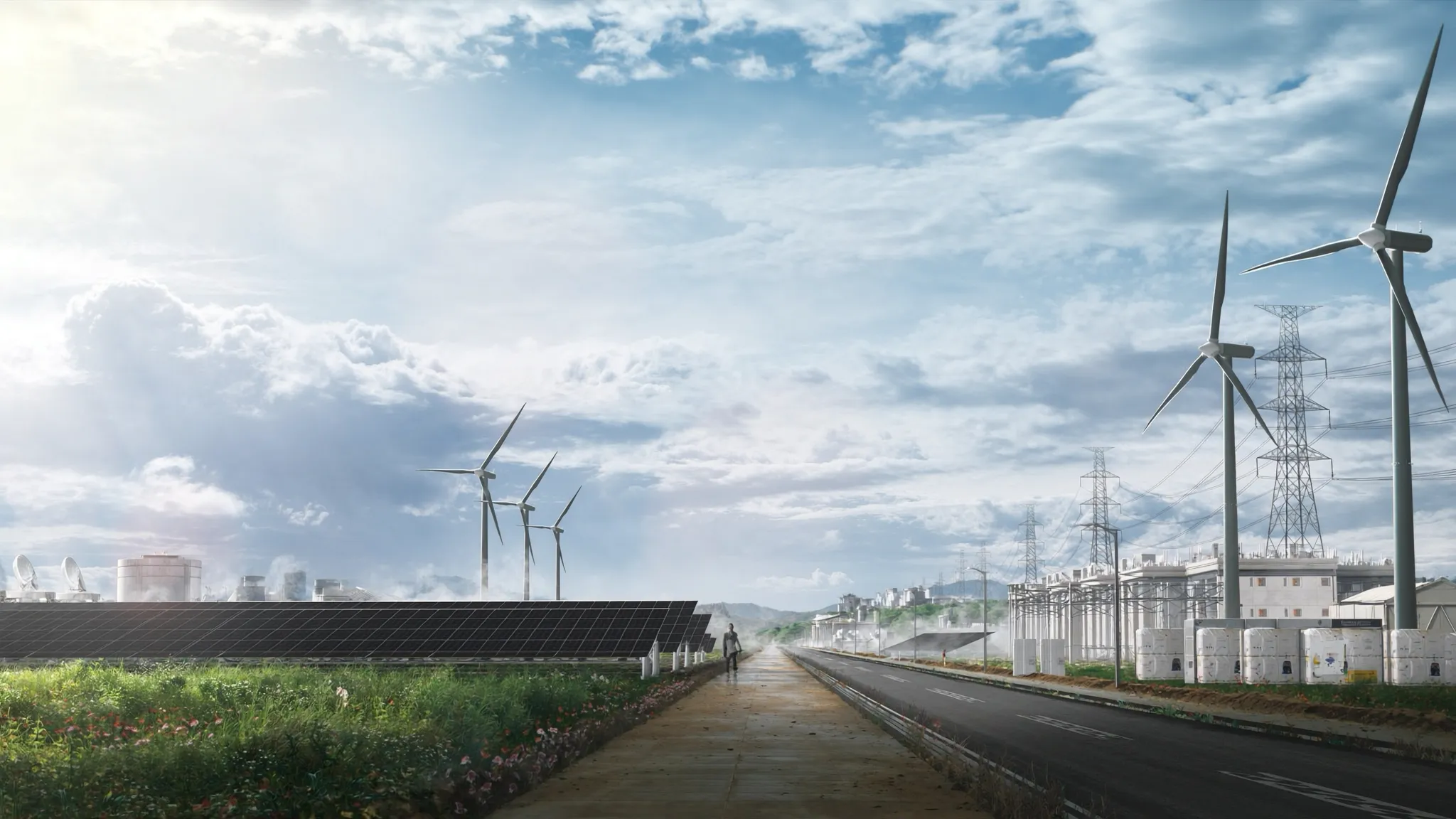
The background of this growth includes active policy support and private investments from major countries worldwide. The European Union has set a target to produce 10 million tons of green hydrogen by 2030 and announced an investment of €210 billion through the REPowerEU plan. The United States is also providing a tax credit of up to $3 per kilogram for green hydrogen production through the Inflation Reduction Act (IRA), which significantly enhances the competitiveness of green hydrogen. The Korean government has also announced plans to expand green hydrogen production to 250,000 tons by 2030 and invest 43 trillion won in related infrastructure through the 2023 Hydrogen Economy Basic Plan.
From a technological perspective, the core of the green hydrogen market in 2025 is the innovation in electrolyzer technology. The efficiency of alkaline electrolyzers, which currently dominate the market, is continuously improving, and with the commercialization of proton exchange membrane (PEM) electrolyzers and solid oxide electrolyzer cell (SOEC) technology, the range of choices is expanding. Denmark’s Nel ASA (Oslo: NEL) announced the launch of a new 5MW PEM electrolyzer system in the first half of 2025, achieving 20% improved efficiency compared to existing systems. This system’s power consumption is 48kWh per kilogram of hydrogen, 8% lower than the industry average of 52kWh.
Domestic companies are also securing a unique position in the green hydrogen market. Doosan Enerbility (KRX: 034020) announced a contract to supply a 1.2GW alkaline electrolyzer system to the Saudi Arabian NEOM project in October 2025. This is the largest single project globally, capable of producing 200,000 tons of green ammonia annually. Doosan Enerbility expects annual sales of 1.2 trillion won from this project starting in 2026. Meanwhile, Doosan Fuel Cell (KRX: 336260) is showing strength in the fuel cell system sector linked to green hydrogen, recording a 42% market share in the domestic fuel cell market as of the third quarter of 2025.
Large-scale Project Investments and Global Supply Chain Establishment
Another feature of the green hydrogen market in 2025 is the commencement of large-scale gigawatt (GW) projects. Australia’s Asian Renewable Energy Hub project plans to produce 1.7 million tons of green ammonia annually using 26GW of renewable energy, with the first phase of construction starting in the second half of 2025. The total investment for this project is $36 billion, and upon completion, it will account for 8% of the global green hydrogen supply. Chile’s HyEx project is also designed to produce 1.6 million tons of green methanol annually from 2030 with a 25GW scale.
The characteristic of these large-scale projects is that they aim to establish a global supply chain beyond simple hydrogen production. Germany’s H2Global initiative has signed green hydrogen import contracts with 15 countries as of 2025, aiming to introduce 1 million tons of green ammonia annually. Japan has also signed green hydrogen supply agreements with Australia, Chile, and Saudi Arabia as of December 2025, planning to import 3 million tons of hydrogen annually by 2030. This accounts for 60% of Japan’s total hydrogen demand, holding significant importance for energy security.
Hyosung Heavy Industries (KRX: 267270) plays a key role in establishing this global supply chain. The company completed the construction of the world’s largest liquefied hydrogen plant in Ulsan, with an annual production capacity of 130,000 tons, in the first half of 2025, significantly improving hydrogen storage and transportation efficiency. Liquefied hydrogen is advantageous for long-distance transport as its volume is reduced to 1/800 compared to its gaseous state, and Hyosung Heavy Industries’ technology reduced energy loss during the liquefaction process from 35% to 28%. This is a crucial factor in securing the economic viability of green hydrogen.
Global industrial gas companies are also actively engaging in the green hydrogen market. Germany’s Linde (NYSE: LIN) announced the construction of a 1GW green hydrogen production facility in Texas in November 2025, marking the largest single investment project in the company’s history. The total investment is $2.5 billion, and upon operation in 2027, it will produce 130,000 tons of green hydrogen annually. The U.S. company Air Products (NYSE: APD) is also investing $8 billion in the Saudi Arabian NEOM project to build the world’s largest green ammonia production facility.
Acceleration of Technological Innovation and Economic Improvement
The most notable change in the green hydrogen market in 2025 is the diversification of production technology and improvement in efficiency. While traditional alkaline electrolyzers account for 70% of the market, the rapid development of PEM electrolyzers and SOEC technology is changing the market structure. Particularly, SOEC technology operates at high temperatures, achieving a power efficiency of over 90% and utilizing waste heat for superior overall system efficiency. Denmark’s Topsoe announced the commercialization of SOEC technology in 2025, reducing power consumption to 39kWh per kilogram of hydrogen. This is a 25% improvement compared to existing alkaline electrolyzers.
U.S. company Plug Power (NASDAQ: PLUG) is pursuing a vertical integration strategy that combines green hydrogen production and utilization. As of 2025, the company has a green hydrogen production capacity of 70,000 tons annually across four regions in the U.S., supplying it to logistics and industrial sectors through its fuel cell systems. Plug Power’s green hydrogen-related revenue in the third quarter of 2025 increased by 187% year-on-year to $420 million, accounting for 68% of total revenue. The company aims to reduce green hydrogen production costs to $2.5 per kilogram by 2026.
The application fields of green hydrogen are also continuously expanding. Beyond traditional refining and chemical industries, the adoption of green hydrogen is accelerating in hard-to-decarbonize sectors such as steel, cement, and shipping. Sweden’s SSAB commercialized the world’s first carbon-free steel production using green hydrogen in 2025, reducing carbon emissions by 95% compared to conventional methods. The company’s green steel products are sold at $200 per ton higher than conventional steel, but automakers like Volvo and BMW are actively purchasing them to achieve carbon neutrality goals.
The shipping industry is also seeing the full-scale introduction of green hydrogen-based fuels. With the International Maritime Organization (IMO) setting a carbon neutrality target for the shipping industry by 2050, demand for green ammonia and green methanol is surging. Maersk is operating 25 green methanol-powered container ships as of 2025 and plans to convert 30% of its fleet to carbon-free fuels by 2030. To achieve this, 1.3 million tons of green methanol will be needed annually, and Maersk is establishing a stable procurement network through long-term supply contracts.
However, despite the rapid growth of the green hydrogen market, challenges remain. The biggest issue is the instability of renewable energy supply and the operating rate of electrolyzer facilities. Due to the intermittency of solar and wind power generation, the annual operating rate of electrolyzer facilities often remains at 30-40%, contributing to increased production costs of green hydrogen. To address this, hybrid models linked with battery storage systems are gaining attention, and Germany’s Enertrag improved the annual operating rate to 65% through an integrated wind-battery-electrolyzer facility in 2025.
Infrastructure construction costs also remain high. The initial investment cost for green hydrogen production facilities is $800,000-$1.2 million per megawatt, three to four times that of natural gas reforming facilities. However, due to technological advancements and economies of scale, these costs are continuously decreasing, and the International Renewable Energy Agency (IRENA) announced that green hydrogen production costs are expected to fall to $1.3 per kilogram by 2030. This is a level that can compete with gray hydrogen (natural gas reforming), marking the point of full-scale commercialization of green hydrogen.
As of the end of 2025, the green hydrogen market is reaching a turning point with the convergence of technological maturity, economic improvement, and policy support. An average annual growth of over 25% is expected over the next five years, with the market size projected to exceed $50 billion by 2030. The Asia-Pacific region is expected to have the highest growth rate, with Korea, Japan, and Australia likely emerging as green hydrogen hubs. This signifies a fundamental change in the global energy system beyond the mere emergence of a new energy source, presenting new growth drivers for related companies while simultaneously posing challenges that require a transformation of existing business models.
This analysis is based on publicly available market data and corporate announcements, and additional due diligence and expert consultation are recommended for investment decisions. Market volatility and policy changes can impact the forecasts.
