The Shocking Impact of Europe’s Green Energy Policy on AI Competitiveness – The Reality Created by Double Electricity Costs
 Editor
I was genuinely surprised after reading a report from the Wall Street Journal. The difference in green energy policies between Europe and the United States is having such a direct impact on AI industry competitiveness. As of December 2025, this issue seems to be emerging as a key variable in the global tech supremacy competition, beyond just a difference in environmental policies.
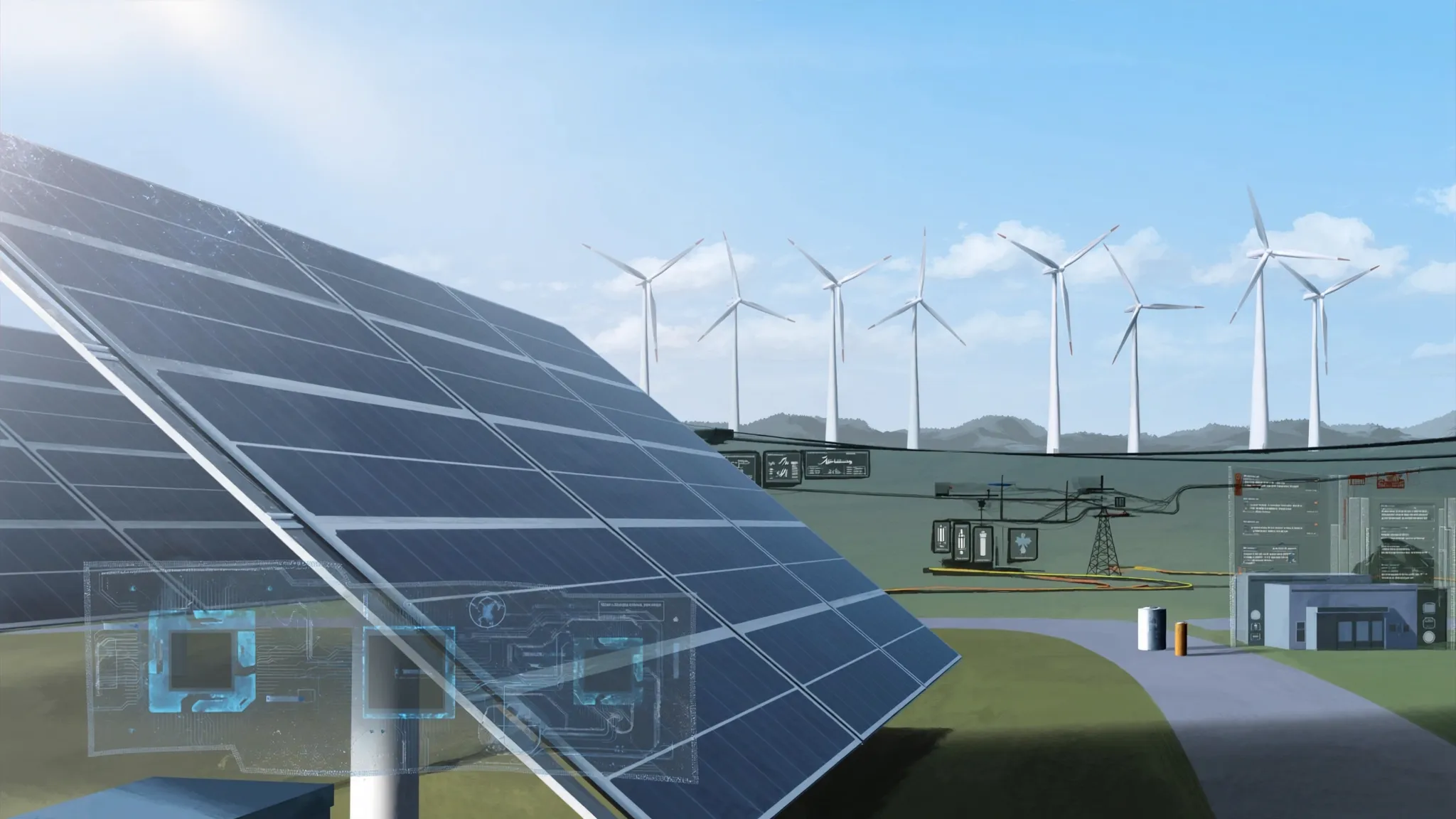
The most shocking aspect was the numbers. The average industrial electricity cost in the European Union is about twice that of the United States. According to an analysis by the International Energy Agency (IEA), Germany has the highest household electricity costs, while the UK has the highest industrial electricity costs. This isn’t just about expensive electricity; it’s a critical barrier to operating data centers, the core infrastructure of the AI revolution, which I find truly concerning.
In fact, Europe’s green energy policy itself has achieved significant results. Reducing carbon emissions by about 30% compared to 2005 is an impressive figure even when compared to the US’s 17% reduction. However, the costs hidden behind these achievements are now coming to light. Considering the massive infrastructure investments for wind and solar power, and the vast backup power systems needed for these variable energy sources, the overall system costs were bound to be high.
Professor Dieter Helm from Oxford University made a particularly striking point. His analysis that “the overall system costs related to carbon reduction are driving up electricity prices” seems to hit the nail on the head. Personally, I think the warnings from some scholars that the costs currently obscured by subsidies and carbon taxes will become more visible in the future are worth noting.
The Reality of Halting Data Center Construction
The most concrete and shocking examples are occurring in Ireland and Germany. The Irish government has announced a halt to new data center construction until 2028, citing that data centers consume one-fifth of the national power. Considering how serious this situation is, one can understand how much power generative AI services like ChatGPT or Google’s Gemini require for learning and inference.
The situation in Frankfurt, Germany, is similar. A data center operator planned to expand two centers, but local power suppliers anticipate delays in power supply for more than a decade, making the plan virtually impossible. In such circumstances, it is imaginable how difficult it would be for global tech companies like Microsoft or Google to expand AI infrastructure in Europe.
The case of Microsoft Corporation (headquartered in Redmond, Washington) makes it even clearer. For a company that develops its business around cloud computing and AI services, Europe’s high electricity costs and restrictions on data center construction are direct growth constraints. The investment in infrastructure for expanding AI services through Azure cloud services and partnerships with OpenAI is becoming increasingly difficult in the European market.
Similarly, Alphabet (headquartered in Mountain View, California) and its Google division face similar challenges. Large-scale data centers are essential for training and providing services for the Gemini AI model, and the power costs and supply constraints in Europe are likely having a significant impact on their global AI strategy.
The Competitive Edge Created by the US’s Flexible Energy Strategy
In contrast, the US approach is truly intriguing. The announcement by President Trump to quadruple nuclear power generation by 2050, and the pursuit of a balanced energy policy combining fossil fuels and renewable energy, are completely different from countries like Germany that still adhere to nuclear phase-out policies.
The recently announced relaxation of automotive fuel efficiency regulations was also impressive. Lowering the Corporate Average Fuel Economy (CAFE) standards from 50 miles per gallon to 34.5 miles for the 2031 model year highlights the US’s approach prioritizing practicality and economy. President Trump’s statement that “people have been paying too much for cars that don’t work properly” and that “now they will have great cars that are environmentally friendly, much cheaper, and work well” clearly reflects this approach.
The impact of these policy differences on actual industrial competitiveness is already becoming visible. US companies are in a much more advantageous position to secure the large-scale computing resources needed for AI development. Take Tesla (headquartered in Austin, Texas), for example. While simultaneously pursuing electric vehicle manufacturing and autonomous driving AI development, they have been able to efficiently build the infrastructure needed for large-scale data center operations and AI model training, thanks to relatively low power costs.
Personally, I think this situation has significant implications for South Korea as well. It could influence the power policies of Korea Electric Power Corporation (015760) or the strategies of energy-related companies like Hanwha Aerospace (012450) and Doosan Enerbility (034020). Especially for South Korea to emerge as an AI powerhouse, stable and economical power supply for data center operations is essential, and the European case underscores the importance of balanced energy policies.
The core of this issue seems to be not simply that renewable energy is bad, but rather the speed and manner of transition. While Europe hastily abandoned existing energy sources, losing both the stability and economy of power supply, the US is providing stable power needed for industrial development by balancing various energy sources. This difference is ultimately leading to a competitive gap in power-intensive industries like AI.
If this trend continues, the global AI industry landscape is likely to become even more US-centric. European companies may increasingly lag in AI development and service provision due to high power costs and infrastructure constraints. Of course, Europe may recognize these issues and attempt policy adjustments, but changing an already established system will likely require considerable time and cost. Ultimately, it seems we are once again confirming that the choice of energy policy is not just an environmental issue but a strategic one directly linked to national competitiveness.
This article was written after reading a Maeil Business article, with personal opinions and analysis added.
Disclaimer: This blog is not a news outlet, and the content is the author’s personal opinion. The responsibility for investment decisions lies with the investor, and no responsibility is taken for investment losses based on the content of this article.
