The Shocking Truth Behind Chinese Solar Inverters’ 90% Market Share – Why the Korean Government is Taking Action Late
 Editor
As of November 27, 2025, witnessing the current situation in Korea’s solar inverter market is truly astonishing. The fact that Chinese products have seized a staggering 90% share is shocking in itself, but even more shocking is that domestic conglomerates have been disguising Chinese products as domestic ones through so-called ‘label swapping’.
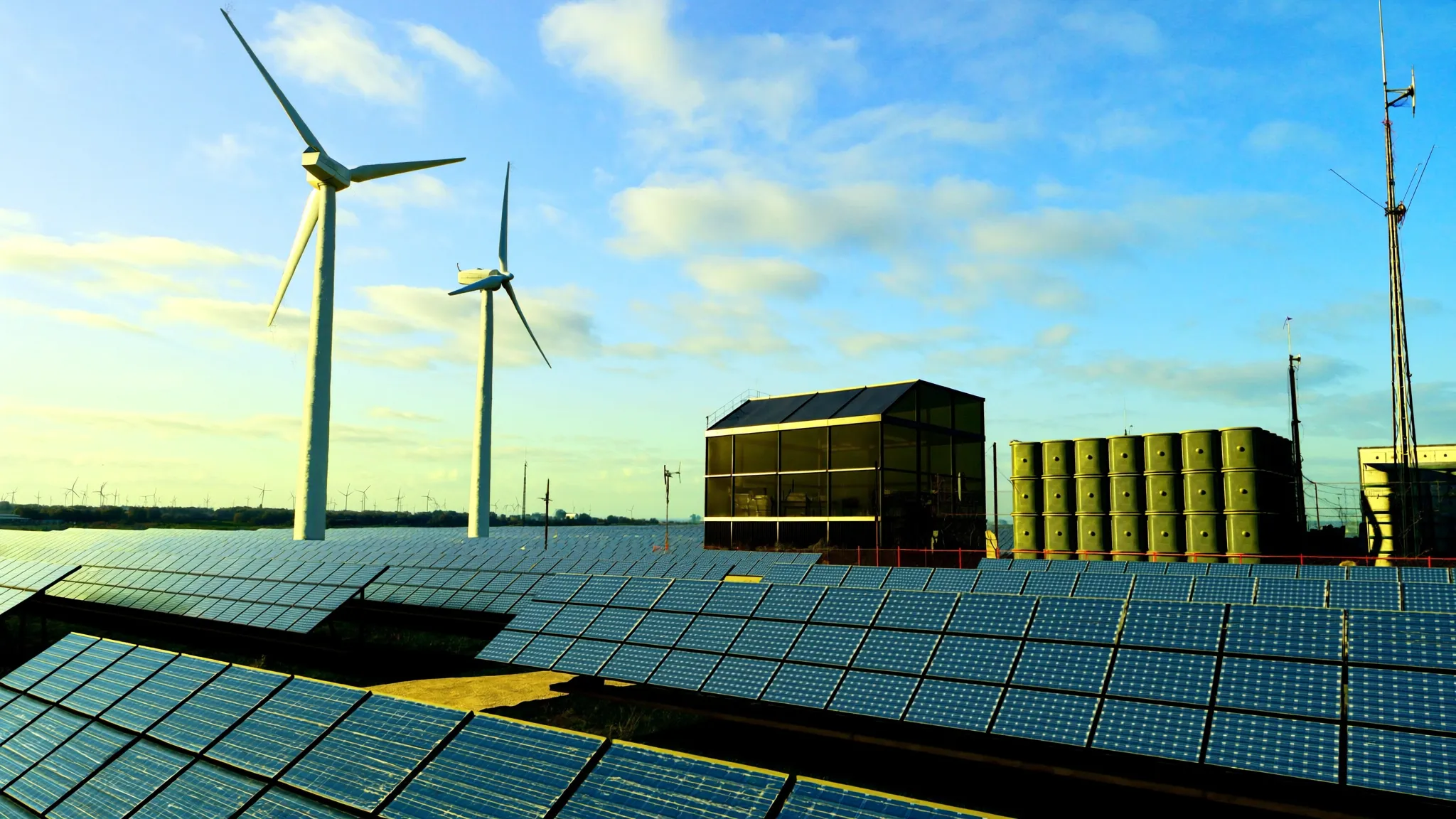
For those unfamiliar with solar inverters, they are crucial devices that convert the direct current electricity generated by solar panels into alternating current electricity used in everyday life. Simply put, they act as the ‘heart’ of a solar power plant. The fact that we rely on China for 90% of this heart poses a serious issue from an energy security perspective.
Recently, the government and solar companies have agreed to reduce the Chinese share to below 60%, but personally, I question whether this is an achievable goal. This is because there is a 10-30% price difference. Naturally, companies would opt for the cheaper option.
The Reality of ‘Label Swapping’ by Domestic Conglomerates
It is reported that domestic conglomerates like Hanwha Q CELLS, HD Hyundai Energy Solution, Hyosung Heavy Industries, and OCI Power have been importing Chinese inverters and disguising them as domestic products. This is what ‘label swapping’ entails—simply putting a Korean label on products made in China. Technically, there is little difference between Chinese and domestic products, but the price is significantly lower, making it an obvious choice for companies.
However, this practice has pushed domestic small and medium-sized parts manufacturers to the brink of collapse. Considering that the domestic solar companies’ domestic sales fell by 20% from 2.3197 trillion won in 2019 to 1.869 trillion won in 2023, the severity of the situation is evident. That’s a loss of 450 billion won in just four years.
The government has devised a plan to award bonus points for using domestic components in public tenders, but frankly, this seems to have clear limitations. It’s difficult to make up a 10-30% price difference with just a few bonus points. Especially in the private market, bonus points hold no significance, making it even more challenging.
A Need for Fundamental Solutions
According to industry insiders, the core issue seems to lie in the supply of raw materials. It is difficult to procure equipment like enclosures that protect the power electronics inside inverters domestically, so most are imported. Ultimately, establishing the entire value chain domestically is necessary to secure price competitiveness.
Considering where China’s solar industry competitiveness comes from, it’s not just because labor is cheap, but because they have completed the entire supply chain within China. Chinese companies like LONGi Green Energy can procure everything from polysilicon to wafers, cells, modules, and inverters domestically. They have reduced costs through economies of scale and continuously improved quality.
In contrast, Korea has a high dependency on overseas sources at each stage, making it difficult to secure price competitiveness. Especially since China accounts for over 80% of the world’s polysilicon production, the structure is such that we inevitably depend on China for raw materials. In this situation, simply assembling domestically does not create competitiveness.
Therefore, there is a call for the government to significantly increase support for domestic small and medium-sized enterprises. However, there is a realistic problem here as well. Even with support, if the market size is small, achieving economies of scale is difficult. With Korea’s annual solar installation capacity being less than one-tenth of China’s, how can we compete on price?
Personally, I think the government’s move is somewhat late. Given that China already holds overwhelming dominance across the solar industry, isolating inverters for domestic production seems unrealistic. It might be better to focus on next-generation technologies.
For instance, in next-generation technology fields like perovskite solar cells or tandem cells, China’s monopoly is not yet complete. Concentrating investments in these areas to secure technological superiority could be a more realistic strategy. Of course, this doesn’t mean completely abandoning the existing market, but we need to carefully decide where to focus our limited resources.
However, from an energy security perspective, I believe this attempt is certainly meaningful. We need to secure at least a minimal level of self-sufficiency in case relations with China deteriorate. But if we approach this purely from a market logic standpoint, the likelihood of failure seems high. We need to approach this with strong policy support from the government and a long-term perspective.
This article was written based on reading a news article, with additional personal opinions and analysis.
Disclaimer: This blog is not a news outlet, and the content reflects the author’s personal views. The responsibility for investment decisions lies with the investors themselves, and no responsibility is taken for any investment losses based on this article.
