The Dangerous Single Point of Failure in Financial Infrastructure Highlighted by the CME Data Center Outage
 Editor
On November 28, 2025, a shocking event occurred in the global financial market. A problem with the cooling system at the data center of the Chicago Mercantile Exchange (CME) Group, the world’s largest derivatives exchange, caused a massive financial infrastructure that processes an average of 28.3 million transactions a day to come to a standstill. Although it was merely a server overheating and shutting down, the ripple effects were beyond imagination.
The most shocking aspect was that the fundamental price information for trading disappeared in an instant. The last trading point for crude oil futures was at 11:47 AM Korean time, with West Texas Intermediate (WTI) at $59 per barrel and Brent crude at $64, and trading came to a complete halt. For several hours, institutional investors worldwide were exposed to position risks in a literal “unknown price” state.
Personally, the most surprising part of this incident was the reversion to pre-2000s trading methods. Brokers had to exclude certain products from their trading lists, and traders had to rely on their own calculations to trade products. It was as if we had reverted to analog methods in the digital age. It’s understandable why Christopher Forbes, CMC Markets’ Head of Asia and Middle East, said, “I haven’t seen such a widespread exchange outage in the past 20 years.”
Considering the influence of the CME Group, the severity of this incident becomes even clearer. Based in Chicago, this company is not just a single exchange. It encompasses the Chicago Board of Trade (CBOT), the New York Mercantile Exchange (NYMEX), and serves as the central hub of a vast financial ecosystem covering all asset classes, including stocks, bonds, currencies, commodities, and energy.
The Chain Reaction in the ETF Market and Domestic Impact
The CME outage starkly revealed the complex interconnected structure of derivatives. According to the Korea Exchange, 26 domestic ETFs based on CME futures were directly affected. Asset management companies had to issue urgent disclosures stating, “Since 12:12 PM, the receipt of the underlying index has been disrupted, causing errors in real-time estimated net asset value calculations.”
The list of affected ETFs includes all the core assets of modern portfolios. Major futures traded on the CME, such as S&P 500 futures, gold futures, U.S. Treasury futures, and crude oil futures, are the underlying assets of these ETFs, all of which were impacted. Particularly, products like the KODEX Gold Futures (H) ETF and the TIGER U.S. S&P 500 Futures (H) ETF, which are very popular among domestic investors, were warned of a significant divergence between their estimated net asset value and market price.
In fact, such chain reactions were predictable. In the modern financial market, ETFs must track the price movements of their underlying assets in real-time, but the price information of those underlying assets disappeared. It’s akin to trying to use navigation without a GPS signal. The warnings from asset management companies about the potential widening gap between estimated net asset value and market price can be understood in this context.
A more serious issue was the impact on the foreign exchange market. Futures trading for major currency pairs like yen-dollar and euro-dollar was also halted, causing a temporary stop in exchange rate updates. This directly affected global companies’ currency hedging strategies and foreign exchange trading. Domestic companies were no exception. With the disappearance of price information for currency futures or options products used by import-export companies to manage exchange rate risks, real-time risk management became impossible.
Structural Vulnerabilities of Data Center Infrastructure
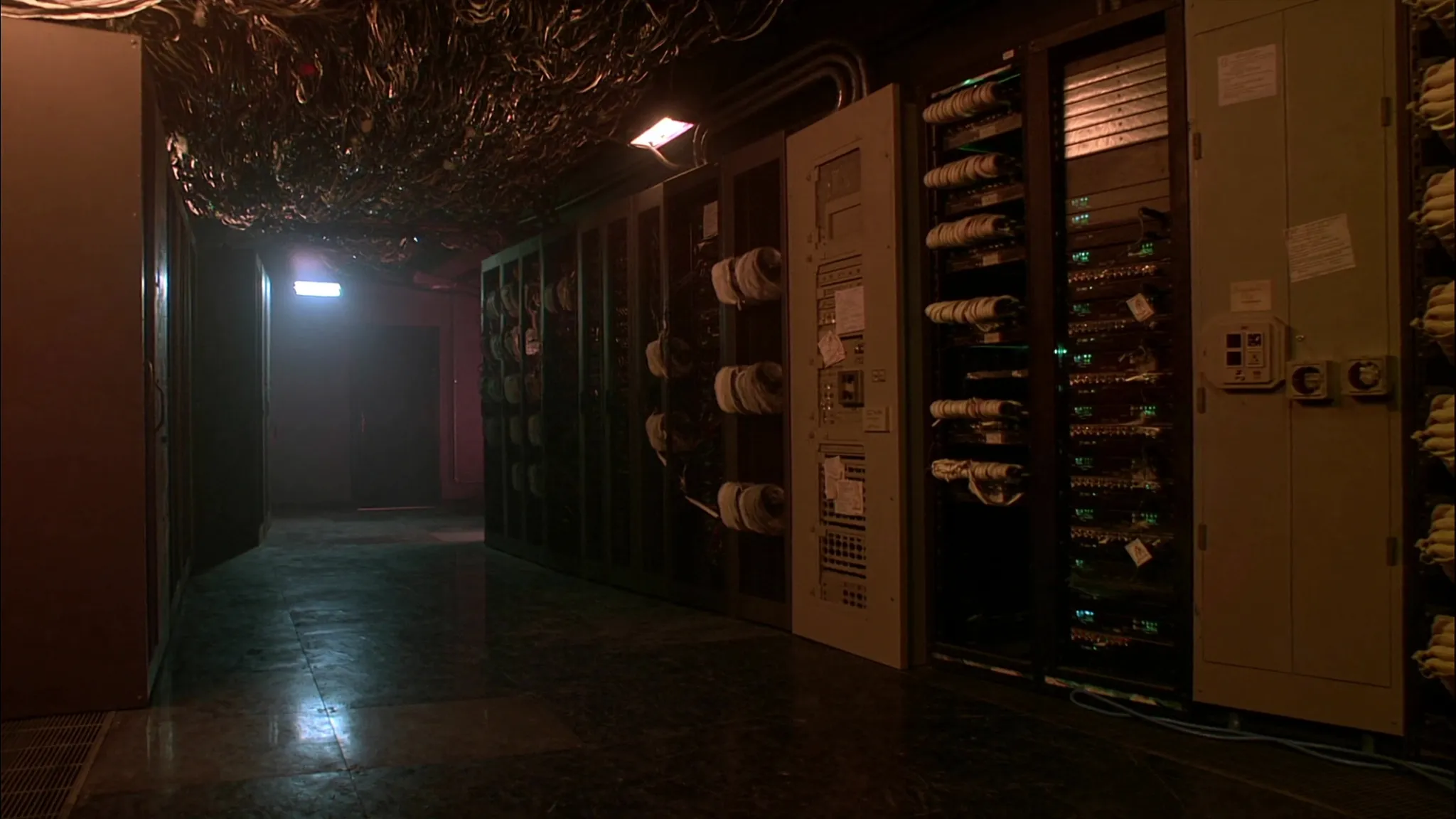
The most shocking aspect of this incident was that the cause was very simple. It was merely a problem with the cooling system at the CME Group data center. A single cooling unit malfunctioned, causing the servers to overheat, leading to the entire system’s shutdown. It’s astonishing that a massive financial infrastructure processing 28.3 million transactions a day relied on a single cooling system.
The comments from IT industry insiders are particularly striking. “There have been consistent warnings that a major shutdown could occur if there are issues with data centers or the cloud,” they said, “The system vulnerability that a single facility failure at one data center can simultaneously halt market liquidity has been exposed.” This points to a fundamental structural problem in modern financial systems.
In fact, this is not the first time CME has halted electronic trading. In 2014, agricultural contract trading was suspended due to technical issues, and last year, the Swiss Stock Exchange (SIX) temporarily halted stock, bond, and ETF trading due to data transmission problems. However, this incident is different in terms of scale and impact. It affected not just some agricultural products but major indices, government bonds, gold, copper, crude oil, and currencies.
Particularly, the fact that this incident occurred during the shortened trading period of Black Friday made the situation even more complex. The futures market was paralyzed just as the New York Stock Exchange was about to open after the Thanksgiving holiday. Although trading hours were shorter and volumes were lower than usual, the confusion among market participants was likely even greater. Forbes’ warning that “significant volatility will occur when the market reopens” can be understood in this context.
When you think about it, this single point of failure issue is not only a problem for financial systems but also for modern digital infrastructure as a whole. It’s similar to how numerous websites and apps can be paralyzed simultaneously if there are issues with cloud services like Amazon Web Services (AWS) or Microsoft Azure. However, in the case of financial markets, the impact on the real economy is much more significant, making it a more serious issue.
A CME spokesperson stated, “The technical support team is working to resolve the issue as soon as possible, and customers will be informed as soon as details regarding after-hours trading are confirmed,” but also warned, “Even after the issue is resolved, it may take time for the price movements of affected contracts to be reflected.” This means that even after the system is restored, it will take considerable time for the market to normalize.
Personally, I believe this incident clearly demonstrates the double-edged sword of financial system digitalization. While it offers tremendous efficiency and speed in normal times, once a problem arises, the ripple effect spreads worldwide in an instant. In the past, during the era of manual trading, even if one exchange had a problem, trading could continue at other exchanges, but now everything is interconnected, so if one fails, it collapses like a domino.
The CME outage is not just a technical glitch but a warning that modern financial systems are built on vulnerable infrastructure. The reality that a single cooling system failure can paralyze the global financial market means that we need much more robust backup systems and distributed structures than we think. Preventing such incidents from recurring will likely be the most urgent task for financial authorities and exchange operators.
This article was written after reading an article from Hankyung Global Market, with personal opinions and analysis added.
Disclaimer: This blog is not a news outlet, and the content is the author’s personal opinion. The responsibility for investment decisions lies with the investor, and no responsibility is taken for investment losses based on the content of this article.
