A New Turning Point in the Collaborative Robot Market: Analysis of AI Integration and Global Competition by 2026
 Editor
As of February 2026, the collaborative robot (cobot) market is experiencing an unprecedented wave of change. The global cobot market size is expected to grow from $2.3 billion in 2025 to $2.8 billion in 2026, a 21.7% increase, significantly surpassing the overall industrial robot market growth rate of 12.4%. Notably, the adoption is expanding from large corporations to small and medium-sized enterprises. According to the International Federation of Robotics (IFR), the proportion of cobot-adopting companies with fewer than 500 employees is expected to reach 47% in 2025, a sharp increase from 32% in 2023.
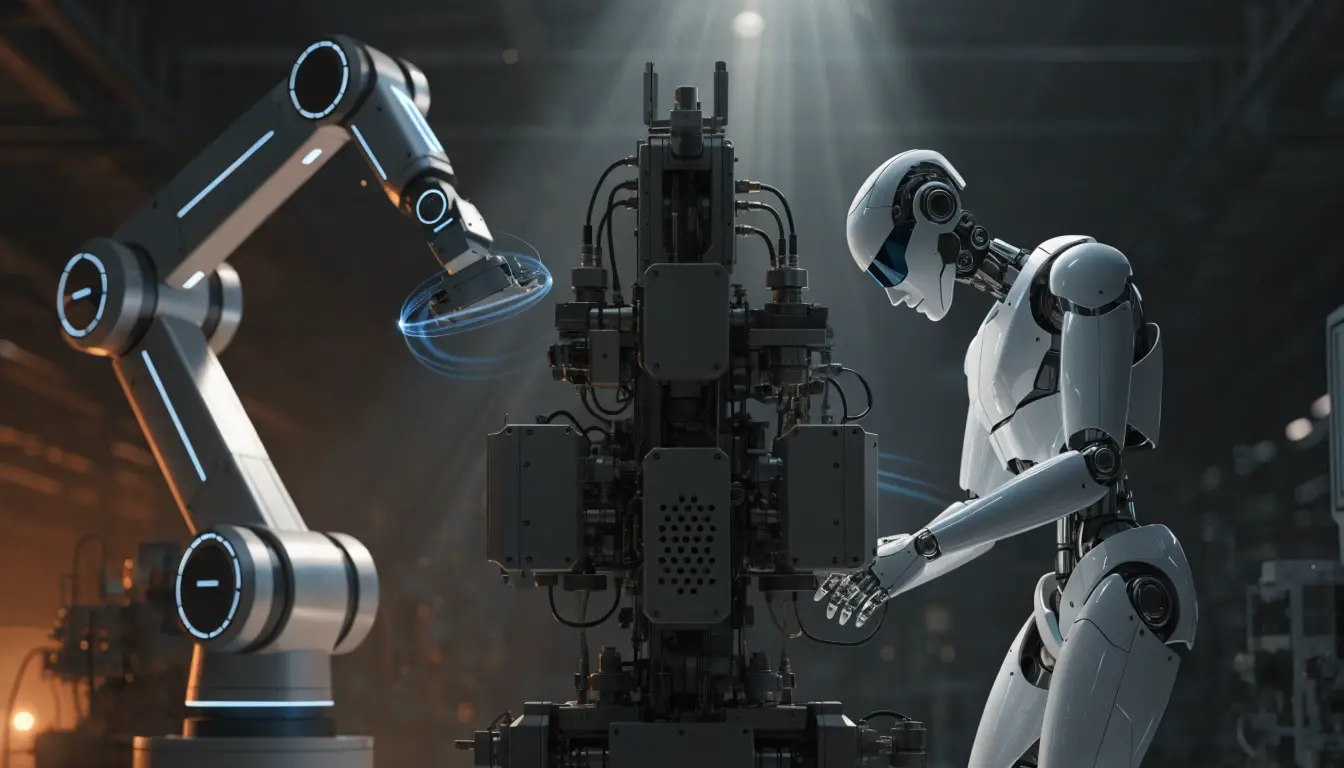
The core driver of this growth is the integration of artificial intelligence technology. The latest cobots incorporate computer vision, natural language processing, and machine learning algorithms, enabling them to perform tasks requiring complex judgment beyond simple repetitive work. Denmark’s Universal Robots showcased the UR30 model in January 2026, featuring real-time learning capabilities that allow immediate adaptation to changes in the work environment. This model reduces setup time by 73% compared to previous models, allowing even unskilled workers to program basic tasks within 30 minutes.
In the Korean market, Hyundai Robotics holds a unique position. Based in Ulsan, Hyundai Robotics announced that its cobot sales in the fourth quarter of 2025 increased by 156% year-on-year, reaching 32.4 billion won. It is showing stable growth, particularly in the automotive parts assembly and welding sectors, based on demand within the Hyundai Motor Group. Hyundai Robotics’ HCR series supports a maximum payload of 25 kg and boasts a 30% faster response time compared to competitors, thanks to its self-developed ROS 2-based control system.
Changes in the Global Competitive Landscape
In the global cobot market, competition between traditional powerhouses and emerging companies is intensifying. Swiss-Swedish multinational ABB recorded $820 million in cobot sales in 2025, a 34% increase year-on-year. ABB’s GoFa and SWIFTI series are particularly strong in the electronics assembly and packaging sectors, and the SWIFTI CRB 1300-11 model, launched in January 2026, offers 150 pick-and-place operations per minute, a 25% performance improvement over competitors.
U.S.-based Rockwell Automation has entered the cobot market under the Allen-Bradley brand, securing an 8.3% market share in 2025. It is growing, particularly among North American manufacturers, by emphasizing compatibility with existing PLC systems. Rockwell’s TM series cobots are fully integrated with the FactoryTalk platform, accelerating companies’ digital transformation. In the fourth quarter of 2025, Rockwell’s cobot-related sales reached $180 million, accounting for 31% of its total robotics automation segment.
Japan’s Mitsubishi Electric has established a strong presence in the Asia-Pacific region with its MELFA ASSISTA series. It recorded a 23% market share in Japan’s cobot market in 2025, particularly dominating the precision electronic component assembly sector. Mitsubishi’s cobots boast a precision of 0.02mm and are highly rated by semiconductor and smartphone manufacturers.
Germany’s KUKA is transitioning from a traditional industrial robot powerhouse to the cobot market. In 2025, KUKA’s cobot sales surged by 89% year-on-year to €410 million. The LBR iisy and LBR Med series target general manufacturing and medical markets, respectively, achieving a 42% market share in the European medical cobot sector.
Technological Innovation and Market Application Cases
The most noteworthy technological innovation in the 2026 cobot market is the application of multimodal AI. California-based startup Collaborative Robotics raised $100 million in Series C funding in January 2026, unveiling a system that allows robots to be controlled via natural language. At BMW’s Munich plant, workers can now say, “Assemble the left part,” and the cobot will immediately perform the task. This reduced task setup time from two hours to 15 minutes and improved productivity by 34%.
Shanghai-based Flexiv in China is gaining attention with its adaptive robot technology. The Rizon series cobots combine force sensors and AI to implement human-like tactile feedback. It recorded a 17% market share in China’s cobot market in 2025, showing excellent performance in delicate tasks like automotive interior assembly. Its fourth-quarter sales in 2025 reached 230 million yuan, a 142% increase year-on-year.
Looking at real-world applications, Germany’s automotive parts supplier Schaeffler introduced 1,200 cobots across 73 plants worldwide in 2025. This reduced defect rates by 67% and worker injury rates by 89%. In particular, productivity in the bearing assembly process improved by 47% through human-cobot collaboration. Schaeffler’s average return on investment (ROI) period after cobot adoption shortened to 14 months, prompting further expansion.
In South Korea, Samsung Electronics’ Pyeongtaek semiconductor plant has been using 450 units of Hyundai Robotics’ HCR-12 model for wafer handling since the second half of 2025. This significantly reduced wafer damage rates from 0.03% to 0.008% and enabled 24-hour uninterrupted production. Based on this success, Samsung Electronics announced plans to expand its cobot adoption to 1,500 units by the end of 2026.
The use of cobots is rapidly expanding in the medical field as well. The Mayo Clinic in the U.S. introduced a surgical cobot system in 2025, improving accuracy in orthopedic surgery to 98.7%. Denmark’s Auris Health developed the Monarch platform, which is used for early lung cancer diagnosis, improving diagnostic accuracy by 23% compared to traditional methods. As a result, the global medical cobot market is expected to grow to $1.8 billion by 2026.
In logistics and warehouse automation, Amazon announced that it deployed 150,000 cobots in warehouses worldwide in 2025, reducing order processing time by an average of 32%. Amazon’s Sparrow robot can sort various types of products with 98% accuracy, significantly reducing the repetitive workload of human workers. Consequently, Amazon plans to introduce an additional 50,000 cobots in 2026.
Along with the growth of the cobot market, major challenges are also emerging. First, ensuring safety remains a critical issue. Meeting ISO 10218 and ISO 15066 standards is fundamental, and additional safety features are required due to strengthened regulations in various countries. The European Union will require more stringent certification procedures for cobots classified as high-risk AI systems under the AI Act starting in 2026.
Second, cybersecurity threats are increasing. Concerns have been raised that network-connected cobots could become targets for hacking, making enhanced security features essential. In 2025, a ransomware attack on a German manufacturer temporarily paralyzed cobot systems, leading to a surge in security investments across the industry.
Third, the shortage of skilled robot engineers is intensifying. According to a 2025 report by McKinsey & Company, there is a global shortage of approximately 450,000 robotics-related professionals. Consequently, major cobot manufacturers are investing in workforce development through educational programs and partnerships.
From an investment perspective, the cobot market still holds attractive growth potential. Goldman Sachs forecasts that the global cobot market will grow at an average annual rate of 22%, reaching $12 billion by 2030. The Asia-Pacific region is expected to lead the growth, accounting for 47% of the total market. Venture capitalists are also increasing investments in cobot-related startups, with global cobot startup investments reaching $2.3 billion in 2025.
The cobot market in 2026 stands at a turning point where technological innovation and market expansion are occurring simultaneously. The advancement of AI integration technology is expanding the scope of cobot applications, and as adoption spreads to small and medium-sized enterprises, the market size is rapidly growing. Amid fierce competition among major global players, companies with technological prowess and market adaptability are expected to lead the market in the future. While addressing challenges such as safety, security, and workforce development, the cobot industry is anticipated to become a key driver in accelerating the digital transformation of the manufacturing sector through continuous innovation.
