Acceleration of Humanoid Robot Adoption in Manufacturing by 2026: At the Intersection of Labor Shortage and Automation Innovation
 Editor
Rapid Growth of the Humanoid Robot Market in Manufacturing
As of January 2026, the global humanoid robot market is experiencing unprecedented growth in the manufacturing sector. According to the latest report by market research firm IDC, the market size for humanoid robots in manufacturing is expected to surge by 78%, from $2.3 billion in 2025 to $4.1 billion in 2026. This explosive growth is driven by the global manufacturing labor shortage and significant improvements in the practicality of humanoid robot technology.
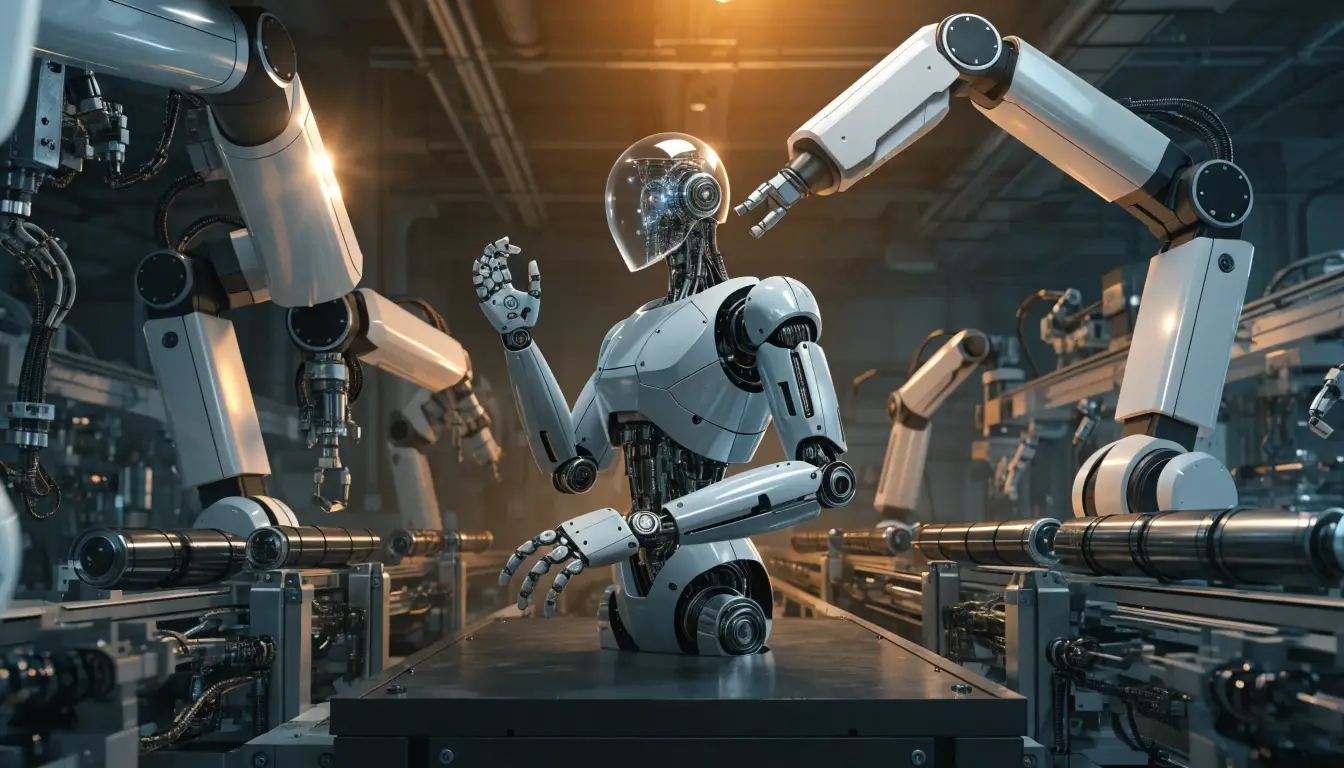
Particularly, Tesla, located in Fremont, California, announced in December 2025 that it would pilot its humanoid robot ‘Optimus’ on the Gigafactory production line. CEO Elon Musk stated, “We plan to deploy 1,000 Optimus units in our factories by the end of 2026,” marking the first large-scale commercialization of humanoid robots. Tesla’s Optimus can save approximately $50 in labor costs per hour and can operate continuously for 24 hours, demonstrating over three times the efficiency compared to traditional labor.
Germany’s BMW Group, headquartered in Munich, announced in early January 2026 that it had introduced 20 upgraded versions of Boston Dynamics’ humanoid robot ‘Atlas’ at its Dingolfing plant. Milan Nedeljković, BMW’s Director of Production Technology, stated, “Humanoid robots are demonstrating precision on par with humans in complex assembly processes,” and plans to introduce an additional 100 units by the second half of 2026. BMW’s case proves that humanoid robots can be utilized not only for simple repetitive tasks but also in highly technical automotive assembly processes.
Honda, headquartered in Tokyo, Japan, has been test-operating the successor model to its humanoid robot ‘ASIMO,’ called ‘ASIMO Production,’ at its Yorii plant in Saitama Prefecture since November 2025. Hiroshi Tanaka, Director of Honda’s Robotics Research Institute, explained, “ASIMO Production reduces installation space by 60% compared to existing industrial robots while improving work efficiency by 40%.” Honda plans to add 50 more units of this model in the first half of 2026 and expand to 200 units across all its plants in Japan by the end of the year.
Key Drivers of Technological Innovation and Performance Enhancement
The acceleration of humanoid robot adoption in manufacturing is primarily due to rapid advancements in artificial intelligence and sensor technology. As of 2026, the latest humanoid robots integrate various AI technologies, including computer vision, natural language processing, and reinforcement learning, enabling stable operation in complex manufacturing environments. Notably, real-time decision-making capabilities based on NVIDIA’s latest GPU architecture allow humanoid robots to respond immediately to unforeseen situations.
Boston Dynamics, headquartered in Waltham, Massachusetts, unveiled a new version of Atlas in the second half of 2025, significantly enhancing its manufacturing-specific functions. The new Atlas can precisely assemble components weighing up to 25 kg and perform repetitive tasks within a 0.1 mm margin of error. The company announced that through machine learning algorithms, it can learn and optimize work patterns, improving work speed by an average of 35% compared to initial deployment.
South Korea’s Hyundai Motor Company began piloting 10 prototypes of its self-developed humanoid robot ‘HUBO-WORK’ at its Ulsan plant in December 2025. Seong-hoon Kim, Executive Director of Hyundai Motor’s Robotics Lab, explained, “HUBO-WORK has a work radius six times wider than existing industrial robot arms and can perform complex bolt fastening tasks with a human-like wrist joint structure.” Hyundai plans to deploy a total of 150 HUBO-WORK units across all domestic plants by mid-2026, expecting to save approximately 200 billion won annually in labor costs.
One of the key performance indicators for humanoid robots in manufacturing, battery life, has also significantly improved. The continuous operation time, which averaged 4-6 hours in 2024, has increased to 8-12 hours by 2026, with some models capable of 16-hour continuous operation. Tesla’s Optimus uses a lithium iron phosphate (LFP) battery, allowing for 10 hours of continuous work followed by an additional 6 hours after a 1-hour charge. This improvement in battery performance greatly enhances the practicality of humanoid robots in a three-shift manufacturing environment.
Significant progress has also been made in terms of safety. The latest humanoid robots comply with international safety standards ISO 10218 and ISO/TS 15066 and are equipped with collision detection systems that immediately halt operations upon collision with human workers. According to safety tests conducted by Germany’s Fraunhofer Institute, the accident rate of the latest humanoid robots is 40% lower than that of existing industrial robots.
Market Competition and Investment Trends
The humanoid robot manufacturing market is currently witnessing fierce competition among companies from the United States, Japan, Germany, and South Korea. In terms of market share, Boston Dynamics leads with 35%, followed by Tesla with 28% and Honda with 15%. The remaining 22% is contested by emerging companies and traditional industrial robot manufacturers.
From an investment perspective, venture capital investments related to humanoid robots totaled $4.7 billion in 2025, a 156% increase from the previous year. Investments in humanoid robot startups specializing in manufacturing have surged. California’s Silicon Valley-based Figure AI raised $670 million in a Series B round in December 2025, with a significant portion allocated for the mass production of its manufacturing humanoid robot ‘Figure-01.’
Rapid growth is also observed in the Chinese market. Shenzhen-based Ubtech Robotics began supplying its humanoid robot ‘Walker X’ to electronics manufacturers in China in the second half of 2025 and has secured orders for over 200 units to date. Ubtech’s CEO Zhou Jian stated, “Demand for humanoid robots among Chinese manufacturers is increasing three times faster than expected,” aiming to sell over 1,000 units in the Chinese market alone by 2026.
In terms of price competitiveness, there is a continuous downward trend. The average price of manufacturing humanoid robots, which was $150,000-$200,000 in 2024, has dropped to $80,000-$120,000 in 2026. This is the result of a combination of mass production effects and price reductions in key components (sensors, actuators, processors). Industry experts predict that prices will further decrease to $50,000-$80,000 by 2027.
From a supply chain perspective, the importance of the Asian region is becoming more pronounced. Taiwan’s TSMC and South Korea’s Samsung Electronics are leading the production of AI chips for humanoid robots, while Japan’s FANUC and Yaskawa supply precision motors and reducers. China’s DJI has entered the LIDAR and camera module market for humanoid robots, leveraging its sensor technology accumulated in drones.
The regulatory environment is also supporting the adoption of humanoid robots. The European Union announced the ‘Robot Ethics and Safety Directive’ in December 2025, providing clear guidelines for the use of humanoid robots in manufacturing. The U.S. Department of Labor also announced in January 2026 that it would expand tax benefits for companies adopting humanoid robots, positively influencing manufacturers’ adoption decisions.
However, challenges remain. The biggest issue is the shortage of skilled robot operators. According to a 2025 survey by Deloitte, 73% of manufacturers that have adopted humanoid robots reported difficulties in securing personnel for robot programming and maintenance. In response, major manufacturers like Tesla, BMW, and Hyundai Motor are operating their own robot training programs or collaborating with universities to nurture specialized personnel.
The adoption of humanoid robots in manufacturing by 2026 is driving fundamental changes in industrial structures beyond mere technological innovation. Initially introduced as a solution to labor shortages, humanoid robots are now becoming a key driver of productivity improvement, quality enhancement, and cost reduction. It is expected that humanoid robots will become standard equipment in manufacturing within the next 2-3 years, bringing transformative changes to the global manufacturing ecosystem. Particularly, the proactive adoption and technological development by manufacturing powerhouses like South Korea, Japan, and Germany are expected to drive the growth of the global market.
*This analysis is provided for informational purposes only and is not intended as investment advice or recommendations. Investment decisions should be made based on individual judgment and responsibility.*
