Innovative Changes in the Medical Robotics Market: New Horizons in Surgical Robots and Medical Automation
 Editor
Rapid Growth and Technological Innovation in the Medical Robotics Market
As of early 2026, the global medical robotics market is estimated to have reached a total market size of $18.7 billion, recording an annual growth rate of 20.3%. This represents approximately a 2.4-fold increase compared to 2022, with the surgical robotics sector accounting for 62% of the overall market, playing a leading role. While Intuitive Surgical’s da Vinci system, headquartered in Sunnyvale, California, continues to lead the market, the competitive landscape has changed dramatically over the past two years.
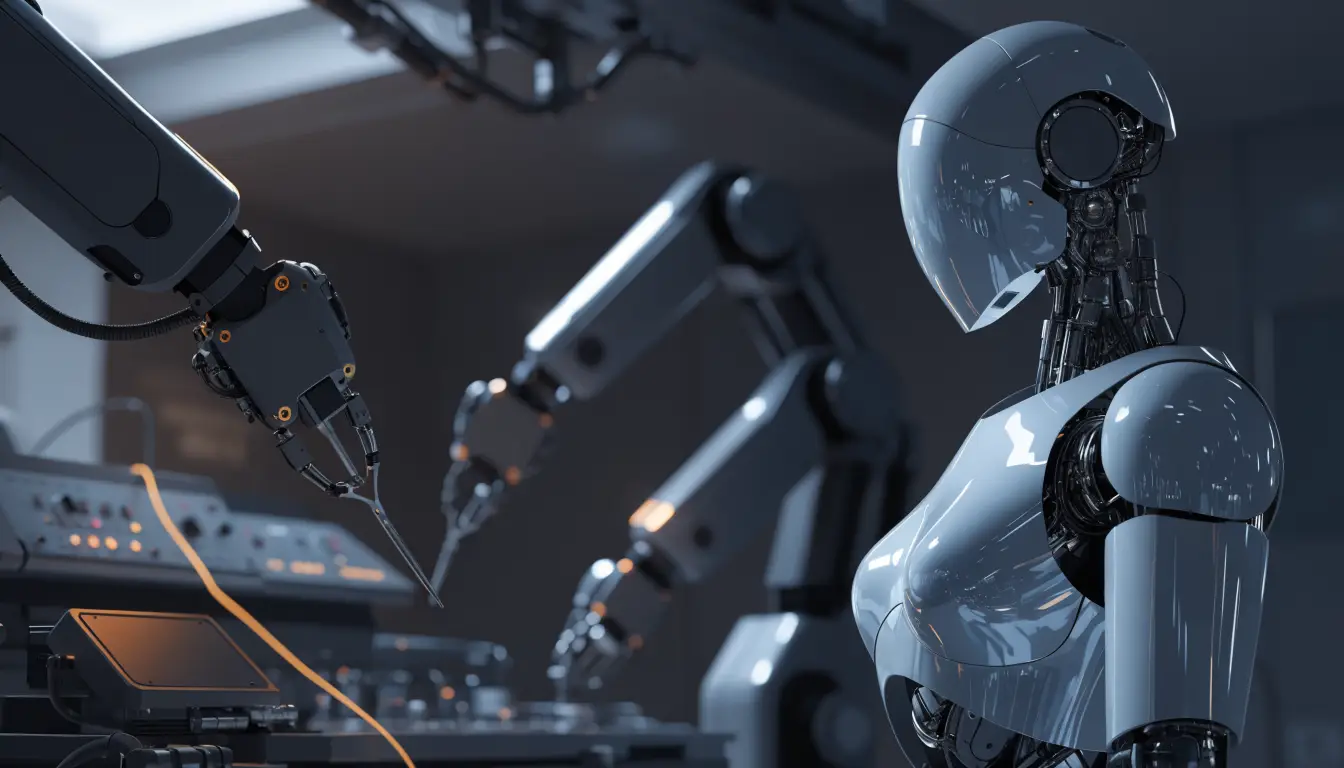
A particularly noteworthy change is the integration of AI-based image analysis and real-time surgical guidance systems. According to an industry report released in the fourth quarter of 2025, next-generation surgical robot systems have demonstrated a 23% reduction in average surgery time and a 35% decrease in complication rates. These improvements are not merely due to enhanced precision of robotic arms but are attributed to advancements in predictive analytics and real-time tissue recognition technology through machine learning algorithms.
Medtronic, headquartered in Dublin, Ireland, released clinical data on its Hugo RAS system in December 2025, which showed that it reduced patient recovery time by an average of 4.2 days compared to traditional open surgery. More intriguingly, this system offers remote surgical support capabilities utilizing 5G networks. In a pilot program conducted at Seoul National University Hospital in November 2025, remote surgical consultations between Seoul and Busan were successfully carried out, presenting new possibilities for bridging regional healthcare disparities.
In terms of market segmentation, orthopedic robots are experiencing the fastest growth. Stryker’s Mako system, headquartered in Kalamazoo, Michigan, had 2,847 units installed worldwide in 2025, a 34% increase from the previous year. The adoption rate of robot-assisted surgeries in knee and hip replacements is surging, expected to be a continuous growth driver in conjunction with the aging society. Zimmer Biomet’s ROSA system, headquartered in Warsaw, Indiana, also recorded high growth rates in the neurosurgery sector, with fourth-quarter sales in 2025 increasing by 41% year-over-year.
Integration of AI and Proliferation of Automation Systems
The most notable trend in the medical robotics field in 2026 is the deep integration of artificial intelligence and automation systems. Ethicon, a subsidiary of Johnson & Johnson headquartered in New Brunswick, New Jersey, developed the Ottava system, which combines computer vision and natural language processing technologies to recognize anatomical structures in real-time during surgery and provide visual guidance to surgeons. Clinical trials in 2025 showed that laparoscopic surgeries using this system improved surgical accuracy by 28% and reduced the need for reoperation by 42%.
Even more innovative is the introduction of predictive analytics features. Abbott, headquartered in Abbott Park, Illinois, launched a cardiovascular surgical robot system in the second half of 2025 that analyzes patients’ real-time biometric signals and historical medical data to predict potential complications during surgery. Initial clinical data indicated that the system reduced the incidence of heart failure by 19% in coronary artery bypass surgeries.
In the Korean market, innovation in the medical robotics field is accelerating. Samsung Electronics announced its medical AI platform, Samsung Health Advanced, in October 2025, aiming to integrate with robotic surgery systems beyond existing radiology AI. In a pilot program conducted in collaboration with Samsung Medical Center, the AI analyzed pre-surgery CT and MRI data to propose optimal surgical paths and tested a system that monitors tissue changes in real-time during surgery.
On the automation front, optimizing the entire workflow of the operating room is becoming a new focus. Siemens Healthineers, headquartered in Erlangen, Germany, announced an expanded version of ‘AI-Rad Companion’ in November 2025, an integrated platform that automates the entire process from surgical planning to post-operative care. Initial hospitals adopting the system reported a 27% improvement in operating room utilization and significant enhancements in medical staff efficiency.
Alongside these technological advancements, cost efficiency has also significantly improved. According to an industry analysis in early 2026, the average cost of robot-assisted surgeries decreased by 18% compared to 2023, primarily due to reduced surgery time and shorter hospital stays. In complex heart surgeries, robot-assisted surgeries reduced the average hospital stay from 7.3 days to 4.8 days, achieving both hospital operational cost savings and improved patient satisfaction.
However, with this rapid advancement, new challenges are also emerging. The biggest concern is the adaptation and training of medical staff. According to a 2025 survey by the American Medical Association (AMA), 67% of hospitals that adopted robotic surgery systems reported that more time and cost were required for medical staff training than expected. On average, it takes about 6-8 months of intensive training for a surgeon to become proficient with a new robotic system, posing a significant burden on hospital operations.
Cybersecurity issues are also becoming a critical concern. In September 2025, the U.S. FDA strengthened cybersecurity guidelines for medical robots, due to concerns that network-connected surgical robot systems could be targets of hacking. In the first half of 2025, a ransomware attack temporarily halted a robotic surgery system at a large hospital in Europe.
From a market outlook perspective, the medical robotics market is projected to maintain an average annual growth rate of 18.5% until 2030, reaching a total market size of $42 billion. This growth is expected to be primarily driven by the Asia-Pacific region, with significant demand increases anticipated in China, Japan, and Korea. In China, the introduction of medical robots is accelerating in line with the government’s ‘Healthy China 2030’ policy, with 1,247 new surgical robots installed nationwide in 2025 alone.
In terms of investment, the medical robotics field is becoming a major focus for venture capital and corporate investors. In 2025, global medical robotics startups raised a total of $3.4 billion in investments, a 52% increase from the previous year. Investments are particularly concentrated in AI-based surgical planning systems and remote surgery technologies, and this trend is expected to continue in 2026.
The regulatory environment is also rapidly changing. In December 2025, the U.S. FDA announced new approval procedures for AI-based medical devices, presenting a balanced approach that accelerates the market entry of innovative technologies while ensuring patient safety. The European Union (EU) also revised the Medical Device Regulation (MDR) to establish more detailed standards for robotic surgery systems. Korea’s Ministry of Food and Drug Safety is also supporting the early commercialization of innovative technologies by introducing a fast-track review system for medical AI robots starting in January 2026.
In summary, the medical robotics market is expected to continue its steady growth, driven by technological innovation, increasing market demand, and a favorable regulatory environment. The advancement of AI and 5G technologies is opening new possibilities for remote surgery and predictive medical services, serving as a crucial driver for improving both the accessibility and quality of healthcare services. However, systematically addressing challenges such as medical staff training, cybersecurity, and ethical considerations will be key elements for the sustainable development of this industry.
This analysis is provided for informational purposes only and is not intended as investment advice or medical guidance. Please seek expert advice when making investment decisions.
