Logistics Automation Robots Emerging as a Key Driver of Global Supply Chain Innovation by 2026
 Editor
Rapid Growth of the Global Logistics Automation Robot Market
As of 2026, the global logistics automation robot market is experiencing unprecedented growth, recording a compound annual growth rate of 23.4%. According to the latest report by market research firm TechNavio, this market expanded from $63.4 billion in 2025 to $78.2 billion in 2026, and is projected to reach $185 billion by 2030. This rapid growth is driven by the accelerated spread of e-commerce post-COVID-19 pandemic, coupled with worsening labor shortages and the demand for improved operational efficiency.
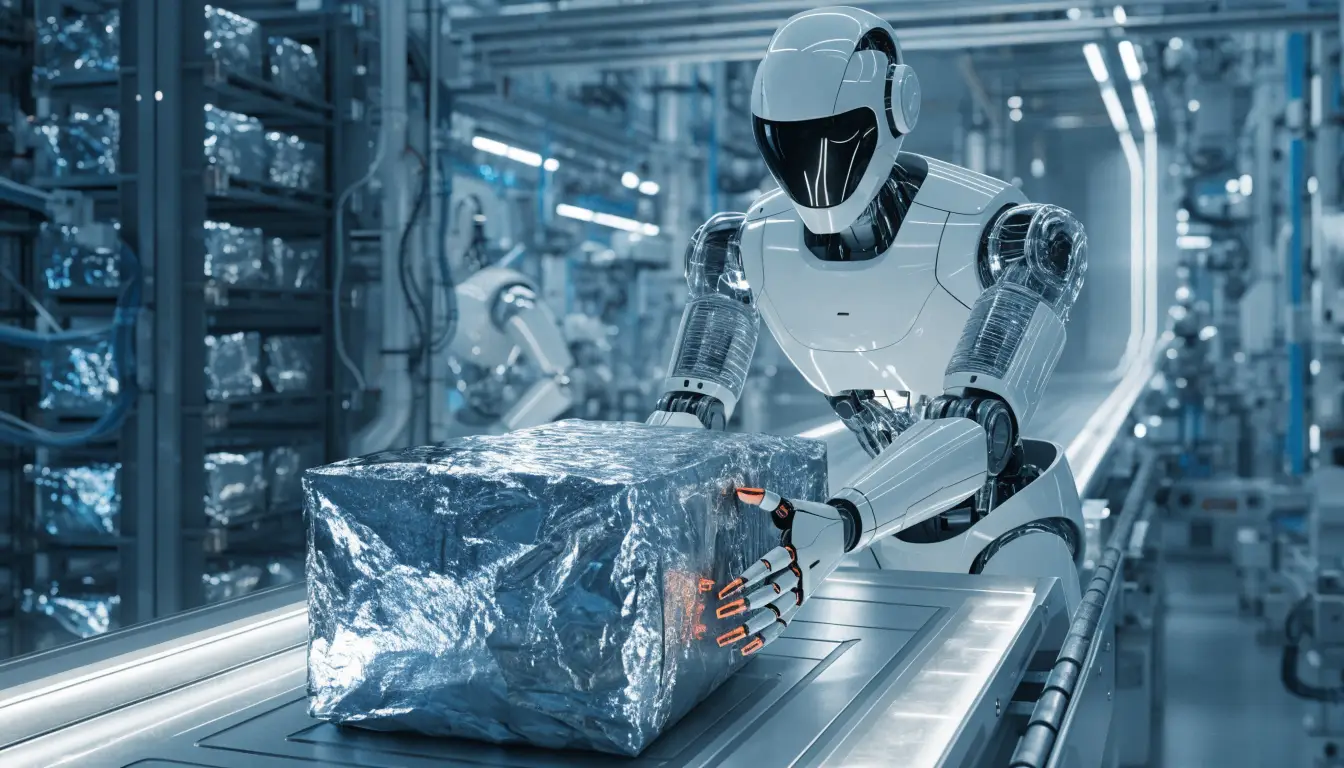
Notably, the Asia-Pacific region accounts for 42% of the total market, acting as the largest growth driver. In China, the logistics robot adoption scale is the largest for a single country in 2026, forming a market of $28 billion annually, while South Korea has established itself as the fourth-largest market in Asia with a scale of $5.2 billion. The U.S. market maintains its technological leadership, recording an annual scale of $19.8 billion.
The rapid advancement of artificial intelligence and machine learning technologies is a key factor in this market expansion. As of 2026, 87% of deployed logistics robots are equipped with AI-based path optimization algorithms, possessing real-time environmental awareness and adaptability. The accuracy of robot vision systems has improved to 99.7%, and the average task processing speed is 3.2 times faster than human workers. Additionally, improvements in battery technology have extended continuous operation time to an average of 16 hours, making 24-hour unmanned operation a reality.
Examining the adoption of robots by global logistics giants, Amazon, headquartered in Seattle, Washington, shows the most aggressive investment. As of 2026, Amazon operates robotic automation systems in 85% of its 1,200 logistics centers worldwide, deploying a total of 750,000 various robots. This represents a 28% increase from the previous year, with Amazon’s annual robot investment amounting to $3.4 billion. Notably, Amazon’s latest robot, ‘Proteus,’ is a fully autonomous mobile robot capable of safely collaborating with humans, processing up to 1,000 packages per hour.
Securing Global Competitiveness for Korean Companies
Korean robot companies are also making their mark in the global logistics automation market. Doosan Robotics, headquartered in Seongnam, Gyeonggi Province, recorded an 8.2% market share in the global collaborative robot (cobot) market as of the first quarter of 2026, securing the third position following Germany’s KUKA and Denmark’s Universal Robots. Doosan Robotics’ logistics collaborative robot ‘M-Series’ can handle up to 25kg and boasts excellent repeatability of ±0.03mm. This product can be installed in existing logistics facilities without additional safety fences, reducing implementation costs by 40%.
Naver Labs is leading innovation in the last-mile delivery automation market with its autonomous delivery robot ‘AROUND’ as of 2026. Naver Labs, headquartered in Bundang, Gyeonggi Province, currently provides commercial services in 27 major cities, including Seoul, Busan, and Daegu, with an average of 15,000 deliveries per day. This robot utilizes 5G networks and cloud-based real-time traffic information to select optimal routes, achieving a delivery success rate of 97.8%. Naver Labs plans to actively enter the Southeast Asian market from the second half of 2026, having launched pilot services in Vietnam and Thailand.
Hyundai Rotem demonstrates strong competitiveness in the market for unmanned forklifts and AGVs (Automated Guided Vehicles) for large logistics centers. Hyundai Rotem, headquartered in Uiwang, Gyeonggi Province, offers logistics robots capable of handling up to 5 tons, equipped with a hybrid navigation system combining LiDAR and cameras, maintaining a path accuracy of 99.5% even in complex warehouse environments. As of 2026, Hyundai Rotem supplies its robots to 23% of large domestic logistics centers and is expanding its market share through partnerships with major logistics companies like Lotte Logistics, CJ Logistics, and Hanjin.
Looking at the status of major companies competing with Korean firms in the global market, Japan’s Honda is attempting differentiation with its humanoid logistics robot ‘ASIMO-L’ series. Honda, headquartered in Tokyo, offers the advantage of utilizing existing logistics facility infrastructure due to the human-like form of this robot. It can process 200 parcels per hour and navigate stairs and narrow passages, enabling work in areas where traditional AGVs cannot reach. As of 2026, Honda has deployed a total of 3,200 ASIMO-L units in 150 logistics centers in Japan and is considering establishing local production facilities in Korea and China to expand into the Asian market.
China’s Geek+ is rapidly growing in the global market with its AI-based warehouse automation solutions. Geek+, headquartered in Beijing, supplies its robot systems to over 700 warehouses in 30 countries worldwide as of 2026. Notably, Geek+’s ‘Smart Robot Picking System’ combines AI and robotic arms to process up to 1,200 items per hour, with a picking accuracy of 99.9%. Geek+ raised an additional $200 million in Series C funding in 2025 and is accelerating its entry into the European and North American markets.
Technological Innovation and Market Outlook
As of 2026, the most noteworthy advancement in logistics automation robot technology is the introduction of multimodal AI. The latest logistics robots utilize sensor fusion technology that integrates visual, tactile, and voice recognition, demonstrating high adaptability even in complex and unpredictable logistics environments. For example, Amazon’s latest robot ‘Sparrow’ combines computer vision and artificial intelligence to identify and handle millions of different products. This robot performs irregularly shaped product picking tasks, previously only possible by humans, with 99.2% accuracy and a processing speed four times that of an average human worker.
Collaboration technology among robots has also significantly advanced. Multi-robot systems based on ‘Swarm Intelligence’ share information in real-time, performing optimal task distribution and path adjustments. As a result, the throughput of entire logistics centers has improved by an average of 340% compared to single robot operations, and energy efficiency has improved by 25%. The ability to respond to surges in volume during peak seasons has greatly improved, enabling stable delivery services even during large-scale shopping events like Black Friday or Singles’ Day.
Despite these rapid technological advancements, several challenges remain. The most significant concern is the issue of job displacement. According to a 2026 report by the International Labour Organization (ILO), approximately 2.8 million existing logistics jobs worldwide are at risk due to logistics automation. On the other hand, about 1.9 million jobs are expected to be created in new fields such as robot maintenance, system management, and AI development, with a net decrease estimated at 900,000 jobs. Consequently, governments and companies are increasing investments in retraining and transition programs for existing logistics workers.
Cybersecurity issues are also emerging as a critical challenge. As logistics robots become network-connected, the risk of hacking or cyberattacks increases. A ransomware attack at a large logistics center in Europe at the end of 2025 caused a three-day paralysis of the robot system, resulting in a loss of $12 million. Consequently, robot manufacturers are significantly increasing security investments, focusing on developing distributed security systems utilizing blockchain-based security protocols and edge computing.
From an investment perspective, the logistics automation robot market continues to offer attractive growth opportunities. Venture capital and private equity firms invested a total of $4.7 billion in this field in the first quarter of 2026, a 31% increase compared to the same period last year. AI-based robot startups are receiving significant interest from investors, with the average company valuation rising by 85% compared to the previous year. Among publicly traded companies, Amazon is the biggest beneficiary, with its stock price rising by 22% following the announcement of expanded robot automation investments.
Looking ahead, the combination of generative AI and robotics is expected to drive new innovations starting in 2027. Robots will communicate more naturally with humans through natural language processing and proactively respond to logistics demands through predictive analytics. Additionally, advancements in quantum computing technology are expected to significantly enhance the ability to solve complex logistics optimization problems in real-time. Alongside these technological advancements, the logistics automation robot market is projected to continue growing at an average annual rate of 19% until 2030, evolving into a massive market worth $2 trillion.
In conclusion, as of 2026, the logistics automation robot market is at a turning point where technological maturity and commercialization acceleration are occurring simultaneously. Korean companies are achieving meaningful results in global competition based on differentiated technological capabilities, contributing significantly to strengthening national competitiveness and building a new industrial ecosystem. As the convergence of core technologies such as artificial intelligence, 5G, and IoT accelerates, the digital transformation of the logistics industry is expected to be completed, with robot technology playing a key role in this process.
