Manufacturing Innovation with Collaborative Robots: Rapid Growth and Industry Transformation of the Cobot Market by 2026
 Editor
Rapid Growth of the Collaborative Robot Market and Industry Transformation
As of 2026, the global collaborative robot (cobot) market is experiencing unprecedented growth, marking a new turning point in manufacturing automation. According to the latest report from the International Federation of Robotics (IFR), the global cobot market size grew from $2.8 billion in 2025 to $3.5 billion in 2026, a 25% increase, and is projected to maintain an average annual growth rate of 23.8% to reach $9.5 billion by 2030. This growth signifies not just market expansion but also structural changes across the manufacturing industry.
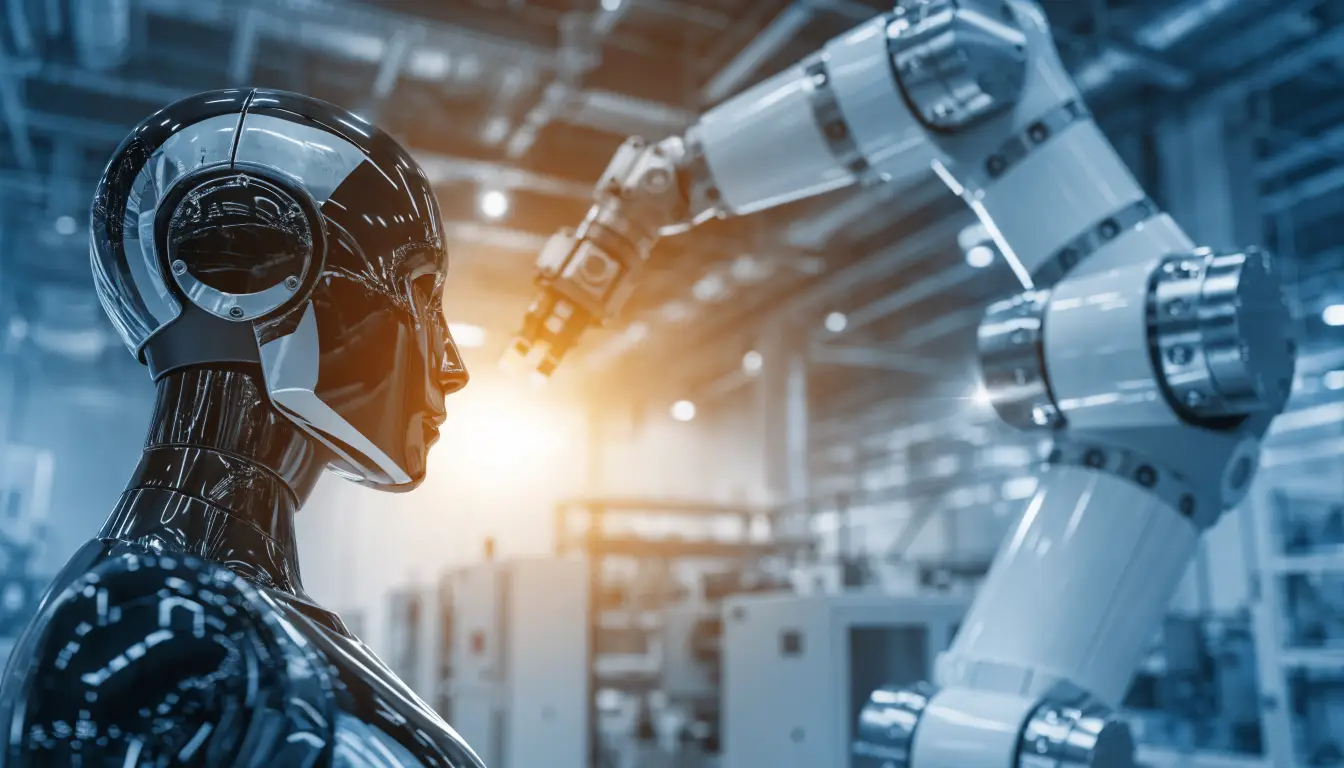
The core value of cobots lies in their ability to safely collaborate with humans in the same workspace, unlike traditional industrial robots. Since Universal Robots, based in Copenhagen, Denmark, first commercialized cobots in 2008, the market has grown rapidly. Currently, Universal Robots holds approximately 56% of the global cobot market, maintaining a dominant position. However, increased competition in recent years has diversified the market structure. KUKA, based in Augsburg, Germany, holds a 17% market share, ranking second, followed by ABB, based in Zurich, Switzerland, with 12%.
The rise of Korean companies is also noteworthy. Hyundai Robotics climbed to fourth place in the global cobot market with an 8% share by 2025. Particularly, Hyundai Robotics’ H-series cobots, which support a payload of 15kg while being 30% cheaper than existing models, have been well-received in the SME market. The company recorded a 89% increase in sales in the fourth quarter of 2025 compared to the same period the previous year, amounting to 124.7 billion KRW, and aims for sales of 210 billion KRW in 2026.
The growth drivers of the cobot market can be analyzed into three main factors. First, the intensifying issue of labor shortages in manufacturing. According to the National Association of Manufacturers (NAM), as of 2026, the U.S. manufacturing sector faces a shortage of approximately 2.4 million jobs, a 15% increase compared to 2023. South Korea is also facing a similar issue, with the number of manufacturing employees decreasing by 5.3% from 4.52 million in 2020 to 4.28 million in 2025. Second, the sharp decline in the cost of adopting cobots. The average price of a cobot, which was $50,000 in 2020, has decreased by 30% to $35,000 as of 2026, and the ROI recovery period has been shortened from an average of 18 months to 12 months.
Technological Innovation and Industry-Specific Application Expansion
The essence of cobot technology lies in the harmony of safety and ease of use. The latest cobots comply with ISO 10218-1/2 and ISO/TS 15066 safety standards and are equipped with advanced sensor systems that automatically limit force and pressure upon contact with humans. For example, Universal Robots’ latest model, the UR20, limits contact force to below 150N and achieves a reaction time of less than 0.5 seconds, which is more than 10 times faster than traditional industrial robots.
The integration of artificial intelligence and machine learning technologies is also a crucial aspect of cobot development. FANUC, based in Tokyo, Japan, launched the CRX-25iA model equipped with an AI vision system in the second half of 2025. This model uses deep learning algorithms to recognize and assemble irregularly shaped parts with over 96% accuracy. FANUC’s cobot-related sales in the fourth quarter of 2025 increased by 43% year-on-year to 890 billion yen, accounting for 18% of total sales.
The use of cobots in the automotive industry is particularly prominent. Volkswagen in Germany introduced 2,400 cobots to its global factories by the end of 2025, improving assembly line efficiency by 23%. Specifically, the collaboration between cobots and workers in door panel assembly and seat installation processes reduced work time by an average of 35%. Hyundai Motor also reported a 15% improvement in post-weld finishing quality by introducing 850 Hyundai Robotics cobots to its Ulsan plant.
The role of cobots is also expanding in the electronics assembly sector. Samsung Electronics automated the smartphone component assembly process by introducing 1,200 ABB YuMi cobots to its factories in Vietnam and India in 2025. This improved assembly accuracy from 99.7% to 99.95% and significantly reduced defect rates from 0.3% to 0.05%. ABB’s robotics division sales in 2025 increased by 19% year-on-year to 3.1 billion Swiss francs, with cobots accounting for 35% of this figure.
The adoption of cobots by SMEs is also accelerating. According to a survey by the U.S. Small Business Administration (SBA), the proportion of manufacturing companies with fewer than 50 employees that adopted cobots more than doubled from 8% in 2023 to 17% in 2025. Similar trends are confirmed by data from the Smart Manufacturing Innovation Promotion Team of the Korean Ministry of SMEs and Startups. In 2025, 1,847 domestic small manufacturing companies adopted cobots, a 134% increase compared to 2023. These companies saw an average productivity improvement of 28% within one year of adoption.
A particularly noteworthy case is Daesung Electric Industry, an automotive parts manufacturer in Ansan, Gyeonggi Province. The company automated its wire harness assembly process by introducing six Hyundai Robotics H-series cobots in 2024. As a result, daily production increased from 2,400 to 3,600 units, a 50% increase, and the incidence of repetitive strain injuries (RSI) among workers decreased by 80% compared to before. The investment recovery period was recorded at 14 months, faster than the initially expected 18 months.
Market Challenges and Future Outlook
Despite the rapidly growing cobot market, several challenges remain. The biggest issue is still the high initial adoption cost. Although the price of cobots has decreased, the total cost of ownership (TCO), including the establishment of peripheral systems and personnel training, remains burdensome for SMEs. According to Deloitte’s 2025 manufacturing survey, 68% of SMEs considering cobot adoption cited initial investment costs as the biggest obstacle.
Technical limitations also persist. The current precision of cobots is at the ±0.1mm level, making them difficult to apply to ultra-precision tasks such as semiconductor or precision machining. Additionally, most cobots are limited to a payload of 25kg or less, reducing their utility in industries requiring heavy load handling. OMRON in Japan has announced the release of the TM-50 model, supporting a 50kg payload, in the first half of 2026 to address these issues. OMRON’s industrial automation division sales in 2025 increased by 12% year-on-year to 425 billion yen.
Retraining personnel and changing organizational culture are also important challenges. According to McKinsey’s 2025 study, 73% of companies that adopted cobots identified retraining existing workers as the most difficult challenge. Especially among skilled craftsmen, there is a high resistance to new technologies, necessitating systematic change management for successful adoption.
Despite these challenges, the future of the cobot market is very bright. Gartner predicts that by 2030, 35% of manufacturing tasks will be performed in a human-robot collaborative form. Particularly, with the advancement of 5G and edge computing technologies, real-time control and remote monitoring of cobots are becoming possible, leading to the emergence of new business models.
The Robot-as-a-Service (RaaS) model is a prime example. Universal Robots, under Teradyne based in Boston, USA, began offering a monthly subscription-based cobot service in the second half of 2025. For a subscription fee of $1,500 per month, companies can use cobots, including maintenance and upgrades. This service was adopted by 380 companies worldwide within six months of its launch, contributing to Teradyne’s sales growth in the fourth quarter of 2025.
The integration with artificial intelligence is also expected to accelerate. NVIDIA released the ‘Jetson Orin NX for Cobots’ AI chipset dedicated to cobots at the end of 2025. This chipset achieves three times faster computation speed and 40% lower power consumption compared to existing models. Major cobot manufacturers such as Hyundai Robotics, ABB, and KUKA plan to incorporate this chipset into their next-generation products.
Regional market prospects are also intriguing. The Asia-Pacific region has emerged as the largest market, accounting for 54% of the total cobot market. Particularly, the Chinese market is growing rapidly, with the number of cobots installed in China reaching 28,400 units in 2025, a 67% increase from the previous year. South Korea, the country with the highest manufacturing robot density globally, has 932 robots per 10,000 manufacturing employees, with the proportion of cobots continuously increasing.
In conclusion, as of 2026, the collaborative robot market has surpassed the critical point of technological maturity and market acceptance, entering a full-fledged popularization phase. Despite challenges such as the burden of initial adoption costs and technical limitations, these barriers are rapidly diminishing with the advancement of AI technologies and the emergence of new business models. As the benefits of automation extend to SMEs, cobots are expected to become a key driver in accelerating the digital transformation of the entire manufacturing ecosystem. This change not only involves the adoption of technology but also presents a new work paradigm of human-machine collaboration, fundamentally altering the future landscape of manufacturing.
