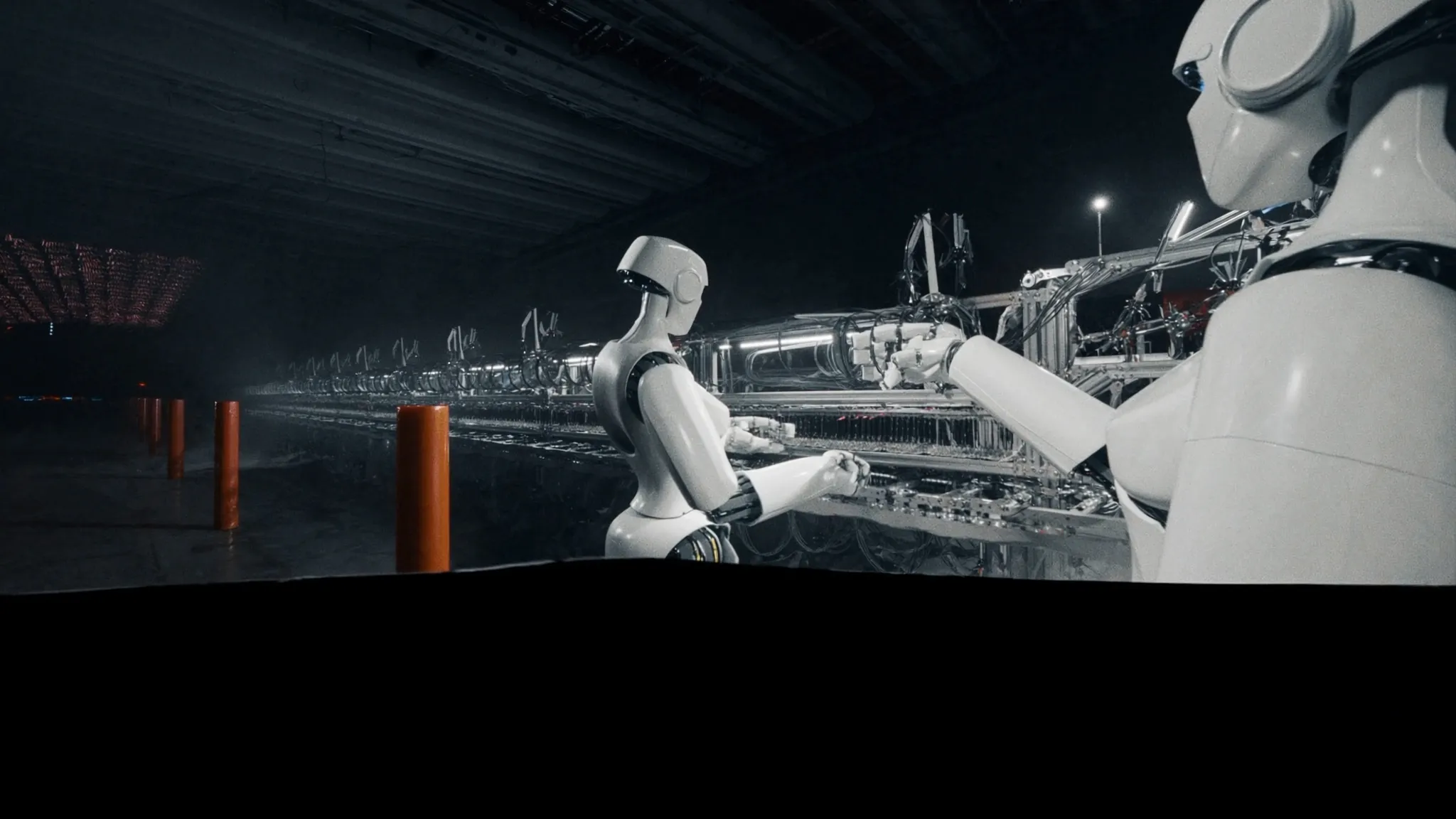
Manufacturing Innovation with Humanoid Robots: Paradigm Shift in the Industrial Robot Market by 2025
 Editor
Entry of Humanoid Robots into Manufacturing and Market Trends
As of November 2025, the humanoid robot market is rapidly growing, fundamentally transforming the traditional manufacturing automation paradigm. According to global market research firm MarketsandMarkets, the humanoid robot market size is projected to grow from $1.9 billion in 2024 to $13.6 billion by 2030, with an average annual growth rate of 39.2%. At the heart of this rapid growth is the expanded application in the manufacturing sector. Precision manufacturers, particularly in the automotive, electronics, and aerospace industries, are actively considering the adoption of humanoid robots, which offer flexibility and versatility over traditional fixed industrial robots.
Tesla, based in California, USA, has begun the pilot operation of its Optimus humanoid robots at its Gigafactory from early 2025. CEO Elon Musk recently announced in a performance report that “Optimus achieved 97% accuracy in battery cell assembly and quality inspection tasks compared to existing workers, and its ability to work continuously for 24 hours has improved productivity by 300%.” Tesla plans to deploy a total of 1,000 Optimus units in its factories by the end of 2025 and will start selling 20,000 units annually to external manufacturers from 2026. The current manufacturing cost of Optimus is set at $20,000 per unit, which is 50% cheaper than existing industrial robots.
Korean manufacturers are also actively embracing humanoid robots. Hyundai Motor Group is conducting tests on automotive parts assembly using Boston Dynamics’ Atlas robots at its Ulsan plant from the first half of 2025. A Hyundai representative stated, “The Atlas robot reduced error rates by 70% in engine block assembly and welding tasks compared to existing workers and performs reliably in hazardous high-temperature environments.” Hyundai plans to invest 50 billion won by 2026 to establish a smart factory based on humanoid robots.
Technological Innovations and Performance Improvements
The key technologies enabling the application of humanoid robots in manufacturing are advancements in AI-based real-time learning capabilities and precision manipulation technology. NVIDIA, based in California, USA, has developed the Isaac platform, allowing humanoid robots to learn complex manufacturing tasks through millions of simulations in virtual environments. According to NVIDIA’s data, humanoid robots using the Isaac platform reduced new task acquisition time by 85% and improved task accuracy to 99.2%. Currently, over 200 manufacturers worldwide are conducting robot training using the Isaac platform.
FANUC, headquartered in Yamanashi Prefecture, Japan, launched a hybrid solution combining its industrial robot technology with humanoid robots from the second half of 2025. FANUC’s CR-H series combines the precision of traditional industrial robots with the flexibility of humanoid robots, enabling ultra-precise tasks at a 0.02mm level. Toyota announced that using FANUC’s CR-H robots reduced defect rates by 99.8% in engine parts assembly processes. FANUC is investing 120 billion yen, 15% of its 2025 sales, in humanoid robot technology development and plans to increase the related sales proportion to 30% by 2030.
ABB, based in Zurich, Switzerland, has developed the humanoid robot GoFa by advancing its YuMi collaborative robot technology. GoFa is designed to work safely in the same workspace as humans and can lift loads up to 5kg. BMW has deployed 50 GoFa robots at its Munich plant in Germany for automotive interior assembly, reporting a 40% improvement in work efficiency. ABB expects to record $800 million in sales in the humanoid robot sector in 2025, a 120% increase from the previous year.
Sensor technology in humanoid robots is also rapidly advancing. The latest humanoid robots are equipped with multimodal sensing systems integrating LiDAR, depth cameras, and tactile sensors. This allows them to recognize and adapt to the work environment within 0.1 seconds and safely halt or adjust operations in unexpected situations. The KUKA KMR iiwa, developed by KUKA in Augsburg, Germany, can perceive its environment in 360 degrees and stop its actions within 0.05 seconds upon detecting obstacles.
The primary reason manufacturers are adopting humanoid robots is the ability to achieve flexible automation without extensive modifications to existing production lines. Traditional industrial robots are optimized for specific tasks, requiring significant reinvestment whenever production items change. In contrast, humanoid robots can learn new tasks with just a software update, greatly enhancing manufacturers’ production flexibility. According to McKinsey Global Institute’s analysis, the adoption of humanoid robots can result in an average productivity improvement of 35% and a 25% reduction in operating costs for manufacturers.
Advancements in battery technology have also significantly increased the practicality of humanoid robots. Humanoid robots equipped with the latest lithium-ion batteries can operate continuously for 8-12 hours and achieve 80% charge in just 30 minutes through fast charging. Tesla’s Optimus uses its proprietary 4680 battery cells, allowing for 10 hours of continuous operation and supporting auxiliary charging via wireless charging pads during work. These technological advancements enable humanoid robots to maintain an operational rate of over 95%.
With the advancement of AI technology, humanoid robots are beginning to possess creative problem-solving abilities beyond simple repetitive tasks. Humanoid robots equipped with the latest large language models (LLMs) can independently assess and find solutions to exceptions that occur during work. For instance, if a part’s position differs from expectations, the robot can calculate the optimal approach path and complete the task. This autonomous problem-solving ability has led to a task success rate of over 98% for humanoid robots.
In terms of safety, humanoid robots offer significant advantages over traditional industrial robots. Their human-like form and movements make it easier for workers to predict the robot’s actions, and collision detection sensors and soft actuators ensure safety even in contact with humans. According to data from the International Federation of Robotics (IFR), the rate of work-related accidents in factories that have adopted humanoid robots has decreased by 60% compared to before.
Market Outlook and Investment Trends
Interest in humanoid robots is surging among global investors and manufacturers. In the first half of 2025 alone, venture investment in humanoid robots totaled $4.5 billion, a 280% increase compared to the same period last year. Particularly, companies developing humanoid robots specialized for manufacturing are attracting large-scale investments. Agility Robotics in the USA secured $150 million in investment from Amazon and Ford, while Engineered Arts in the UK received an $80 million investment from SoftBank.
The Chinese government is also actively fostering the humanoid robot industry. The Ministry of Industry and Information Technology of China announced a humanoid robot development plan for 2025-2030, with plans to invest a total of 50 billion yuan (approximately $7 billion) over the next five years. UBTech Robotics, a leading Chinese robot manufacturer, began mass production of its Walker series humanoid robots specialized for manufacturing from the second half of 2025. The Walker S is priced at $150,000 per unit, with major Chinese manufacturers like Foxconn and BYD considering its adoption.
Japan is also making large-scale investments to maintain its technological edge in the humanoid robot market. The Japanese government established a 100 billion yen fund in the second half of 2025 for next-generation robot technology development, with major companies like Honda, Sony, and Toyota participating. Honda’s ASIMO Next, the successor to ASIMO, is set for release in the first half of 2026, designed specifically for precision tasks in manufacturing environments. Honda aims to capture a 20% market share in the humanoid robot market by 2030 through ASIMO Next.
The European Union is also expanding investments in humanoid robot technology development to secure digital sovereignty. The EU’s Horizon Europe program plans to support robot technology development with 3 billion euros during 2025-2027, with 40% allocated to humanoid robot-related projects. The Fraunhofer Institute in Germany has formed a consortium with BMW, Mercedes-Benz, and Volkswagen to develop next-generation humanoid robots, aiming to create fully autonomous manufacturing robots by 2027.
However, there are still challenges to be addressed in the adoption of humanoid robots in manufacturing. The biggest issue is the high initial investment cost. Currently, the price of high-performance humanoid robots ranges from $100,000 to $500,000 per unit, making it difficult for small and medium-sized manufacturers to adopt them easily. Additionally, complex programming and maintenance require specialized personnel, resulting in significant additional costs. According to McKinsey’s analysis, the total cost of ownership (TCO) for adopting humanoid robots is 2-3 times the robot purchase cost over five years.
Regulation and safety standards are also urgent issues. Most countries currently lack clear safety standards or certification procedures for humanoid robots. The International Organization for Standardization (ISO) plans to establish the safety standard ISO 13482-2 for humanoid robots by 2026, but the adoption speed is expected to vary depending on each country’s regulatory environment. Strict regulations, such as the European Union’s AI legislation, could delay the commercialization of humanoid robots.
There are also growing concerns about job displacement for workers. The International Labour Organization (ILO) predicts that the spread of humanoid robots could affect 15-20% of global manufacturing jobs by 2030. However, it is also expected to create new high-skilled jobs in robot operation, maintenance, and programming. The World Economic Forum (WEF) analyzes that the adoption of humanoid robots will create 1.2 times more new jobs than the jobs lost.
Technical limitations still exist. Current humanoid robots do not possess human-level dexterity or creative thinking abilities, and their ability to respond to unexpected situations is limited. In fields requiring precise manual work, such as electronics assembly or art creation, it is still challenging to completely replace human workers. Additionally, limitations in battery life and charging time restrict 24-hour continuous operation.
Despite these challenges, industry experts predict that humanoid robots will become a key technology transforming the future of manufacturing. According to the latest report from Boston Consulting Group (BCG), over 60% of global manufacturers are expected to adopt at least one humanoid robot by 2030. The adoption rate is expected to be faster among advanced country manufacturers, where labor costs are high and skilled labor is difficult to secure. Considering the continuous advancement of humanoid robot technology, cost reduction, and the increasing demand for automation among manufacturers, the market is expected to sustain a high growth rate of over 30% annually over the next decade.
*This analysis is provided for informational purposes only and is not intended as investment advice or a recommendation of specific stocks. Investment decisions should be made based on individual judgment and responsibility, and no liability is assumed for investment results based on this content.*