Opportunities Found by Korean Reducer Companies in the Physical AI Robot Market – Breaking Away from Dependence on China is Key
 Editor
While reading a Chosun Biz article, I came across some truly fascinating information. With the rapid growth of the physical AI robot market, Korean reducer companies are seizing new opportunities. Although the reducer component has long been important in manufacturing, its significance seems to be further highlighted as the AI robot era approaches.
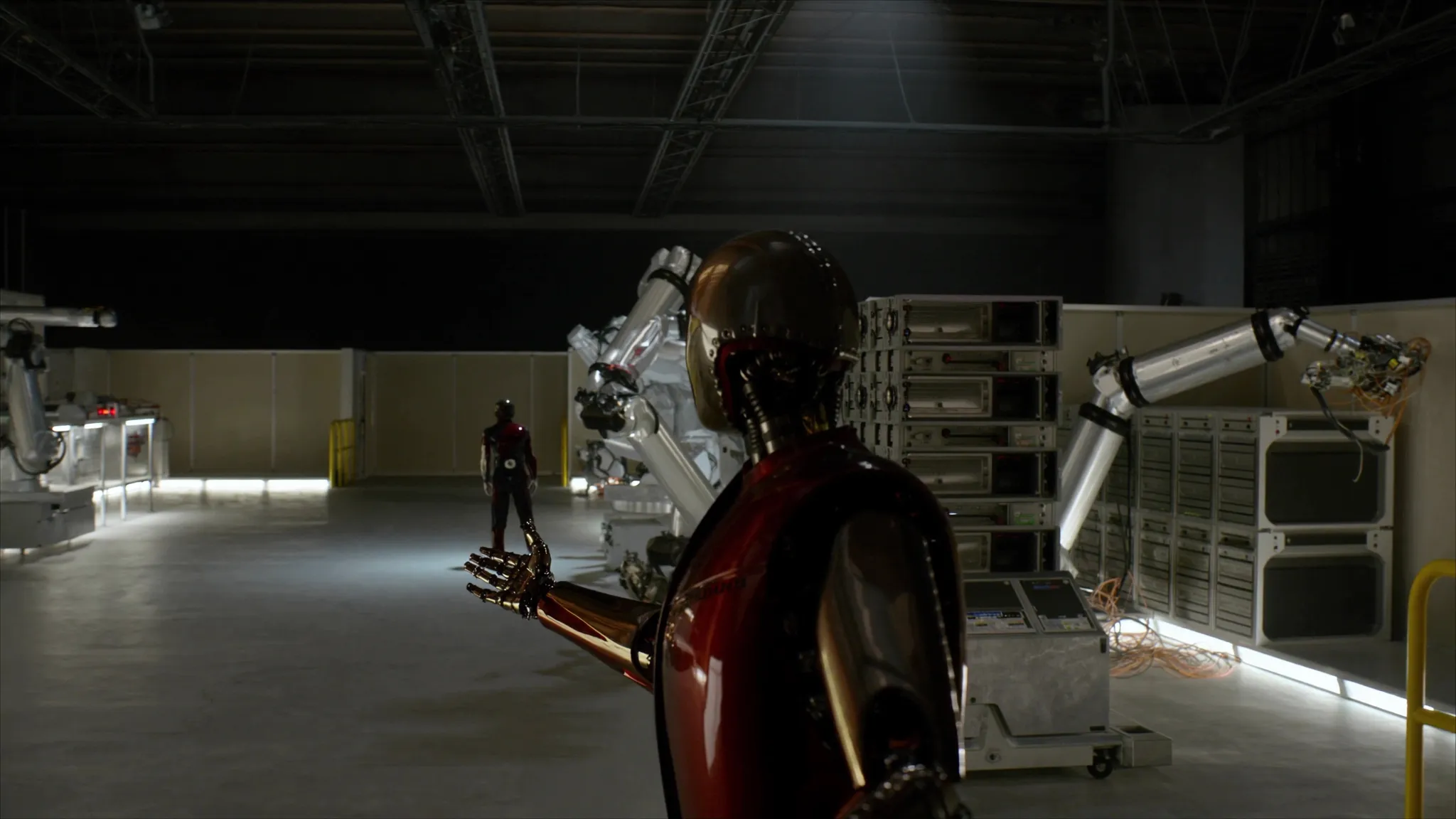
According to the article, Korean companies are seeking growth opportunities in the reducer market, a core component of physical AI robots, by riding the ‘de-China’ trend. Notably, the number of companies aiming to turn a profit next year is increasing, which is worth noting. Personally, I believe this change is not solely due to geopolitical factors.
The concept of physical AI robots itself is one of the hottest topics as of 2025. If OpenAI’s ChatGPT led the innovation of language models, we are now at a stage where AI is evolving into robots that can interact with the physical world. Tesla’s Optimus, Boston Dynamics’ Atlas, and numerous startups developing humanoid robots are evidence of this.
However, precise joint control is essential for these robots to function properly. This is where the role of reducers becomes crucial. A reducer is a component that converts the high-speed rotation of a motor into low-speed, high-torque movement, allowing for precise movements in each joint of a robot. It’s akin to the role of joints and muscles in humans.
Changes in the Global Reducer Market Landscape
The ‘de-China’ trend mentioned in the article is a phenomenon occurring across various industries. It is particularly prominent in the robotics industry. While China has dominated the low-cost reducer market, limitations in quality and reliability have led more companies to seek alternatives.
Looking at the global reducer market, Japan’s Harmonic Drive and Nabtesco have long led the premium market. Harmonic Drive, in particular, holds over 60% of the global market in the harmonic reducer sector. Nabtesco is renowned for its RV reducers, primarily used in industrial robot joints. The annual sales of these two companies are approximately $700 million and $2.5 billion, respectively.
However, with the rapid growth of the physical AI robot market, existing companies alone have struggled to meet the demand. The global robot reducer market was valued at about $2.3 billion in 2024, and it is expected to grow to $4.5 billion by 2030, with an average annual growth rate of over 12%. The growth in the humanoid and service robot sectors is driving this increase in demand.
This is where opportunities arise for Korean companies. While Japanese companies are recognized for their technological prowess, they are expensive, and Chinese companies, though affordable, have questionable quality reliability. Korean companies can position themselves to offer reasonable quality at a competitive price point.
In fact, during the development of Tesla’s Optimus robot, it was reported that they initially used Japanese reducers but sought alternatives due to cost issues. Each Optimus requires more than 20 reducers, making component costs a significant factor when considering mass production. To achieve Tesla’s goal of producing a $20,000 humanoid robot, optimizing the cost of all components is essential.
Strategies and Challenges for Korean Reducer Companies
The goal of turning a profit next year, as mentioned in the article, seems like a realistic scenario. As of December 2025, several Korean reducer companies are focusing on developing products for physical AI robots. Efforts to enhance precision and durability while securing price competitiveness are particularly noticeable.
The strength of Korean companies lies in the precision manufacturing technology accumulated in the semiconductor and display industries. As major corporations like Samsung Electronics and LG Electronics show interest in the robotics business, their partner companies are also accelerating technology development. Samsung Electronics began investing in home robot development in 2024, and LG Electronics is expanding its service robot business.
Hyundai Motor Group is even more proactive. After acquiring Boston Dynamics, they are pushing for the commercialization of the humanoid robot Atlas, increasing collaboration with Korean component companies in the process. Hyundai Motor’s investment in the robotics business for 2024 amounts to $800 million, a 40% increase from the previous year.
However, challenges are not insignificant. Catching up with the technological expertise accumulated by Japanese companies over decades is not easy. The core of reducers lies in gear processing technology and assembly know-how, which cannot be acquired overnight. Harmonic Drive, for instance, has been manufacturing reducers since 1955. It will require significant time and investment to catch up with nearly 70 years of experience.
Another issue is establishing a global supply chain. Physical AI robot companies are scattered worldwide, and to supply components stably, a global production and distribution network is necessary. One reason Chinese companies have dominated the market is not only their low prices but also their rapid supply capabilities.
However, the situation is gradually changing. As U.S. and European robot companies pursue supply chain diversification, opportunities are emerging for Korean companies. Particularly, as NVIDIA expands hardware partnerships through its robot AI platform Isaac, the likelihood of Korean companies participating in this ecosystem is increasing.
What personally intrigues me the most is the direction of technological innovation. While traditional reducers relied on mechanical structures, the concept of smart reducers, combining electronic control and AI, is emerging. Features are being developed that analyze robot movements in real-time to automatically adjust reduction ratios or predict wear conditions to inform maintenance timing.
In this smart reducer market, Korea’s IT technology may have an advantage over the mechanical-centric approach of existing Japanese companies. By integrating sensor, semiconductor, and software technologies from companies like Samsung Electronics and LG Electronics into reducers, differentiated products can be created. In fact, LG Electronics began developing industrial robot components equipped with AI-based predictive maintenance features starting in 2024.
Market data further reinforces this confidence. As of 2025, the reducer market for physical AI robots accounts for about 15% of the total robot reducer market, but it is expected to expand to 35% by 2030. Particularly, humanoid robots require an average of 25 reducers per unit, which is significantly more than the 6-7 used in traditional industrial robots.
Tesla aims to produce 1 million units of Optimus annually, and several Chinese companies are also preparing for mass production of humanoid robots. Considering this demand, the growth potential of the reducer market seems substantial. The question is, who will seize this opportunity first?
Ultimately, the success of Korean reducer companies hinges on their ability to secure both technological prowess and price competitiveness. While the goal of turning a profit next year, as mentioned in the article, seems achievable, a broader perspective is necessary for the long term. It’s important to create new value that aligns with the physical AI era, beyond merely serving as a substitute for China.
This article was written after reading the Chosun Biz article on the core components of physical AI robots, with personal opinions and analysis added.
Disclaimer: This blog is not a news outlet, and the content reflects the author’s personal views. Responsibility for investment decisions lies with the investor, and no responsibility is taken for investment losses based on the content of this article.
