Rapid Growth of the Collaborative Robot Market and a New Paradigm in Manufacturing Automation
 Editor
As we enter 2026, the collaborative robot (cobot) market is experiencing unprecedented growth, marking a new turning point in manufacturing automation. According to the latest report from the International Federation of Robotics (IFR), the global cobot market size is expected to surge from $7 billion in 2025 to $8.7 billion in 2026, a 24% increase, and is projected to maintain an average annual growth rate of 22%, reaching $24 billion by 2030. This growth reflects not just numerical expansion but also a structural transformation across the manufacturing ecosystem. Unlike traditional industrial robots, which were limited to mass production environments dominated by large corporations, cobots are expanding the realm of automation to small and medium-sized enterprises and environments characterized by low-volume, high-mix production.
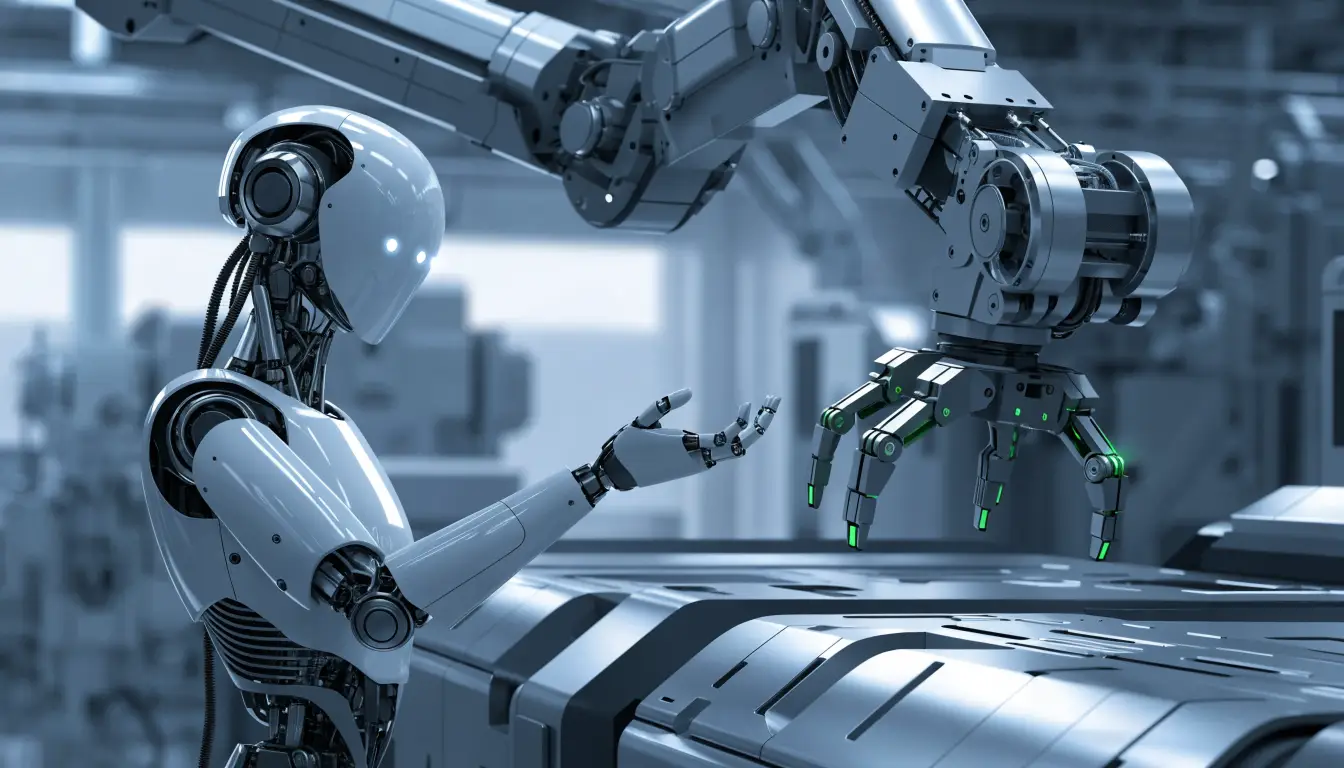
The key differentiator of cobot technology is safe collaboration with humans. Unlike traditional industrial robots that had to operate in isolated environments with safety fences, cobots can work safely in the same space as human operators, thanks to collision detection sensors, force-limiting mechanisms, and real-time monitoring systems that comply with ISO 10218 and ISO/TS 15066 safety standards. The UR20 model from Denmark’s Universal Robots can handle a payload of 20 kg and implements a safety feature that stops within 0.1 seconds upon collision, which is ten times faster than traditional industrial robots. Such technological advancements have enabled the spread of cobots across various industries, from automotive assembly lines to electronics production and food packaging.
New Driving Force in the SME Automation Market
The most notable change in the cobot market is the sharp increase in adoption rates among small and medium-sized enterprises (SMEs). According to McKinsey’s 2026 manufacturing automation report, the adoption rate of cobots among small manufacturers with fewer than 50 employees more than doubled from 12% in 2024 to 28% in 2026. This is because the initial investment cost of cobots is 60-70% cheaper than traditional industrial robots, ranging from $30,000 to $80,000, making them accessible to SMEs. In particular, South Korea’s Doosan Robotics successfully targeted the SME market with the launch of the entry-level M series cobot priced at $25,000, resulting in a 45% year-on-year increase in sales to 120 billion won in the fourth quarter of 2025.
The simplification of programming and setup is also a key factor in the spread among SMEs. Unlike traditional industrial robots that required complex programming by professional engineers, current cobots offer intuitive touchscreen interfaces and drag-and-drop programming. The GoFa series from Switzerland’s ABB has improved usability to the extent that ordinary workers can set up basic tasks within 30 minutes, making it an optimized solution for SME environments with limited dedicated personnel. Additionally, cloud-based remote monitoring and predictive maintenance functions allow for over 95% uptime without separate maintenance personnel, significantly enhancing operational efficiency for SMEs.
This improved accessibility is also demonstrated by actual return on investment (ROI). According to an analysis by Germany’s Fraunhofer Institute, the average ROI for SMEs adopting cobots is achieved within 18 months, which is twice as fast as the 36 months for traditional industrial robots. In particular, cobots can perform repetitive assembly, packaging, and quality inspection tasks continuously for 24 hours while achieving 3-5 times higher accuracy than human workers. Powertrain Solutions, a small automotive parts manufacturer in Illinois, USA, reported a 40% increase in productivity and an 85% reduction in defect rates after adopting three A0509 cobots from Doosan Robotics.
Technological Innovation and Changes in Competitive Dynamics
Technological innovation in the cobot market is accelerating, centered around the integration of AI and machine learning. As of 2026, major cobot manufacturers are focusing on developing ‘intelligent cobots’ that combine computer vision, natural language processing, and reinforcement learning technologies. Japan’s FANUC CRX-25iA can automatically recognize and classify parts of various shapes and sizes through a deep learning-based vision system, reducing the learning time for new products from 4 hours to 30 minutes. These technological advancements enable cobots to perform tasks requiring complex judgment beyond simple repetitive tasks.
The market competition is fierce between established leaders and emerging players. While Denmark’s Universal Robots maintains its lead with a 35% market share, South Korea’s Doosan Robotics (12%), Germany’s KUKA (10%), and Switzerland’s ABB (9%) are rapidly catching up. Particularly, Doosan Robotics expanded its R&D investment by 50% after securing 750 billion won through its 2025 IPO and recorded an 80% year-on-year increase in sales in the North American market in the first quarter of 2026. Emerging Chinese companies are also accelerating market entry based on price competitiveness, continuing the overall price decline pressure.
In terms of technological differentiation, modular design and scalability are emerging as new competitive factors. Hyundai Robotics’ Hi6 series adopts a modular structure that allows for the replacement of various end effectors and sensors depending on the work environment, enabling a single cobot to perform various tasks such as welding, assembly, and inspection. Additionally, real-time data collection and analysis functions through integration with 5G networks are becoming standardized, evolving cobots from simple automation equipment to key components of smart factories.
Building a software ecosystem is also an important differentiating factor. ABB provides an integrated development environment from virtual simulation to actual deployment through its RobotStudio platform, reducing customer implementation time from 8 weeks to 3 weeks. Japan’s OMRON has launched the integrated automation solution ‘i-Automation!’ that links cobots, AI vision, and mobile robots, focusing on optimizing entire production lines. This integrated solution approach enables the establishment of long-term partnerships and continuous revenue models beyond single product sales.
Improving safety and reliability is also a continuous area of technological development. The latest cobots implement multi-safety systems combining LiDAR, ultrasonic, and infrared sensors, and can predict and respond to potential hazardous situations in advance by learning worker behavior patterns through machine learning. The latest UR30 model from Universal Robots under the US’s Teradyne has achieved a safety reliability of 99.9%, approaching the safety standards of the aerospace industry. This improvement in safety allows for expansion into industries requiring high safety, such as medical device manufacturing and food processing.
The regional growth patterns of the cobot market are also showing intriguing changes. The Asia-Pacific region forms the largest market, accounting for 42% of the total market, with growth rates in China and India significantly exceeding the global average at 35% and 28%, respectively. In South Korea, the domestic cobot market grew by 31% year-on-year to 850 billion won in 2026, supported by the government’s ‘Smart Manufacturing Innovation 2030’ policy and expanded cobot adoption subsidies. The European market is focusing on premium cobots due to strict safety regulations and high labor costs, while the North American market is accelerating cobot adoption alongside manufacturing reshoring policies.
Investment and M&A activities are also actively underway. In 2025, venture investments related to cobots recorded $2.3 billion, a 40% increase from the previous year. Particularly, interest in AI-based cobot startups is rising, with the US’s Agility Robotics raising $150 million in a Series C round, and Germany’s Franka Emika attracting strategic investments from BMW and Siemens. Large corporations are also continuing mergers and acquisitions, with KUKA acquiring the collaborative robot division of Italy’s Comau for $350 million in January 2026, strengthening its dominance in the European market.
The growth of the cobot market is driving changes across the entire manufacturing ecosystem beyond mere technological advancements. In developed countries facing a deepening labor shortage, cobots are becoming a key means of maintaining productivity, while in emerging countries, they act as catalysts for manufacturing advancement. Additionally, the increased demand for unmanned automation due to strengthened social distancing and hygiene management requirements post-COVID-19 suggests that the structural growth momentum of the cobot market will continue. As of 2026, the cobot market is establishing itself as the new standard in manufacturing automation, equipped with the triad of technological innovation, cost efficiency, and safety, and is expected to continue growing at an average annual rate of over 20% over the next five years, developing into a key element of global manufacturing competitiveness.
