Rapid Growth of the Collaborative Robot Market and Acceleration of Digital Transformation in Korean Manufacturing
 Editor
As of November 2025, the global collaborative robot (Cobot) market is experiencing unprecedented growth. According to the latest report by the International Federation of Robotics (IFR), the global cobot market size has reached $18.9 billion this year, showing a sharp growth rate of 35% compared to the previous year. This growth is particularly pronounced in the Asia-Pacific region, with Korea demonstrating the fastest adoption rate within the region. Data from the Korea Institute for Robot Industry Advancement indicates that the adoption rate of cobots among domestic manufacturers surged from 23% in 2024 to 41% in 2025, significantly exceeding the global average of 28%.
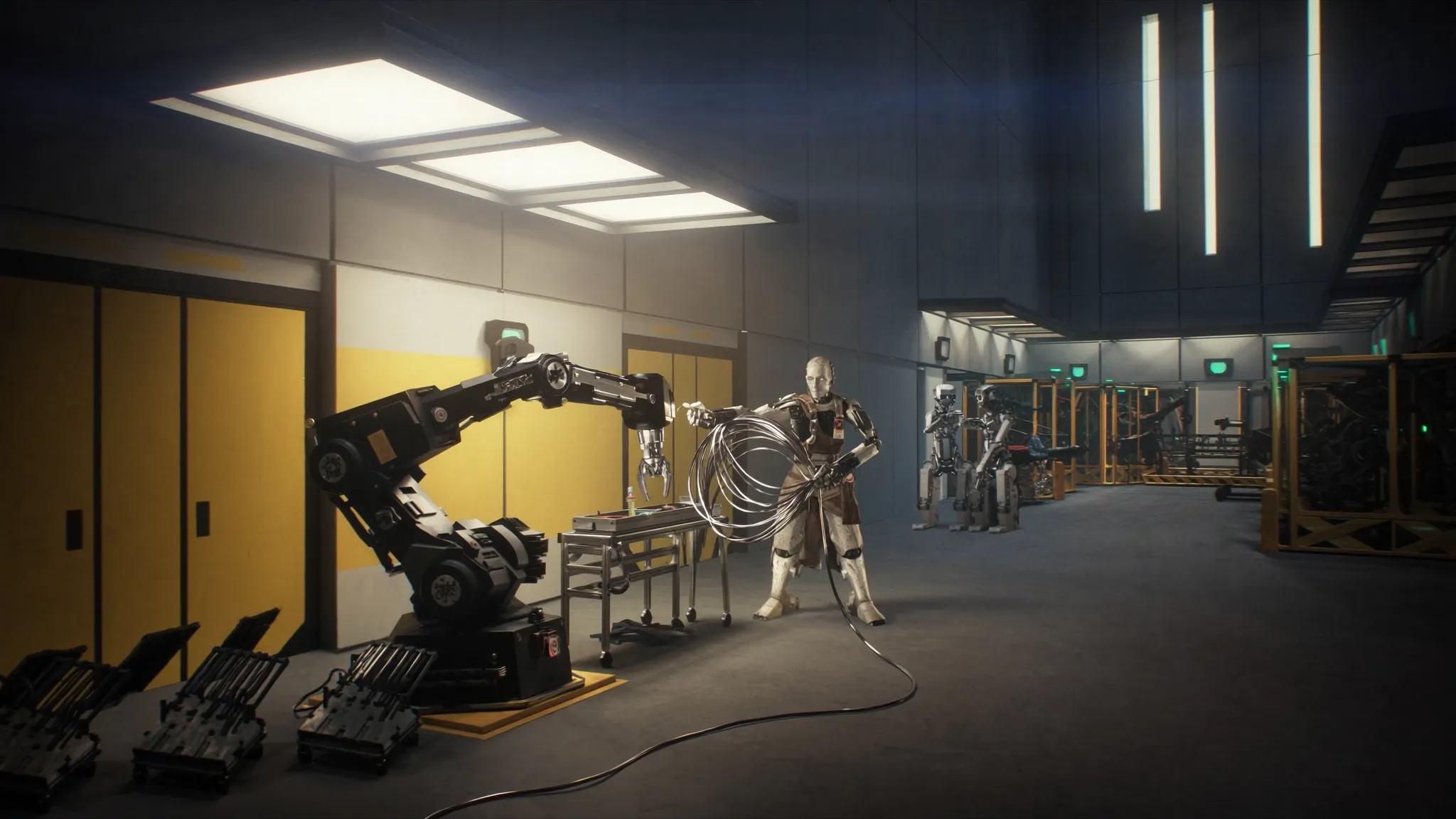
Several complex factors are driving this rapid growth. Firstly, the severe labor shortage faced by the Korean manufacturing industry is a major driving force. According to Statistics Korea, the number of manufacturing employees decreased from 4.52 million in 2023 to 4.37 million in 2025, with a particularly acute shortage in 3D (Dirty, Dangerous, Difficult) sectors. Simultaneously, changes in labor conditions, such as rising minimum wages and reduced working hours, have increased labor costs, prompting companies to actively seek automation solutions. A survey by the Korea Federation of SMEs found that 78% of manufacturers cited labor cost burdens as a primary reason for adopting cobots.
From a technical perspective, the performance and accessibility of cobots have significantly improved. As of 2025, the latest cobots can handle payloads of up to 25kg, with a positional accuracy of ±0.02mm and repeatability of ±0.01mm. The integration of artificial intelligence and machine learning technologies has dramatically enhanced the learning capabilities of cobots. For instance, the UR30 model released by Denmark’s Universal Robots this year can learn the movements of workers through deep learning algorithms and adapt to new tasks within 24 hours. This is a revolutionary advancement compared to traditional industrial robots, which required weeks to months for programming.
Current Status and Achievements of Cobot Adoption by Korean Companies
Examining the cases of cobot adoption by Korean manufacturers reveals their effectiveness and impact. Hyundai Motor Company has been utilizing 120 LBR iiwa cobots from Germany’s KUKA in its Ulsan plant since 2024 for body welding processes. This has resulted in a 43% improvement in work efficiency and an 87% reduction in worker safety accidents. Notably, existing workers have transitioned to higher value-added tasks through collaboration with cobots. Among 150 welding workers, 89% have been reassigned to quality control and process improvement roles, contributing to overall productivity enhancement.
Significant achievements are also evident at the level of small and medium-sized enterprises. Taesung Industries Co., Ltd., a precision parts manufacturer located in Ansan, Gyeonggi Province, has implemented six YuMi cobots from Switzerland’s ABB to establish an electronic component assembly line. Despite an investment of 420 million won, the return on investment was achieved within 18 months. Notably, the defect rate drastically decreased from 3.2% to 0.4%, and production volume increased by 58% from 2,400 to 3,800 units per day. This case demonstrates that small and medium-sized enterprises can significantly enhance their competitiveness through appropriate cobot adoption strategies.
Domestic cobot manufacturers are also actively leveraging these market opportunities. Doosan Robotics recorded sales of 98.7 billion won in the third quarter of 2025, marking a 124% growth compared to the same period last year. Particularly, the company’s M series cobots captured a 34% market share in the domestic market, surpassing Universal Robots (28%) to claim the top spot. The success of Doosan Robotics lies in providing customized solutions that reflect the characteristics of Korean manufacturers. For example, they have developed a specialized gripper for kimchi manufacturers and cleanroom-spec cobots for semiconductor post-processing, establishing a diversified product lineup.
Rainbow Robotics is also showing noteworthy achievements. The company achieved sales of 31.2 billion won in the cobot business sector this year, particularly establishing a unique positioning in the medical cobot field. The ‘RB-Y1’ surgical assistant cobot, jointly developed with Seoul National University Hospital, demonstrated 92% accuracy in orthopedic surgeries and has entered the commercialization stage. This is significant as it pioneers a collaborative approach in the medical cobot market, distinct from Intuitive Surgical’s da Vinci surgical robot.
Global Competitive Landscape and Technological Innovation Trends
The competitive landscape of the global cobot market is becoming increasingly intense in 2025. While Denmark’s Universal Robots still maintains the top global market share (32%), the pursuit by Chinese and Korean companies is fierce. China’s AUBO Robotics has officially entered the European market this year, expanding its global market share to 12%. Particularly, it is experiencing rapid growth in Southeast Asia and South America, driven by its price competitiveness. AUBO’s i5 series offers similar performance at 40% lower prices compared to Universal Robots’ UR5e, gaining significant traction in price-sensitive markets.
In terms of technological innovation, the convergence of artificial intelligence and sensor technology is the most notable trend. The Hahn Group, the successor to the U.S. company Rethink Robotics, announced a new cobot platform that combines computer vision and tactile sensors to achieve human-level dexterity. This system can detect subtle force differences of 0.1 Newton, demonstrating the ability to move eggs without breaking them or handle silk fabrics without damage. Such technological advancements are expanding the application areas of cobots to more sophisticated tasks in food processing, garment manufacturing, and electronics assembly.
Significant progress has also been made in collaborative safety. A new safety system jointly developed by Germany’s Fraunhofer Institute and KUKA is reported to prevent collision risks between workers and cobots by 99.8%. This system combines LiDAR sensors and AI predictive algorithms to anticipate worker movements 0.02 seconds in advance and automatically adjust cobot actions. The advancement of such safety technologies lays the foundation for cobots to be utilized in more complex and dynamic work environments.
Innovation continues at the software platform level as well. Formant, based in Chicago, USA, has developed a cloud-based robot management platform that monitors and manages over 8,500 cobots worldwide in real-time. Through this platform, manufacturers can monitor cobot utilization rates, energy efficiency, and predictive maintenance timing in real-time, reportedly achieving an average 23% improvement in utilization rates and a 31% reduction in maintenance costs.
Investment and mergers and acquisitions (M&A) activities are also active. In the first half of this year alone, cobot-related companies attracted a total of $4.7 billion in investments, an 89% increase compared to the same period last year. Notably, German automotive parts supplier Bosch invested $250 million in U.S. cobot startup Agility Robotics. Agility Robotics’ bipedal humanoid robot ‘Digit’ expands the concept of traditional cobots, demonstrating the ability to collaborate directly with humans in warehouses and logistics centers. Such investments suggest the potential for cobot technology to expand beyond simple manufacturing automation into the service and logistics industries.
Comprehensively analyzing market prospects and investment opportunities, the cobot industry is expected to maintain an average annual growth rate of 28% from 2025 to 2030. According to McKinsey’s latest report, the global cobot market size is projected to reach $85 billion by 2030, with the Asia-Pacific region accounting for 45% of this market. Korea is expected to play a key role within this region, based on technological innovation and the advancement of manufacturing industries. The utilization of cobots is anticipated to continue expanding in Korea’s key industries, such as semiconductors, automobiles, and shipbuilding, providing significant investment opportunities for related companies.
However, challenges remain. The cost of adopting cobots is still burdensome for small and medium-sized enterprises, and indirect costs related to worker retraining and process redesign must also be considered. Additionally, issues of compatibility between cobots and existing manufacturing systems, cybersecurity risks, and social concerns about job displacement remain challenges to be addressed. To overcome these challenges and fully realize the potential of cobot technology, not only technological development but also policy support, educational system reform, and social consensus formation must be achieved together.
Disclaimer: This analysis is based on publicly available information and should not be interpreted as advice for investment decisions. All investments carry risks, so please consult with an expert before making investment decisions.
