Rapid Growth of the Collaborative Robot Market and Acceleration of Manufacturing Innovation
 Editor
As of the end of 2025, the collaborative robot (Cobot) market is experiencing unprecedented growth, establishing itself as the new standard in manufacturing automation. According to global market research firm ABI Research, the Cobot market size will reach $12 billion in 2025, reflecting a 35% growth from the previous year. This figure significantly surpasses the 12% growth rate of the traditional industrial robot market, indicating that manufacturers are actively adopting Cobots as automation solutions that combine safety and flexibility. Notably, the adoption rate of Cobots by small and medium-sized enterprises (SMEs) increased by 42% compared to the previous year, allowing even small-scale manufacturers, which previously faced high barriers to automation, to benefit from robotic technology.
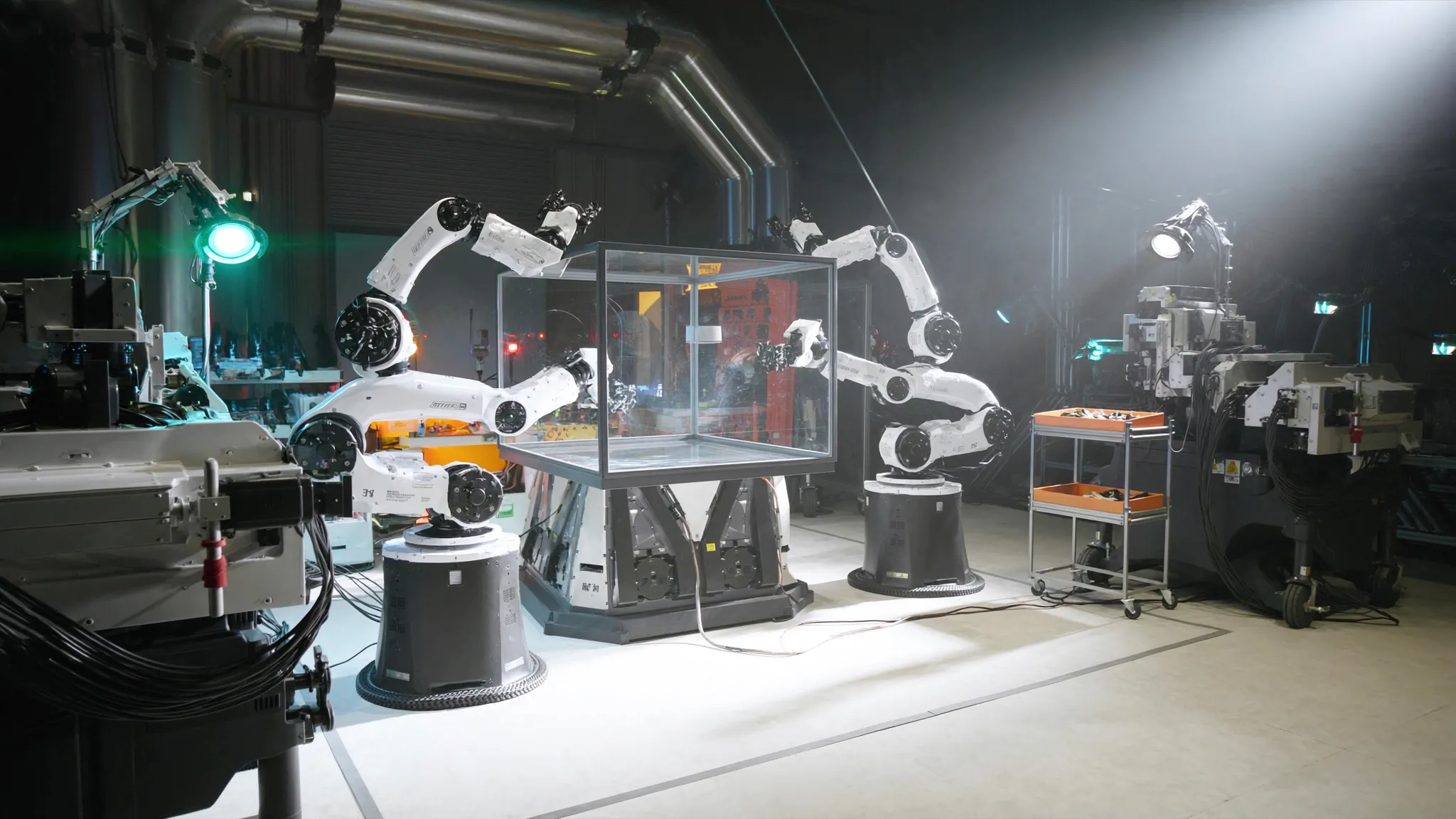
The core driver of this growth lies in the unique technical characteristics of Cobots. Unlike traditional industrial robots that had to operate in isolated spaces with safety fences, Cobots are designed to safely collaborate in the same workspace as humans. For instance, the UR20 model developed by Denmark’s Universal Robots features collision detection sensors and force-limiting functions that immediately stop movement upon contact with humans, limiting maximum contact force to below 150N. This meets the safety standards for Cobots set by the international safety standard ISO 10218, providing a technical foundation that ensures worker safety while maximizing productivity.
Examining the market competition landscape, Denmark’s Universal Robots remains the leader in the Cobot market, maintaining approximately 45% market share. However, the pursuit by Asian companies is accelerating. As of the third quarter of 2025, South Korea’s Doosan Robotics secured the second position in the global Cobot market with a 12% market share. Doosan Robotics’ M series Cobots support a 6-axis joint structure and a maximum payload of 25kg, demonstrating high precision particularly in automotive parts assembly and welding tasks. According to a company representative, sales in the first half of 2025 increased by 68% year-over-year, reaching 234 billion won, with 72% of sales coming from overseas markets.
Traditional industrial robot manufacturers like Switzerland’s ABB and Germany’s KUKA are also accelerating their entry into the Cobot market. ABB’s GoFa series applies existing industrial robot technology to Cobots, offering high precision and durability. The GoFa 10 model, in particular, boasts a maximum payload of 10kg and a repeatability of ±0.03mm, making it optimized for precision tasks such as electronics assembly. KUKA’s iiwa (Intelligent Industrial Work Assistant) series adopts a 7-axis structure to mimic human arm movements, excelling in complex assembly tasks.
Case Studies of Cobot Utilization in Manufacturing and Economic Impact
The economic impact of Cobots can be specifically examined through real-world application cases. Germany’s automotive parts manufacturer Bosch began introducing Cobots to 120 factories worldwide starting in 2024. According to Bosch’s internal data, productivity improved by an average of 28% after Cobot implementation, while defect rates decreased by 15%. Particularly on the engine parts assembly line, the use of eight Doosan Robotics H series Cobots enabled 24-hour continuous operation, resulting in an annual cost-saving effect of approximately 3.4 million euros.
In South Korea, Samsung Electronics’ Suwon plant is also actively adopting Cobots. By introducing 35 Hyundai Robotics YS080 Cobots to the smartphone assembly line, assembly time was reduced by 22% compared to previous methods, and the incidence of repetitive strain injury (RSI) among workers decreased by 40%. A Samsung Electronics representative stated, “With Cobots handling simple repetitive tasks, workers can focus on more creative and value-added tasks,” and announced plans to triple the scale of Cobot adoption by 2026.
The impact of Cobot adoption is even more dramatic in SMEs. Techwin Co., Ltd., a precision machining company located in Ansan, Gyeonggi Province, increased its monthly production by 35% after introducing two Rainbow Robotics RB-Y1 Cobots. The Cobots took over the CNC machining loading/unloading tasks previously handled by four skilled workers, allowing workers to invest more time in quality inspection and process improvement. The company representative explained, “We recouped the 280 million won cost of Cobot adoption in just 14 months, and we are now in the profit generation phase.”
The pace of technological advancement in the Cobot market is also accelerating. The integration of artificial intelligence and machine learning technologies has significantly enhanced the learning capabilities and adaptability of Cobots. The CRX-25iA model developed by Japan’s FANUC uses an AI vision system to recognize the work environment in real-time and automatically calculate the optimal work path. This robot takes an average of two hours to learn new tasks, reducing learning time by 75% compared to previous models. FANUC’s Cobot division sales in the third quarter of 2025 increased by 52% year-over-year, reaching 124 billion yen, accounting for 31% of total robot business sales.
Global Market Trends and Investment Flows
Analyzing the regional growth patterns of the Cobot market, the Asia-Pacific region is showing the fastest growth. As of 2025, China accounts for 38% of the global Cobot installations, emerging as the largest market. The rapid increase in Cobot adoption aligns with the Chinese government’s ‘Made in China 2025’ policy, with notable utilization in the electronics and automotive industries. China’s Cobot market size is estimated at $4.5 billion in 2025, with an average annual growth rate of 42%.
South Korea is gaining attention for both its Cobot technology and market size. According to the Korea Institute for Robot Industry Advancement, the South Korean Cobot market size in 2025 grew by 29% year-over-year to 850 billion won. South Korean companies are particularly notable for their technological innovation, with Hyundai Robotics commercializing the world’s first 5G communication-based remote control Cobot. This technology allows operators to control Cobots in real-time from up to 100km away, significantly enhancing safety in hazardous work environments.
From an investment perspective, the attractiveness of the Cobot market continues to increase. According to global venture capital investment tracking firm PitchBook, investment in Cobot-related startups in the first half of 2025 amounted to $2.3 billion, a 67% increase from the same period the previous year. Investment is particularly concentrated in AI-based Cobot technology, with the average size of Series A investments increasing by 35% to $12 million compared to 2024. South Korea’s Rainbow Robotics raised 42 billion won through its KOSDAQ listing in September 2025, accelerating overseas market expansion and R&D investment.
The future outlook for the Cobot market is very bright. The International Federation of Robotics (IFR) predicts that the global Cobot market will grow at an average annual rate of 32% to reach $28 billion by 2028. The main drivers of this growth are addressing labor shortages, improving production flexibility, and enhancing automation accessibility for SMEs. Particularly, the increased interest in contactless production systems following the COVID-19 pandemic has further highlighted the necessity of Cobots.
However, the Cobot market also faces challenges. The most significant issue remains the high initial adoption cost. Establishing a mid-range Cobot system costs an average of 150 million to 300 million won, which poses a burden for many SMEs. Additionally, the shortage of skilled personnel capable of operating and maintaining Cobots is a hurdle to market growth. According to a survey by the Korea Industrial Manpower Corporation, the demand for skilled personnel related to Cobots is increasing by 25% annually, but supply is only increasing by 12%, exacerbating the shortage.
Despite these challenges, the Cobot market continues to maintain its growth momentum through ongoing technological innovation and cost-efficiency improvements. The introduction of cloud-based robotic services and subscription-based business models is reducing the burden of initial investment, while the training of skilled personnel through online education platforms is actively underway. As of the end of 2025, Cobots have established themselves as a key technology driving the digital transformation of manufacturing, and they are expected to play a crucial role in enhancing manufacturing competitiveness in the future.
