Rapid Growth of the Collaborative Robot Market and Changes in the Manufacturing Ecosystem: Industry Analysis for 2026
 Editor
Explosive Growth of the Collaborative Robot Market and Paradigm Shift in Manufacturing
As of 2026, the global collaborative robot (cobot) market is experiencing unprecedented growth, establishing itself as the new standard in manufacturing automation. According to the latest report from the International Federation of Robotics (IFR), the cobot market size reached $1.8 billion in 2025 and is expected to grow by 25% to $2.25 billion in 2026. This figure significantly surpasses the average annual growth rate of 8.2% for the overall industrial robot market, indicating that cobots are rapidly becoming mainstream in manufacturing automation. Notably, the adoption rate of cobots by SMEs surged from 12% in 2024 to 19% in 2025. This change is driven by technological advancements that have reduced cobot installation costs by 40% and significantly lowered programming complexity.
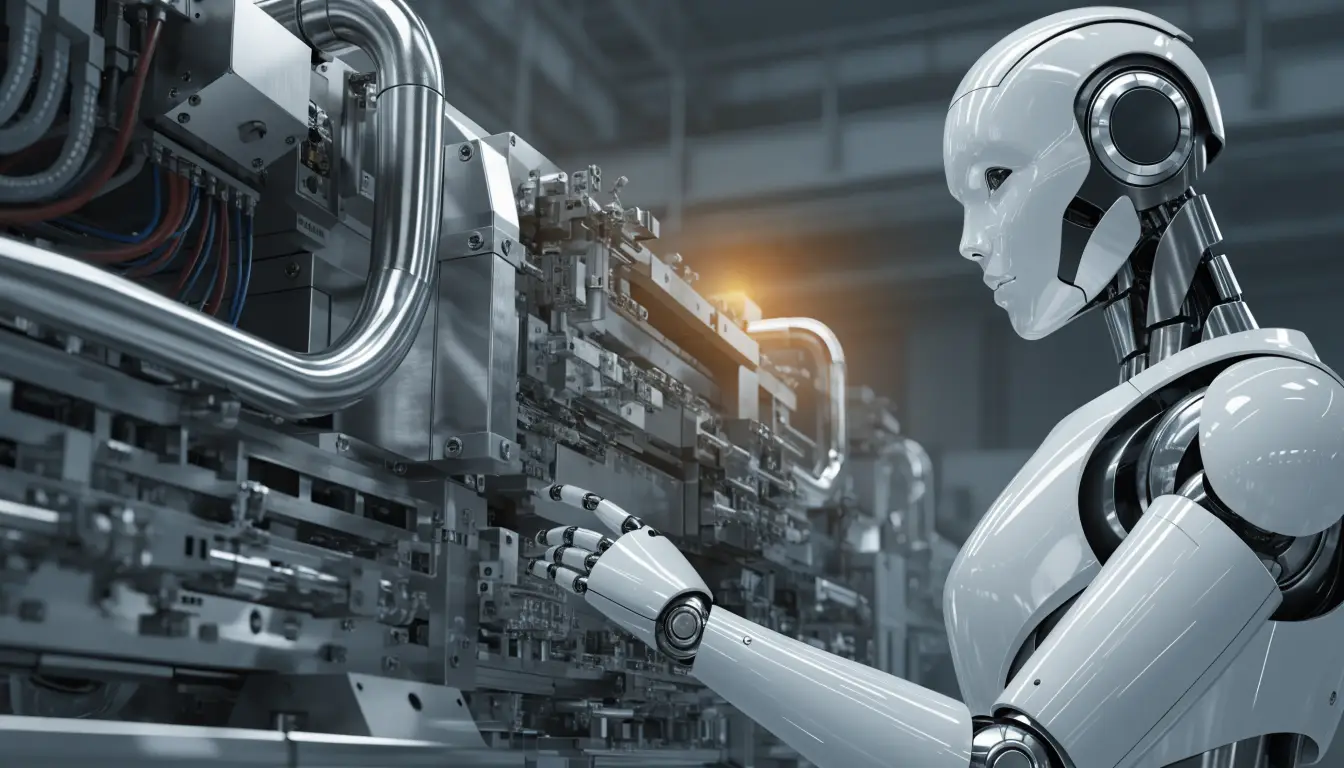
The collaborative robot market in Korea is showing particularly noteworthy growth. According to data from the Korea Association of Robot Industry, the domestic cobot market reached 320 billion won in 2025 and is projected to grow by 28% to 410 billion won in 2026. This is attributed to the government’s ‘Smart Factory Expansion Policy’ and the need for SMEs to address labor shortages. Hyundai Robotics is leading this market growth, reporting a 45% increase in sales to 68 billion won in the fourth quarter of 2025 compared to the same period the previous year. The company is particularly strong in the automotive parts, electronics assembly, and food packaging sectors, holding a 23% share of the domestic cobot market.
The core competitive advantage of collaborative robots is their ability to work alongside humans in the same workspace without safety fences, unlike traditional industrial robots. This is due to the application of torque limitation, speed limitation, and collision detection technologies that comply with ISO 10218-1 and ISO/TS 15066 safety standards. The UR series developed by Denmark’s Universal Robots is a pioneer in these safety technologies, capturing approximately 32% of the global cobot market. The company announced a 22% increase in sales to $800 million in 2025 compared to the previous year. The UR20 model, in particular, offers a payload capacity of 20 kg and a working radius of 1,750 mm, increasing its utilization in automotive assembly lines.
From a technological perspective, the most significant innovation in collaborative robots by 2026 is the introduction of AI-based adaptive control systems. Switzerland’s ABB GoFa series offers the ability to learn work patterns and automatically optimize efficiency through machine learning algorithms. This system achieved an average productivity improvement of 15% and reduced programming time by 60% compared to previous methods. ABB reported $3.3 billion in sales in its robotics division in 2025, with the share of collaborative robots continuously expanding to 18%. The company expects cobot sales to reach $700 million in 2026.
Japan’s FANUC CRX series showcases another technological innovation. By combining its proprietary iRVision system with a Force Sensor, it enables assembly work with a precision of 0.1 mm and can automatically recognize and handle irregularly shaped parts. FANUC announced that the collaborative robot division accounted for $800 million of its total $7.5 billion sales in 2025. Demand for the CRX-10iA model surged among electronics manufacturers, with order volumes increasing by 80% in the second half of 2025 compared to the same period the previous year.
Germany’s KUKA iiwa (intelligent industrial work assistant) series offers flexibility similar to a human arm with its 7-axis joint structure. Each joint is equipped with a torque sensor capable of detecting minute forces below 1 Newton, playing a crucial role in precision assembly work. KUKA reported that collaborative robots accounted for €400 million of its €3.3 billion sales in 2025 and projected growth to €520 million in 2026. The utilization of the iiwa LBR is expanding in the automotive industry, with major manufacturers like BMW and Audi deciding on large-scale adoption.
The rapid growth of the collaborative robot market is significant in that it has substantially lowered the automation entry barriers for SMEs. While the average adoption cost for traditional industrial robots was $200,000 to $500,000, collaborative robots are now accessible at $30,000 to $80,000. Additionally, installation time has been reduced from 6-8 weeks to 2-3 days, allowing SMEs to start automation without much burden. According to a survey by the U.S. Small Business Administration (SBA), the robot adoption rate among manufacturers with fewer than 50 employees surged from 3.2% in 2024 to 7.8% in 2025, with 85% choosing collaborative robots.
Industry-Specific Applications and Performance Analysis
The use of collaborative robots is most prominent in the automotive industry. Hyundai Motor Company announced that it introduced 150 collaborative robots to its Ulsan plant in 2025, improving the efficiency of its engine assembly line by 23%. Particularly, the collaboration with human workers in handling heavy engine parts and precise bolt fastening reduced work time by an average of 35%. Following this project’s success, Hyundai plans to introduce an additional 300 cobots in 2026. The investment is expected to be around 24 billion won, with a return on investment achievable within three years, according to the company.
The adoption of collaborative robots is also accelerating in the electronics manufacturing sector. Samsung Electronics introduced 200 collaborative robots for smartphone assembly at its Suwon plant in 2025, reducing defect rates from 0.8% to 0.3%. The consistent performance of collaborative robots in processes requiring 0.05 mm precision, such as camera module and display assembly, significantly contributed to quality improvement. LG Electronics also installed 80 cobots for home appliance assembly at its Changwon plant, improving production efficiency by 18% and reducing the incidence of musculoskeletal disorders among workers by 40%.
The use of collaborative robots in food manufacturing is also noteworthy. Ottogi introduced 25 collaborative robots for packaging and palletizing at its Anyang plant in 2025, increasing hourly throughput from 2,400 to 3,200 units, a 33% increase. The use of cobots made of stainless steel that meets food safety standards also improved hygiene management. CJ CheilJedang introduced collaborative robots to its Hetbahn production line, improving packaging accuracy to 99.7%, a 2.3 percentage point improvement over manual processes. Based on these achievements, inquiries about the adoption of collaborative robots by domestic food manufacturers increased by 150% in the second half of 2025 compared to the same period the previous year, according to the Korea Association of Robot Industry.
In the medical device manufacturing sector, the precision and cleanliness of collaborative robots are highly valued. Medytox installed 12 collaborative robots capable of operating in aseptic environments on its Botox injection production line, reducing contamination risk by 90%. The use of robots with special coatings that can operate in ISO 14644-1 Class 5 cleanroom environments ensured product quality consistency. This received positive evaluations in the FDA approval process and is expected to help secure competitiveness when entering the U.S. market in 2026.
In logistics and warehouse automation, global logistics companies like Amazon and DHL are adopting collaborative robots on a large scale. Amazon deployed 12,000 collaborative robots in its logistics centers worldwide in 2025, reducing order processing time by an average of 25%. The ‘Robin’ system, in particular, collaborates with human pickers to automatically sort products and transport them to packaging zones. The introduction of this system improved picking efficiency from 180 to 245 items per hour, a 36% increase. Domestically, Coupang introduced 150 collaborative robots to its Gimpo logistics center, expanding its dawn delivery processing capacity by 30%.
Future Prospects and Investment Opportunities
The future of the collaborative robot market is heading towards intelligent automation through integration with AI technology. As of 2026, GPT-based natural language processing technology is beginning to be applied to robot control, ushering in an era where workers can control robots through voice commands. Mobile Industrial Robots (MiR), a subsidiary of the U.S. company Teradyne, has developed a conversational robot control system using the ChatGPT API, aiming for commercialization in the first half of 2026. This system can understand and execute natural language commands such as “Bring 10 units of product A from the second-floor warehouse to the packaging line.”
Market experts predict that the collaborative robot market will grow at an average annual rate of 22% from 2026 to 2030, reaching a market size of $5.8 billion by 2030. The key drivers of this growth are real-time remote control using 5G networks, simulation-based optimization through digital twin technology, and enhanced real-time decision-making capabilities using edge computing. Japan’s OMRON launched a solution integrating these technologies through its ‘i-Automation!’ platform in 2025, recording $200 million in sales in its first year.
From an investment perspective, the valuation of companies related to collaborative robots is continuously rising. Hyundai Robotics’ stock price rose by 85% in 2025 alone, with additional upward momentum in the first quarter of 2026. The company’s 45% sales growth rate and 12.3% improvement in operating profit margin attracted investor interest. Teradyne, the parent company of Universal Robots, also saw its stock price rise by 62% in 2025 due to the strength of its robotics division, with analysts raising the average target price by 15% for 2026.
However, along with market growth, several challenges also exist. First, the shortage of skilled robot engineers is emerging as a serious issue. According to a survey by the Korean Robotics Society, the number of robot-related jobs in Korea is expected to increase from 23,000 in 2025 to 31,000 in 2026, but the available workforce is expected to remain at around 25,000. Second, cybersecurity risks are increasing. As the number of network-connected collaborative robots grows, the potential for exposure to hacking or malware attacks is rising. In response, major manufacturers are expanding investments in security solutions, with the related market expected to grow to $800 million by 2026.
In conclusion, as of 2026, the collaborative robot market is driving the digital transformation of the entire manufacturing industry based on technological maturity and economic viability. By lowering the automation entry barriers for SMEs, it contributes to enhancing the competitiveness of the entire manufacturing ecosystem. Going forward, the integration with AI technology, utilization of 5G networks, and establishment of new safety standards are expected to create a more intelligent and safe human-robot collaboration environment. These changes are anticipated to play a crucial role not only in improving productivity but also in enhancing worker safety and satisfaction, as well as promoting sustainable manufacturing development.
