Smart Factories and Industrial Automation in 2026: The Accelerating Reality of Digital Transformation in Manufacturing
 Editor
As we welcome the new year of 2026, the global manufacturing industry is fully committed to building smart factories amidst an unprecedented wave of digital transformation. According to the latest report by the International Federation of Robotics (IFR), the number of industrial robots installed worldwide in 2025 increased by 23% compared to the previous year, reaching 580,000 units, significantly surpassing pre-COVID-19 levels. Notably, the AI-based collaborative robot (cobot) market is experiencing rapid growth, from $4.5 billion in 2025 to $6.2 billion in 2026. This growth reflects a strategic shift by manufacturers to achieve both flexibility and efficiency, beyond merely increasing automation levels.
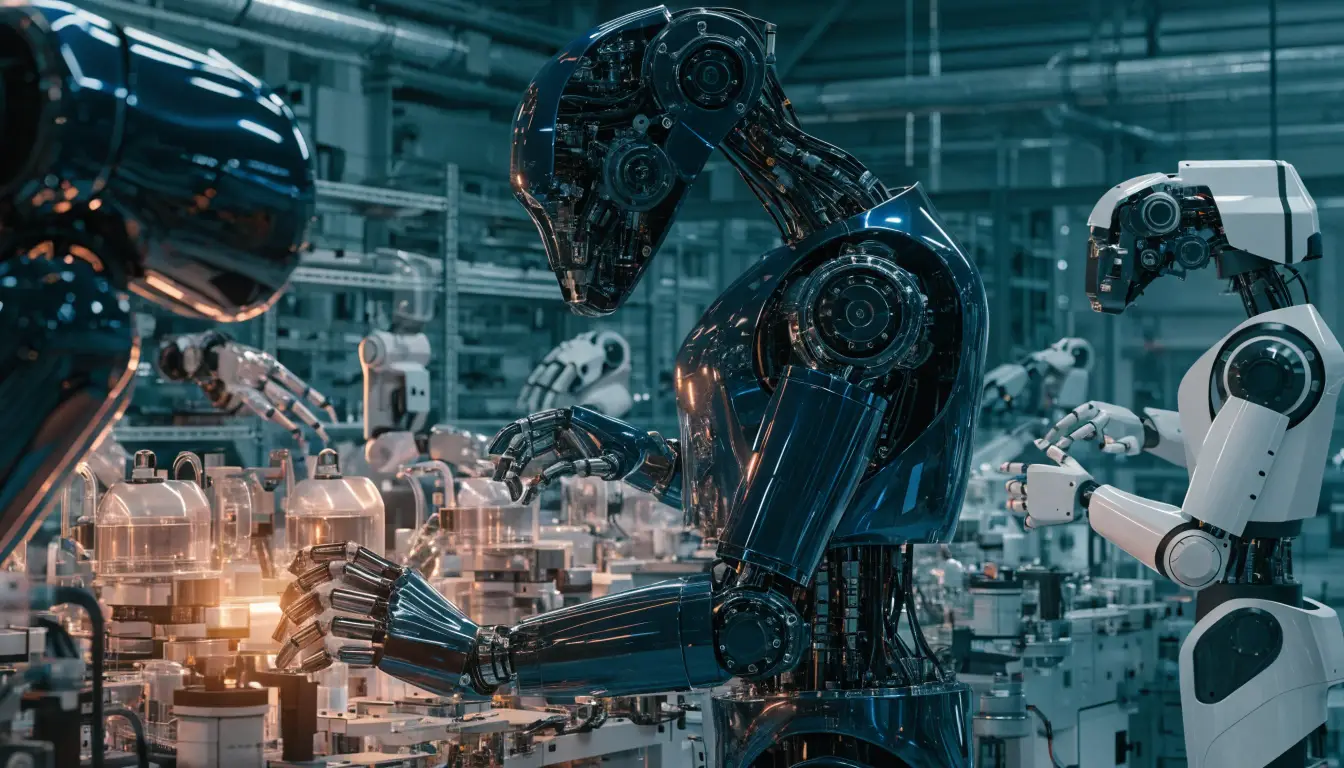
Korea’s manufacturing industry is playing a leading role in this global trend. Samsung Electronics, headquartered in Hwaseong, Gyeonggi-do, introduced AI-based quality management systems across all major production lines from the second half of 2025, reducing defect rates by 35% compared to previous levels. Even more impressive is Samsung’s implementation of predictive maintenance based on real-time data analysis through its self-developed ‘Samsung Smart Factory Platform,’ achieving an equipment operation rate of 97.2%. This significantly exceeds the industry average of 89.3%, showcasing the synergy of Samsung’s technological prowess and operational expertise.
In the field of collaborative robots, Doosan Robotics, headquartered in Pangyo, is gaining attention. The company recorded a 4th quarter revenue of 124.7 billion won in 2025, an 89% increase from the same period the previous year, solidifying its position in the global cobot market. Doosan Robotics’ success lies in its focus on cobot technology that safely collaborates with workers, unlike traditional industrial robots. The company’s ‘M Series’ cobots, capable of handling up to 25kg with a precision of 0.1mm, are applied in various processes, from assembling automotive parts to inspecting electronic products. Currently, Doosan Robotics’ products are used in 47 countries worldwide, with plans to expand annual production capacity to 20,000 units by 2026.
Global Competitive Landscape and Technological Innovation Trends
Examining the global competitive landscape of the smart factory market, Siemens, headquartered in Munich, Germany, and ABB in Zurich, Switzerland, continue to lead the market, but Korean and Japanese companies are rapidly catching up. Siemens reported an 18% increase in revenue from its digital factory division in 2025, reaching 18.7 billion euros, with notable growth in the Asia-Pacific region. Siemens’ core competitiveness lies in providing integrated solutions through its ‘Simatic’ automation platform and ‘MindSphere’ IoT operating system. This platform is currently operational in over 250,000 manufacturing sites worldwide, improving productivity by an average of 22% and reducing energy consumption by 15%.
Meanwhile, ABB is particularly strong in the robotics sector. The company recorded $3.8 billion in revenue from its robotics and discrete automation division in 2025, accounting for approximately 13% of its total revenue. ABB’s differentiating factor is the combination of its AI-based robot control system ‘RobotStudio’ and cloud-based analytics platform ‘ABB Ability.’ ABB’s welding robots are highly recognized for their reliability among automotive manufacturers and are widely adopted in production lines of major automakers like Hyundai, BMW, and Volkswagen. Rockwell Automation, headquartered in Milwaukee, USA, also shows noteworthy performance. The company reported an 8.2 billion dollar revenue in 2025, a 12% increase from the previous year, with digital solutions centered on its ‘FactoryTalk’ software platform accounting for 35% of total sales.
In terms of technological innovation, the application of AI and machine learning in manufacturing is rapidly expanding. In 2025, 78% of global manufacturers adopted AI-based predictive maintenance systems, achieving an average 42% reduction in unplanned downtime. In semiconductor manufacturing, AI-based yield optimization systems have become key technologies. Taiwan’s TSMC announced a 3.2% yield improvement after introducing AI systems in its fabs, translating to approximately $1.5 billion in additional annual revenue. Korea’s SK Hynix also achieved a memory semiconductor yield of 95.8%, the highest in the industry, through AI-based process optimization in its Icheon and Cheongju fabs.
The proliferation of 5G networks is also a major driver accelerating the advancement of smart factories. With ultra-low latency (below 1ms) and ultra-fast communication, 5G acts as a game-changer in industrial automation environments where real-time control is essential. Audi’s Ingolstadt plant in Germany began full-scale operation of a 5G-based wireless manufacturing system in 2025, reducing installation costs by 60% compared to traditional wired connections while achieving greater flexibility. In Korea, Hyundai Motor established a 5G-based smart factory at its Ulsan plant, implementing a real-time collaboration system among welding robots, improving production efficiency by 18%.
Market Segmentation and Industry-Specific Applications
Segmenting the smart factory market by industry, the automotive manufacturing sector accounts for the largest share at 32%, followed by semiconductor and electronics manufacturing at 28%, and chemical and pharmaceutical industries at 15%. The adoption of smart factories in the automotive industry is closely related to the expansion of electric vehicle production. Tesla’s Shanghai Gigafactory has an annual production capacity of 750,000 units and aims to reduce production time per vehicle to 10 seconds through AI-based production optimization systems. Currently, Tesla takes an average of 10.5 hours to produce a Model Y, but plans to reduce this to 8 hours by the end of 2026.
In Korea’s automotive industry, Hyundai Motor Group is leading the smart factory transition. Hyundai Motor established the ‘Hyundai Smart Factory System (HSFS)’ at its Asan plant, integrating AI-based quality inspection, robotic automation, and IoT-based facility management. Following the system’s implementation, defect rates decreased to 0.03%, and energy efficiency improved by 22%. Notably, Hyundai Motor developed a ‘human-robot collaboration line’ utilizing its own collaborative robot technology, enhancing productivity by 35% while ensuring worker safety.
In semiconductor manufacturing, the increasing complexity of extreme ultraviolet (EUV) lithography processes has made AI-based process control essential. Netherlands’ ASML’s EUV equipment, priced over $200 million per unit, requires real-time analysis of thousands of sensor data for optimal operation. Samsung Electronics increased equipment operation rates from 92% to 96% after introducing AI-based EUV process optimization systems at its Pyeongtaek fab, resulting in approximately $800 million in additional annual revenue. SK Hynix operates a similar system at its Icheon M16 fab, achieving world-class yields in memory semiconductor production.
In the chemical industry, smart factory technology that simultaneously pursues safety and efficiency is key. Germany’s BASF introduced AI-based predictive maintenance systems at its Ludwigshafen chemical complex, reducing unplanned downtime by 55%. This system analyzes data from over 15,000 sensors in real-time to detect equipment anomalies in advance. Korea’s SK Innovation operates a similar system at its Ulsan Complex, achieving a 3.2% yield improvement in petrochemical processes, translating to approximately 280 billion won in additional annual revenue.
Smart factory adoption is also accelerating in the food manufacturing industry. Nestlé operates IoT-based quality management systems in 85% of its 400 factories worldwide, reducing product recall rates by 40%. Korea’s CJ CheilJedang introduced an AI-based taste prediction system at its Incheon plant, reducing new product development time from six months to three months. This system learns from thousands of taste data to predict consumer preferences and suggest optimal recipes.
The smart factory market is expected to maintain strong growth momentum through 2026. According to the latest report by global market research firm McKinsey, the global smart factory market size is projected to reach $350 billion in 2026, a 15% increase from 2025. The Asia-Pacific region is expected to emerge as the largest market, accounting for 45% of the total market. Korea is positioned as the third-largest market in this region, following China and Japan, with a market size projected to reach $28 billion by 2026. This growth is attributed to the combination of the government’s K-Digital New Deal policy and proactive digital transformation investments by companies. In the future, smart factory technology will evolve beyond simple automation to pursue sustainability and carbon neutrality, with Korean companies’ technological innovation capabilities expected to be a key factor in global competitiveness.
This analysis is based on publicly available market data and corporate announcements, and additional due diligence and expert consultation are recommended before making investment decisions. Forecasts may change depending on the pace of technological development and market changes.
