Tesla’s Optimus Robot Self-Replication Plan: Billion-Unit Production Dreams Meet Manufacturing Reality
 Editor
Elon Musk has made another bold claim that’s got the robotics industry buzzing: Tesla’s Optimus humanoid robots could eventually self-replicate and produce up to one billion units per year. According to the article from Global Economic, this isn’t just typical Musk hyperbole – it’s part of a broader vision for how Tesla plans to revolutionize manufacturing through autonomous robotics. The implications are staggering, but honestly, the technical and economic realities make this one of the most fascinating – and questionable – predictions in modern robotics.
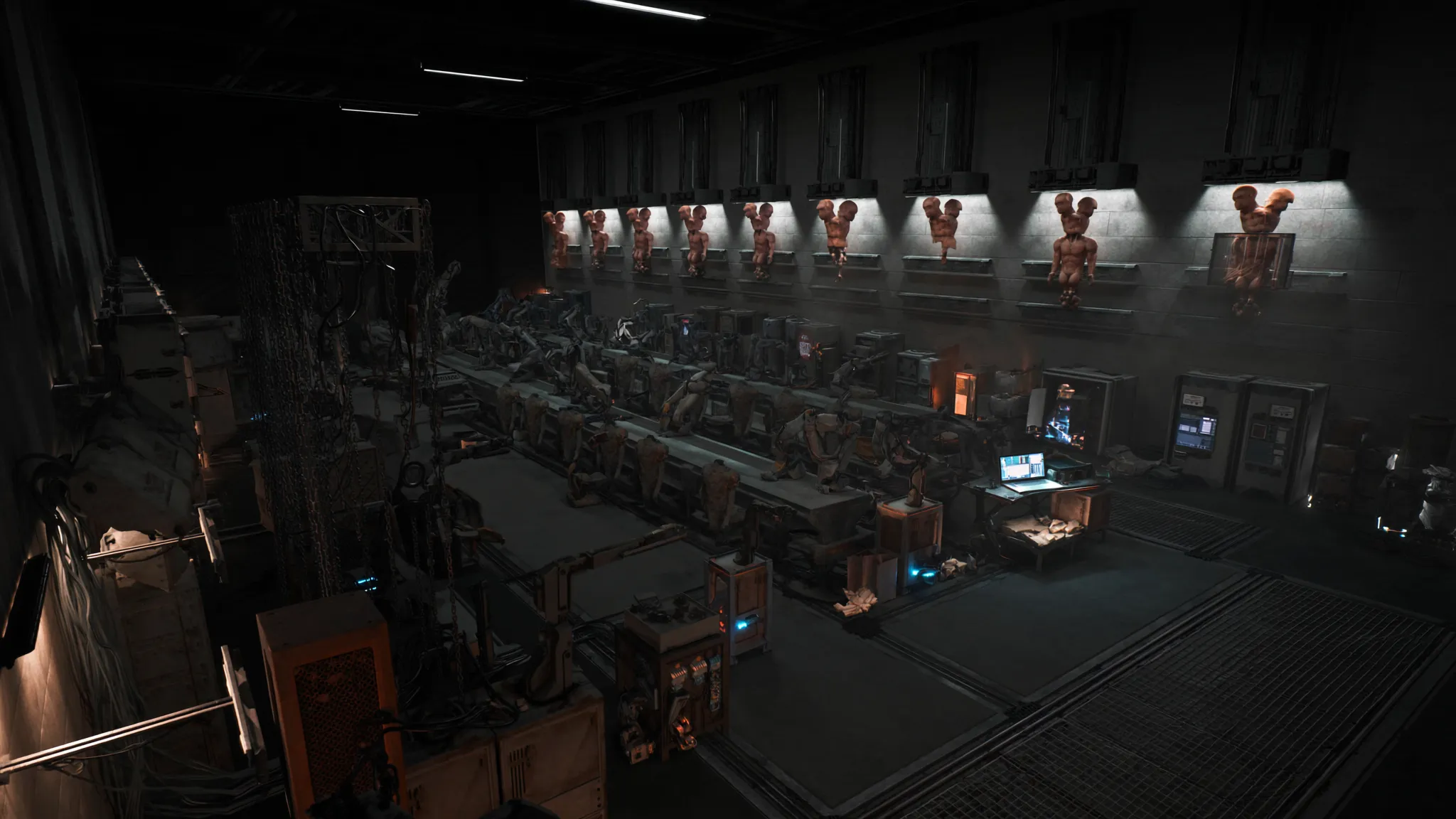
The self-replication concept isn’t entirely science fiction. What Musk appears to be describing is robots that can manufacture other robots, essentially creating a fully automated production line where Optimus units assemble, test, and deploy new Optimus units. This would theoretically eliminate human labor from the manufacturing process while exponentially scaling production capacity. The article suggests this could happen through iterative improvements in the robots’ dexterity, AI capabilities, and manufacturing precision.
But let’s break down what billion-unit annual production actually means. Tesla produced approximately 1.8 million vehicles in 2023, making it one of the world’s largest automakers. A billion robots per year would represent a 555x increase over Tesla’s current manufacturing output. Even if we assume robots are simpler to manufacture than cars (which is debatable), the raw materials, supply chain logistics, and quality control systems required would dwarf anything currently existing in manufacturing.
The current humanoid robotics market tells a different story about production scalability. Boston Dynamics, headquartered in Waltham, Massachusetts, has been developing advanced robots for over three decades and produces perhaps hundreds of units annually across all product lines. Honda’s ASIMO program, running since 2000, never achieved commercial production despite billions in investment from the Hamamatsu-based company. Even China’s aggressive push into robotics, with companies like UBTech producing consumer robots, measures annual output in thousands, not millions.
Manufacturing Economics and Technical Barriers
The economics of robot self-replication face several fundamental challenges that the article doesn’t fully address. First, the precision manufacturing required for actuators, sensors, and processing units currently relies on specialized semiconductor fabrication facilities and precision machining that robots simply cannot perform. Tesla’s Optimus uses custom chips, advanced motors, and sophisticated sensor arrays – components that require billion-dollar fabs and specialized materials processing.
Consider the supply chain complexity: a single humanoid robot contains thousands of components sourced globally. The rare earth elements for motors come primarily from China, semiconductor substrates from Taiwan and South Korea, and precision bearings from Japan and Germany. Self-replicating robots would need to either maintain these complex global supply chains or develop entirely new manufacturing processes for every component – a challenge that makes Tesla’s Full Self-Driving timeline look conservative.
The article mentions Tesla’s current Optimus development timeline, but production realities suggest significant hurdles ahead. Tesla’s Fremont factory, with 5.3 million square feet, produces about 600,000 vehicles annually. To manufacture a billion robots yearly, Tesla would need manufacturing space equivalent to roughly 870 Fremont factories, assuming similar space efficiency. That’s approximately 4.6 billion square feet of manufacturing space – larger than the entire city of Boston.
Financial analysts have estimated current Optimus production costs at $20,000-30,000 per unit, based on Tesla’s component costs and manufacturing processes. At billion-unit scale, even with dramatic cost reductions, we’re discussing a $10-20 trillion annual production value – roughly equivalent to the entire U.S. GDP. The capital requirements for such scaling would exceed the market capitalization of most countries’ entire stock markets.
What’s particularly interesting is how this compares to other automation approaches. Traditional industrial robotics companies like ABB (headquartered in Zurich) and KUKA (based in Augsburg, Germany) have focused on specialized, task-specific robots that excel in narrow applications. Their annual production volumes in the hundreds of thousands represent mature, profitable businesses built over decades. Tesla’s approach of general-purpose humanoid robots faces the classic generalist versus specialist trade-off that has historically favored specialized solutions in manufacturing.
Market Dynamics and Competitive Landscape
The broader humanoid robotics market is heating up significantly as we approach 2026. SoftBank’s Pepper robot, despite limited commercial success, demonstrated consumer appetite for interactive humanoids, while Boston Dynamics’ Atlas continues pushing the boundaries of mobility and dexterity. However, none of these players are targeting the mass-market production volumes Musk envisions.
More importantly, the article’s billion-unit projection assumes unlimited market demand, which seems questionable given current economic conditions. The global automotive market, after decades of growth, sells roughly 90 million vehicles annually. For comparison, the entire global smartphone market – arguably the most successful consumer technology ever – peaks at around 1.4 billion units yearly. Musk’s robot production target would require creating demand equivalent to 70% of global smartphone sales, but for products costing 10-50 times more.
The competitive implications are fascinating to consider. If Tesla actually achieved self-replicating robot production, it would fundamentally reshape not just robotics but manufacturing itself. Traditional manufacturers like General Motors, Toyota, and Samsung would face existential challenges if Tesla could produce goods using essentially free robot labor. However, this assumes Tesla can solve problems that have stumped the manufacturing industry for decades.
NVIDIA’s role in this ecosystem cannot be understated. The Santa Clara-based company’s AI chips power most advanced robotics applications, including Tesla’s Optimus development. NVIDIA’s robotics revenue grew 210% year-over-year in Q3 2025, reaching $1.3 billion, largely driven by humanoid robotics demand. If Tesla’s self-replication vision materializes, NVIDIA could see unprecedented demand for its Jetson and Grace processors, potentially adding tens of billions to their annual revenue.
The geopolitical implications are equally significant. China has invested heavily in robotics manufacturing through companies like BYD and state-backed initiatives, while the European Union’s Horizon Europe program allocated €15 billion for robotics research through 2027. Tesla’s American-based self-replicating robot production could shift global manufacturing competitiveness, assuming the technical challenges prove surmountable.
Looking at Tesla’s track record provides mixed signals about the feasibility of these claims. The company successfully scaled electric vehicle production from zero to nearly two million units annually, demonstrating impressive manufacturing capabilities. However, Tesla’s Full Self-Driving timeline has consistently slipped, with promises of coast-to-coast autonomous driving dating back to 2017 still unfulfilled. The complexity of robot self-replication likely exceeds even autonomous driving challenges.
What’s most intriguing about Musk’s latest prediction is the timeline implications. The article doesn’t specify when billion-unit production might be achievable, but Tesla’s current Optimus development suggests commercial deployment is still 2-3 years away. Scaling from prototype to billion-unit production typically requires 10-15 years in manufacturing, even with revolutionary approaches. This puts Musk’s vision in the 2035-2040 timeframe – coincidentally aligning with many AI researchers’ predictions for artificial general intelligence.
The investment community’s reaction has been characteristically mixed. Tesla’s stock has shown resilience despite repeated timeline misses, suggesting investors either believe in Musk’s long-term vision or view Tesla’s other businesses as sufficiently valuable. However, the capital requirements for billion-unit robot production would likely require external funding beyond Tesla’s current capabilities, potentially diluting existing shareholders or requiring unprecedented debt financing.
Perhaps the most realistic interpretation of Musk’s claims is as a North Star vision rather than a near-term production target. Tesla’s approach to manufacturing has consistently pushed industry boundaries, from their use of massive casting machines to integrated battery production. Self-replicating robots represent the logical extreme of this automation philosophy – even if the billion-unit target proves wildly optimistic, the underlying technology development could revolutionize manufacturing in more modest ways.
As we move deeper into 2025, the humanoid robotics industry stands at a critical inflection point. Tesla’s bold claims, whether achievable or not, are driving unprecedented investment and innovation across the sector. The question isn’t necessarily whether Tesla will produce a billion robots annually, but rather how their ambitious vision will reshape manufacturing, labor markets, and the global economy in ways we’re only beginning to understand.
This post was written after reading 머스크 “옵티머스 로봇, 자기 복제로 연 10억대 생산 가능” . I’ve added my own analysis and perspective.
Disclaimer: This blog is not a news outlet. The content represents the author’s personal views. Investment decisions are the sole responsibility of the investor, and we assume no liability for any losses incurred based on this content.
