The Rapid Evolution of the Collaborative Robot Market: A New Paradigm in Manufacturing Automation by 2025
 Editor
Explosive Growth and New Drivers in the Cobot Market
As of November 2025, the collaborative robot (cobot) market is experiencing unprecedented growth. According to the latest report by the International Federation of Robotics (IFR), the global cobot market size increased by 15.3% from $16.5 billion in 2024 to $19 billion in 2025, and it is predicted to grow at an average annual rate of 18.7% to reach $34 billion by 2028. This rapid growth is fueled by the increasing automation needs of small and medium-sized manufacturers, advancements in AI-based safety technologies, and the use of cobots as a practical solution to labor shortages.
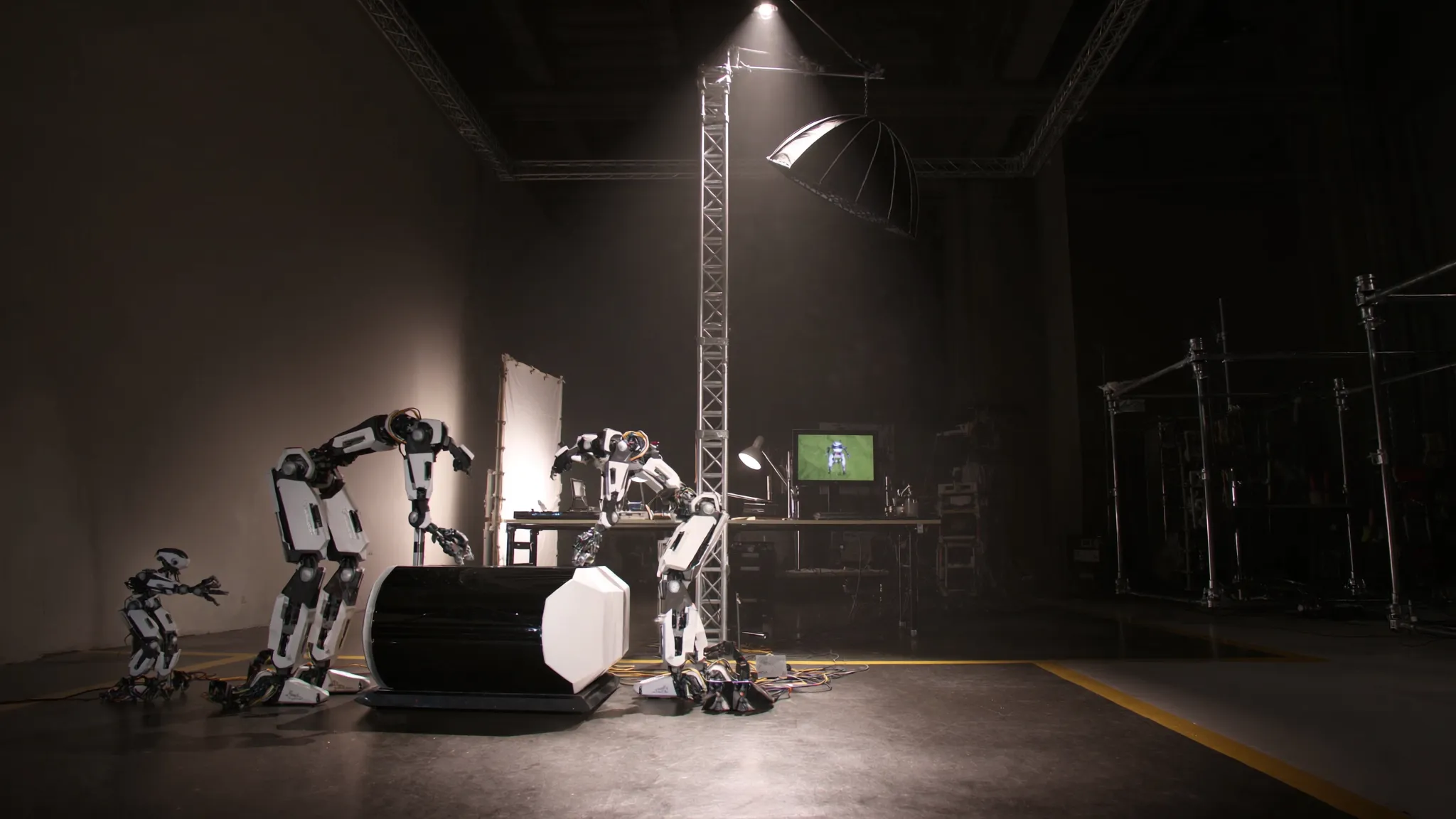
Notably, the regional growth patterns of the cobot market are significant. The Asia-Pacific region accounts for 42.8% of the total market, with China holding a 28.3% share, South Korea 7.2%, and Japan 4.8%. The North American market holds 31.5%, and the European market 23.7%. In South Korea, domestic companies like Hyundai Robotics (Seoul) and Doosan Robotics (Seongnam) are expanding their presence in the global market. Specifically, Hyundai Robotics recorded a 23.4% increase in cobot sales in Q3 2025 compared to the same period last year, reaching 124.7 billion won.
The most critical factor driving the growth of the cobot market is the rapid adoption by small and medium-sized manufacturers. According to McKinsey & Company’s 2025 manufacturing automation report, 34.2% of small and medium-sized manufacturers with 50-500 employees are currently operating cobots, a significant increase from 18.7% in 2023. The main reasons these companies choose cobots are the relatively low implementation costs and high flexibility compared to traditional industrial robots. For instance, the latest UR20 model from Universal Robots, based in Odense, Denmark, can be implemented for an average of $45,000, including installation and programming costs, which is about 40% cheaper than comparable industrial robot systems.
From a technological perspective, the most significant innovation in the cobot market in 2025 is the integration of AI-based safety and learning systems. The GoFa series from ABB, based in Zurich, Switzerland, is equipped with predictive safety systems using machine learning algorithms, enhancing the ability to detect and avoid collisions with humans to 99.7%. FANUC’s CRX series, based in Yamanashi, Japan, has also introduced adaptive grip technology combining vision systems and force sensors, allowing it to automatically recognize and manipulate objects of various shapes and materials with appropriate force. These technological advancements are expanding the use of cobots from simple repetitive tasks to precision assembly, quality inspection, and even creative tasks.
In terms of market competition, Universal Robots remains the leader in the global cobot market with a 32.1% market share. However, traditional industrial robot manufacturers like ABB (18.7%), FANUC (12.3%), and KUKA (9.8%) based in Augsburg, Germany, are entering the cobot market, intensifying competition. Notably, ABB recorded $1.4 billion in cobot sales in the first half of 2025, a 28.4% increase from the same period last year, continuously expanding its market share. Korean companies are also actively participating in this competition, with Hyundai Robotics achieving a 15.2% domestic market share with its self-developed H-Series cobots and accelerating its entry into the North American and European markets.
Industry Applications and Performance Analysis
The use of cobots in the automotive industry is considered one of the most mature examples. Volkswagen, based in Wolfsburg, Germany, has introduced a total of 1,247 cobots in 27 production plants worldwide since 2024 to collaborate with human workers on assembly lines. As a result of this project, assembly accuracy improved from 99.2% to 99.7%, and the incidence of musculoskeletal disorders among workers decreased by 34%. More importantly, productivity increased, reducing the assembly time per vehicle by an average of 12 minutes, resulting in an annual cost saving of approximately $230 million.
The adoption of cobots is also rapidly expanding in the electronics manufacturing sector. Foxconn, based in Taipei, Taiwan, has deployed 1,850 ABB YuMi cobots on its iPhone assembly lines to perform precision component assembly tasks. These cobots can assemble micro connectors with a precision of 0.02mm and operate continuously for 24 hours, improving production efficiency by 47% compared to previous methods. Notably, the defect rate has significantly decreased from 3.2% to 0.8% due to the introduction of cobots, saving $150 million annually in quality costs.
In the medical device manufacturing sector, the use of cobots is also noteworthy. Boston Scientific, based in Boston, Massachusetts, has introduced 45 Universal Robots UR10e models into its heart stent manufacturing process. These cobots perform precision assembly and packaging tasks in sterile environments according to FDA regulations, ensuring 10 times higher precision and 100% consistent quality compared to human workers. As a result, product approval times have been reduced by an average of three months, and production costs have decreased by 28%.
The role of cobots is expanding in the logistics and warehouse automation sector as well. Amazon, based in Seattle, USA, is operating over 6,200 cobots in its global logistics centers as of 2025, with many being FANUC’s CRX-10iA models. These cobots collaborate with human pickers to sort and pack products, increasing hourly throughput by 65% compared to previous methods. Additionally, they have reduced the average walking distance of workers by 40%, significantly reducing fatigue, leading to improved employee satisfaction and reduced turnover rates.
The adoption of cobots in the food processing industry is also accelerating. Unilever, based in Eindhoven, Netherlands, has introduced ABB’s IRB 14000 cobot series into its ice cream packaging line to automate packaging material supply and product placement tasks. This system, capable of processing 3,500 products per hour while complying with food safety regulations, has improved processing speed by 85% compared to manual operations. Furthermore, it has reduced packaging defect rates to 0.3%, achieving a 60% reduction in annual quality-related losses.
Market Outlook and Investment Trends
Investment in the cobot sector by venture capital and private equity has significantly increased in 2025. According to CB Insights data, global investment in cobot-related startups reached $1.8 billion in the first three quarters of 2025, a 42% increase from the same period last year. The company receiving the largest investment was Agility Robotics, based in San Francisco, California, which raised $150 million in a Series C round. This company has developed the humanoid cobot ‘Digit,’ providing solutions for collaboration with humans in warehouses and logistics centers.
Active investment is also continuing in the Asian region. CloudMinds, based in Beijing, China, secured $80 million in investment for its cloud-based cobot solutions utilizing 5G communication technology, while Preferred Networks, based in Tokyo, Japan, raised $60 million for its AI-based robot learning platform. In South Korea, Rainbow Robotics received 30 billion won in Series B funding to accelerate the development of collaborative robot technology.
Major corporations are also active in M&A activities. In September 2025, Siemens, based in Germany, announced the acquisition of Wandelbots, a U.S. cobot software specialist, for $200 million. Through this acquisition, Siemens has secured intuitive software technology that significantly reduces the complexity of cobot programming. Similarly, ABB acquired the cobot division of COMAU, an Italian collaborative robot specialist, for $120 million in June 2025, strengthening its position in the European market.
Government policy support also plays a crucial role in market growth. The South Korean government announced that as part of the ‘Smart Manufacturing 3.0 Strategy,’ it will provide a total of 1.2 trillion won in support for the adoption of cobots by small and medium-sized manufacturers from 2025 to 2027. This program is expected to enable approximately 3,500 small and medium-sized enterprises to adopt cobots. The German government is also expanding tax benefits for companies adopting cobots as part of the ‘Industrie 4.0’ program extension and has allocated a total of 1.5 billion euros in support funds.
In the United States, the Biden administration is allocating $800 million annually in federal budget for cobot technology development under the ‘Advanced Manufacturing Promotion Act.’ Tax benefits and low-interest loan programs are being operated to support the adoption of cobots by small and medium-sized manufacturers, with approximately 12,000 SMEs expected to benefit from these incentives in 2025. The Chinese government has also designated cobot technology as a key task in the ‘Made in China 2025’ strategy, allocating a total of 20 billion yuan in R&D budget over the next five years.
However, with the rapid growth of the cobot market, several challenges are also emerging. One of the biggest issues is the shortage of skilled robot engineers and programmers. According to the International Federation of Robotics, there is currently a global shortage of approximately 85,000 robot specialists, which is acting as a major bottleneck in the spread of cobot adoption. In response, governments and companies worldwide are expanding robot education programs, with Germany announcing the establishment of cobot specialist courses at 500 technical universities nationwide starting in 2025.
Cybersecurity issues are also emerging as a significant challenge. As cobots become network-connected, enabling remote monitoring and control, concerns about hacking and malware attacks are increasing. In the first half of 2025 alone, cases of cyberattacks related to cobots increased by 67% compared to the same period last year, with 23% resulting in actual production disruptions. In response, cobot manufacturers are allocating an average of 15% of their R&D budgets to enhance security features, introducing blockchain-based authentication systems and AI-based anomaly detection technologies.
As of the end of 2025, the cobot market is evaluated to have entered a full-fledged mainstream phase as both technological maturity and economic feasibility are secured. It is expected to continue growing at an average annual rate of over 18% for the next 3-5 years, with accelerated adoption anticipated particularly in small and medium-sized manufacturers and service sectors. This growth is driving a paradigm shift in manufacturing, ushering in an era where human-robot collaboration becomes the new standard. For investors and companies, positioning in this changing market and securing technological capabilities will be key factors determining future competitiveness.
This analysis is for informational purposes only and should not be interpreted as investment advice or recommendations. All investment decisions should be made at the discretion and responsibility of individual investors.
