The Rapid Growth of the Cobot Market: A New Paradigm in Manufacturing Automation
 Editor
Explosive Growth of the Cobot Market
As of November 2025, the collaborative robots (cobots) market is experiencing unprecedented growth, marking a new turning point in manufacturing automation. According to global market research firm ABI Research, the cobot market size is projected to grow from $1.8 billion in 2024 to $11 billion by 2030, with an average annual growth rate of 35.2%. This figure significantly exceeds the overall industrial robot market growth rate of 12.3%, indicating that cobots are becoming mainstream automation solutions beyond a mere niche market.
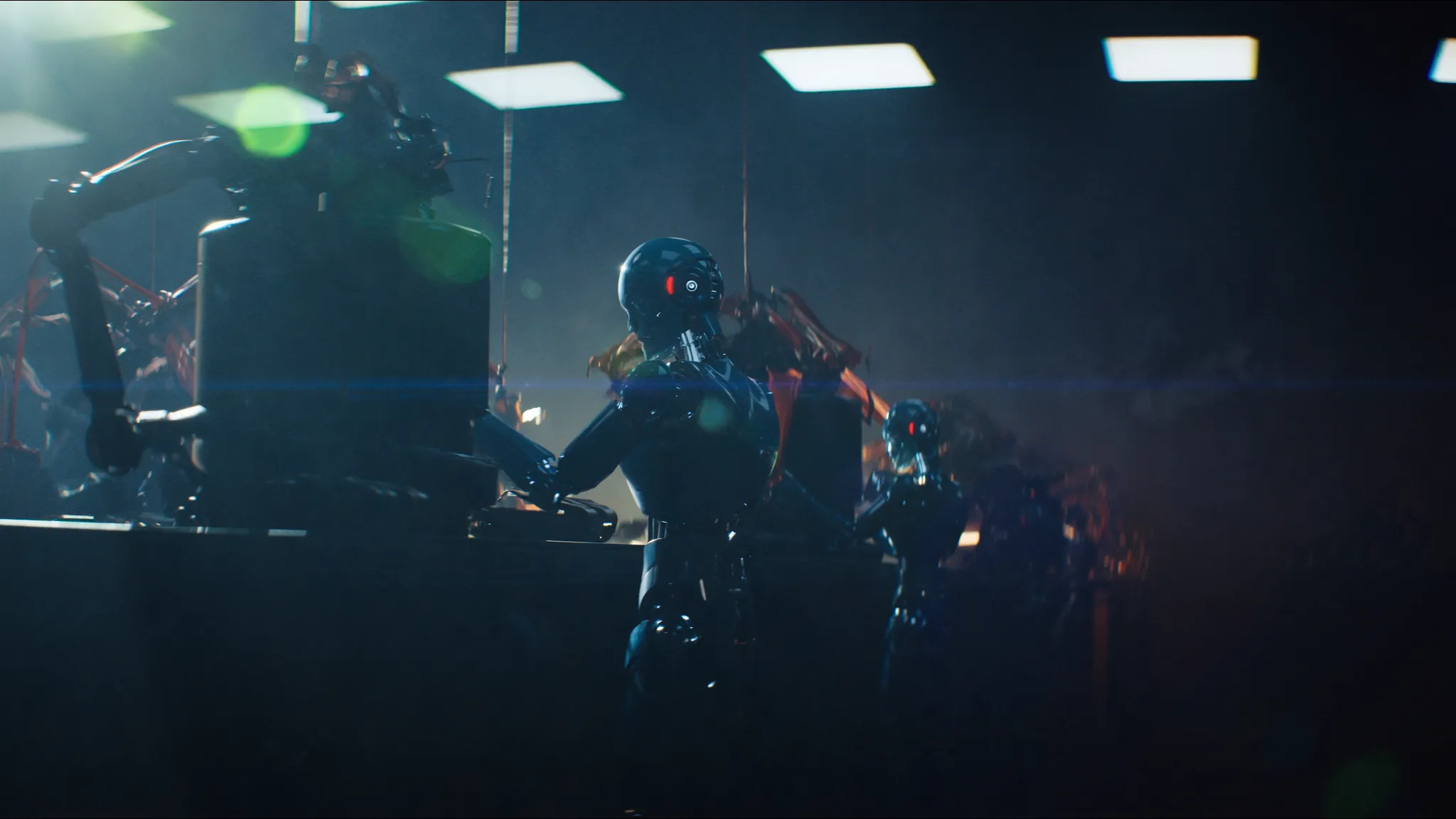
The key driver of this growth lies in the unique characteristics of cobots. While traditional industrial robots operate independently within safety fences, cobots are designed to safely collaborate with human workers in the same space. Since Universal Robots, headquartered in Odense, Denmark, first commercialized cobots in 2008, the field has experienced continuous technological innovation and market expansion. Particularly since 2023, advancements in AI technology have accelerated the intelligence of cobots, enabling them to perform complex assembly, inspection, and packaging tasks beyond simple repetitive work.
In terms of market segmentation, the automotive industry accounts for 32% of the total cobot market, establishing itself as the largest application field. Traditional industrial robot manufacturers like KUKA in Augsburg, Germany, and ABB in Zurich, Switzerland, are expanding their cobot lineups significantly and entering the market competition. KUKA’s LBR iisy series has recorded a monthly sales growth rate of over 15% since its launch in 2024, while ABB’s GoFa and SWIFTI series are also showing strong growth in the European and North American markets.
The cobot boom is also evident in the Korean market. Hyundai Robotics announced that its cobot sales in the third quarter of 2024 increased by 87% year-on-year, reaching 14.2 billion won. In particular, the company’s YL012 model, which supports a payload of 12 kg, is attracting interest from small and medium-sized manufacturers with a price 30% lower than existing products. The domestic cobot market is estimated to be worth approximately 280 billion won in 2024 and is expected to grow at an average annual rate of 28% until 2027, according to the Korea Institute for Robot Industry Advancement.
Technological Innovation and Enhanced Safety
The core competitiveness of cobots lies in their safety and ease of use. While traditional industrial robots operate only within safety fences according to ISO 10218 standards, cobots comply with ISO/TS 15066 standards, allowing direct interaction with humans. To achieve this, cobots are equipped with various safety features, such as collision detection through force/torque sensors, speed and separation monitoring, and safety stop functions. For example, Universal Robots’ UR20 model limits contact force to below 150N, minimizing the risk of injury in the event of a collision with humans.
Recent technological advancements are focusing on the intelligence of cobots. With the integration of computer vision and AI technology, cobots now possess visual recognition capabilities. FANUC’s CRX series, headquartered in Yamanashi Prefecture, Japan, can automatically recognize and adapt to the position and orientation of parts through an embedded vision system. This represents a shift from the traditional method of following pre-programmed paths to implementing truly ‘intelligent’ robots that adapt to the work environment in real-time.
Innovations in programming methods are also noteworthy. While traditional industrial robots require complex coding knowledge, current cobots support intuitive teaching methods. The ‘hand guiding’ method, where operators move the robot arm directly to teach desired actions, is a prime example. ABB’s Wizard Easy Programming software allows non-experts to complete basic robot programming within 30 minutes through a drag-and-drop interface. This significantly lowers the barriers to robot adoption for small and medium-sized enterprises.
Advancements in sensor technology also contribute significantly to the performance enhancement of cobots. The latest cobots are equipped with multi-sensor systems, including six-axis force/torque sensors, proximity sensors, and joint torque sensors, to precisely detect their surroundings. Hyundai Robotics’ new H-Series offers a force detection accuracy of 0.1N, demonstrating excellent performance even in precision assembly tasks. Additionally, cloud-based data analysis is gradually becoming standardized, allowing robots to learn and optimize their work patterns.
Industry Applications and Market Trends
The use of cobots in the automotive industry is at its most mature stage. At Hyundai Motor’s Ulsan plant, 32 Hyundai Robotics cobots were introduced to the engine assembly line in the second half of 2024, improving work efficiency by 23%. In particular, cobots apply precise torque in repetitive tasks such as bolt fastening, allowing human workers to focus on quality inspections and handling exceptions. This is considered a typical example of the core value of ‘human-robot collaboration’ offered by cobots.
The adoption of cobots is also rapidly expanding in the electronics manufacturing industry. Samsung Electronics’ Suwon plant added 150 Universal Robots UR10e models to its smartphone assembly process in 2024. These robots accurately place small components with a precision of 0.03mm, improving productivity by 35% compared to before. More importantly, they reduced the incidence of repetitive strain injuries (RSI) among workers by 85%. This demonstrates that cobots can contribute not only as tools for productivity improvement but also to enhancing worker health and welfare.
The use of cobots is also increasing in the medical device manufacturing sector. German medical device manufacturer B. Braun introduced KUKA’s LBR Med cobots to its syringe and catheter production lines, implementing automation in sterile environments certified by the FDA and CE. This system provides ten times the precision of human workers while allowing immediate intervention by operators when necessary. It is evaluated as a solution that meets the high-quality standards and flexibility required in medical device manufacturing.
In the logistics and warehouse automation sector, cobots are presenting new possibilities. Shopify, a competitor of Amazon in the U.S., began introducing a cobot-based picking system to its order fulfillment centers at the end of 2024. This system operates by having cobots accurately pick lightweight items while human workers handle heavier goods. Initial test results showed a 40% increase in hourly processing capacity and a 65% reduction in misdelivery rates, according to Shopify.
The adoption of cobots in the small and medium-sized enterprise market is also accelerating. Through the ‘Smart Factory Expansion Project’ conducted by Korea’s Ministry of SMEs and Startups, approximately 1,200 small and medium-sized manufacturers introduced cobots in 2024 alone. The average investment cost is 85 million won per unit, which is 60% cheaper than traditional industrial robot systems. The payback period has also been shortened to an average of 18 months, greatly improving accessibility for SMEs. For instance, Daesung Precision Co., Ltd., an auto parts manufacturer in Siheung, Gyeonggi Province, reported a 45% increase in production and a resolution to the skilled welder shortage problem after introducing four Hyundai Robotics cobots to its welding process.
The competitive landscape in the global market is also unfolding interestingly. Universal Robots still maintains its lead with approximately 47% market share of the overall cobot market, but Chinese companies are rapidly catching up. Doosan Robotics China, headquartered in Shanghai, is growing rapidly in the Asian market based on price competitiveness, capturing 23% of the Chinese cobot market as of 2024. Meanwhile, Japan’s FANUC is strong in the high-precision manufacturing sector, holding a dominant position, particularly in semiconductor and electronic component manufacturing.
The future outlook for the cobot market is very bright. As the issues of an aging population and skilled labor shortages intensify globally, the demand for cobots is expected to continue increasing. With the advancement of AI and 5G technologies, more intelligent and responsive cobots are expected to emerge, pioneering new application fields that are currently difficult to imagine. For investors, companies at the forefront of these technological innovations, especially those with differentiated technology and market positions, are analyzed to provide long-term growth drivers.
