The Rapid Growth of the Collaborative Robot (Cobot) Market and the Shift in Manufacturing Automation Paradigm
 Editor
Explosive Growth of the Collaborative Robot Market and Changes in the Industrial Landscape
As of January 2026, the global collaborative robot (cobot) market is experiencing unprecedented growth, fundamentally altering the paradigm of manufacturing automation. According to the latest report by the International Federation of Robotics (IFR), the global cobot market size reached $7.8 billion in 2025 and is projected to grow at a compound annual growth rate (CAGR) of 21.8% to reach $24 billion by 2030. This significantly surpasses the growth rate of the overall industrial robot market, which stands at 8.2%, indicating that cobots are becoming mainstream in manufacturing automation beyond just a niche market.
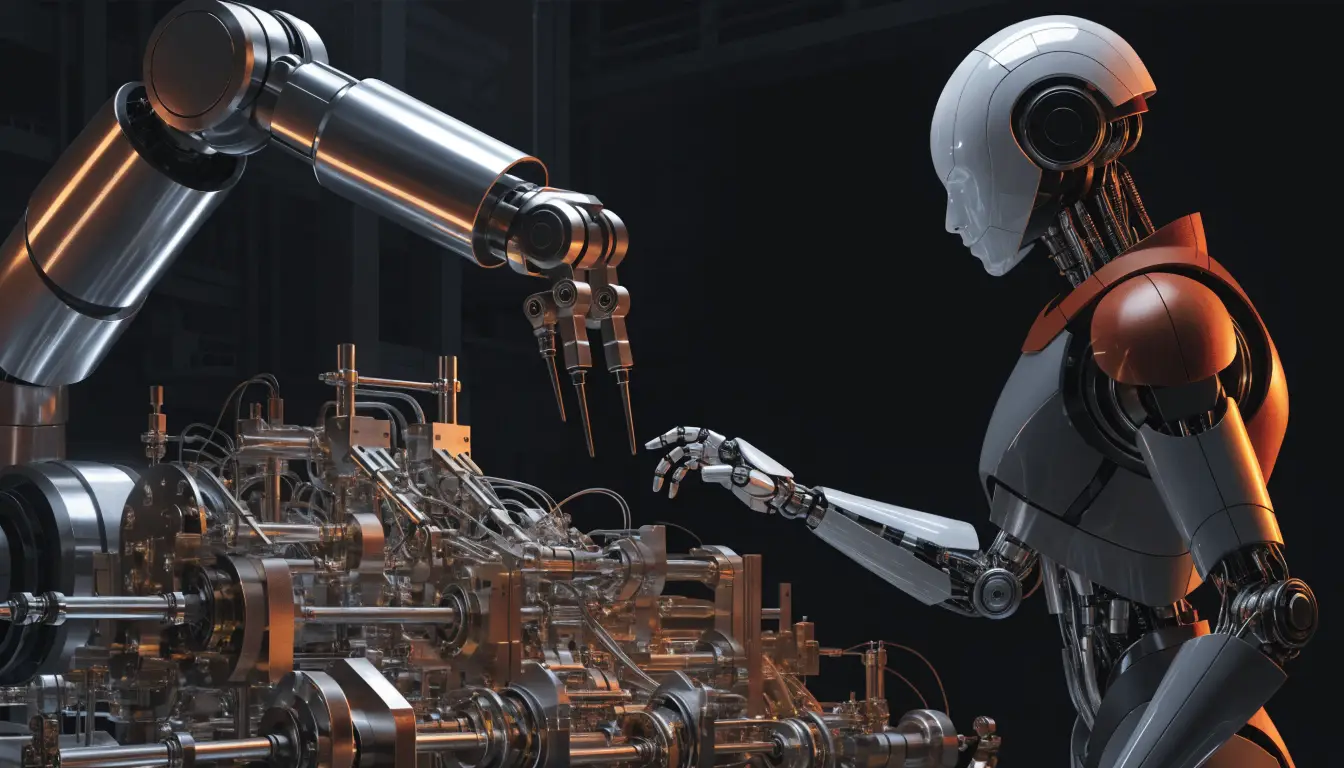
Notably, the growth momentum of the cobot market is spreading from large corporations to small and medium-sized enterprises. According to McKinsey & Company’s fourth-quarter 2025 survey, the adoption rate of cobots among manufacturers with fewer than 500 employees increased by 47% compared to the previous year, with the average return on investment (ROI) for these companies reduced to 18 months. Data released by Denmark’s Universal Robots in 2024 showed that small and medium-sized enterprise customers accounted for 62% of their total, a significant increase from 38% three years prior.
The adoption of cobots is also accelerating in the Korean market. According to 2025 statistics from the Korea Robot Industry Association, the domestic cobot market size grew by 34% year-on-year to 124 billion won, with notable increases in adoption in the automotive parts, electronics, and food processing sectors. Hyundai Robotics recorded a 52% year-on-year increase in cobot sales in the fourth quarter of 2025, reaching 38 billion won, maintaining its number one market share in the domestic cobot market. The company announced plans to launch the next-generation AI-based cobot ‘H-Series 2.0’ in the first half of 2026.
One of the key drivers of the cobot market’s growth is the significant improvement in price competitiveness alongside technological advancements. As of 2026, the average selling price of major cobot manufacturers is around $45,000 for a 10kg payload, a decrease of about 30% compared to five years ago. Simultaneously, work accuracy has improved to within ±0.1mm, and safety features and user convenience have been greatly enhanced. These technological advancements have laid the foundation for cobots to expand beyond simple repetitive tasks to more complex operations such as precision assembly, quality inspection, and packaging.
New Possibilities Created by AI Integration and Technological Innovation
The integration of artificial intelligence (AI) technology with cobots, which began in earnest in the second half of 2025, is being hailed as a game-changer in the industry. Next-generation cobots, integrating computer vision, machine learning, and natural language processing technologies, have reached a level where they can perform real-time learning and adaptation beyond pre-programmed tasks. Germany’s KUKA announced that their ‘LBR iisy AI’ model, launched in September 2025, is equipped with a GPT-based natural language interface, allowing operators to set complex tasks using voice commands alone.
Switzerland’s ABB revealed in their fourth-quarter 2025 earnings report that orders for their AI-based cobot ‘GoFa CRB 15000AI’ surpassed 12,000 units within six months of launch. This product features the ability to recognize changes in the work environment in real-time and calculate the optimal motion path independently through deep learning algorithms. ABB’s robotics division revenue increased by 18% year-on-year to $9.8 billion in 2025, with AI-based cobots accounting for 35% of this revenue, according to the company.
Japan’s Yaskawa Electric is also significantly expanding its investment in AI technology. The company allocated 40% of its 2025 R&D budget, amounting to 42 billion yen, to the development of AI robot technology, focusing particularly on predictive maintenance and autonomous optimization functions. Yaskawa’s ‘HC10DT AI’ model analyzes its own sensor data to predict component replacement timing three months in advance and improves work efficiency by an average of 23%. The company’s cobot division revenue increased by 28% year-on-year to 185 billion yen in 2025.
Meanwhile, FANUC officially entered the AI cobot market by unveiling the ‘CRX-AI series’ at the International Robot Exhibition in Tokyo in November 2025. FANUC’s new cobots are evaluated to have an edge over competing products in terms of accuracy and speed by integrating AI functions with existing industrial robot control technology. Although cobots accounted for only 8% of FANUC’s total revenue of 7.2 trillion yen in 2025, the company aims to increase this proportion to 25% by 2028.
This integration of AI technology is significantly expanding the application areas of cobots. Cobots, which were previously mainly used for simple pick-and-place tasks or assembly processes, can now perform quality inspections, predictive analytics, and even creative activities. BMW’s Munich plant in Germany announced in August 2025 that they had implemented an AI cobot-based quality inspection system for automotive interiors, improving inspection accuracy to 99.7% and reducing inspection time by 40% compared to previous methods.
Global Competitive Landscape and Market Outlook
Currently, the global cobot market is led by Denmark’s Universal Robots, which maintains a leading position with approximately 45% market share. However, competition is intensifying as latecomers accelerate their pursuit. According to the fourth-quarter 2025 earnings of Universal Robots’ parent company, Teradyne, cobot division revenue increased by 15% year-on-year to $820 million, but market share declined from 50% in 2024 to 45%. This is attributed to the aggressive market entry of Asian manufacturers from countries like China, Korea, and Japan.
The Chinese cobot market is showing particularly noteworthy growth. According to 2025 statistics from the China Robot Industry Alliance (CRIA), cobot sales in China increased by 68% year-on-year to 42,000 units, with 80% of these being products from local Chinese companies. Major Chinese cobot manufacturers such as Dobot, Elite Robot, and Aubo Robotics are rapidly expanding their market share with aggressive pricing strategies and locally tailored features. Notably, Dobot’s ‘CR series’ is gaining significant popularity in Southeast Asia and South America due to its price being 30% lower than comparable products.
In the European market, Denmark’s Universal Robots and Germany’s KUKA remain strong, but Switzerland’s ABB is showing remarkable growth. ABB expanded its market share in the European cobot market by 5 percentage points year-on-year to 18% in 2025, with significant increases in orders from the automotive and electronics industries. The company announced plans to complete a new cobot production line in Poland in the first half of 2026, increasing its annual production capacity from the current 15,000 units to 25,000 units.
In the North American market, established industrial robot leaders are actively entering the cobot market. In October 2025, Rockwell Automation acquired Danish cobot startup MiR (Mobile Industrial Robots) to pursue the integration of autonomous mobile robot (AMR) technology with cobot technology. Of Rockwell’s $8.2 billion revenue in 2025, the robotics-related division accounted for 15%, and the company plans to increase this proportion to 25% by 2027.
In the Korean market, Hyundai Robotics is proving the technological competitiveness of domestic cobots and playing a leading role in the market. The company recorded a 28% market share in the domestic cobot market as of 2025, with significant increases in exports, accounting for 35% of total revenue. Hyundai Robotics unveiled the next-generation AI cobot ‘H-Bot AI’ at CES in January 2026, featuring an intuitive interface combining natural language processing and computer vision. The company set a target for a 45% year-on-year increase in cobot division revenue to 55 billion won in 2026.
Looking at investment trends, global venture capital investment related to cobots totaled $3.4 billion in 2025, a 28% increase from the previous year. Investments are particularly concentrated in next-generation cobot startups integrating AI technology, with the average investment size growing to $50 million. In December 2025, Agility Robotics in the U.S. raised $150 million in a Series C round, valuing the company at $2.7 billion, while Germany’s Franka Emika secured $70 million in August of the same year, becoming Europe’s largest cobot startup.
Looking ahead, the growth of the cobot market is expected to continue for the foreseeable future. According to a January 2026 report by Boston Consulting Group (BCG), 73% of global manufacturers are considering adopting cobots within the next three years, with 45% already having concrete adoption plans. In advanced countries, where rising labor costs and a shortage of skilled workers are becoming more severe, cobots are expected to become an essential solution. Simultaneously, the continuous advancement of AI technology and the spread of related infrastructure such as 5G and edge computing are expected to further enhance the performance and application range of cobots.
In conclusion, as of 2026, the collaborative robot market is experiencing rapid growth driven by three key factors: technological innovation, improved economic viability, and expanded application areas. The integration with AI technology is evolving cobots from simple automation tools to intelligent work partners, opening up possibilities for expansion into various industries beyond manufacturing, including services, agriculture, and healthcare. As global competition intensifies, companies that secure both technological prowess and price competitiveness are expected to lead the market, with particular attention on the achievements of Korean companies. While the growth of the cobot market is expected to continue for the coming years, challenges such as technology standardization, safety regulations, and workforce retraining will also need to be addressed.
